Telling oaks apart
Quercus · 7 species on Floraneo
Family: Beech familyCompare by organ
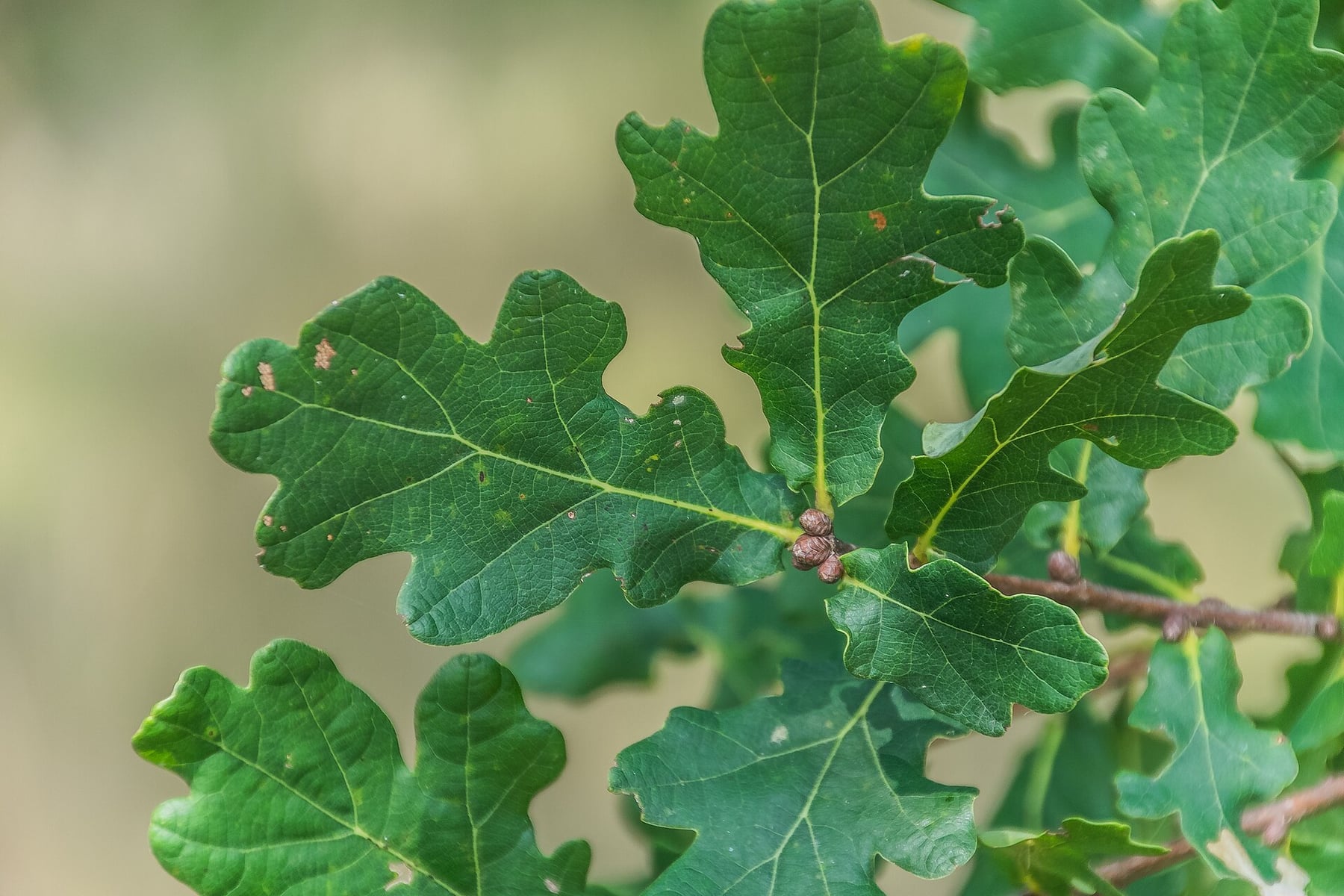 English oak
Rounded lobes, auricled base, almost without petiole
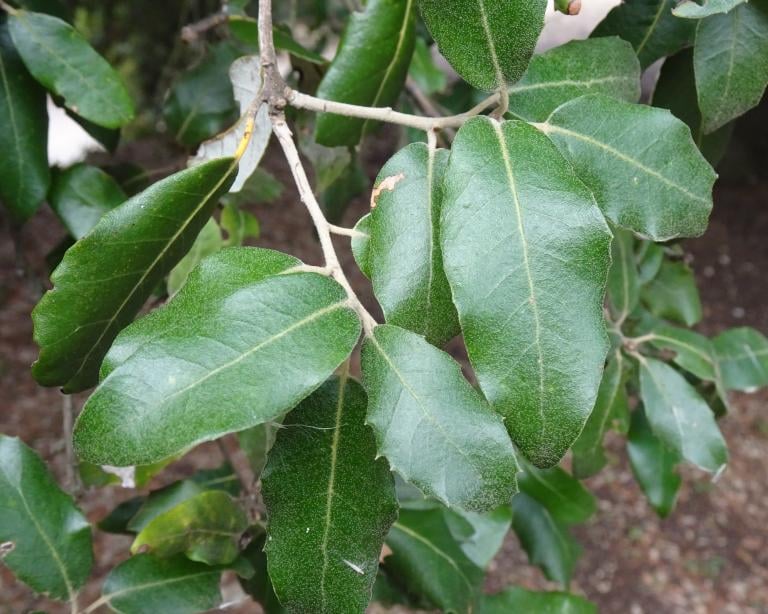 Holm oak
Evergreen, leathery, very variable: entire on the adult leaves of some twigs, or toothed/spiny mainly on young trees and suckers; upper surface dark green, underside greyish and downy.
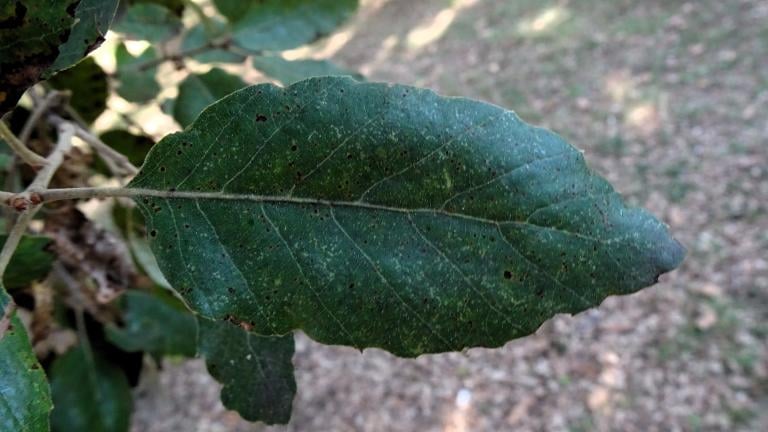 Cork oak
Evergreen, leathery, ovate to oblong, dark green above and greyish white beneath; young leaves can be more toothed or spiny.
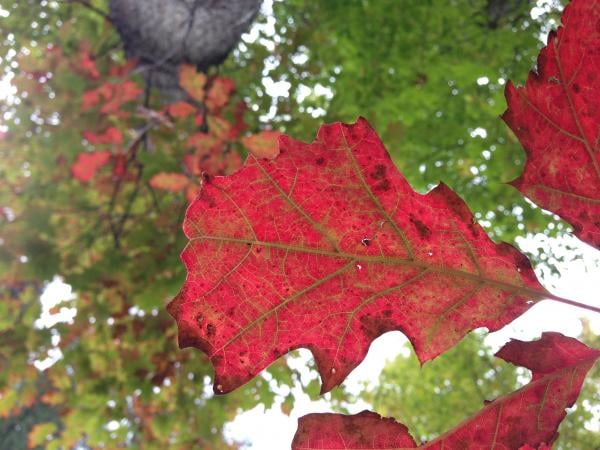 Northern red oak
Large, deeply lobed leaves, with lobes ending in points, unlike the more rounded lobes of pedunculate or sessile oak.
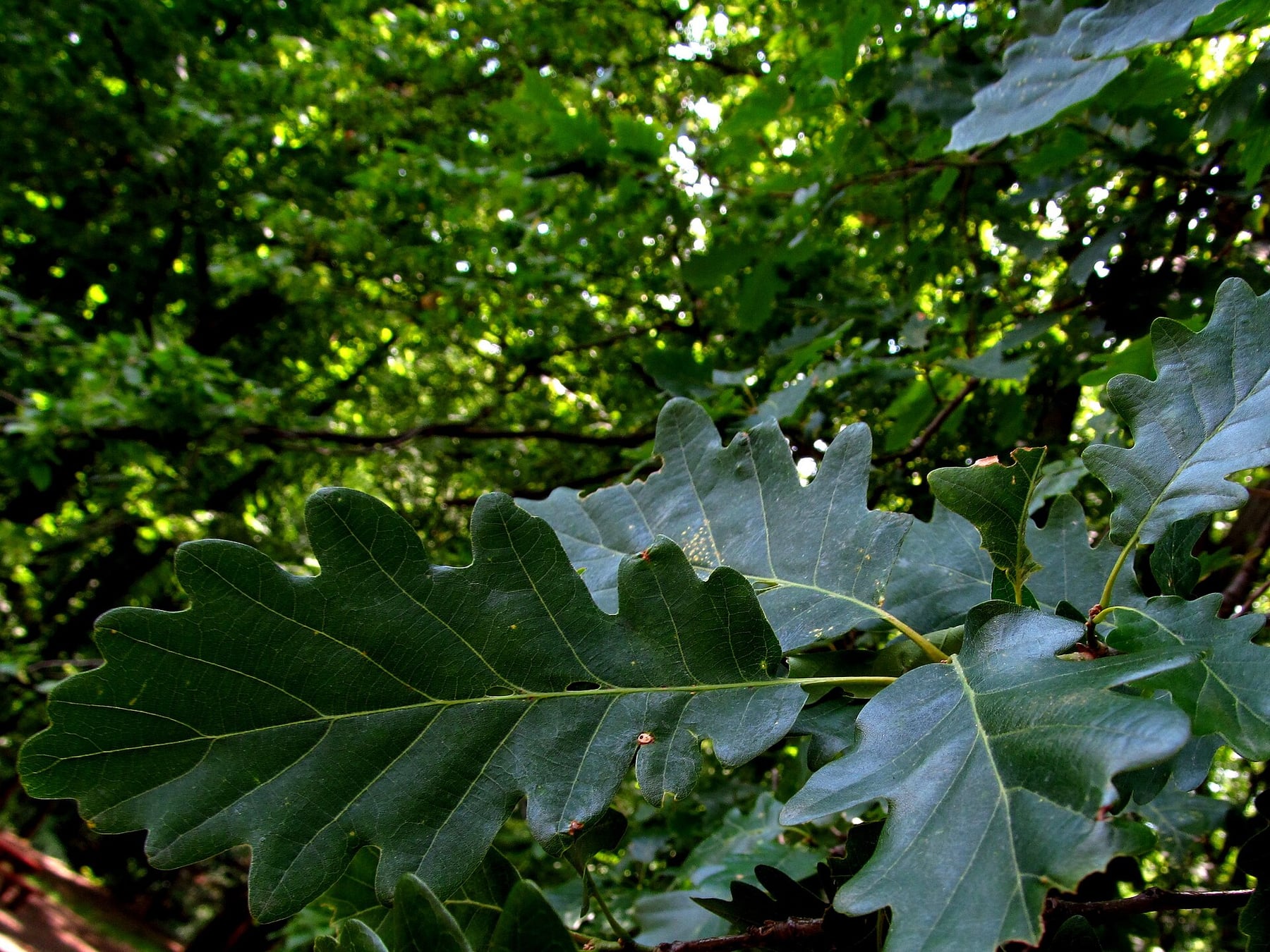 Sessile oak
Leaves with a clearly visible petiole, base generally wedge-shaped or rounded without large auricles; rounded lobes.
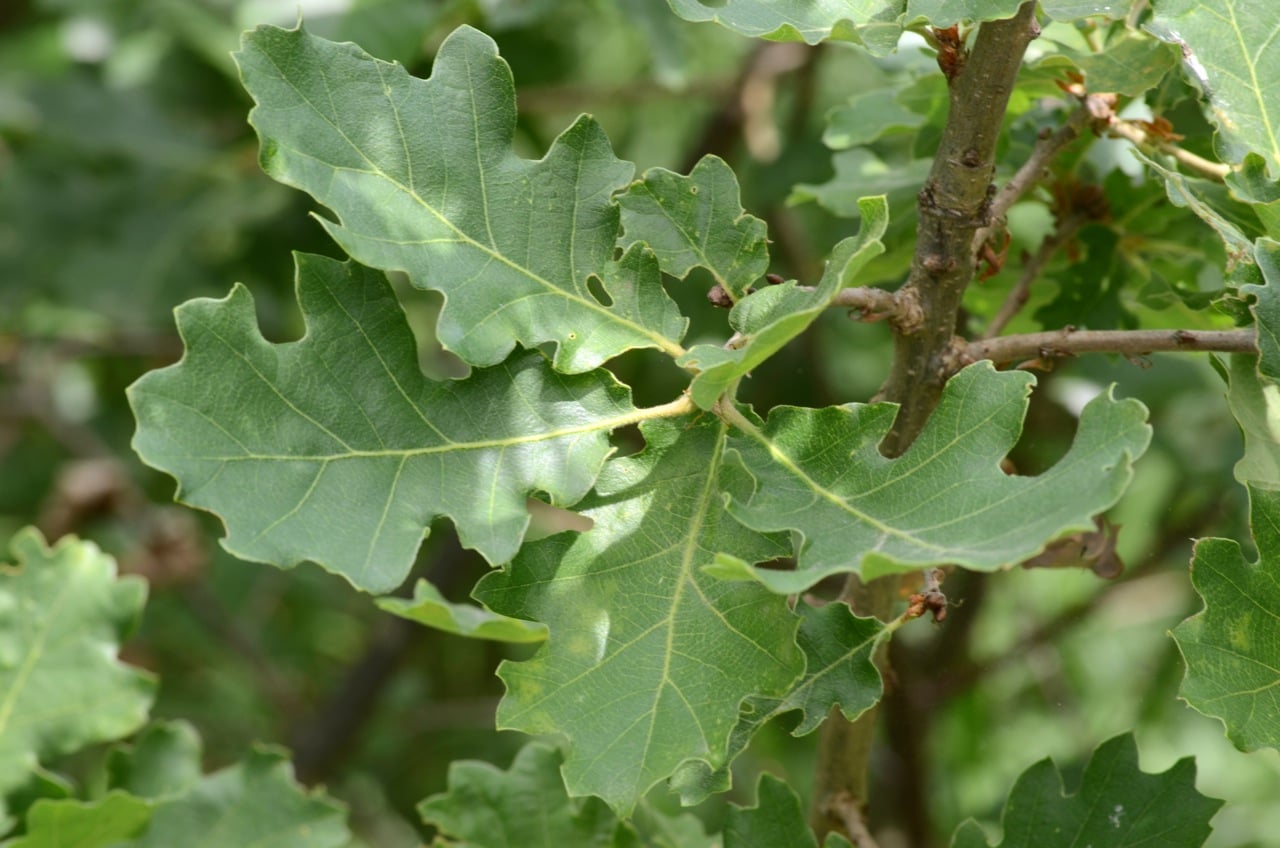 Downy oak
Very variable but generally more or less downy, especially beneath; young twigs are often hairy.
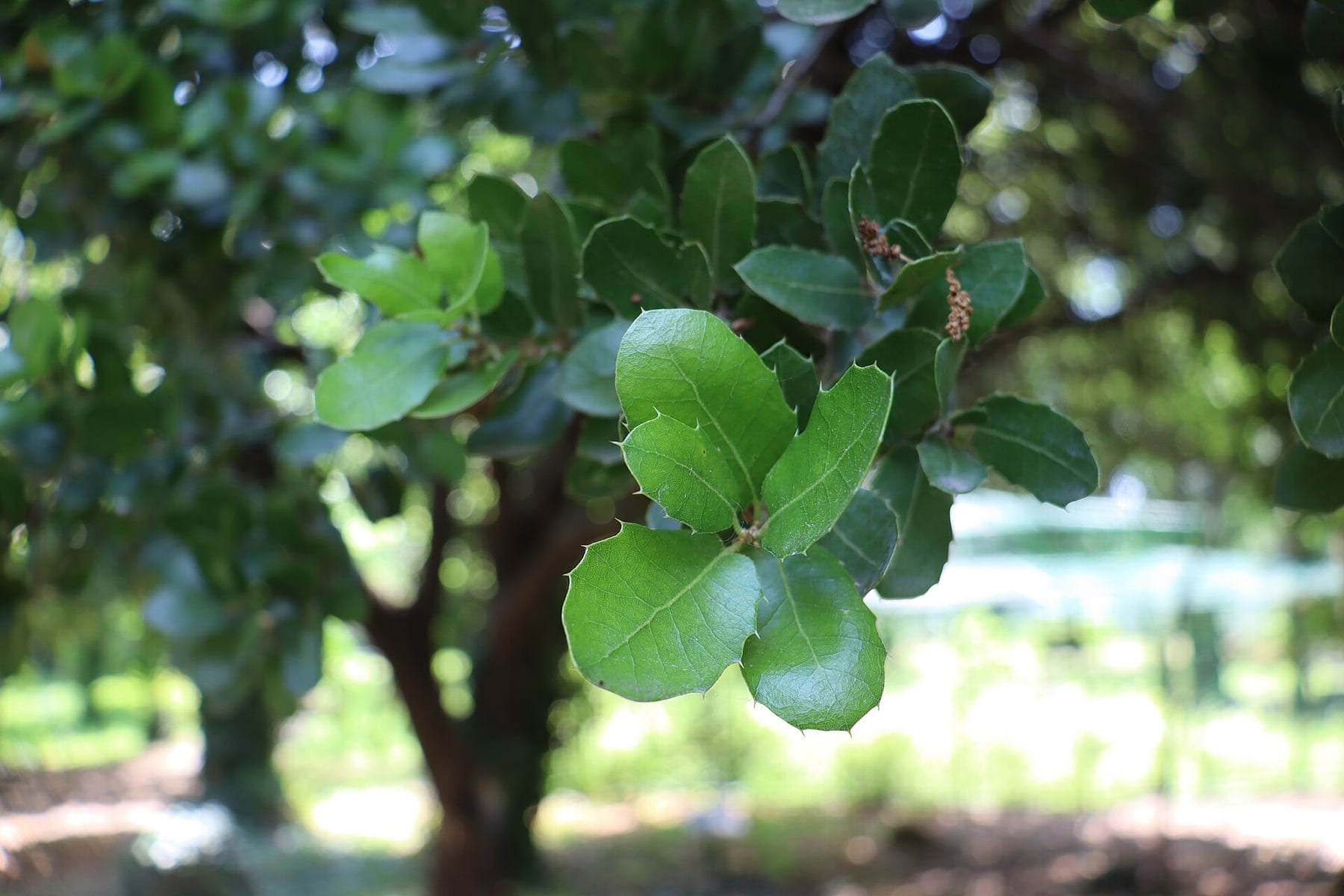 Kermes oak
Evergreen, leathery, small, ovate, edged with regular spiny teeth recalling those of holly but smaller; underside darker than in holm oak.
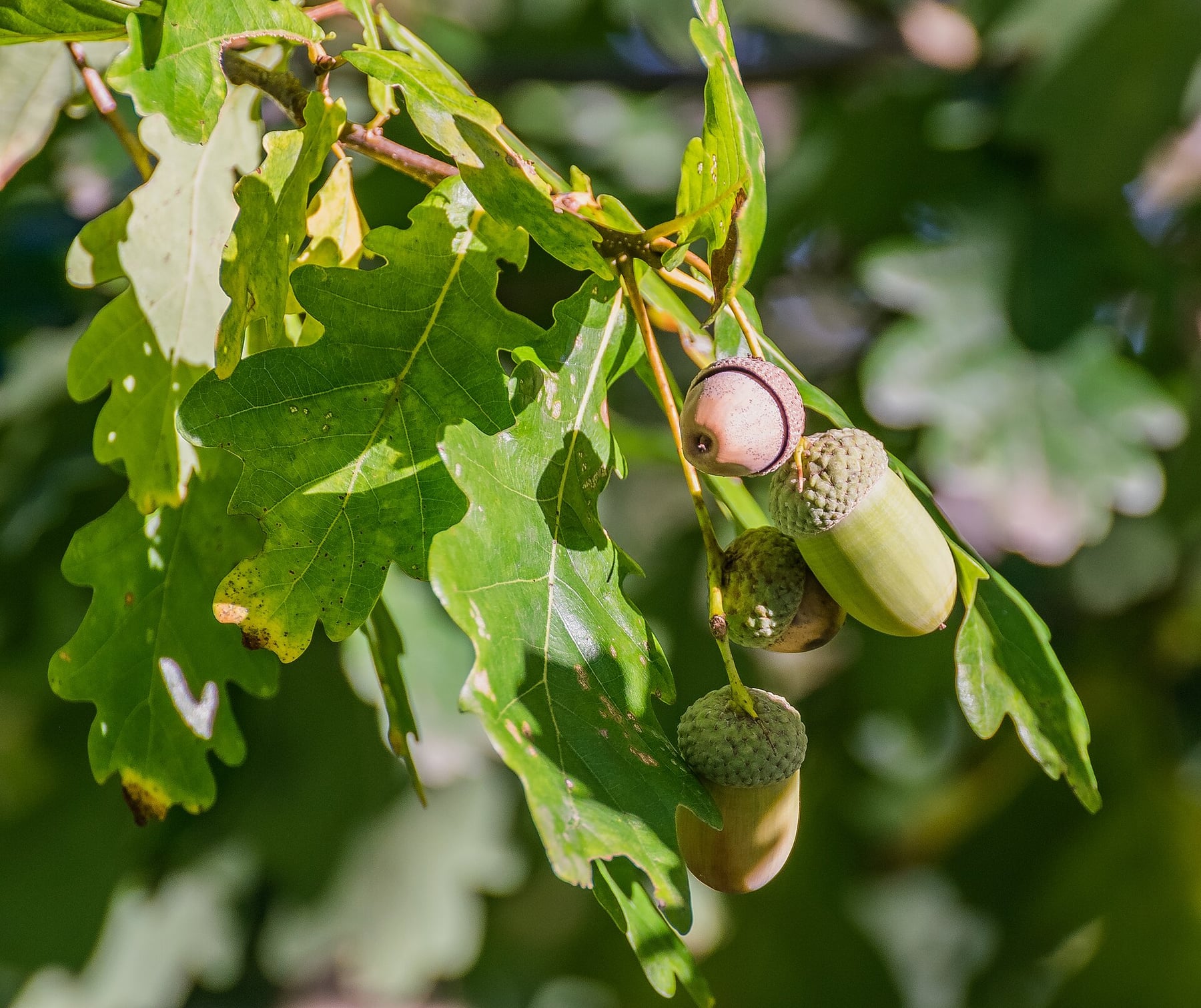 English oak
Acorns borne on a long peduncle
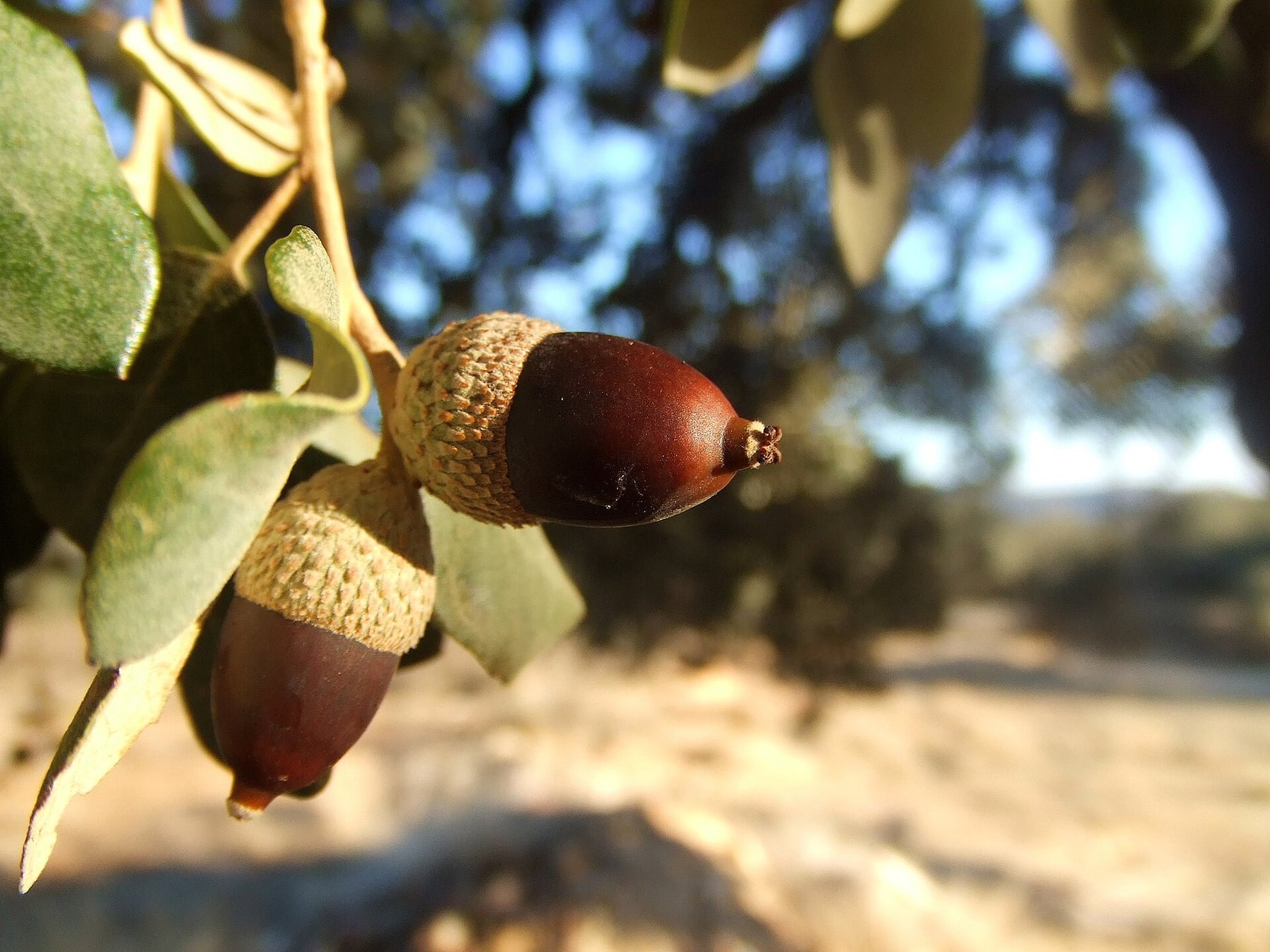 Holm oak
Small elongated acorns with a felted cup
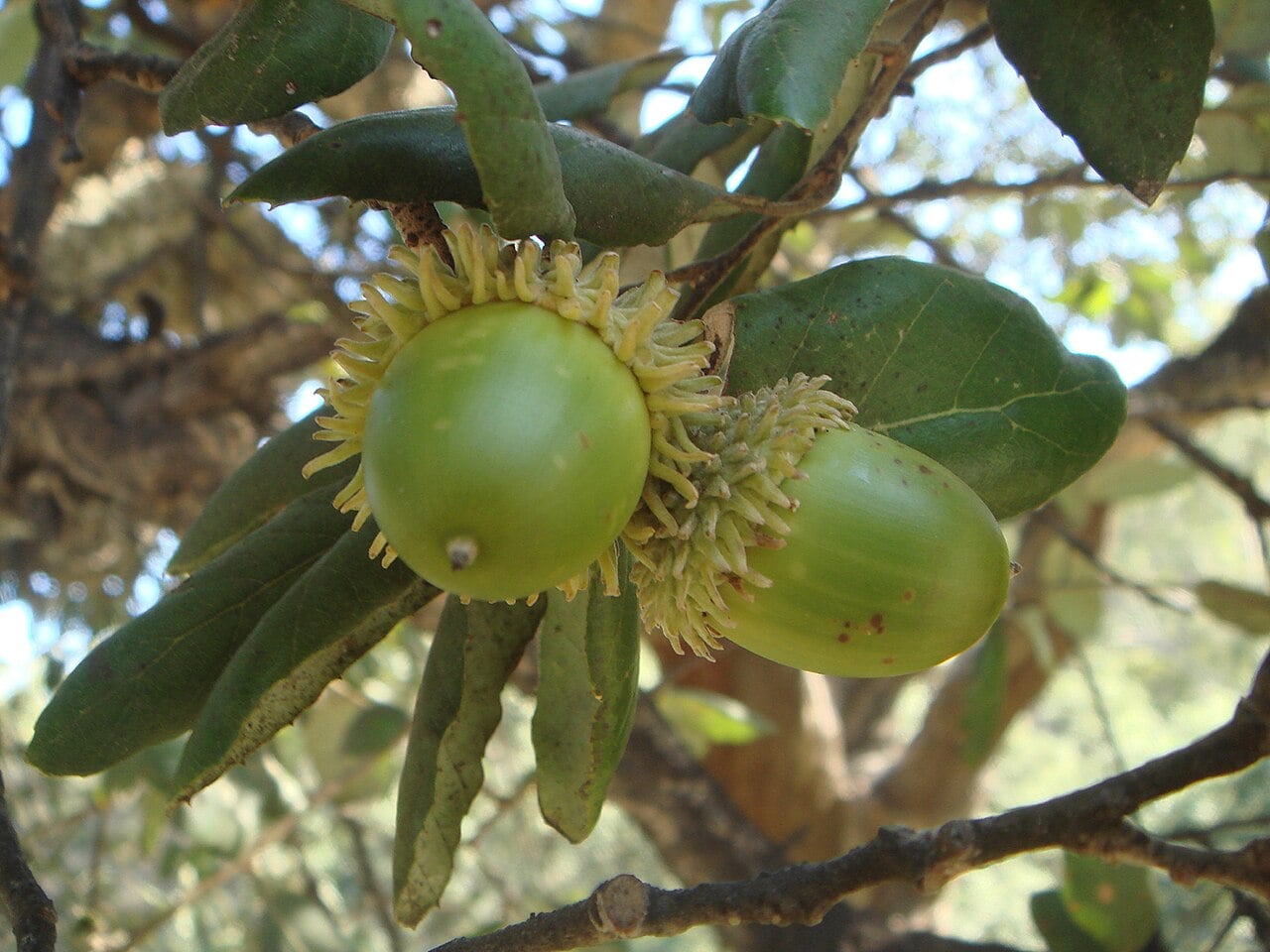 Cork oak
Elongated acorn, with a cup covered in soft, downy scales
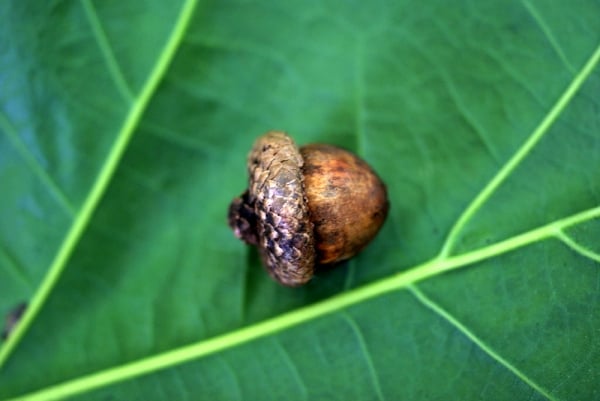 Northern red oak
Brown acorn, with a shallow cup; ripening over two years. The acorns are relatively large and often almost sessile.
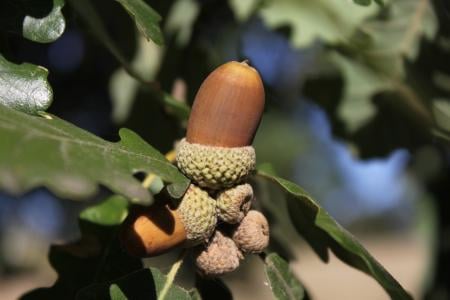 Sessile oak
Acorns without a peduncle, attached directly to the twig
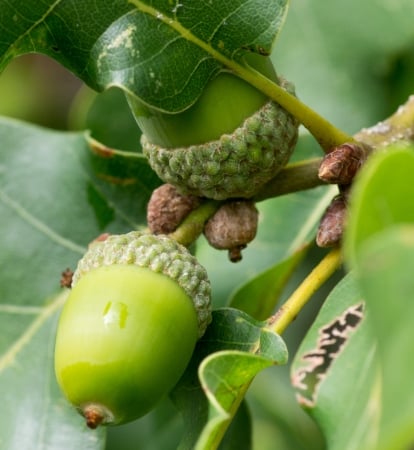 Downy oak
Small, shortly stalked acorns
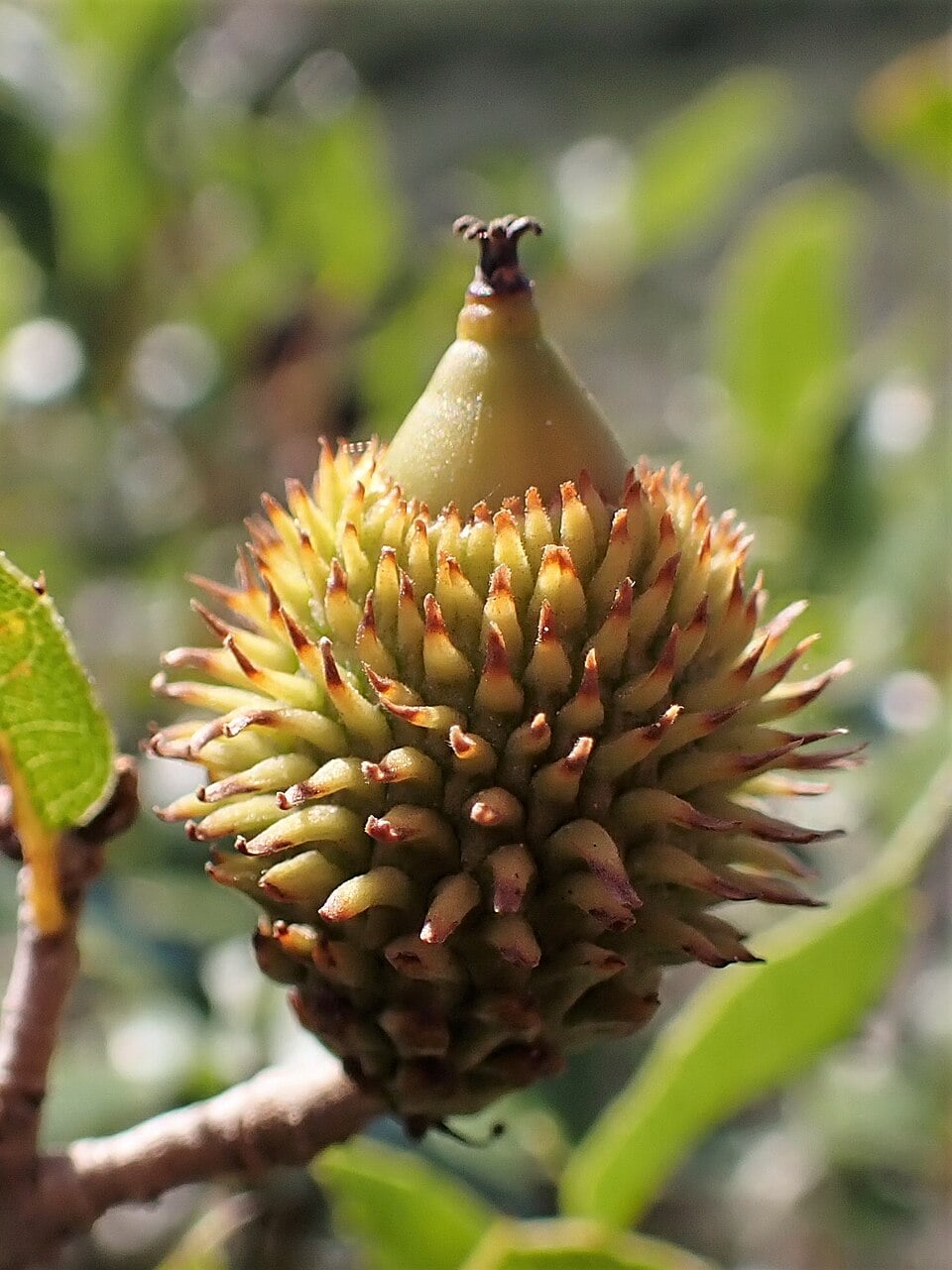 Kermes oak
Small acorn with a cup covered in prickly scales, unlike the smooth, felted cup of the holm oak
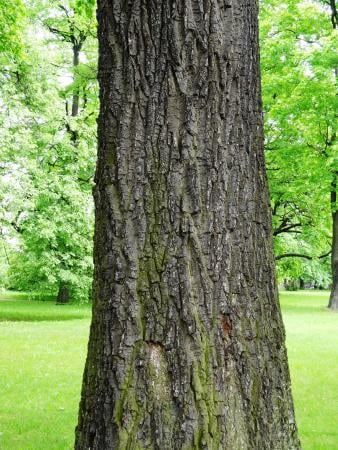 English oak
Grey, thick, deeply fissured with age
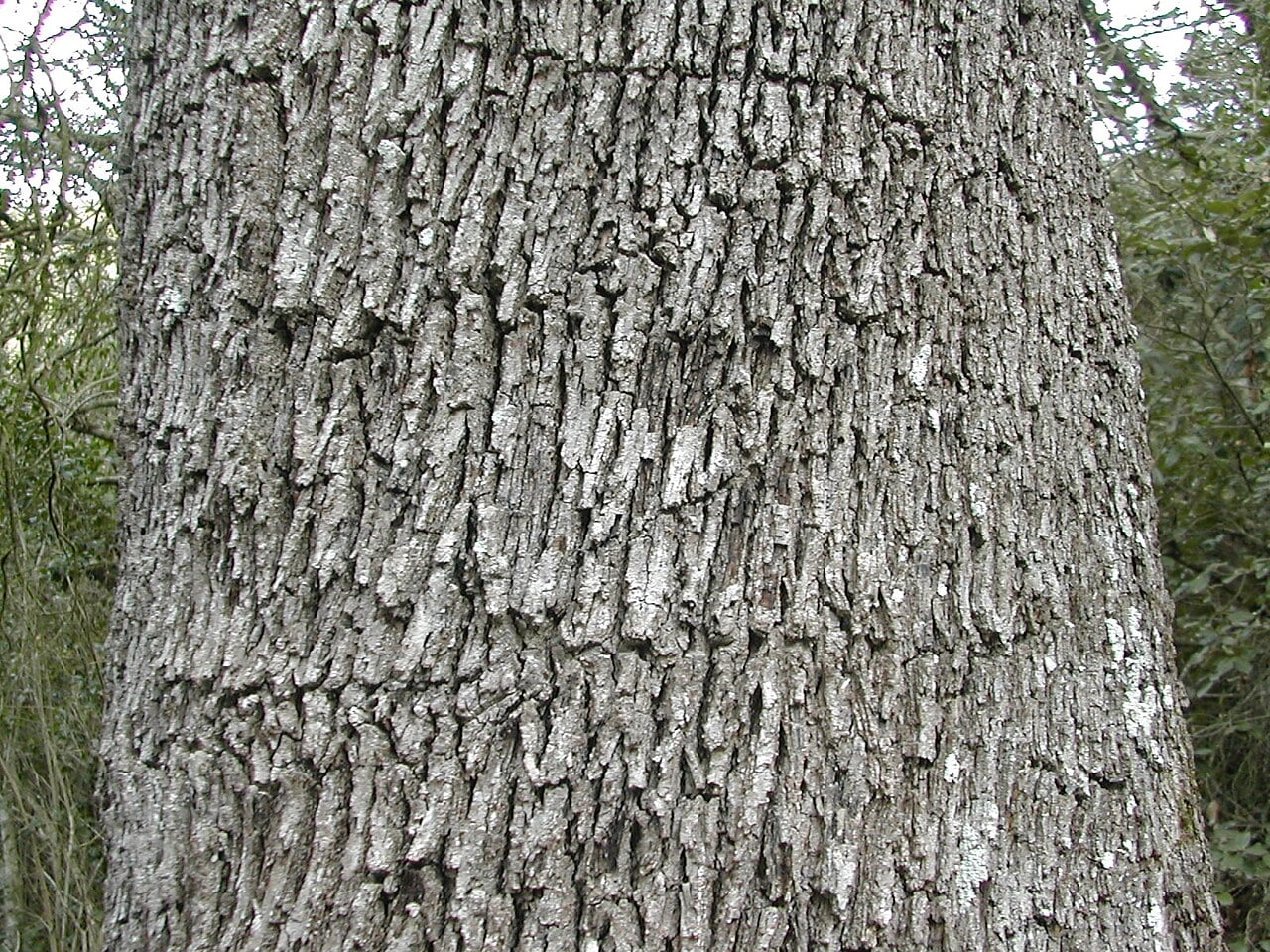 Holm oak
Grey-black, finely fissured
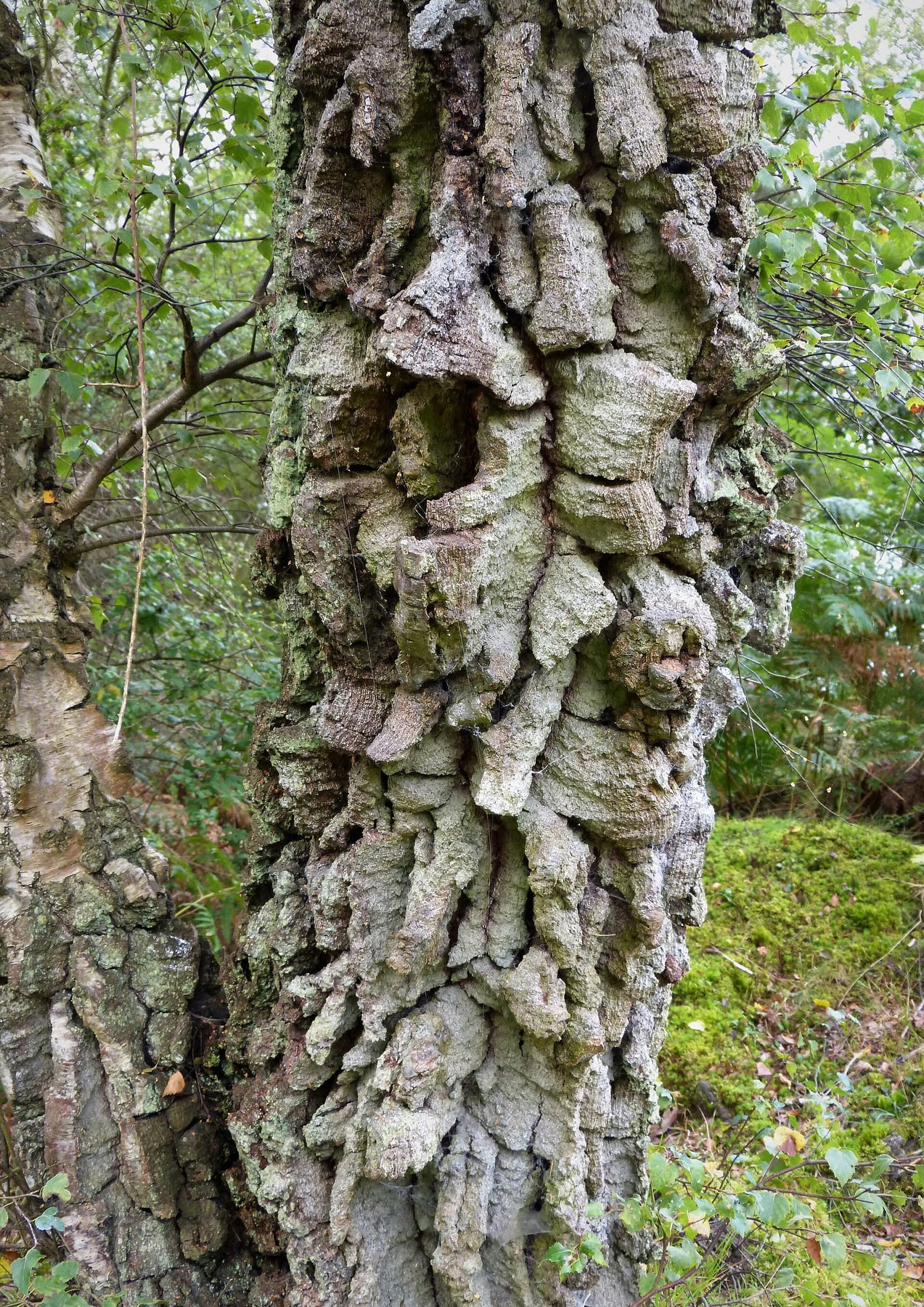 Cork oak
Very thick, spongy, deeply fissured bark on trees managed for cork. Cork harvesting removes the outer layer without felling the tree when done correctly.
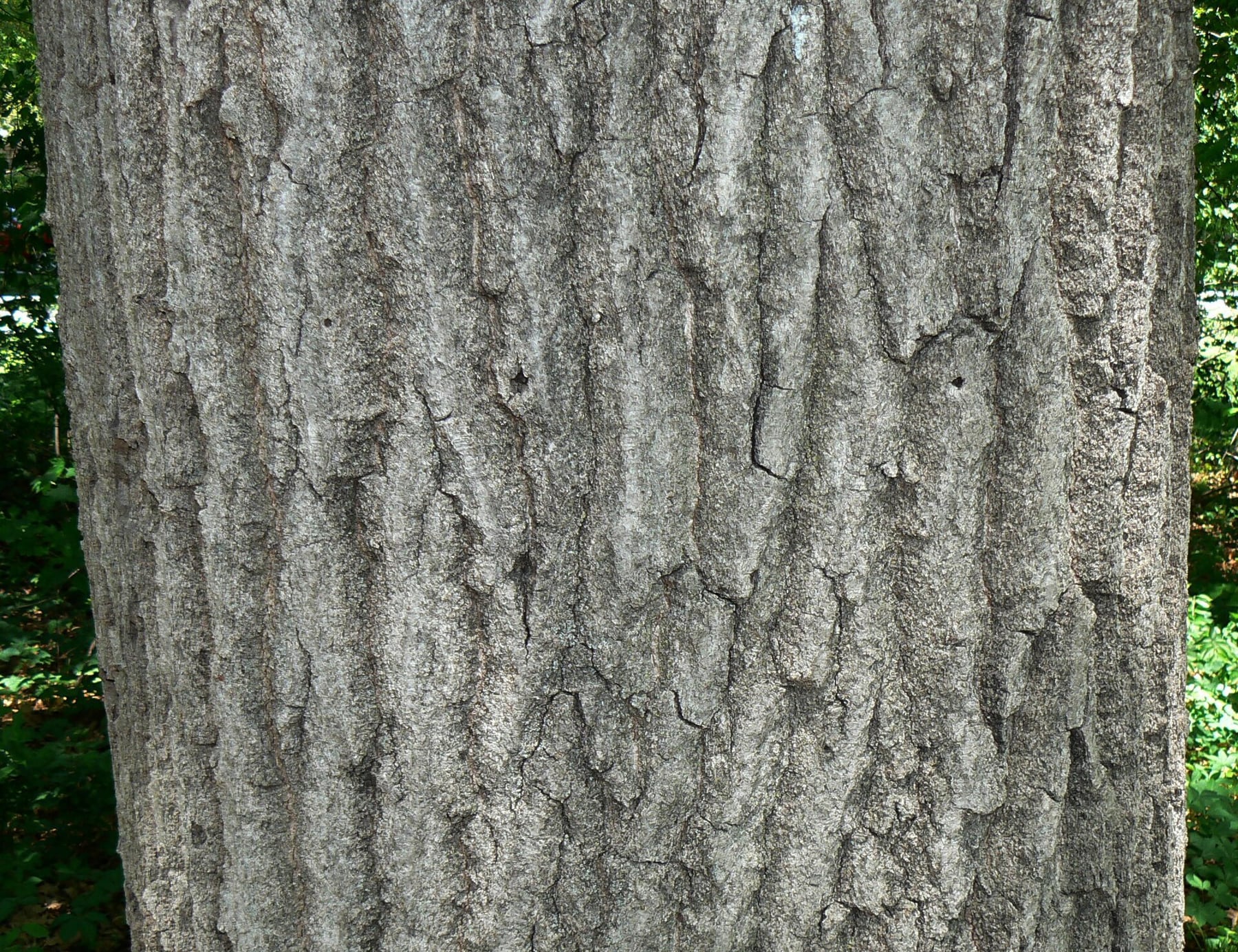 Northern red oak
Grey, smooth on young trees, becoming furrowed with age
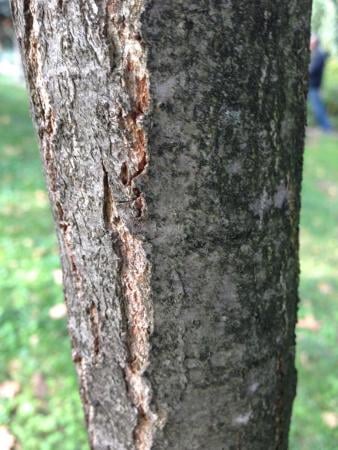 Sessile oak
Grey, fissured, more regular than that of pedunculate oak
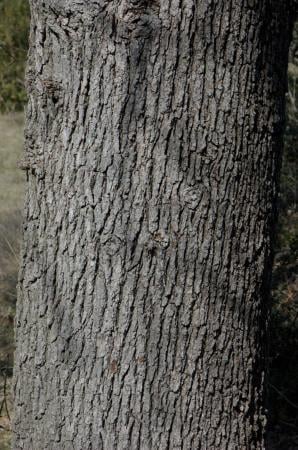 Downy oak
Grey, fissured into small plates
- Kermes oak
Grey, finely fissured, often little visible beneath a very branched bushy habit from the base
The pairs that get confused
All comparisons ›Test yourself on oaks
Question 1 of 5
Which plant is this?
Educational page: these marks help recognise a family, never judge whether a plant is edible or safe.