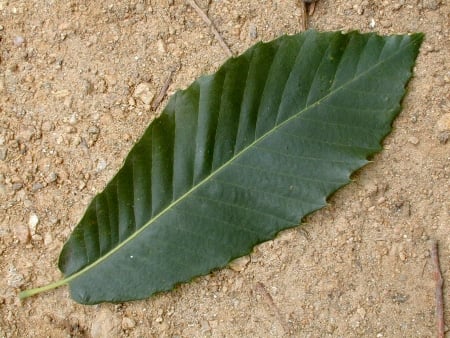
Leaf
Sdjurovic, Wikimedia · CC BY-SA 4.0
Sessile oak
Quercus petraea (Matt.) Liebl.
Also known as: Durmast oak, Cornish oak
Family: Fagaceae
25 to 35 m tall
Lowland and hillside forests, drier soils than pedunculate oak
Flowering: April – May
Part shade
Full sun
-30°C
❓ How do you recognise this plant?
Acorns without a peduncle but distinctly petiolate leaves — exactly the opposite of the pedunculate oak. Sessile: acorns almost without a peduncle and distinctly petiolate leaves. Pedunculate: acorns on a long peduncle and almost sessile leaves, often with small auricles at the base. Intermediate individuals and hybrids exist.
🍃 Leaves
Leaves with a clearly visible petiole, base generally wedge-shaped or rounded without large auricles; rounded lobes.
🌸 Flowers
Inconspicuous catkins
🍎 Fruits
Acorns without a peduncle, attached directly to the twig
🪵 Bark
Grey, fissured, more regular than that of pedunculate oak
🗺️ Distribution
Europe, as far as the Caucasus; very common in France, preferring more free-draining soils than pedunculate oak
🐝 Value for pollinators
Male catkins producing abundant pollen, foliage hosting very many caterpillar species
✂️ Horticultural uses
Managed in forestry for its stave timber (cooperage) and planted in forests and large parks
⚠️ Possible toxicity
Acorns rich in tannins, toxic in large quantity to some domestic animals; harmless on contact
⚠️ Look-alike species
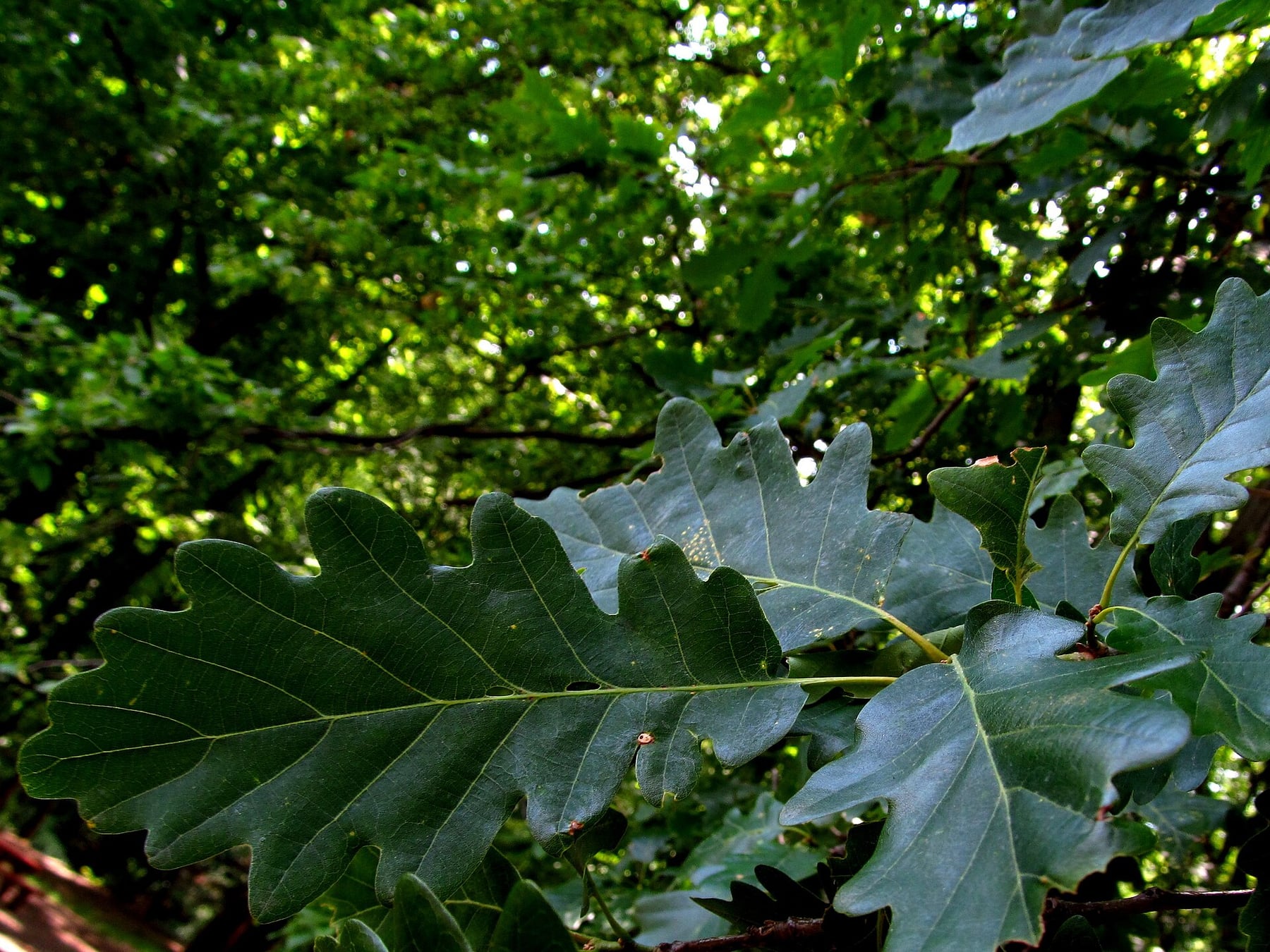
Sessile oak
Quercus petraea
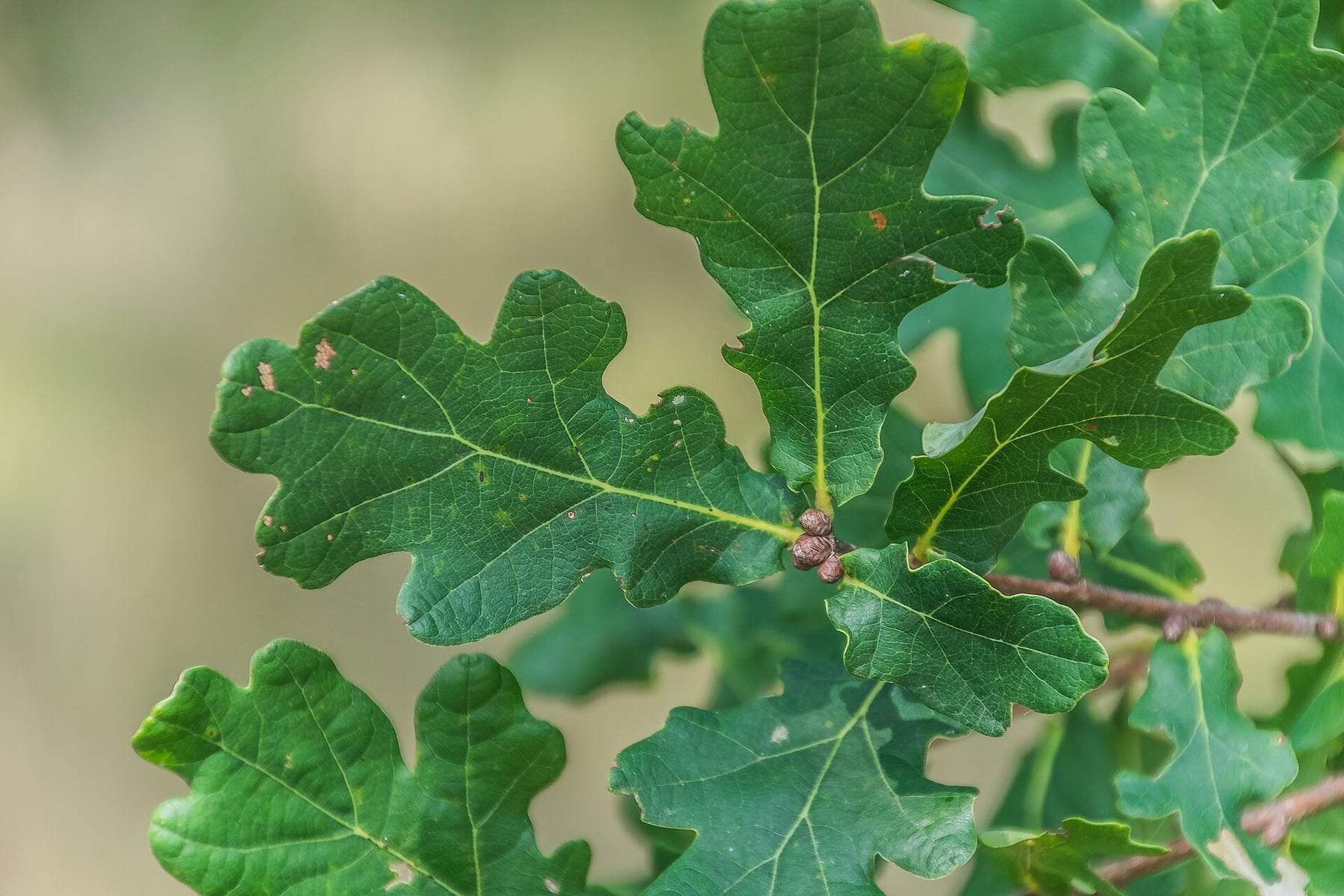
English oak
Quercus robur
Sessile: acorns almost without a peduncle and distinctly petiolate leaves. Pedunculate: acorns on a long peduncle and almost sessile leaves, often with small auricles at the base. Intermediate individuals and hybrids exist.
Sessile oak
Quercus petraea
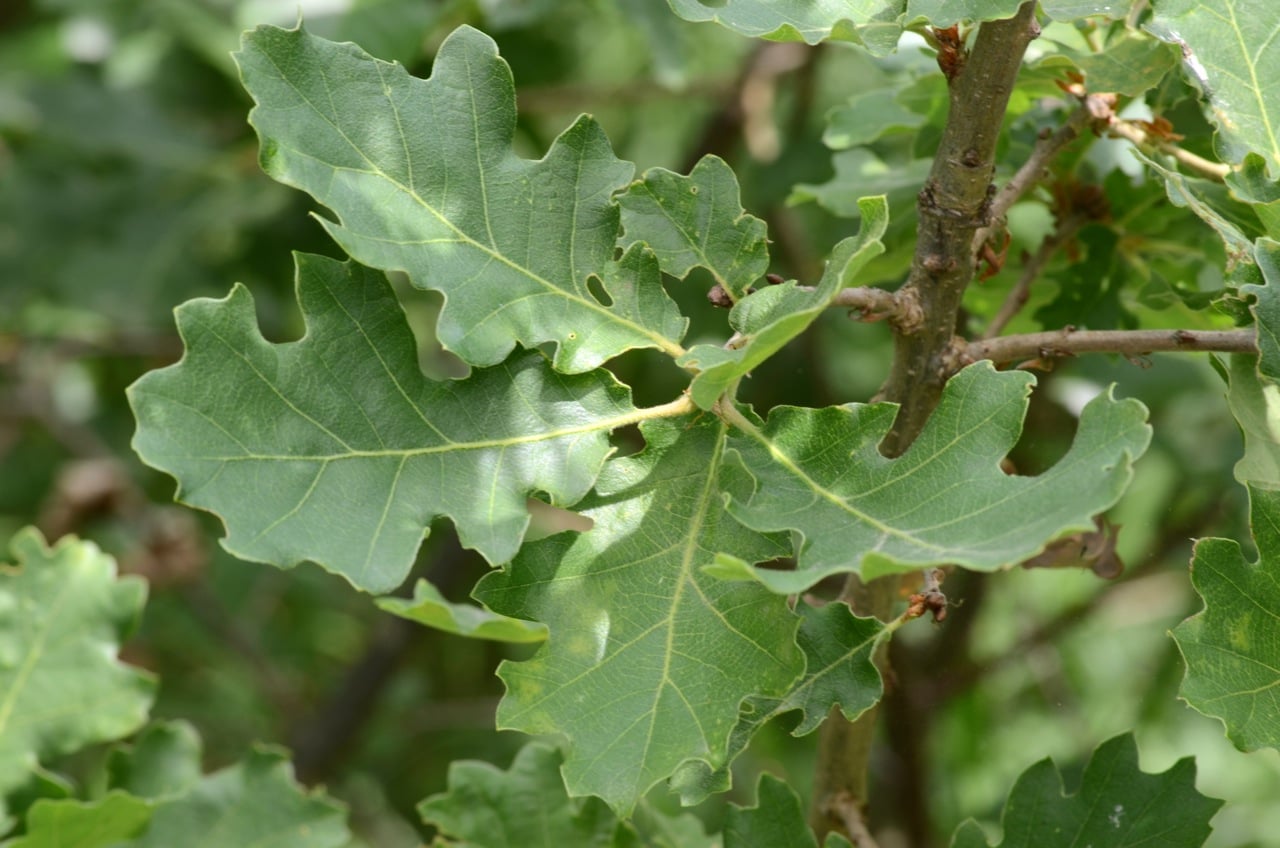
Downy oak
Quercus pubescens
Sessile oak has hairless leaves without down, whereas downy oak has leaves and young twigs covered with a fine down, hence its name.
🌿 Other Fagaceae to discover
ℹ️ Educational profile — do not use it to judge whether a plant is edible or safe.
🌱 This database is constantly evolving — species and information are added and corrected regularly. Spotted a mistake? Report it below.
© Floraneo — profile content is protected; reproduction without permission is prohibited. Photos remain under their own licence (see the credit shown on each photo).