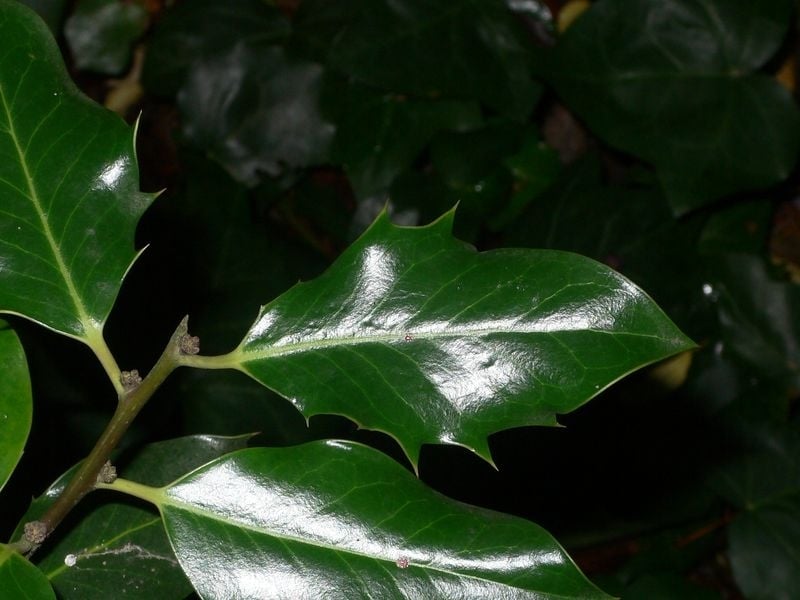
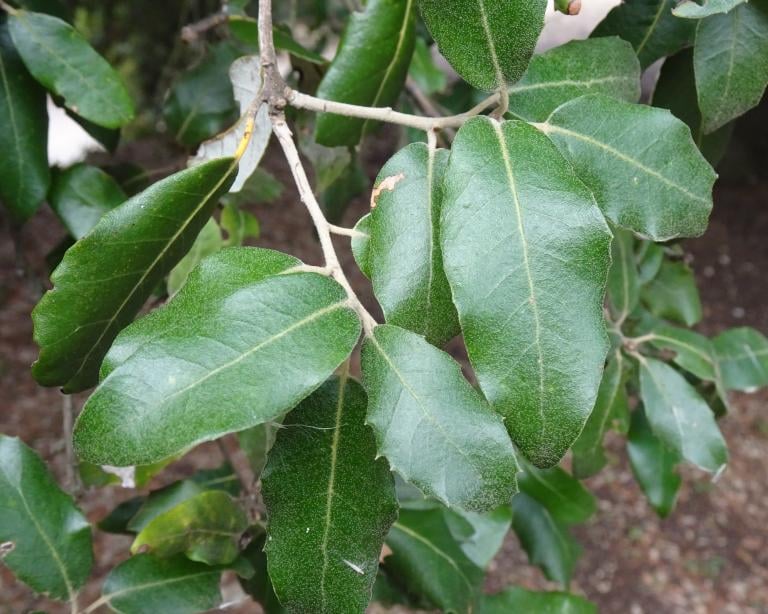
Leaf
Alain Bigou, Tela Botanica · CC BY-SA 2.0

Holm oak

Quercus ilex L.
Also known as: Holly oak, Evergreen oak
Family: Fagaceae
Telling oaks apart ›
  • 10 to 20 m tall
  • Mediterranean garrigue and forests
  • Full sun, Part shade
  • -20°C

In flower from April to May

2 months
See what flowers in:April ›May ›

❓ How do you recognise this plant?

The only large evergreen oak in France — green all year round, even in winter. Holly has alternate, wavy, bumpy leaves, spiny all round the margin, and bears bright red berries; the holm oak (nicknamed 'false holly oak' in French) has flatter leaves, felted white beneath, with more irregular teeth (sometimes absent on the adult), and bears acorns.

Learn to recognise it

Conifers and park trees. This plant is in the lesson “Conifers and park trees”, with 11 others.
Holm oak
Southern magnolia
Japanese cherry
Goat willow
Italian cypress
+7

Free, no account needed.

🍃 Leaves
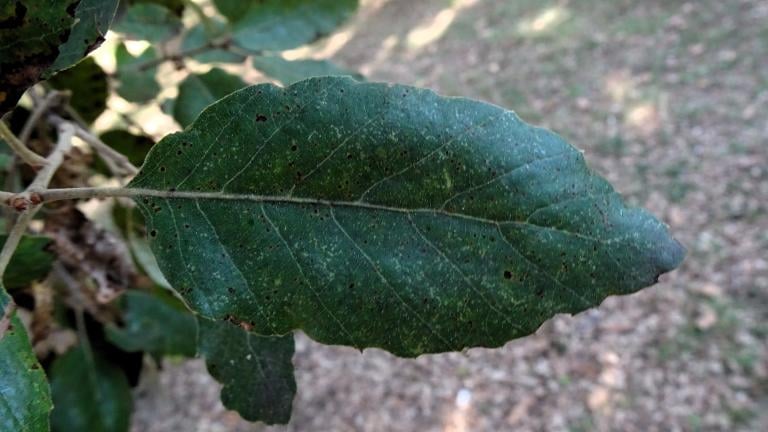
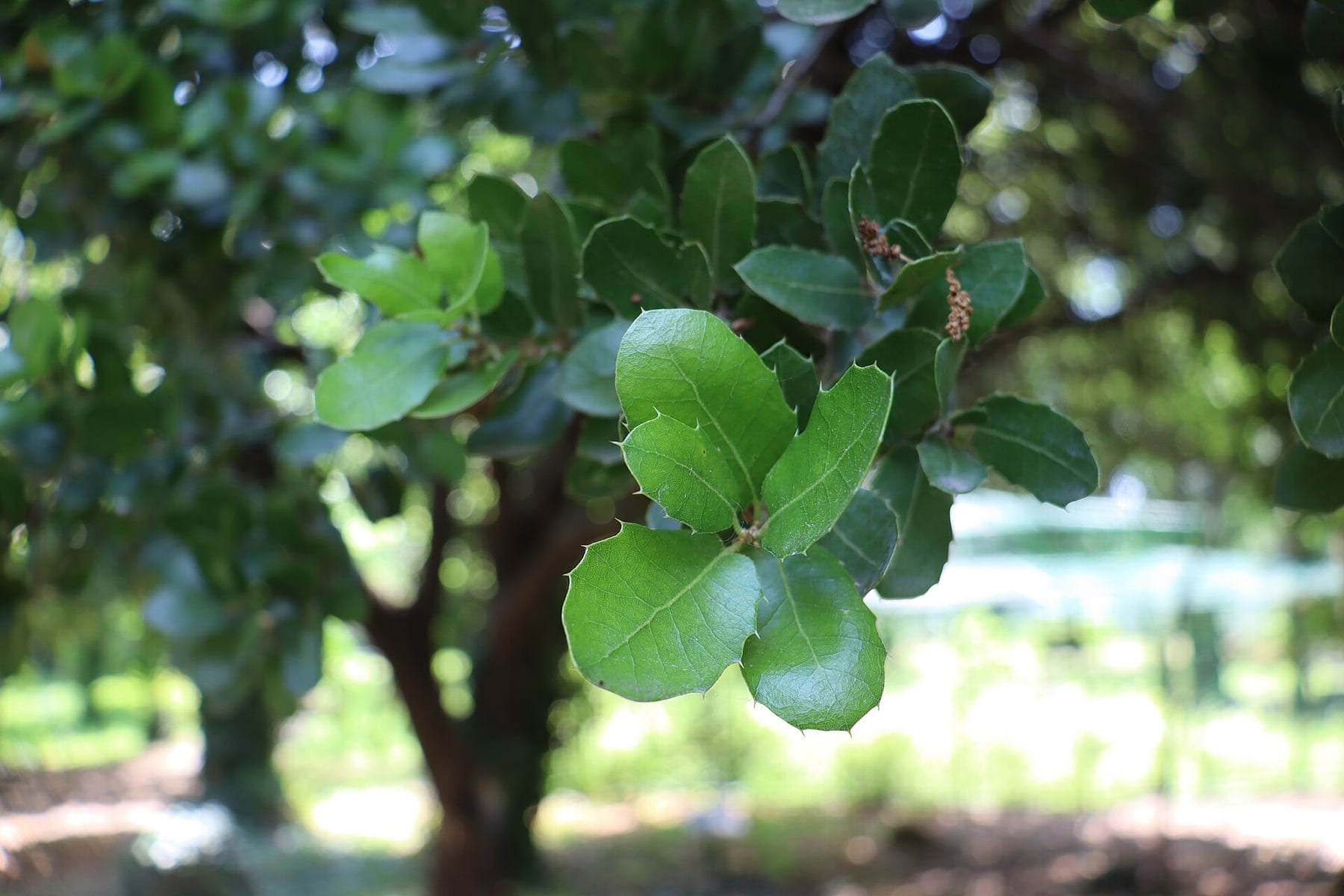
Evergreen, leathery, very variable: entire on the adult leaves of some twigs, or toothed/spiny mainly on young trees and suckers; upper surface dark green, underside greyish and downy.
🌸 Flowers
Yellowish hanging catkins
🍎 Fruits
Small elongated acorns with a felted cup
🪵 Bark
Grey-black, finely fissured
Distribution, pollinators, uses
🗺️ Distribution
Mediterranean basin; very common in southern France, forming the maquis and garrigue
🐝 Value for pollinators
Catkins producing pollen in spring, evergreen foliage offering winter shelter to wildlife
✂️ Horticultural uses
Planted as a windbreak hedge, in coastal avenues or as a specimen for its drought-resistant evergreen foliage

⚠️ Possible toxicity

Acorns rich in tannins, to be eaten in moderation by animals; harmless on contact

⚠️ Look-alike species

Holm oak
Holm oak
Quercus ilex
Common holly
Common holly
Ilex aquifolium

Holly has alternate, wavy, bumpy leaves, spiny all round the margin, and bears bright red berries; the holm oak (nicknamed 'false holly oak' in French) has flatter leaves, felted white beneath, with more irregular teeth (sometimes absent on the adult), and bears acorns.
See the full comparison →
Holm oak
Holm oak
Quercus ilex
Cork oak
Cork oak
Quercus suber

Both are Mediterranean oaks with leathery evergreen leaves, but the cork oak has thick, fissured, corky bark, whereas that of the holm oak stays smooth and grey.
See the full comparison →
Holm oak
Holm oak
Quercus ilex
Kermes oak
Kermes oak
Quercus coccifera

The kermes oak looks like a young spiny holm oak, but remains a low bush of 2 to 4 m with leaves regularly and densely prickly all round their margin, whereas the mature holm oak becomes a tree and bears leaves that are barely toothed, even entire.

See the full comparison →

ℹ️ Educational profile — do not use it to judge whether a plant is edible or safe.

🌱 This database is constantly evolving — species and information are added and corrected regularly. Spotted a mistake? Report it below.

© Floraneo — profile content is protected; reproduction without permission is prohibited. Photos remain under their own licence (see the credit shown on each photo).