Cork oak or Holm oak: how to tell them apart?
Cork oak and Holm oak look alike and are often mixed up. Here is how to tell them apart, feature by feature, with their photos and the details to look for.
⚡ The quick answer
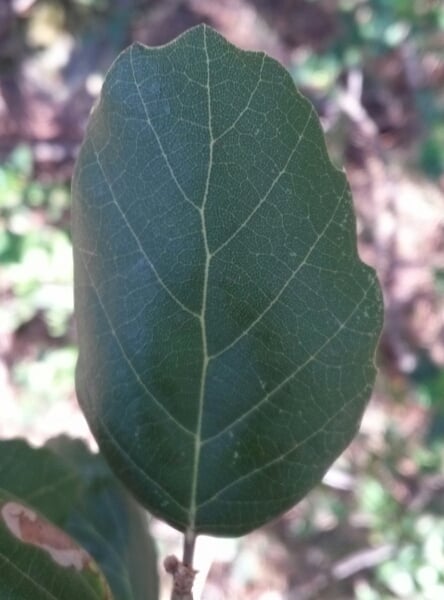
Cork oak
Quercus suber
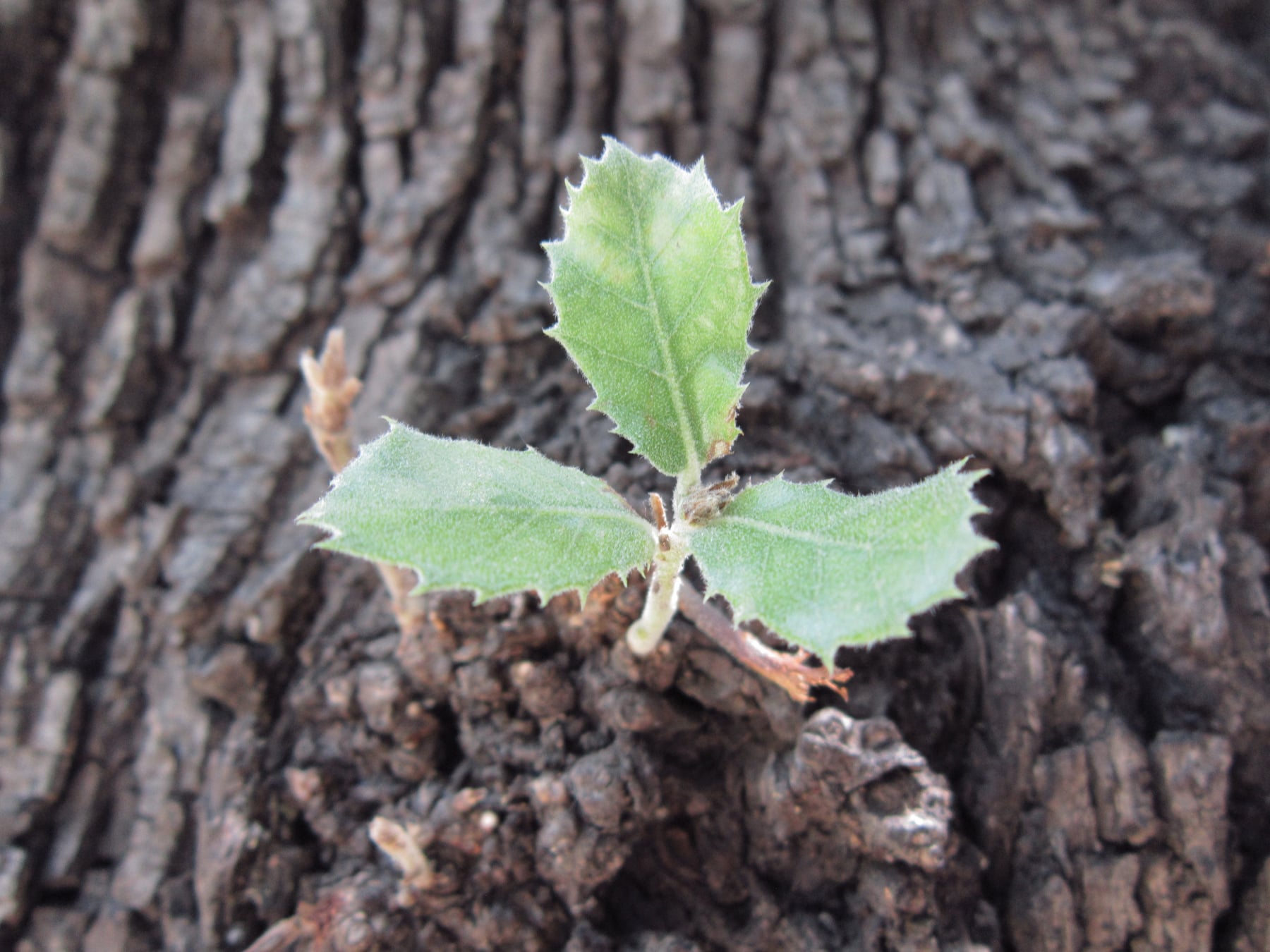
Holm oak
Quercus ilex
Both are Mediterranean oaks with leathery evergreen leaves, but the cork oak has thick, fissured, corky bark, whereas that of the holm oak stays smooth and grey.
🍃 Leaves
Evergreen, leathery, ovate to oblong, dark green above and greyish white beneath; young leaves can be more toothed or spiny.
Evergreen, leathery, very variable: entire on the adult leaves of some twigs, or toothed/spiny mainly on young trees and suckers; upper surface dark green, underside greyish and downy.
🌸 Flowers
Yellowish hanging male catkins; tiny, inconspicuous female flowers
Yellowish hanging catkins
🍎 Fruits
Elongated acorn, with a cup covered in soft, downy scales
Small elongated acorns with a felted cup
🪵 Bark
Very thick, spongy, deeply fissured bark on trees managed for cork. Cork harvesting removes the outer layer without felling the tree when done correctly.
Grey-black, finely fissured
📏 Size
10 to 20 m tall
10 to 20 m tall
🗺️ Habitat
Mediterranean forests and maquis, siliceous soils
Mediterranean garrigue and forests
⚠️ Toxicity
No known toxicity; acorns rich in tannins, bitter but non-toxic
Acorns rich in tannins, to be eaten in moderation by animals; harmless on contact
🔎 And from the Holm oak side
Both are Mediterranean oaks with leathery evergreen leaves, but the cork oak has thick, fissured, corky bark, whereas that of the holm oak stays smooth and grey.
🌿 Go further
Want to practise spotting these details on real photos? Floraneo offers profiles and quizzes for dozens of look-alike species.
ℹ️ Educational profile — do not use it to judge whether a plant is edible or safe.