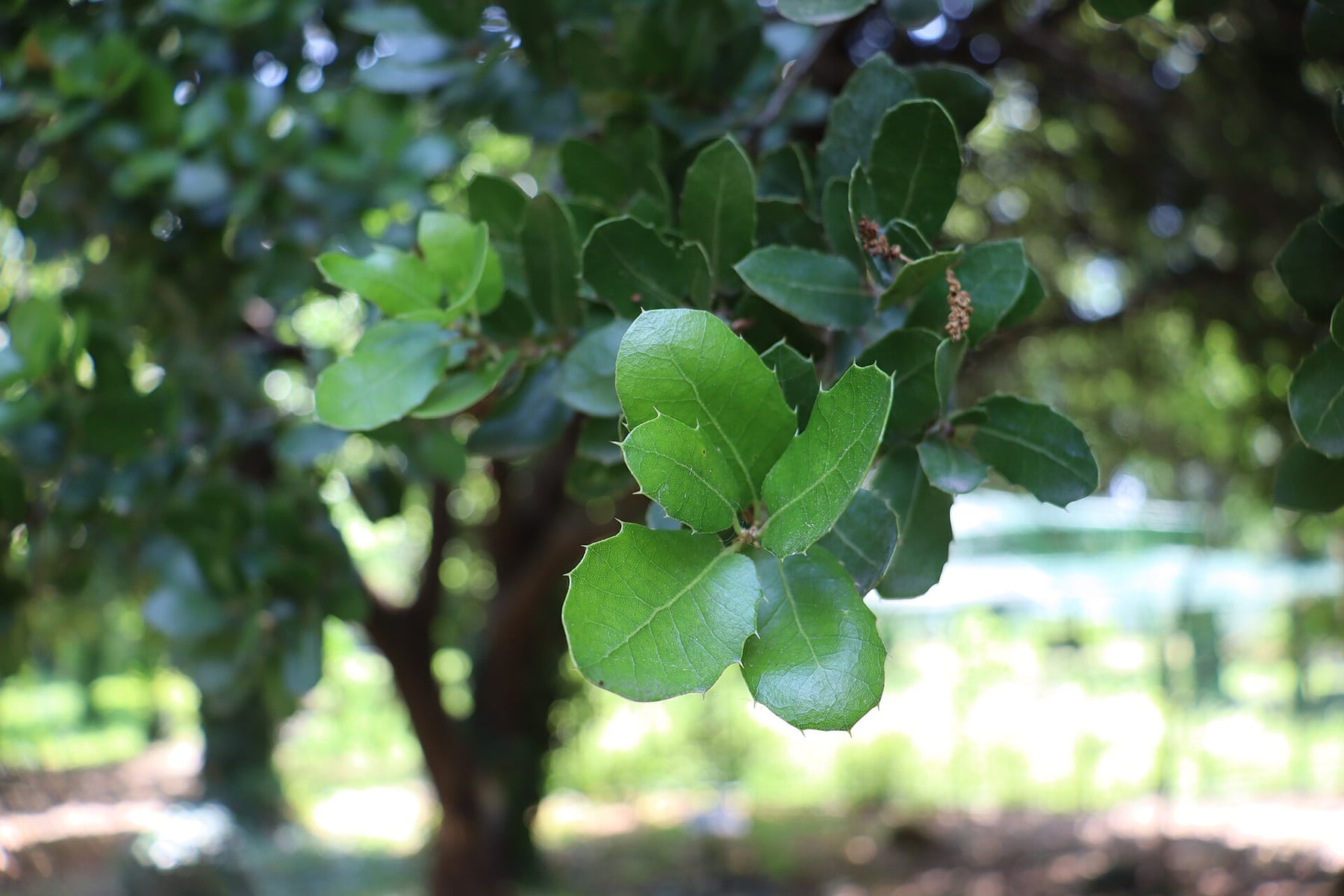
2 to 4 m tall, forming a dense bush rather than a tree
Mediterranean garrigue and maquis, dry calcareous soils
Flowering: April – June
Full sun
Fairly hardy, to about -15°C, dislikes prolonged frosts
❓ How do you recognise this plant?
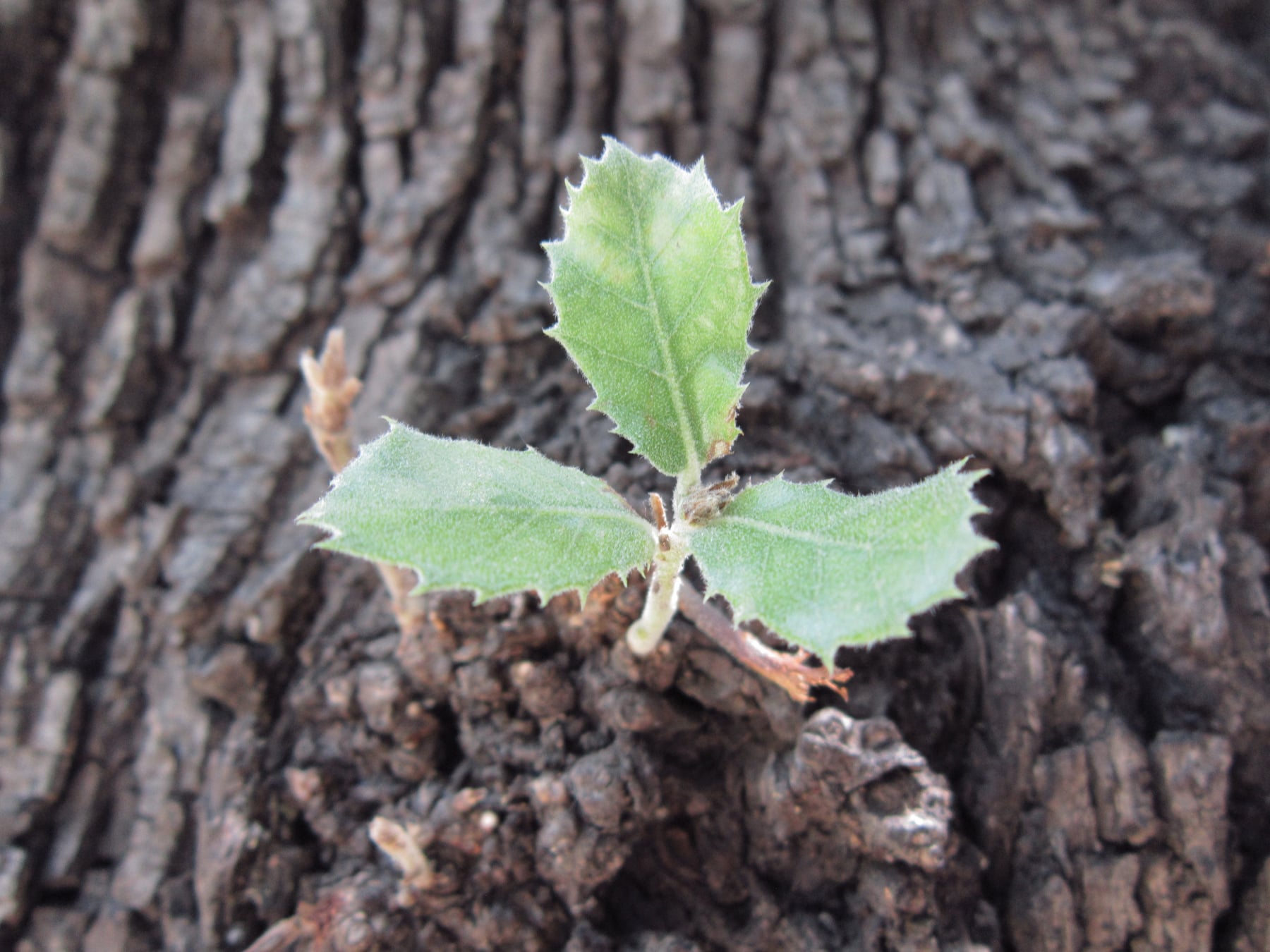
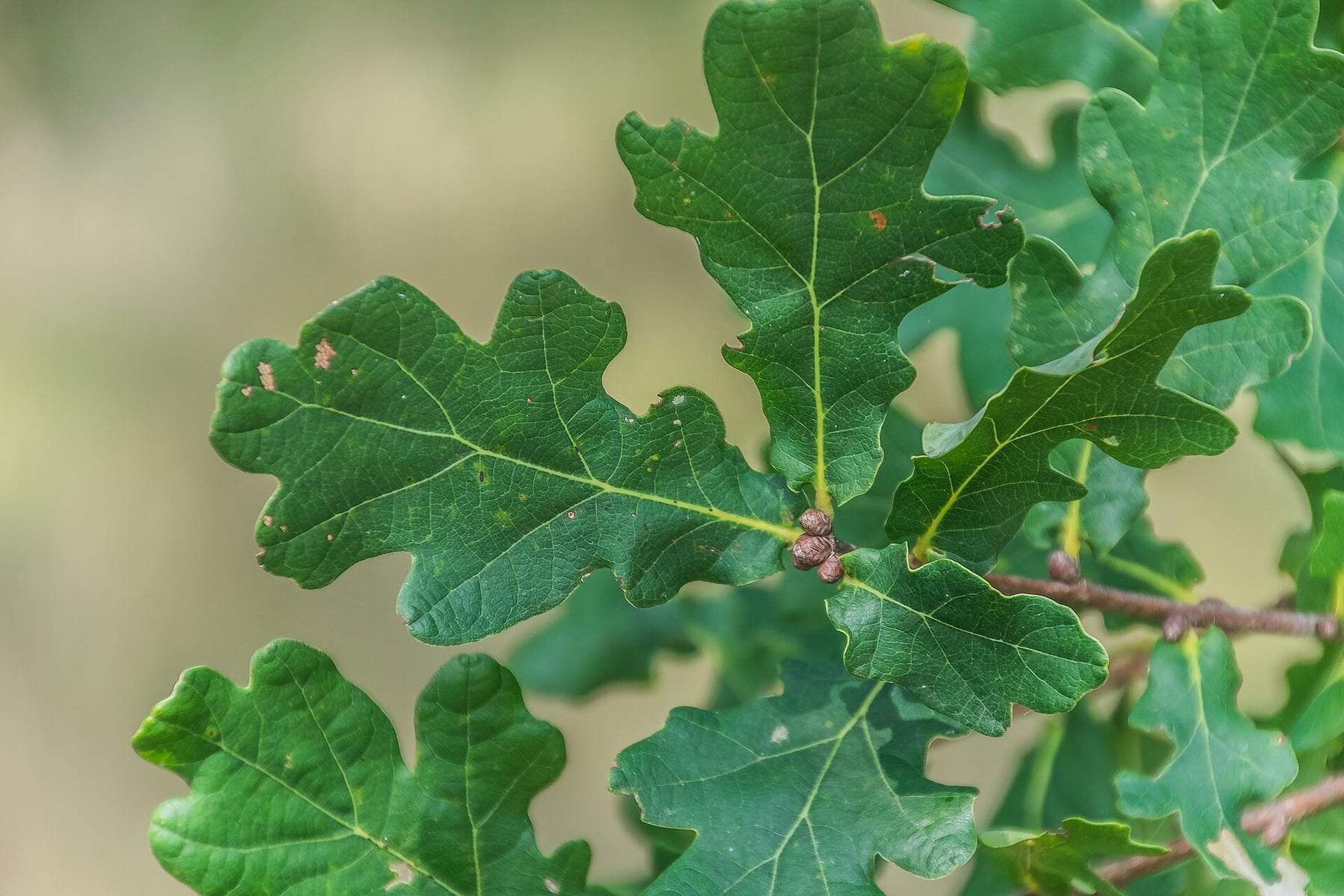
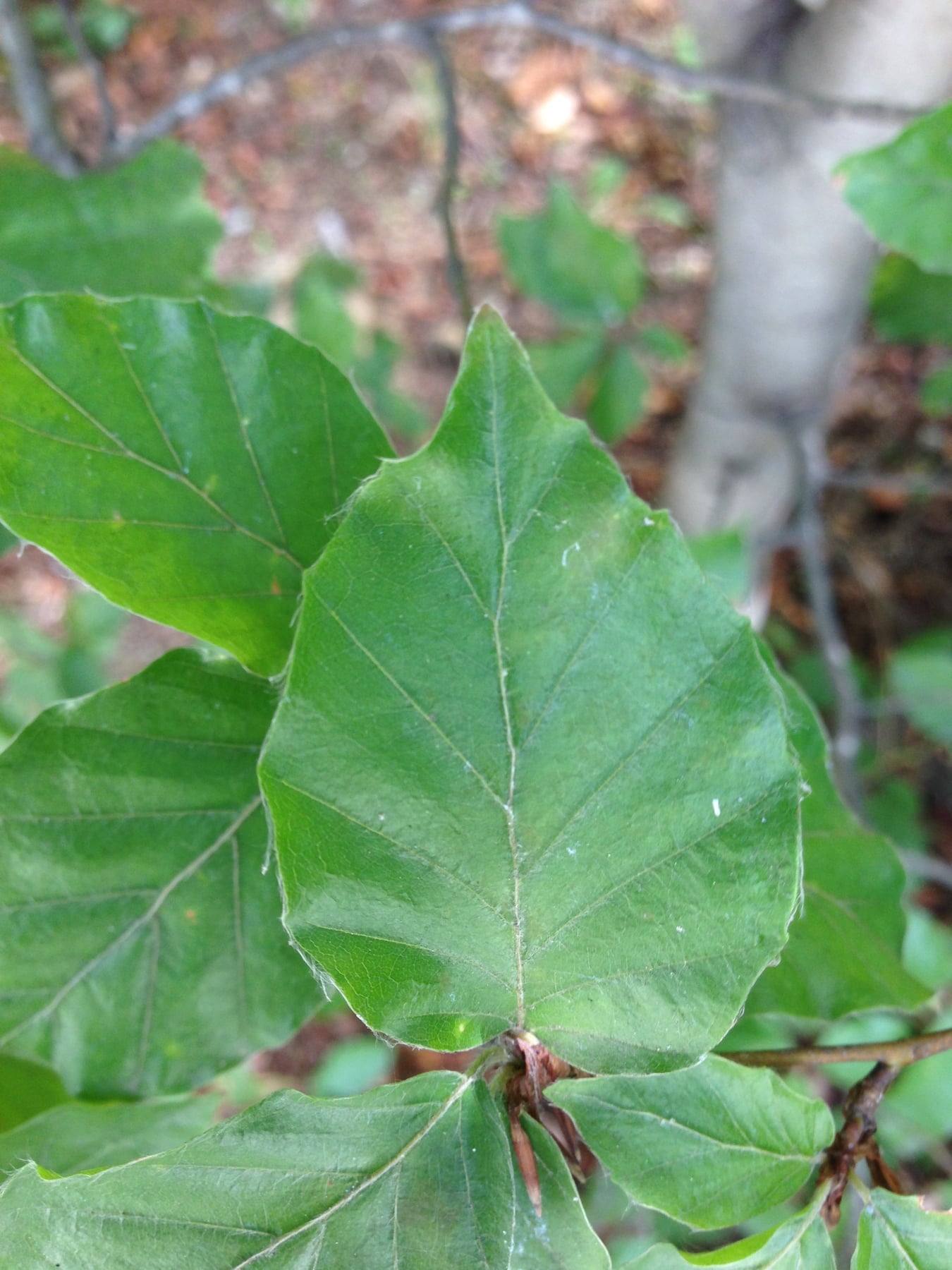
It was on its leaves that the kermes scale insect lived, an insect once harvested to produce a scarlet red dye before the arrival of Mexican cochineal. The kermes oak remains a dense bush of 2 to 4 m whereas the holm oak becomes a true tree of 10 to 20 m; on young specimens, compare mainly the leaves: regularly and densely spiny all round the margin in kermes oak, as against barely toothed or entire leaves in the mature holm oak. The acorn cup helps too: bristling with small prickly scales in kermes oak, felted and smooth in holm oak.
🍃 Leaves
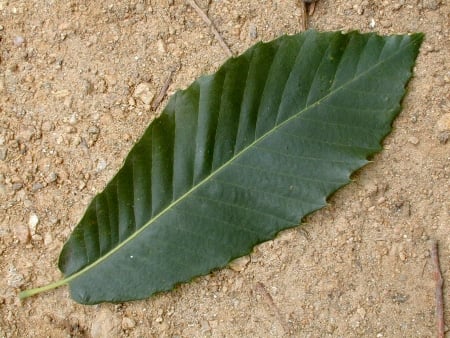
Evergreen, leathery, small, ovate, edged with regular spiny teeth recalling those of holly but smaller; underside darker than in holm oak.
🌸 Flowers
Yellowish, inconspicuous male catkins, appearing with the young shoots
🍎 Fruits
Small acorn with a cup covered in prickly scales, unlike the smooth, felted cup of the holm oak
🪵 Bark
Grey, finely fissured, often little visible beneath a very branched bushy habit from the base
🗺️ Distribution
Mediterranean rim; found in southern France as far as the Aveyron, Tarn and Drôme
🐝 Value for pollinators
Wind-pollinated, little direct value for pollinators; evergreen foliage offering winter shelter to small wildlife
✂️ Horticultural uses
Planted as a low defensive hedge in Mediterranean climates; historic host of the kermes scale insect formerly used for red dye
⚠️ Possible toxicity
No known toxicity; bitter acorns rich in tannins, non-toxic but not very palatable to humans
The kermes oak remains a dense bush of 2 to 4 m whereas the holm oak becomes a true tree of 10 to 20 m; on young specimens, compare mainly the leaves: regularly and densely spiny all round the margin in kermes oak, as against barely toothed or entire leaves in the mature holm oak. The acorn cup helps too: bristling with small prickly scales in kermes oak, felted and smooth in holm oak.