Leaf
Pierre Bonnet, Tela Botanica · CC BY-SA 2.0
Common holly
Ilex aquifolium L.
Also known as: Holly, English holly, European holly
Family: Aquifoliaceae
5 to 10 m tall, sometimes up to 15 m
Woodland understorey, hedges, often planted as an ornamental
Flowering: May – June
Full sun
Part shade
Shade
-19°C
❓ How do you recognise this plant?
The leaves on the lower part of the tree are spiny, those higher up often smooth — the tree protects the leaves within reach of grazing animals. Holly has alternate, very spiny leaves all round the margin and red fruits in winter, whereas holm oak has barely toothed leaves, typical acorns and fissured dark grey bark.
🍃 Leaves
Leathery, glossy, wavy margin bristling with spines (smooth higher up on the same tree)
🌸 Flowers
Small, white, inconspicuous, sexes separate, on different plants
🍎 Fruits
Bright red berries persisting all winter, only on female plants
🪵 Bark
Grey, smooth
🗺️ Distribution
Western and southern Europe; common in France in woodland, especially in the West and South
🐝 Value for pollinators
Small, fragrant white flowers, rich in nectar, visited by bees in spring
✂️ Horticultural uses
Widely planted as a persistent defensive hedge, as a specimen or in topiary; branches used for Christmas decoration
⚠️ Possible toxicity
Berries toxic if ingested (digestive upset), spiny leaves irritating; dangerous mainly for young children
🌱 Known cultivars
Argentea Marginata
Leaves edged with creamy white, sometimes tinged pink at bud break; one of the best-selling variegated hollies, often used as a hedge or as a decorative specimen in winter.
Ferox Argentea (silver hedgehog holly)
A curious variety with the entire leaf blade bristling with small spines (not only on the margins) and edged with creamy white; the 'hedgehog holly' is a classic of holly collections.
⚠️ Look-alike species
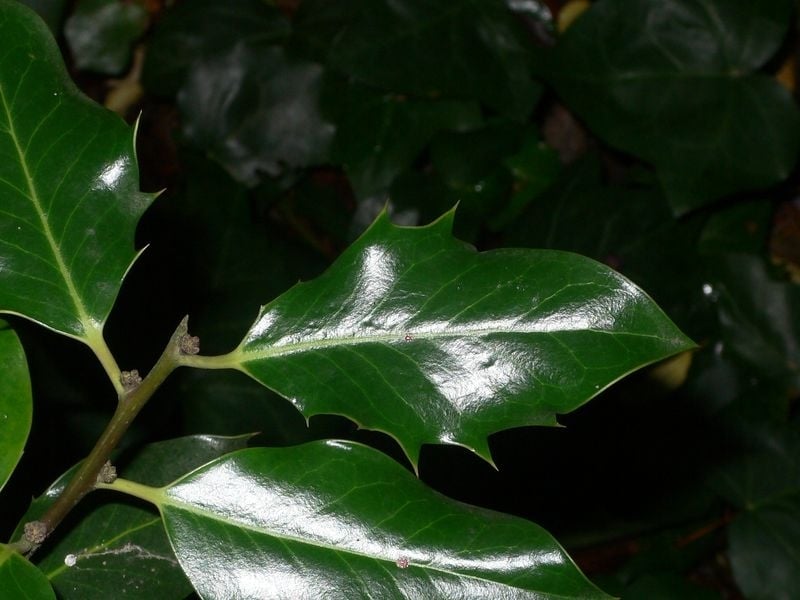
Common holly
Ilex aquifolium
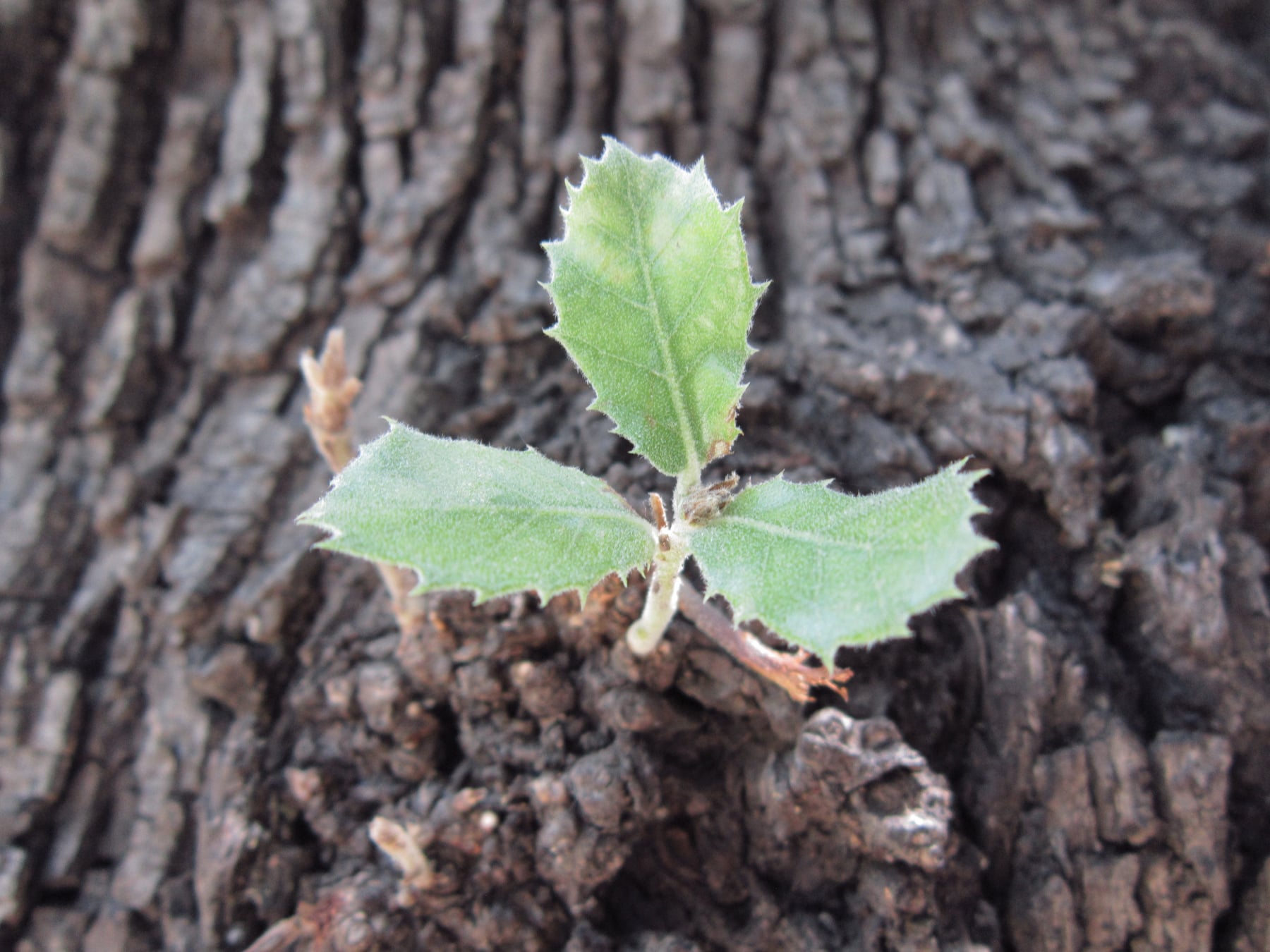
Holm oak
Quercus ilex
Holly has alternate, very spiny leaves all round the margin and red fruits in winter, whereas holm oak has barely toothed leaves, typical acorns and fissured dark grey bark.
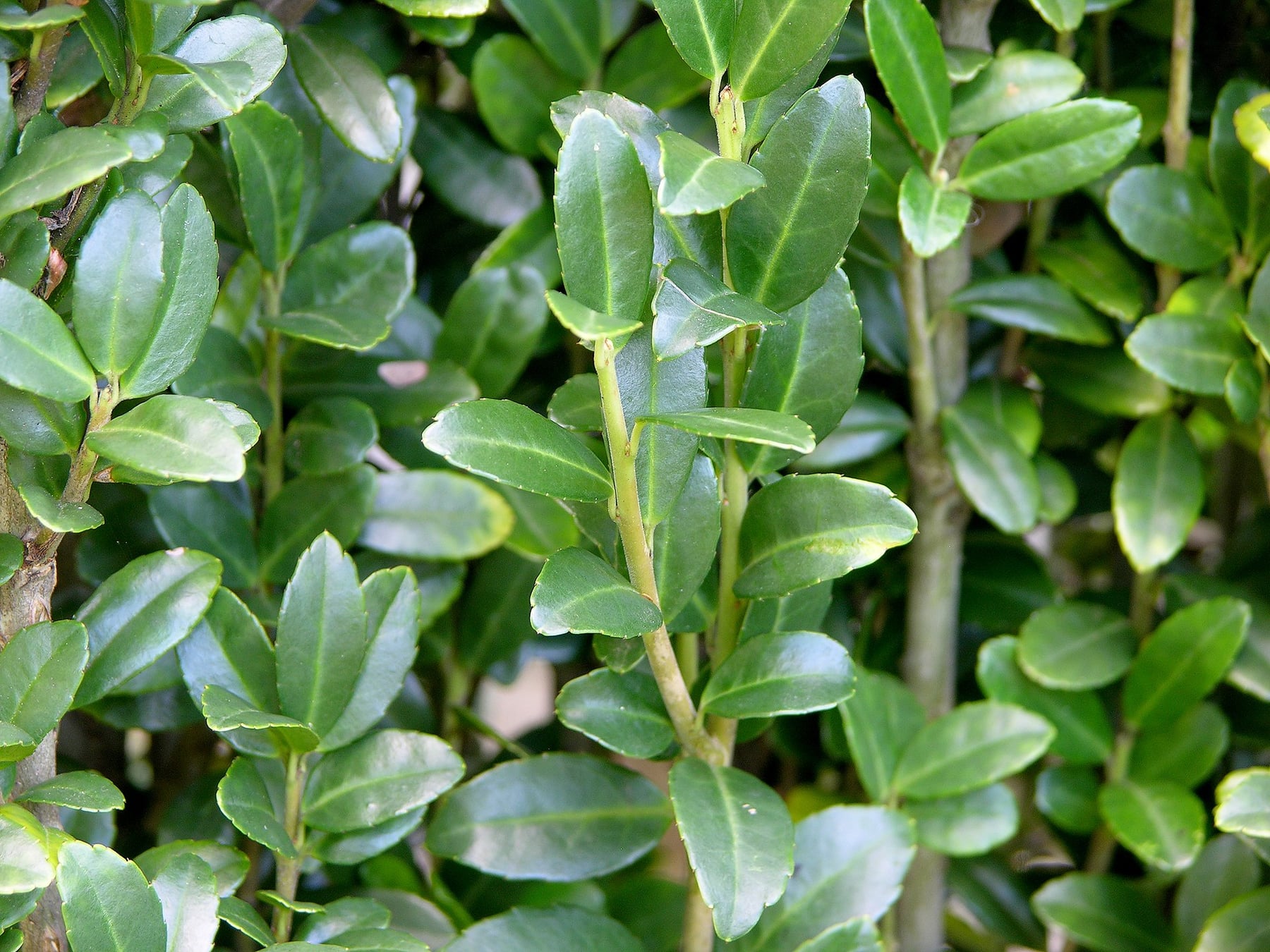
🌿 Other Aquifoliaceae to discover

ℹ️ Educational profile — do not use it to judge whether a plant is edible or safe.
🌱 This database is constantly evolving — species and information are added and corrected regularly. Spotted a mistake? Report it below.
© Floraneo — profile content is protected; reproduction without permission is prohibited. Photos remain under their own licence (see the credit shown on each photo).