Leaf
Derek Ramsey (Ram-Man), Wikimedia · CC BY-SA 3.0
Japanese holly
Ilex crenata Thunb.
Also known as: Box-leaved holly
Family: Aquifoliaceae
1 to 3 m tall (often clipped low into balls or hedges)
Clipped borders, edgings and topiary; used as a replacement for box affected by box moth and box blight
Flowering: May – June (inconspicuous flowering)
Full sun
Part shade
Hardy to about -20°C
❓ How do you recognise this plant?
Its foliage looks remarkably like that of box, being fine and non-spiny, which makes it the number one horticultural substitute since the arrival of the box tree moth in Europe. Common box has opposite leaves (two by two, facing each other on the stem) and a characteristic smell when crushed, whereas Japanese holly — despite its box-like look — has alternate, odourless leaves, which remains the surest way to tell them apart.
🍃 Leaves
Evergreen, small, ovate, finely toothed but not spiny margin, dark green
🌸 Flowers
Small, white, barely visible
🍎 Fruits
Small black berries, rare on regularly clipped plants
🪵 Bark
Slender twigs, blackish with age
🗺️ Distribution
Native to Japan, Korea and China
🐝 Value for pollinators
Inconspicuous flowering, limited interest
✂️ Horticultural uses
Increasingly replaces common box in topiary and clipped edgings, resistant to box moth
⚠️ Possible toxicity
Leaves and berries toxic if ingested (saponins), generally causing digestive upset (vomiting, diarrhoea) in pets; toxicity comparable to other hollies.
⚠️ Look-alike species
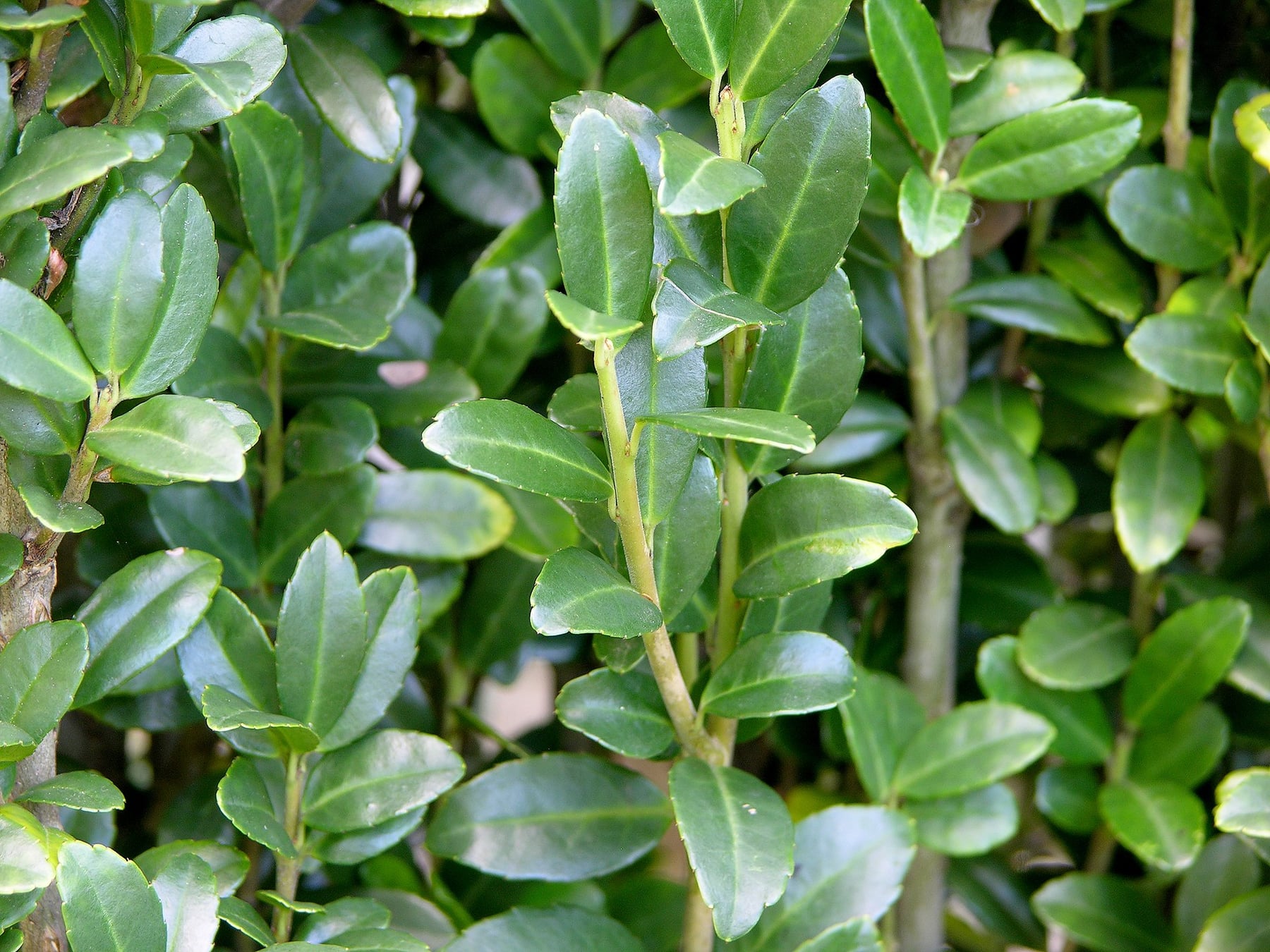
Japanese holly
Ilex crenata
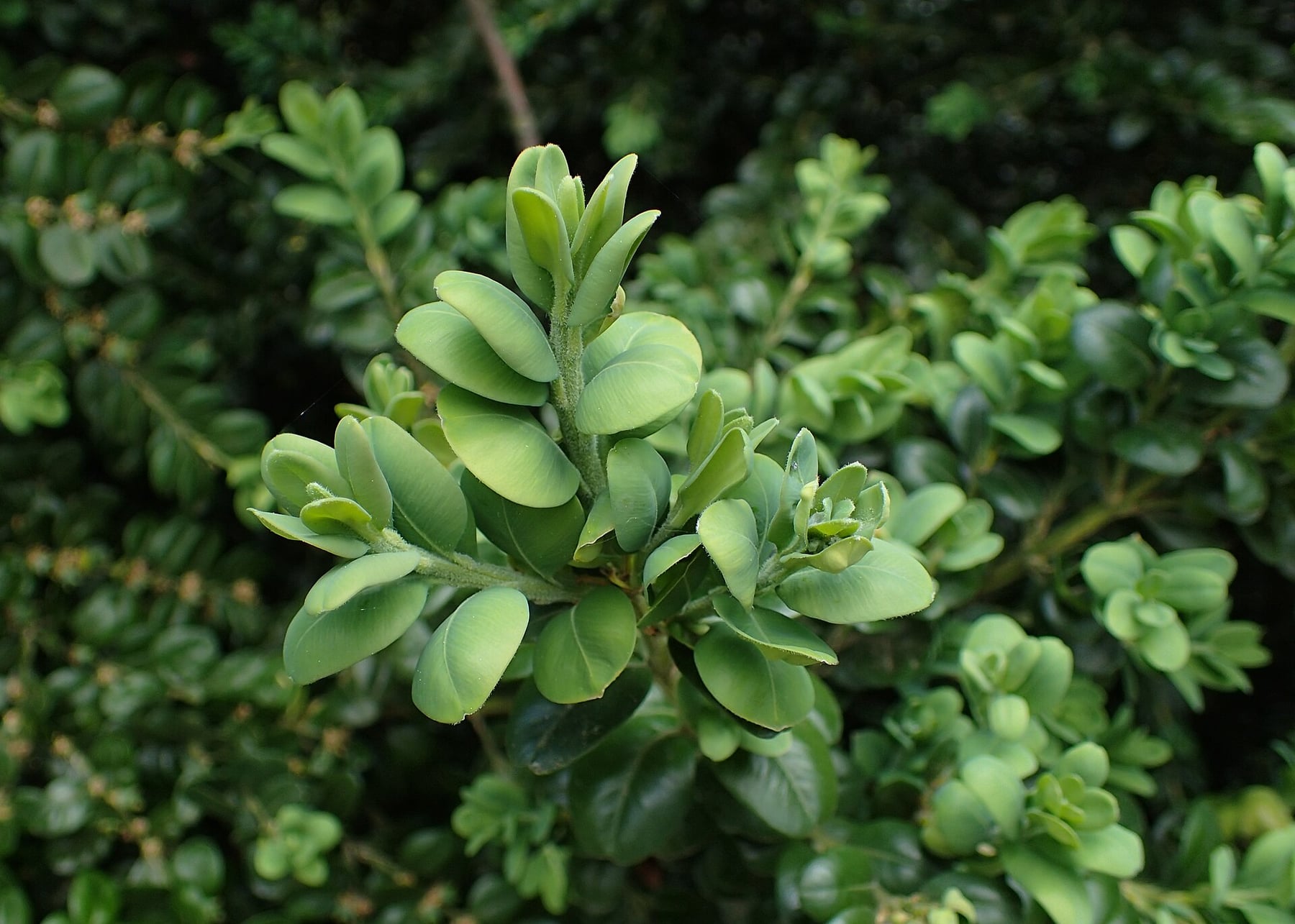
Common box
Buxus sempervirens
Common box has opposite leaves (two by two, facing each other on the stem) and a characteristic smell when crushed, whereas Japanese holly — despite its box-like look — has alternate, odourless leaves, which remains the surest way to tell them apart.
🌿 Other Aquifoliaceae to discover

ℹ️ Educational profile — do not use it to judge whether a plant is edible or safe.
🌱 This database is constantly evolving — species and information are added and corrected regularly. Spotted a mistake? Report it below.
© Floraneo — profile content is protected; reproduction without permission is prohibited. Photos remain under their own licence (see the credit shown on each photo).