Common box or Japanese holly: how to tell them apart?
Common box and Japanese holly look alike and are often mixed up. Here is how to tell them apart, feature by feature, with their photos and the details to look for.
⚡ The quick answer
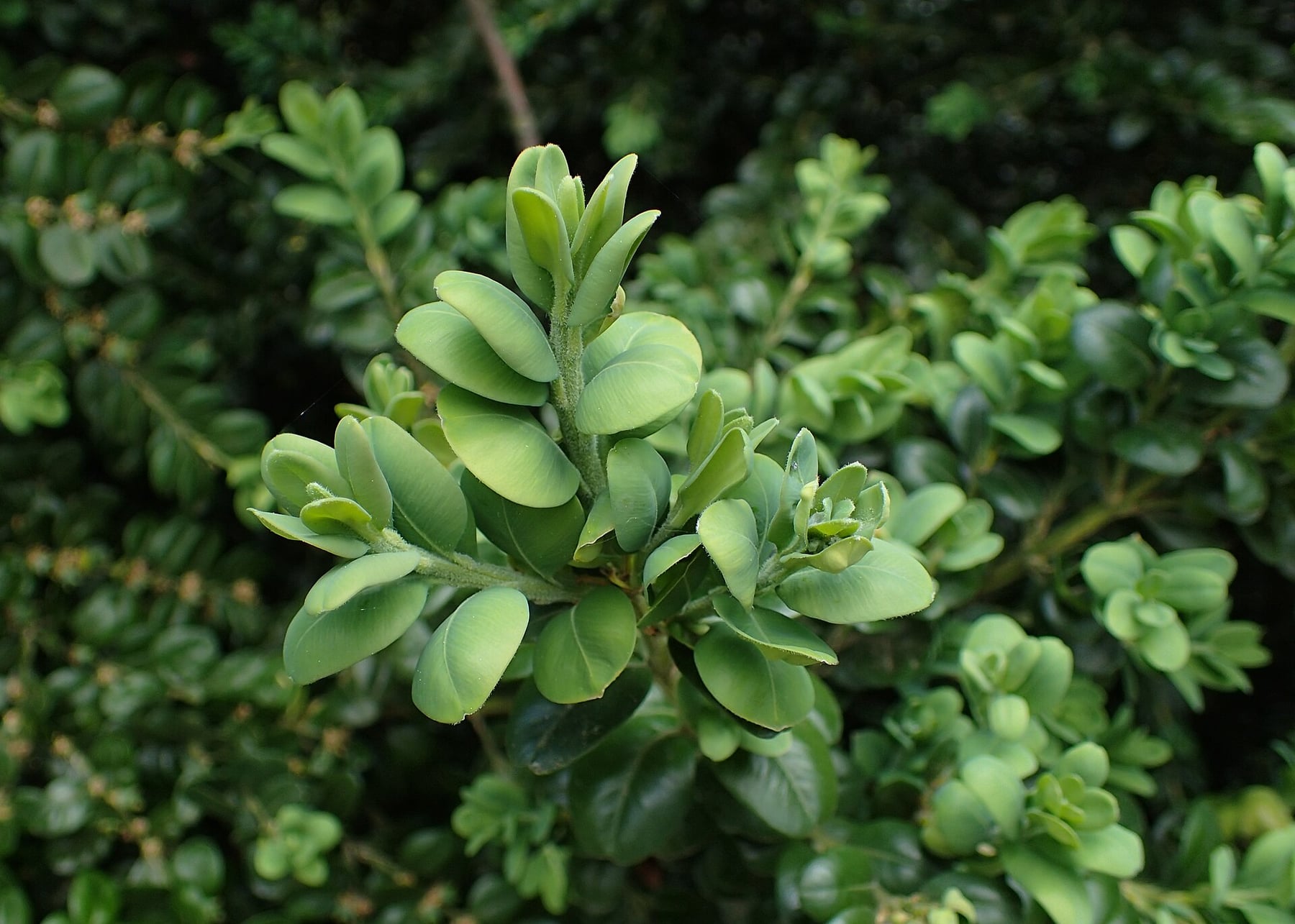
Common box
Buxus sempervirens
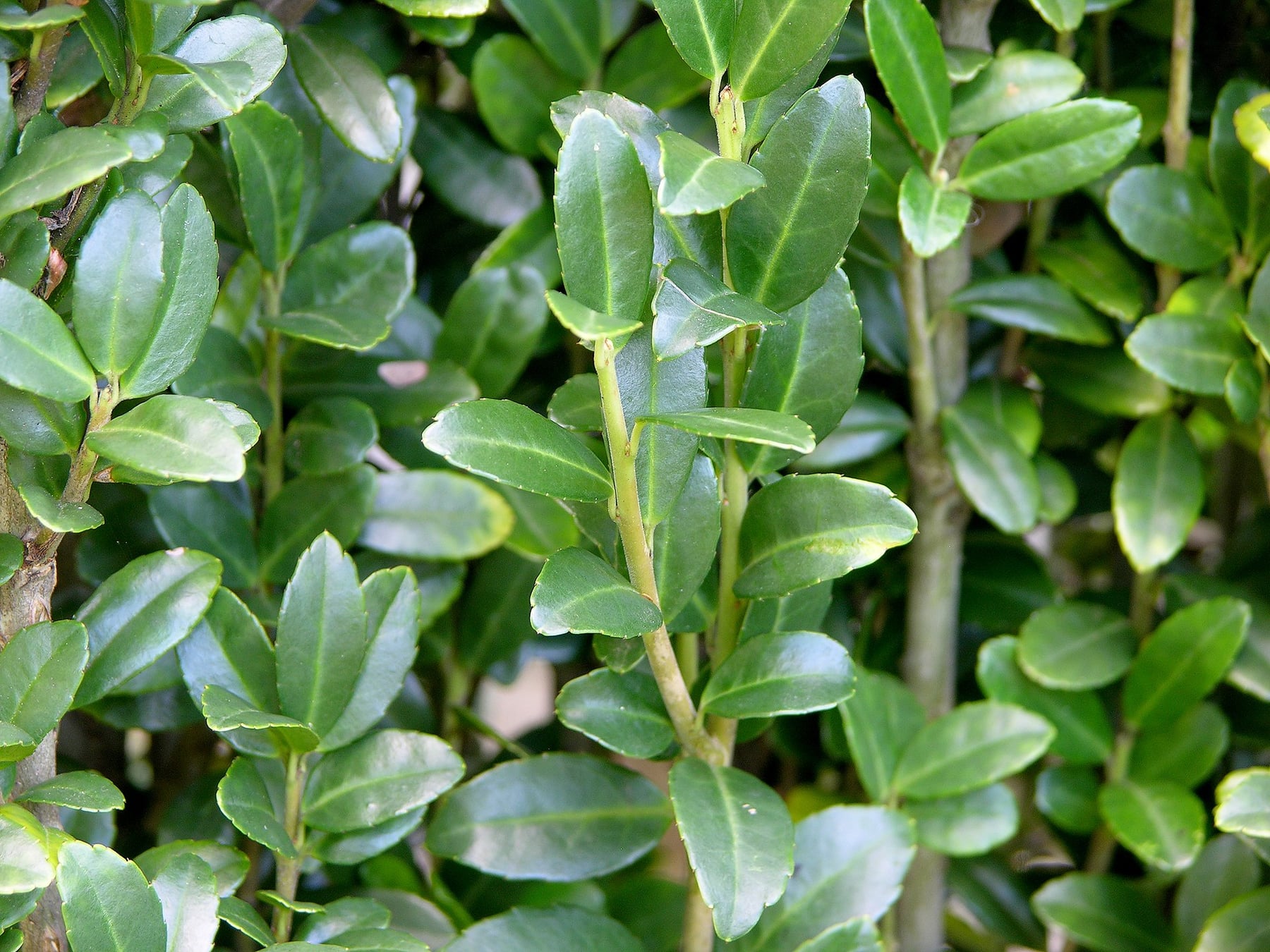
Japanese holly
Ilex crenata
Japanese holly, often planted in place of box to escape box tree moth, has alternate leaves that are odourless when crushed, whereas common box has leaves opposite in pairs and a characteristic smell when crushed.
🍃 Leaves
Small, oval, leathery, evergreen, opposite
Evergreen, small, ovate, finely toothed but not spiny margin, dark green
🌸 Flowers
Tiny, yellowish, clustered in the leaf axils
Small, white, barely visible
🍎 Fruits
Small 3-horned capsules
Small black berries, rare on regularly clipped plants
🪵 Bark
Grey, cracking into small square plates with age
Slender twigs, blackish with age
📏 Size
1 to 5 m tall, often clipped much lower
1 to 3 m tall (often clipped low into balls or hedges)
🗺️ Habitat
Limestone slopes, open woodland, widely planted as a hedge
Clipped borders, edgings and topiary; used as a replacement for box affected by box moth and box blight
⚠️ Toxicity
All parts toxic (alkaloids), causing digestive and nervous disorders if ingested. Avoid any consumption and keep clippings out of reach of animals.
Leaves and berries toxic if ingested (saponins), generally causing digestive upset (vomiting, diarrhoea) in pets; toxicity comparable to other hollies.
🔎 And from the Japanese holly side
Common box has opposite leaves (two by two, facing each other on the stem) and a characteristic smell when crushed, whereas Japanese holly — despite its box-like look — has alternate, odourless leaves, which remains the surest way to tell them apart.
🌿 Go further
Want to practise spotting these details on real photos? Floraneo offers profiles and quizzes for dozens of look-alike species.
ℹ️ Educational profile — do not use it to judge whether a plant is edible or safe.