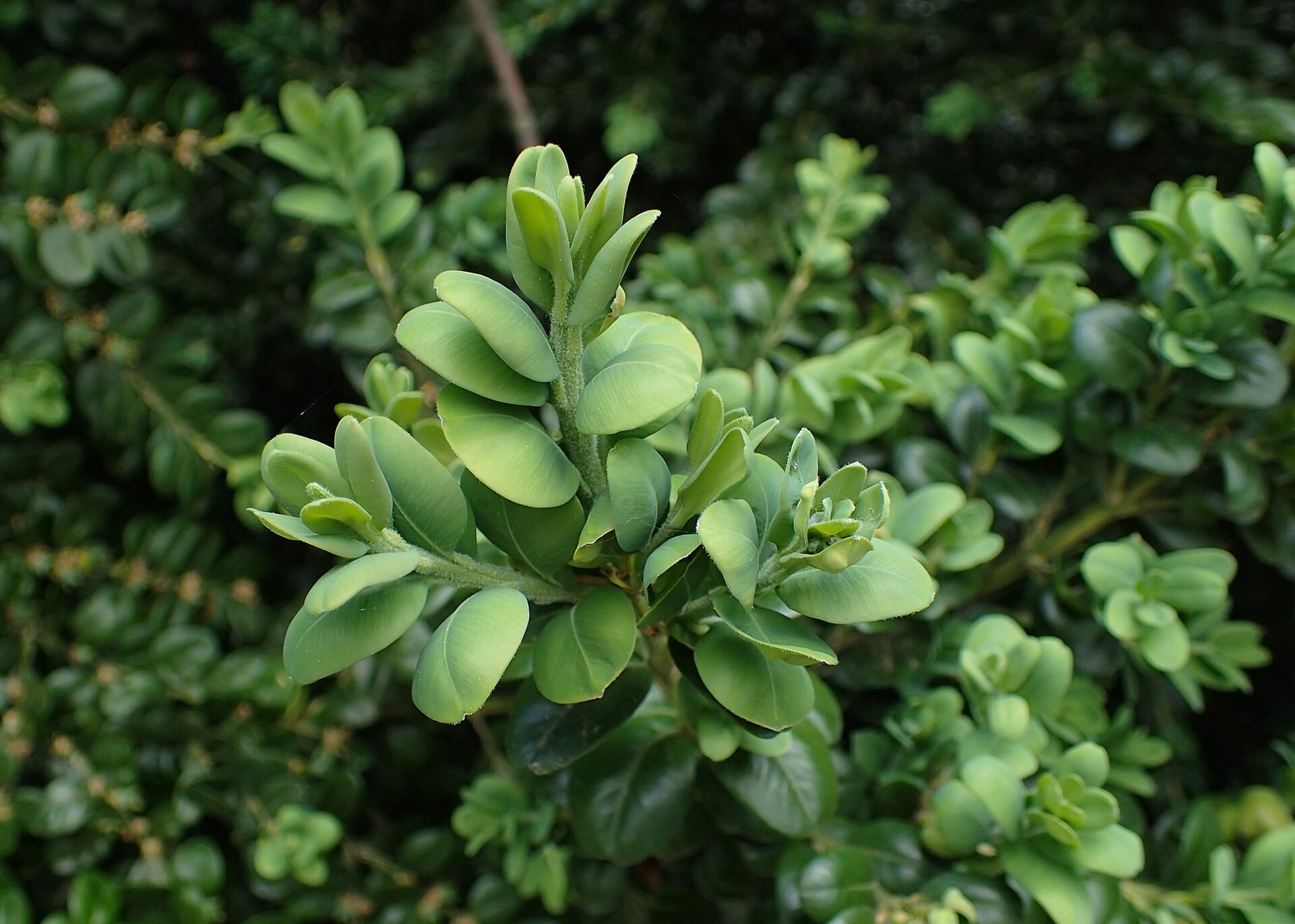
Leaf
Krzysztof Ziarnek, Kenraiz, Wikimedia · CC BY-SA 4.0
Common box
Buxus sempervirens L.
Also known as: Box, Boxwood
Family: Buxaceae
- 1 to 5 m tall, often clipped much lower
- Limestone slopes, open woodland, widely planted as a hedge
- Full sun, Part shade, Shade
- Very hardy, to -20°C
In flower from March to April
2 months❓ How do you recognise this plant?
Dense evergreen foliage with a distinctive smell when crushed — often clipped into hedges or topiary. Japanese holly, often planted in place of box to escape box tree moth, has alternate leaves that are odourless when crushed, whereas common box has leaves opposite in pairs and a characteristic smell when crushed.
Learn to recognise it
The shrubs everyone knows. This plant is in the lesson “The shrubs everyone knows”, with 11 others.
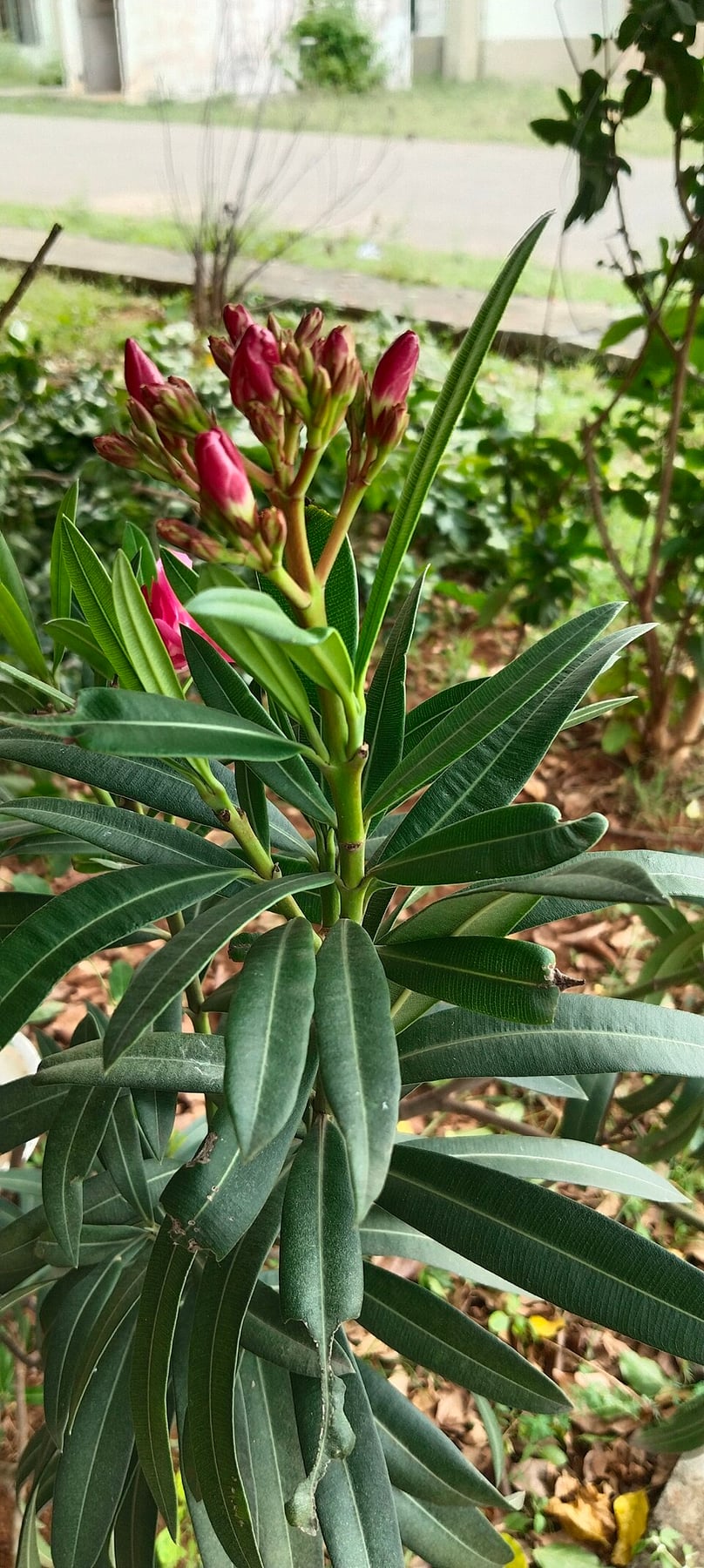
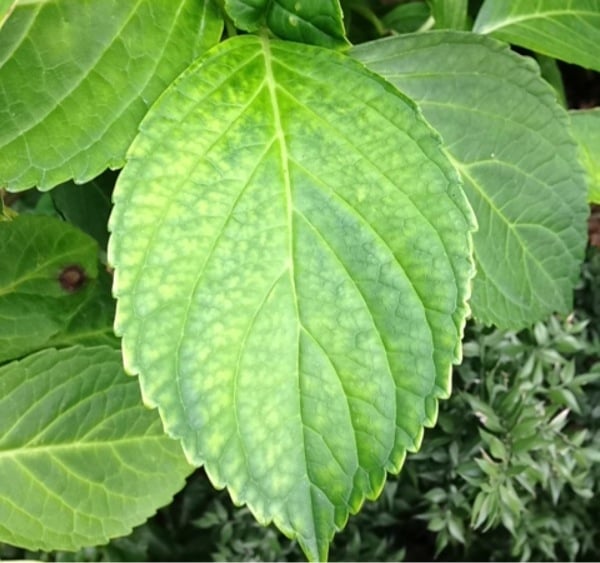
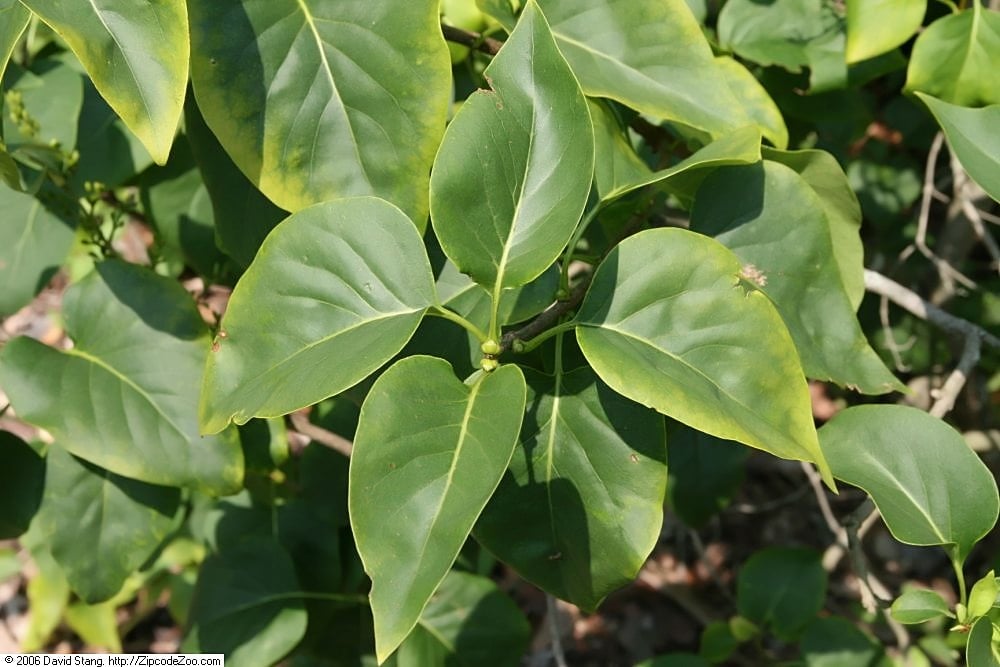
A free account is enough for this lesson.
🍃 Leaves
Small, oval, leathery, evergreen, opposite
🌸 Flowers
Tiny, yellowish, clustered in the leaf axils
🍎 Fruits
Small 3-horned capsules
🪵 Bark
Grey, cracking into small square plates with age
Distribution, pollinators, uses
🗺️ Distribution
Southern and western Europe, North Africa; common on limestone slopes, notably in garrigue and in certain valleys.
🐝 Value for pollinators
Inconspicuous but early flowering, a source of pollen for the first bees of spring.
✂️ Horticultural uses
Emblematic of topiary and clipped hedges, widely used in topiary despite box tree moth.
⚠️ Possible toxicity
All parts toxic (alkaloids), causing digestive and nervous disorders if ingested. Avoid any consumption and keep clippings out of reach of animals.
⚠️ Look-alike species
Common box
Buxus sempervirens

Japanese holly
Ilex crenata
Japanese holly, often planted in place of box to escape box tree moth, has alternate leaves that are odourless when crushed, whereas common box has leaves opposite in pairs and a characteristic smell when crushed.
🌿 Other Buxaceae to discover

ℹ️ Educational profile — do not use it to judge whether a plant is edible or safe.
🌱 This database is constantly evolving — species and information are added and corrected regularly. Spotted a mistake? Report it below.
© Floraneo — profile content is protected; reproduction without permission is prohibited. Photos remain under their own licence (see the credit shown on each photo).