Leaf
David J. Stang, Wikimedia · CC BY-SA 4.0
Japanese spurge
Pachysandra terminalis Siebold & Zucc.
Also known as: Japanese pachysandra
Family: Buxaceae
- 15 to 30 cm tall
- Woodland and shaded borders; one of the most widely used ground covers beneath trees in difficult situations
- Shade
- Hardy to about -25°C
In flower from March to April
2 months❓ How do you recognise this plant?
It is one of the few ground covers able to thrive in the dense, dry shade beneath large shallow-rooted trees, where most other perennials struggle to establish.
Learn to recognise it
Even more woodland perennials. This plant is in the lesson “Even more woodland perennials”, with 8 others.
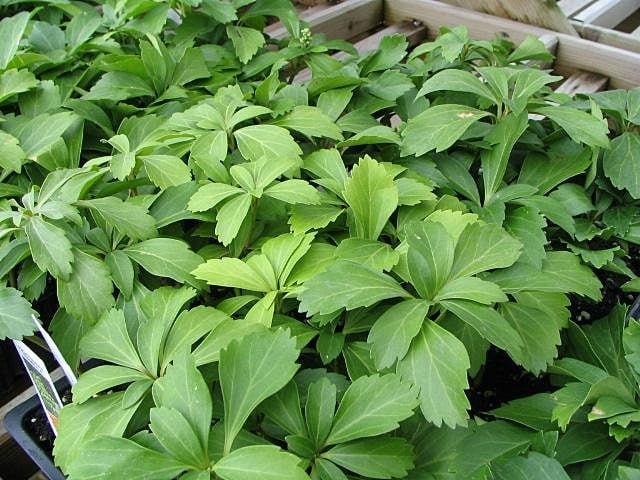
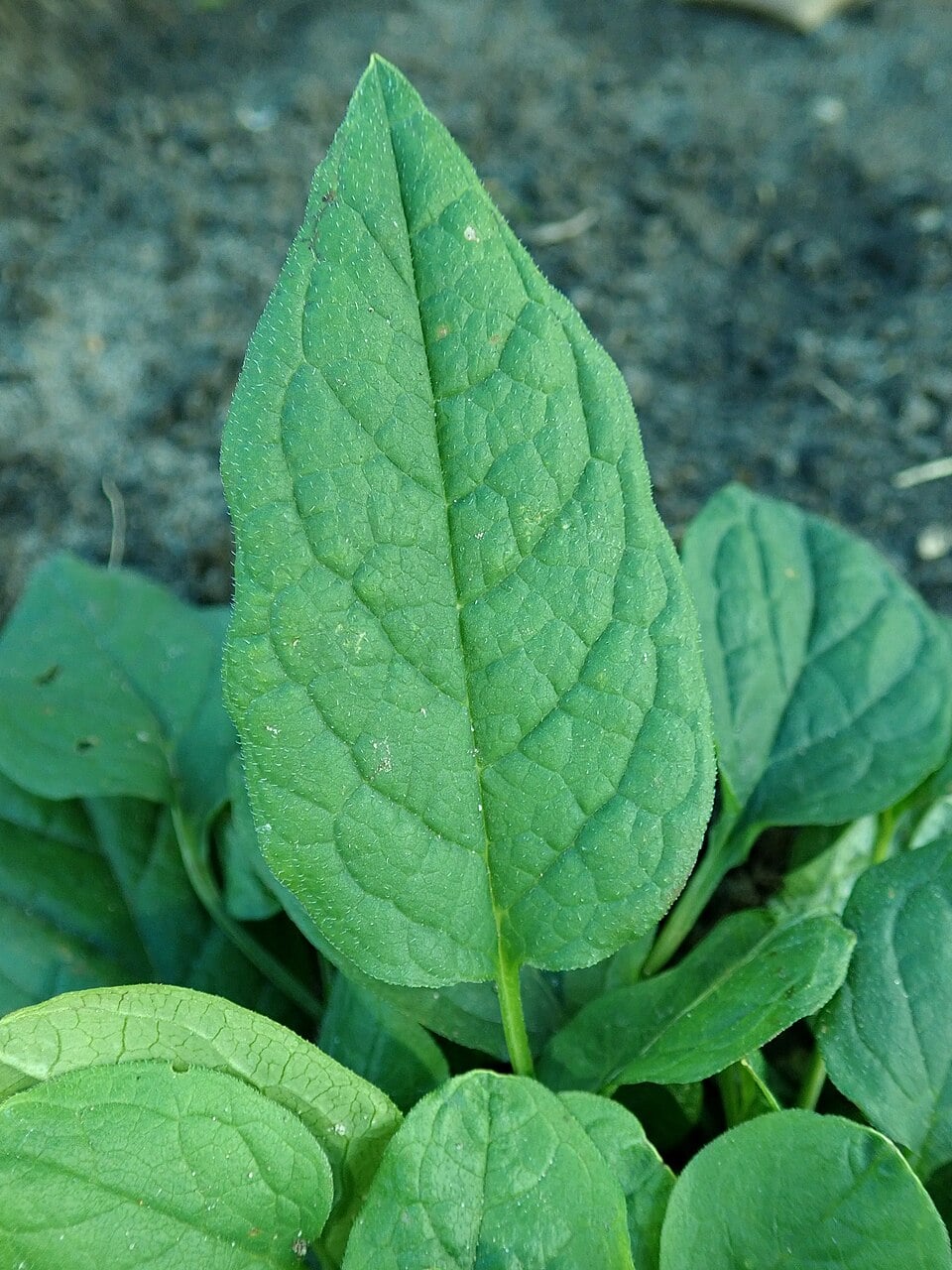
🍃 Leaves
Evergreen, ovate, toothed at the tip, arranged in a rosette at the ends of the stems, glossy green
🌸 Flowers
Small, whitish, without petals, in an upright spike in the axils of the upper leaves, barely visible
🍎 Fruits
Small white drupe, rarely produced in temperate climates
🌿 Stem and habit
Not applicable — rhizomatous herbaceous perennial with a sub-woody habit
Distribution, pollinators, uses
🗺️ Distribution
Native to Japan and China; one of the most widely grown woodland ground covers in the temperate world
🐝 Value for pollinators
Inconspicuous flowering, of little significance to pollinators
✂️ Horticultural uses
Reference ground cover for shaded, dry areas under trees, tolerates root competition
⚠️ Possible toxicity
Foliage slightly toxic if ingested by domestic animals
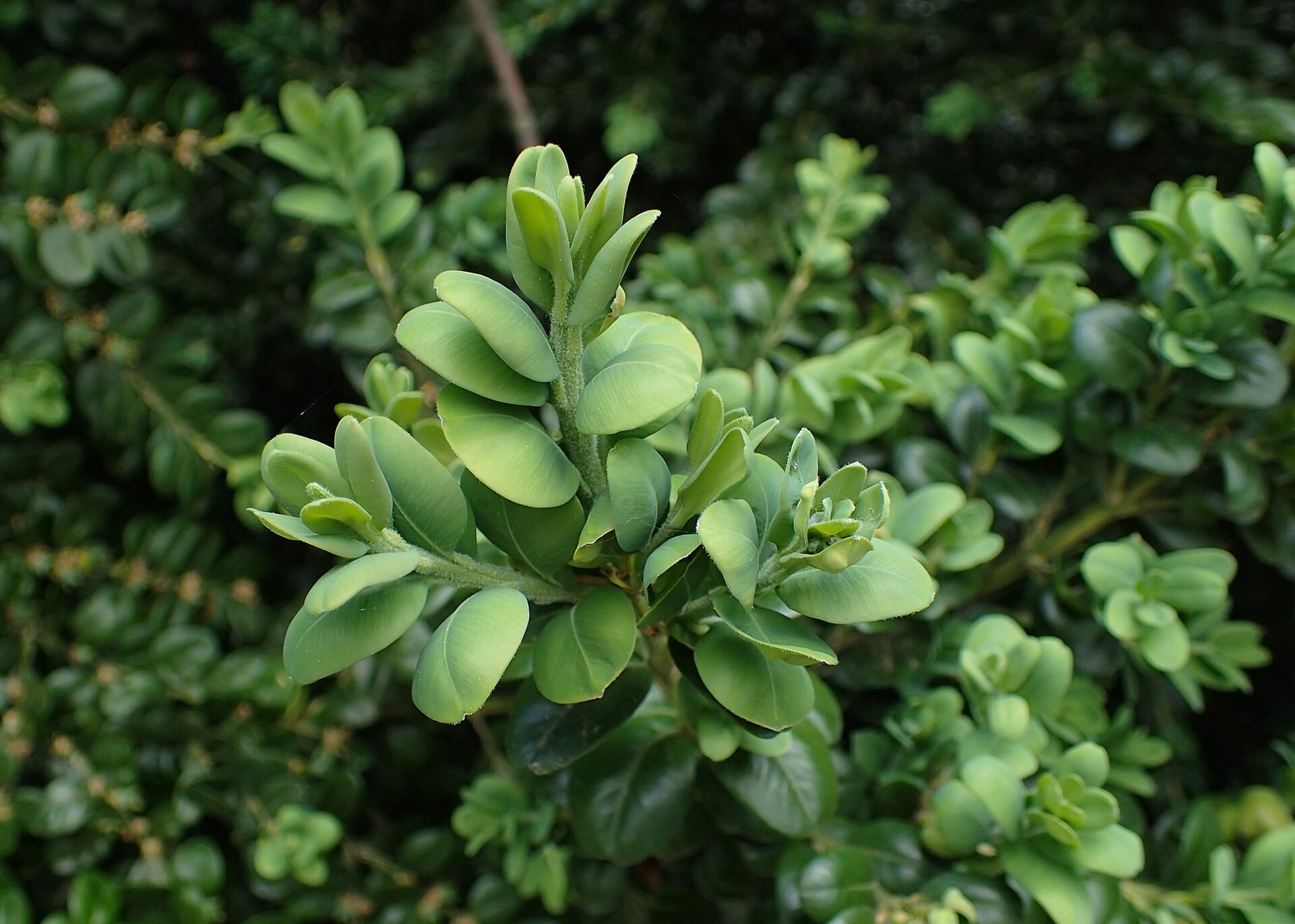
🌿 Other Buxaceae to discover

ℹ️ Educational profile — do not use it to judge whether a plant is edible or safe.
🌱 This database is constantly evolving — species and information are added and corrected regularly. Spotted a mistake? Report it below.
© Floraneo — profile content is protected; reproduction without permission is prohibited. Photos remain under their own licence (see the credit shown on each photo).