Downy oak or Sessile oak: how to tell them apart?
Downy oak and Sessile oak look alike and are often mixed up. Here is how to tell them apart, feature by feature, with their photos and the details to look for.
⚡ The quick answer
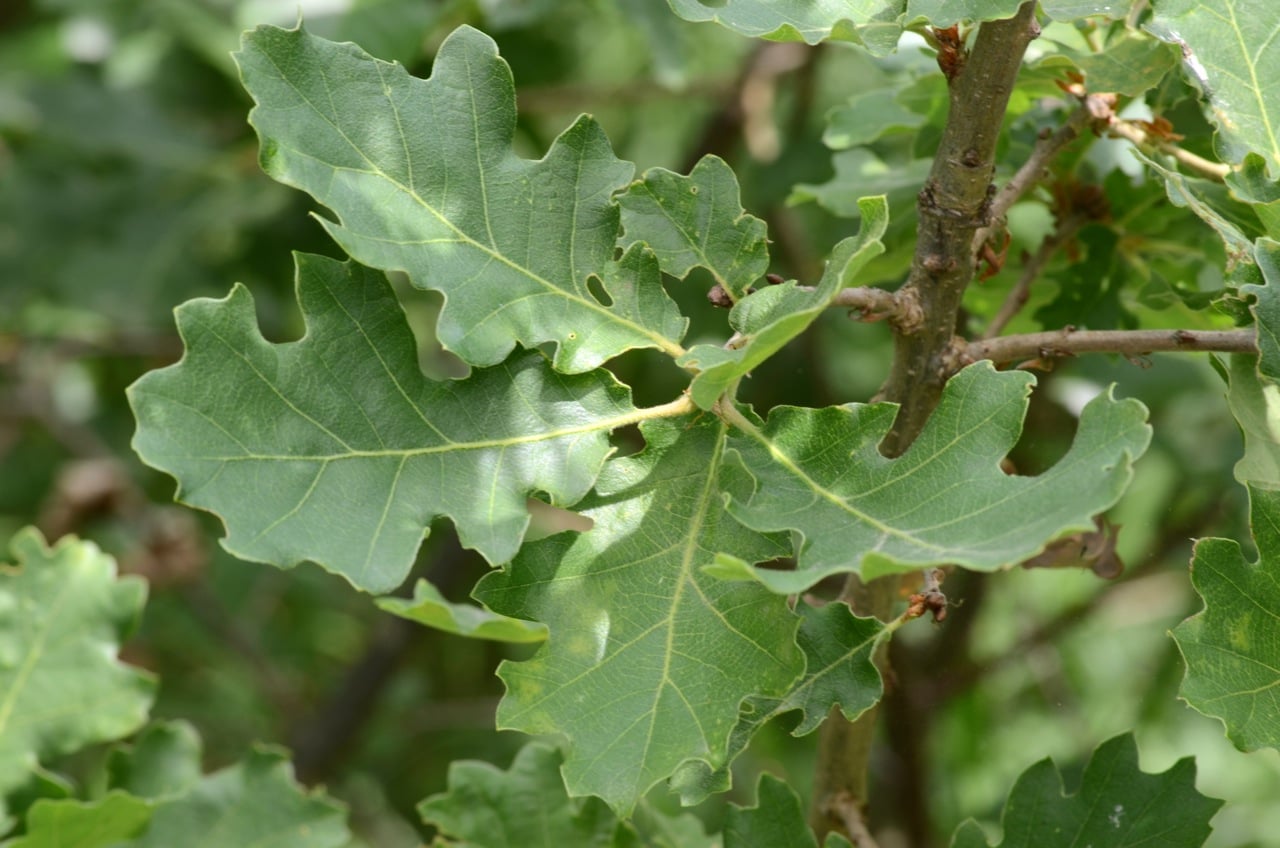
Downy oak
Quercus pubescens
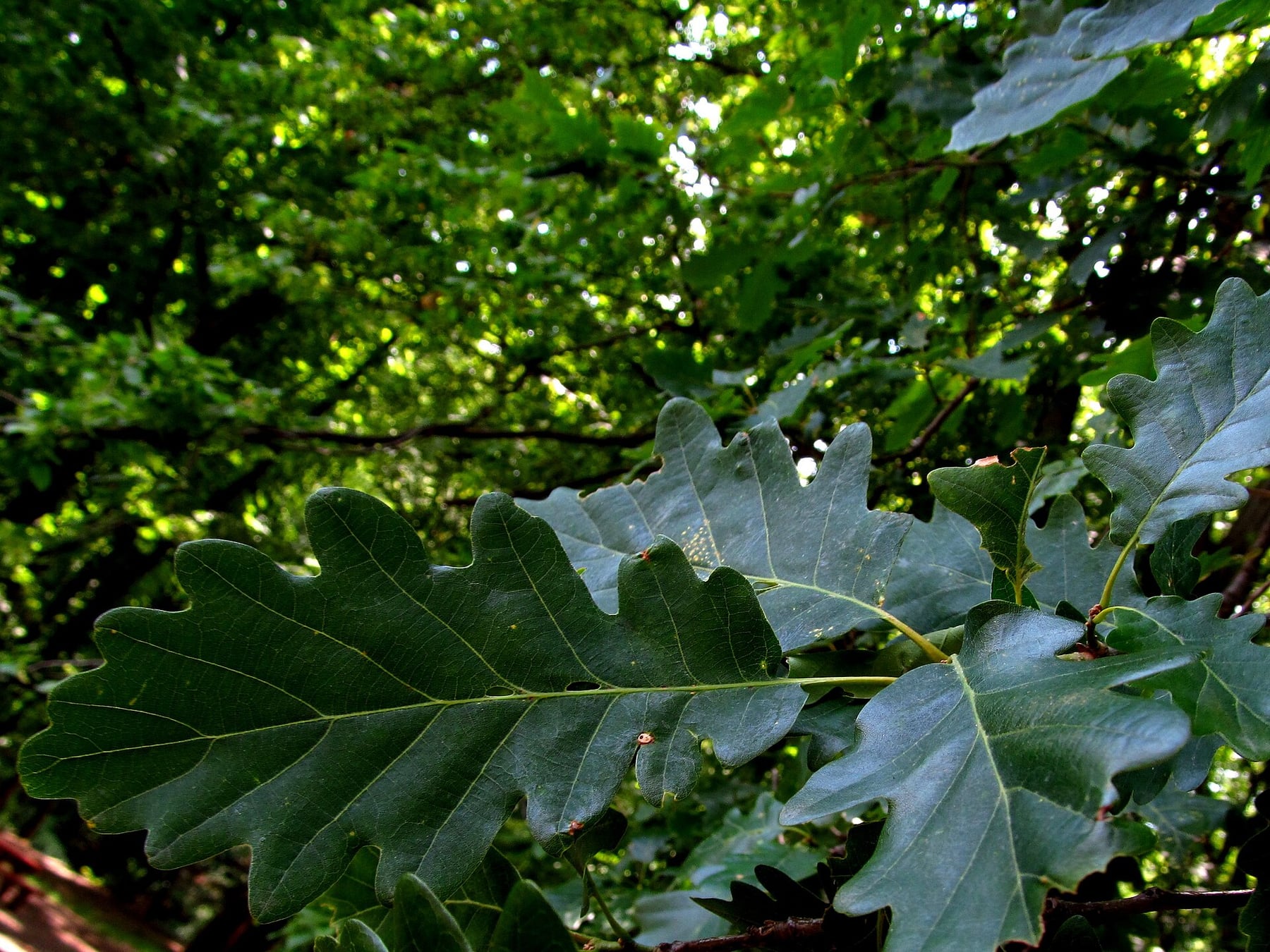
Sessile oak
Quercus petraea
The downiness of the leaves and young twigs helps to recognise the downy oak, but it can vary. Also compare the shape of the lobes, the size of the leaves and the acorns.
🍃 Leaves
Very variable but generally more or less downy, especially beneath; young twigs are often hairy.
Leaves with a clearly visible petiole, base generally wedge-shaped or rounded without large auricles; rounded lobes.
🌸 Flowers
Inconspicuous catkins
Inconspicuous catkins
🍎 Fruits
Small, shortly stalked acorns
Acorns without a peduncle, attached directly to the twig
🪵 Bark
Grey, fissured into small plates
Grey, fissured, more regular than that of pedunculate oak
📏 Size
10 to 20 m tall
25 to 35 m tall
🗺️ Habitat
Dry, calcareous hillsides, southern regions
Lowland and hillside forests, drier soils than pedunculate oak
⚠️ Toxicity
Acorns rich in tannins, toxic in large quantity to some domestic animals
Acorns rich in tannins, toxic in large quantity to some domestic animals; harmless on contact
🔎 And from the Sessile oak side
Sessile oak has hairless leaves without down, whereas downy oak has leaves and young twigs covered with a fine down, hence its name.
🌿 Go further
Want to practise spotting these details on real photos? Floraneo offers profiles and quizzes for dozens of look-alike species.
ℹ️ Educational profile — do not use it to judge whether a plant is edible or safe.