English oak or Sessile oak: how to tell them apart?
The pedunculate oak (Quercus robur) and the sessile oak (Quercus petraea) are the two most common oaks in France, and they look similar enough to fool even a trained eye. Good news: a single detail is enough to tell them apart for certain, as long as you look in the right place.
⚡ The quick answer
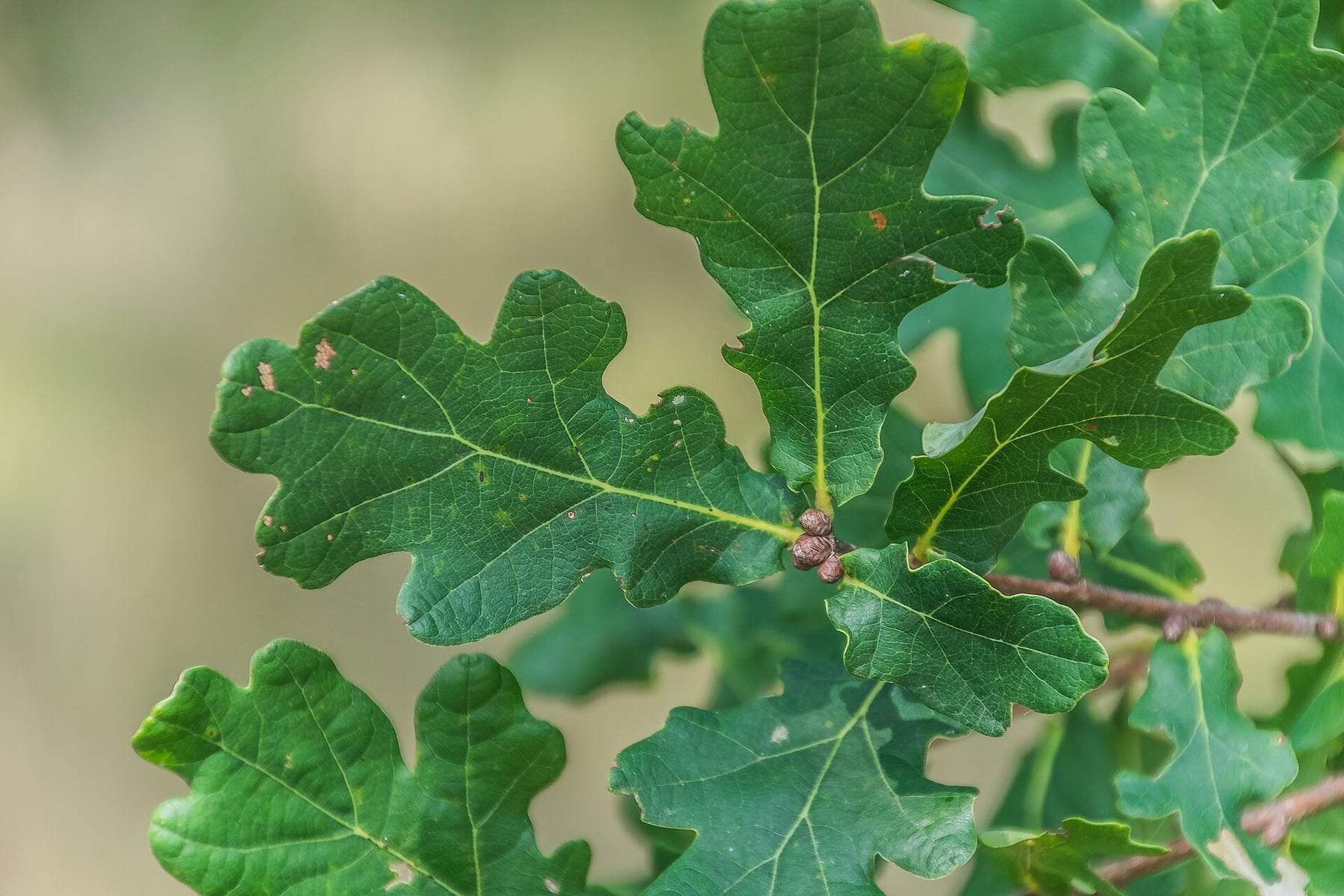
English oak
Quercus robur
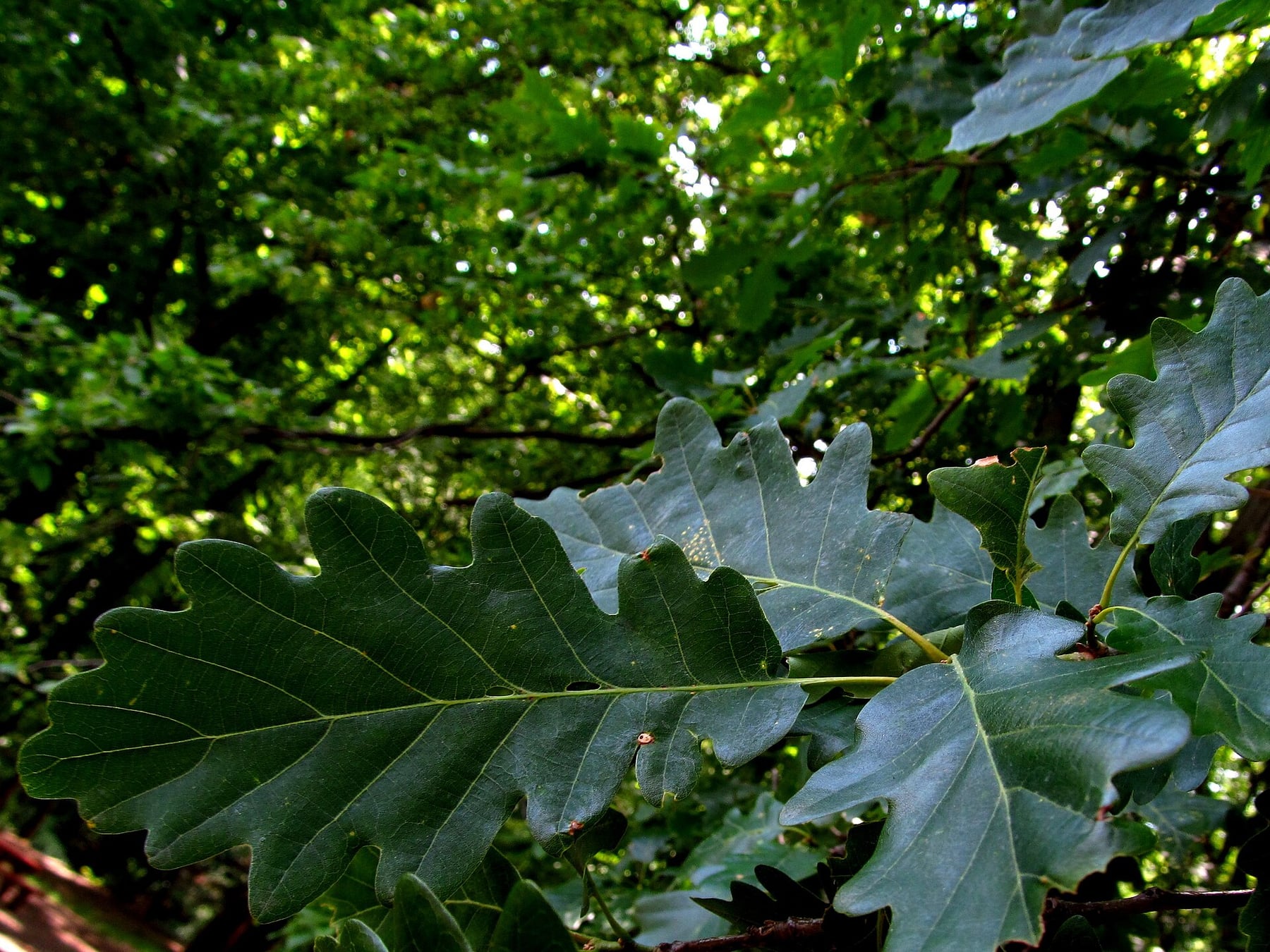
Sessile oak
Quercus petraea
Pedunculate oak bears its acorns on a long peduncle but has leaves almost without petiole; in sessile oak it is the reverse — the acorns sit directly on the twig, without a peduncle, while the leaves have a real petiole.
🍃 Leaves
Rounded lobes, auricled base, almost without petiole
Leaves with a clearly visible petiole, base generally wedge-shaped or rounded without large auricles; rounded lobes.
🌸 Flowers
Inconspicuous catkins
Inconspicuous catkins
🍎 Fruits
Acorns borne on a long peduncle
Acorns without a peduncle, attached directly to the twig
🪵 Bark
Grey, thick, deeply fissured with age
Grey, fissured, more regular than that of pedunculate oak
📏 Size
25 to 35 m tall, sometimes more
25 to 35 m tall
🗺️ Habitat
Lowland forests, deep, moist soils
Lowland and hillside forests, drier soils than pedunculate oak
⚠️ Toxicity
Acorns rich in tannins, toxic to many domestic animals (horses, cattle) in large quantity; harmless on contact. Do not present the acorn as a safe food without suitable preparation.
Acorns rich in tannins, toxic in large quantity to some domestic animals; harmless on contact
🤔 Why they get mixed up
Both have similarly shaped lobed leaves, often grow in the same forests, and can even hybridise naturally — intermediate individuals really do exist, so an occasional doubt is normal, even for a botanist.
🌿 Go further
Want to practise spotting these details on real photos? Floraneo offers profiles and quizzes for dozens of look-alike species.
ℹ️ Educational profile — do not use it to judge whether a plant is edible or safe.