Leaf
Alain Bigou, Tela Botanica · CC BY-SA 2.0
Telling oaks apart ›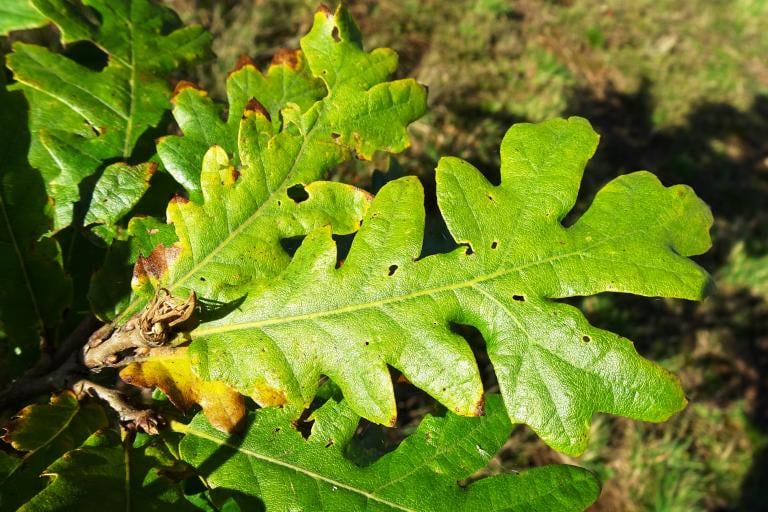
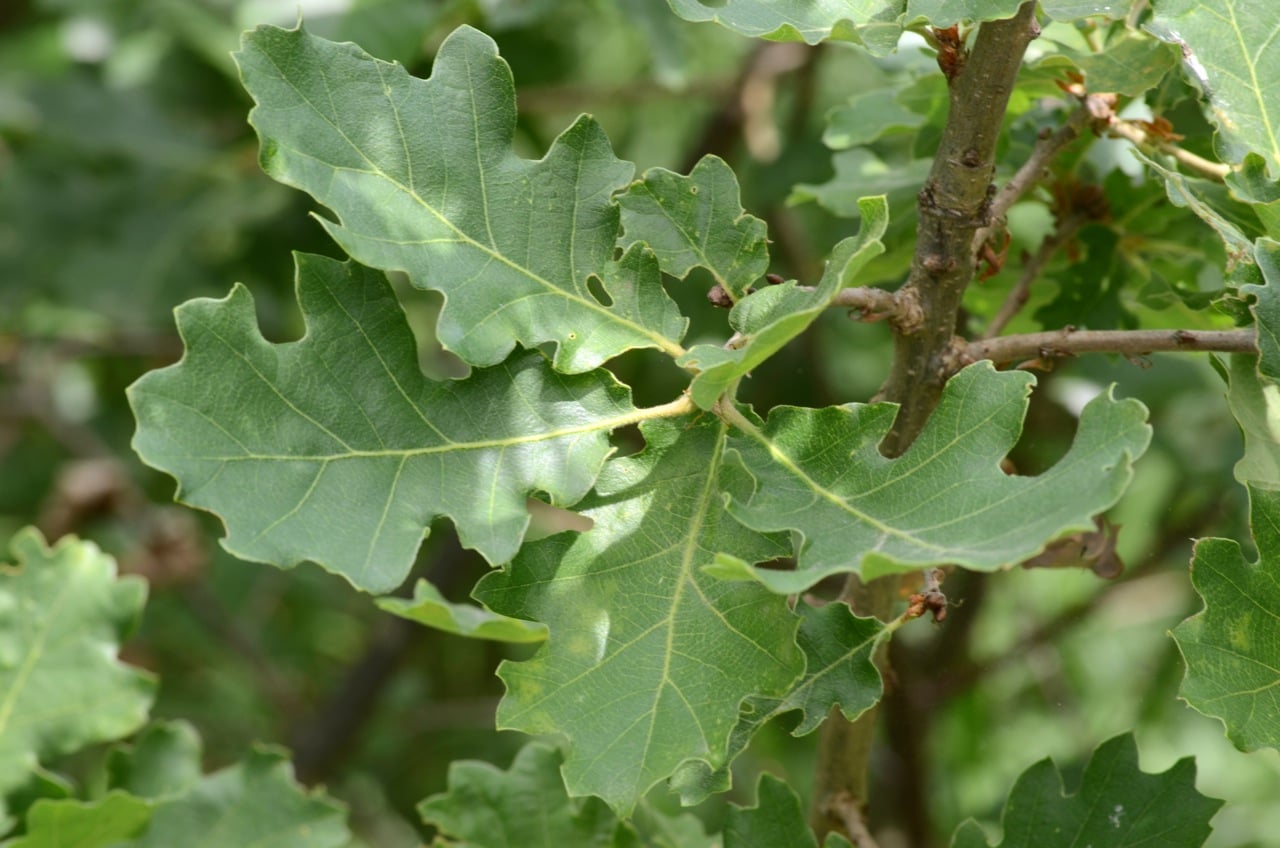 See the full comparison →
- 25 to 35 m tall
- Parks, large gardens, roadsides and woodland edges, sometimes self-sown; fairly deep, mostly acid or neutral soils, tolerates heat well
- Full sun
- Very hardy, to -25°C
In flower from April to May
2 months❓ How do you recognise this plant?
Its acorns are capped with a cup bristling with long, thin, curled scales, like a tousled head of hair: that is where its French name, "hairy oak", comes from. Turkey oak has narrow pointed lobes, a cup bristling with long curled scales and thread-like persistent stipules near the buds; downy oak, which is native, has more rounded lobes and a cup with small flattened scales, with very downy young twigs and leaves.
🍃 Leaves
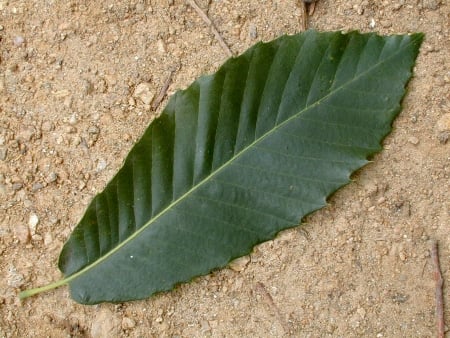
Deciduous, often kept dry on the tree for part of the winter, oblong and 8 to 14 cm long, with narrow, triangular, pointed lobes that are irregular and deeply cut; rough above, greyish and finely hairy beneath; thread-like stipules that persist near the buds
🌸 Flowers
Long hanging yellow-green male catkins; very discreet female flowers in the leaf axils
🍎 Fruits
Acorns 2 to 4 cm, capped with a large cup bristling with long, thin, curled scales; they take about eighteen months to ripen
🪵 Bark
Dark grey, deeply fissured into broad ridges whose cracks show orange to pink glints
Distribution, pollinators, uses
🗺️ Distribution
Native to southern and south-eastern Europe (Italy, the Balkans) and Asia Minor; planted in France as a park tree for several centuries
🐝 Value for pollinators
Wind-pollinated; oaks host a great many insects, including small wasps that form galls on its catkins
✂️ Horticultural uses
Large ornamental tree that grows fairly fast and withstands heat and drought; timber less prized than that of native oaks
⚠️ Possible toxicity
Leaves and acorns rich in tannins, toxic to livestock (horses, cattle) if eaten in large quantities
⚠️ Look-alike species
Turkey oak
Quercus cerris
Downy oak
Quercus pubescens
Turkey oak has narrow pointed lobes, a cup bristling with long curled scales and thread-like persistent stipules near the buds; downy oak, which is native, has more rounded lobes and a cup with small flattened scales, with very downy young twigs and leaves.
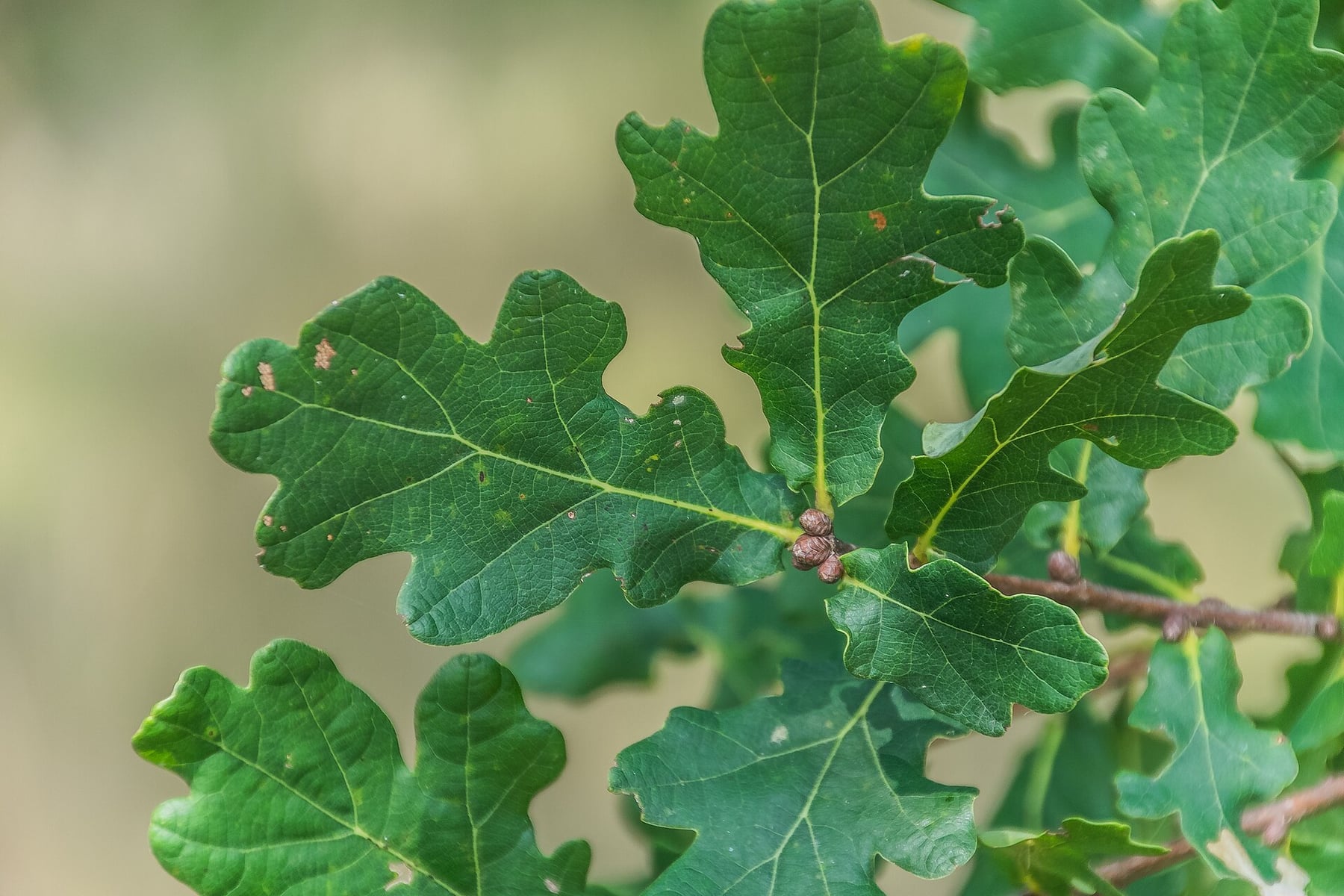
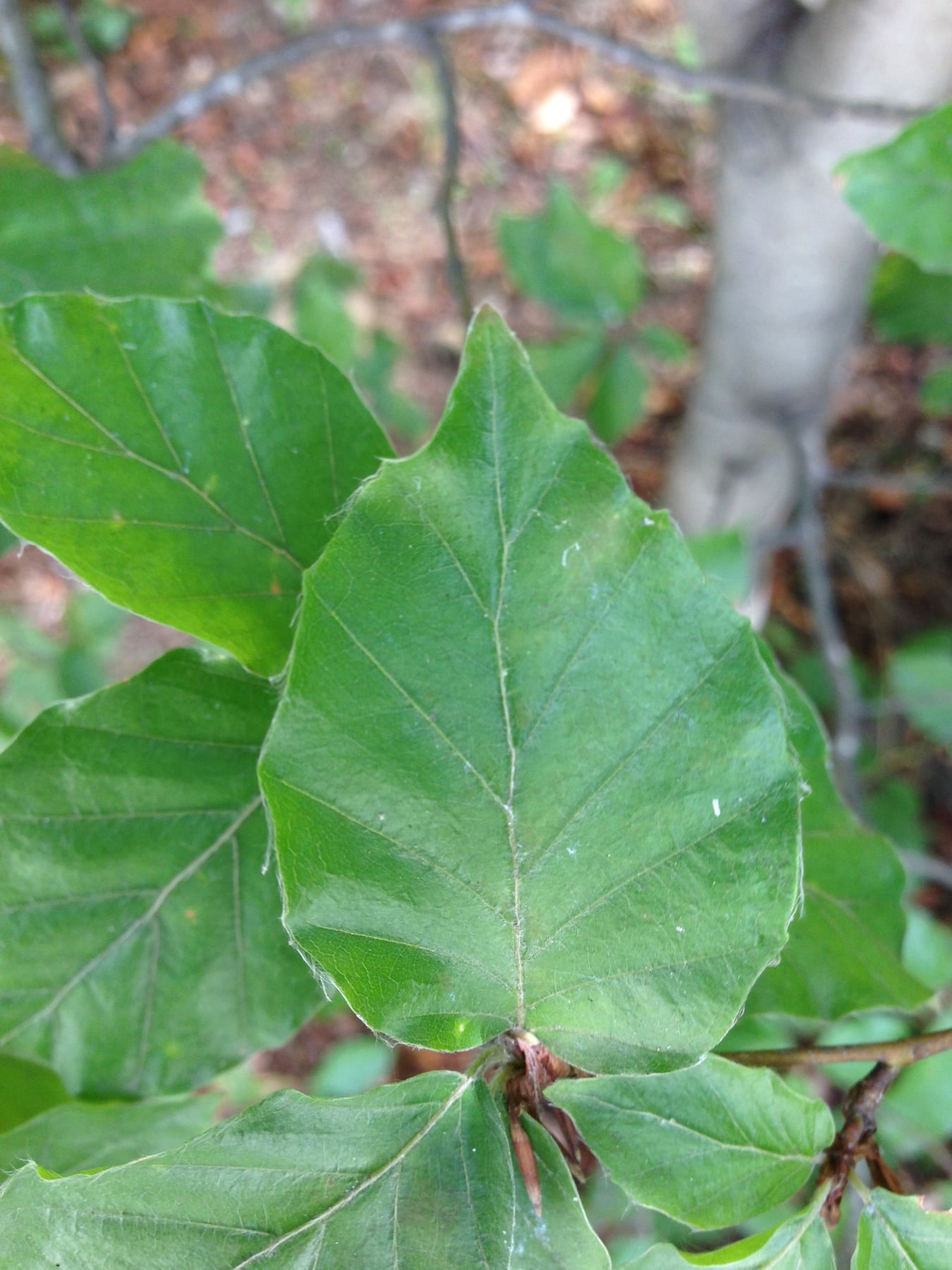
🌿 Other Fagaceae to discover
ℹ️ Educational profile — do not use it to judge whether a plant is edible or safe.
🌱 This database is constantly evolving — species and information are added and corrected regularly. Spotted a mistake? Report it below.
© Floraneo — profile content is protected; reproduction without permission is prohibited. Photos remain under their own licence (see the credit shown on each photo).