Leaf
Reid Hardin, iNaturalist · CC BY
Telling oaks apart ›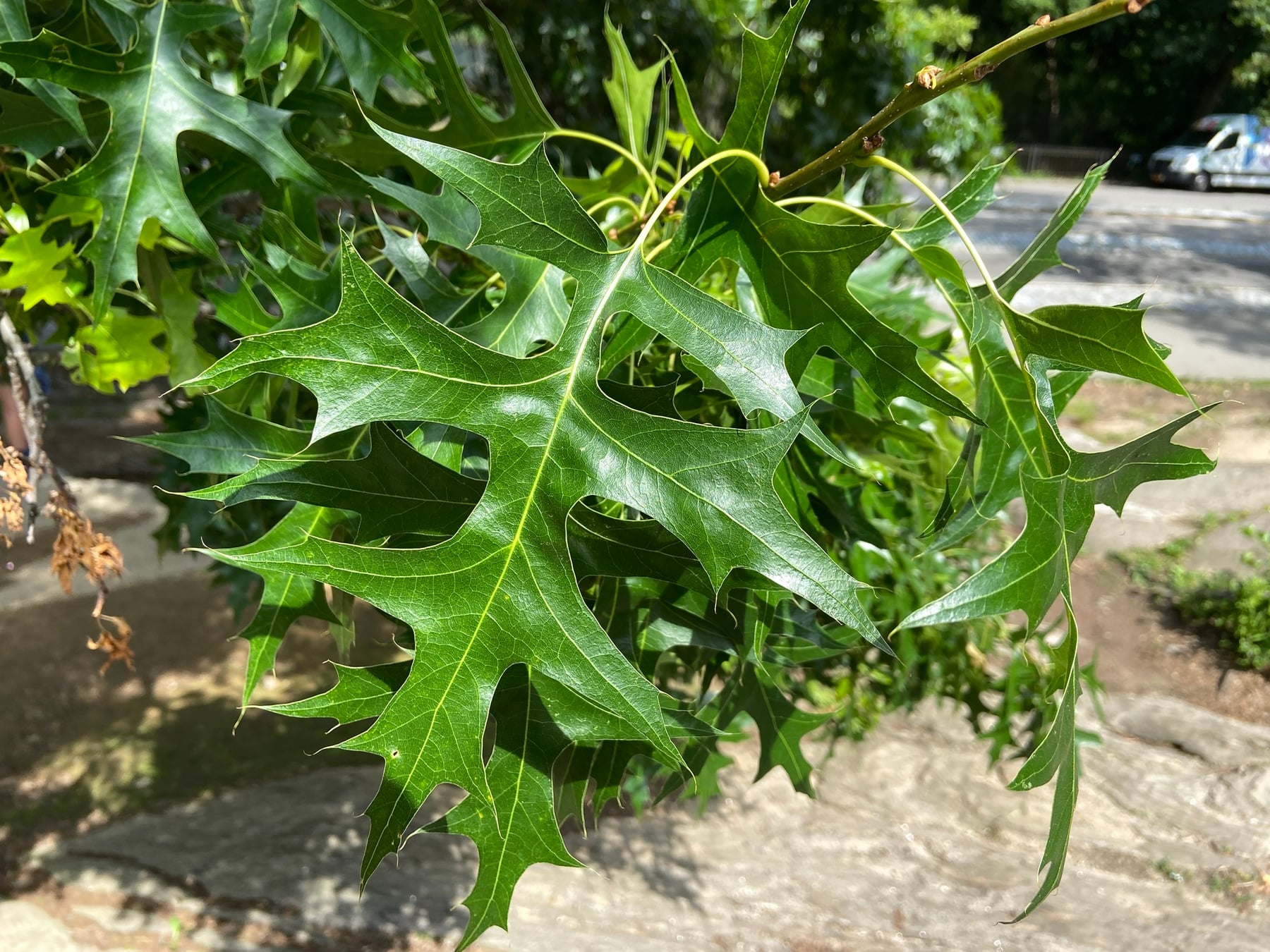
 See the full comparison →
- 20 to 25 m tall
- Parks, avenues and large gardens; native to eastern North America, where it grows on damp soils
- Full sun
- Very hardy, to -30°C
In flower from April to May
2 months❓ How do you recognise this plant?
Its lower branches droop, the middle ones spread horizontally and the upper ones point up: a very recognisable conical outline, even from afar. Pin oak has leaves with very deep, rounded sinuses, small round acorns 1 cm across and drooping lower branches; red oak has leaves with less deeply cut lobes, large acorns 2 cm across with a wide flat cup and spreading lower branches.
🍃 Leaves
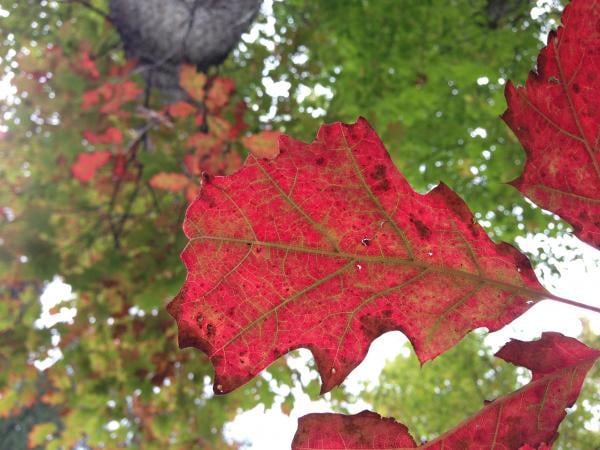
Alternate, 8 to 15 cm, cut into 5 to 7 pointed lobes separated by deep, rounded sinuses, glossy, scarlet in autumn
🌸 Flowers
Hanging yellow-green male catkins; small discreet female flowers
🍎 Fruits
Small round acorns 1 cm across, with a shallow saucer-shaped cup, ripening in the second year
🪵 Bark
Grey-brown, smooth, then slightly cracked
Distribution, pollinators, uses
🗺️ Distribution
Eastern North America; planted in Europe
🐝 Value for pollinators
Wind-pollinated; acorns eaten by jays, ducks and rodents
✂️ Horticultural uses
Ornamental tree with fine autumn colour that tolerates heavy, damp soils; prone to chlorosis on limy soils
⚠️ Possible toxicity
Leaves and acorns rich in tannins, toxic in large quantities to livestock
⚠️ Look-alike species
Pin oak
Quercus palustris
Northern red oak
Quercus rubra
Pin oak has leaves with very deep, rounded sinuses, small round acorns 1 cm across and drooping lower branches; red oak has leaves with less deeply cut lobes, large acorns 2 cm across with a wide flat cup and spreading lower branches.
🌿 Other Fagaceae to discover
ℹ️ Educational profile — do not use it to judge whether a plant is edible or safe.
🌱 This database is constantly evolving — species and information are added and corrected regularly. Spotted a mistake? Report it below.
© Floraneo — profile content is protected; reproduction without permission is prohibited. Photos remain under their own licence (see the credit shown on each photo).