🌸Flowering: All year round, mainly February – June
☀️Full sun
❄️Very hardy, to -20°C
❓ How do you recognise this plant?
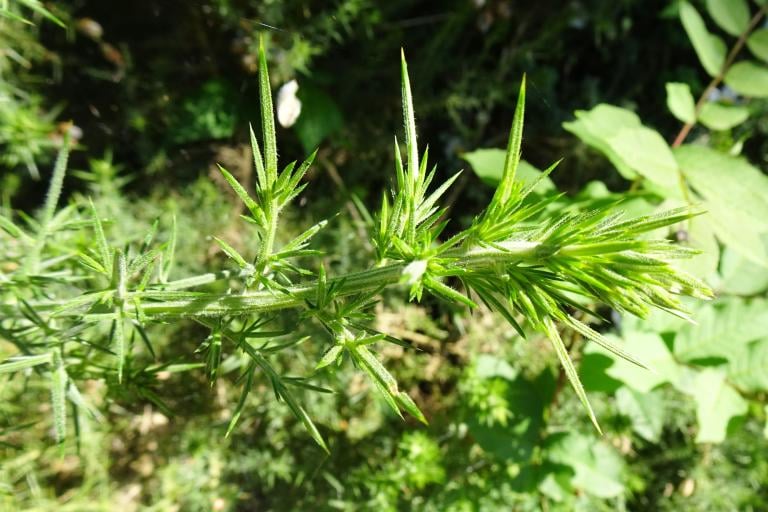
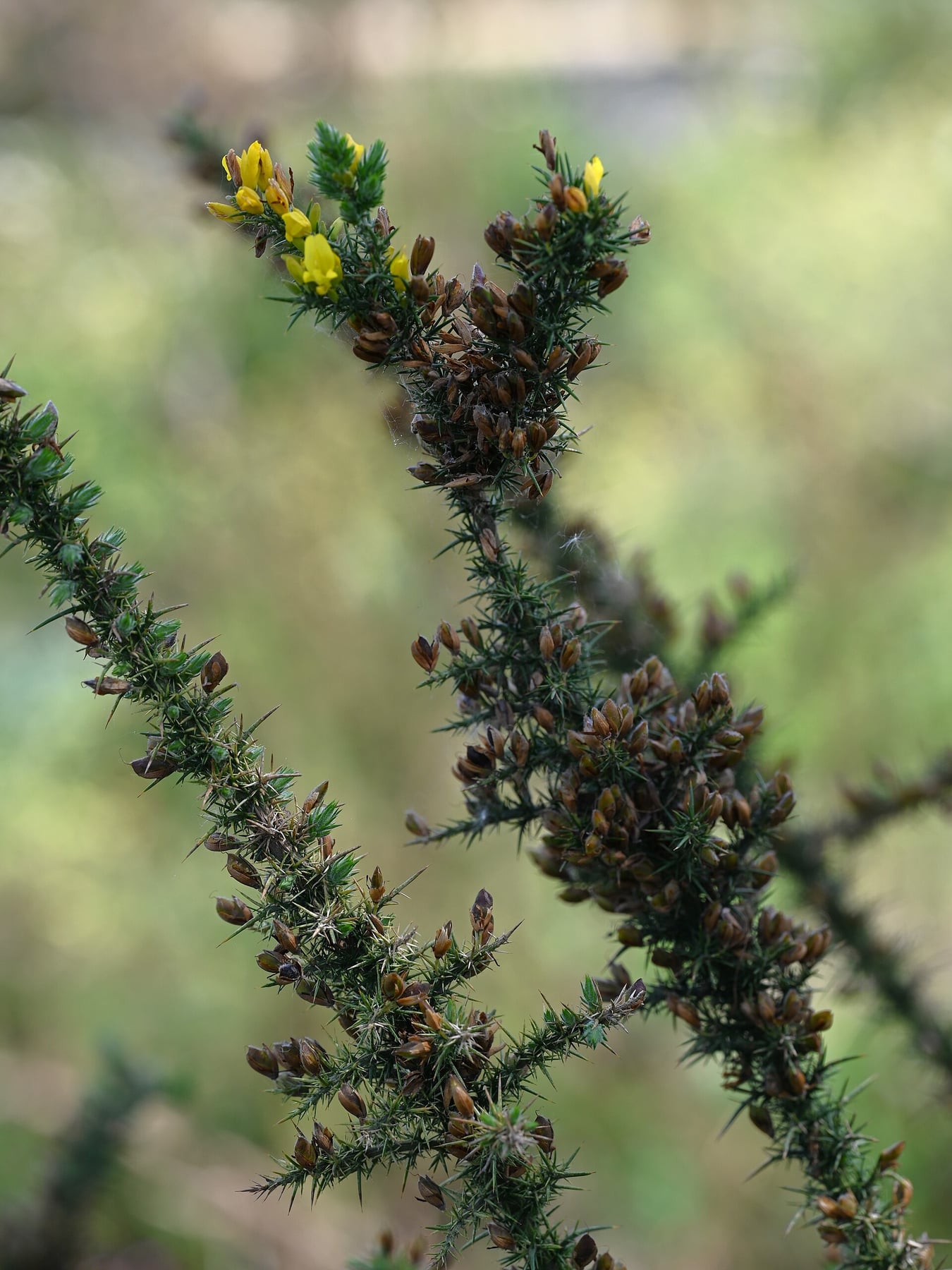
A shrub heavily armed with long green spines, which distinguishes it from common broom, whose stems have no spines. Common broom has no spines, its stems are supple and angled, whereas gorse is bristling with rigid spines over its whole surface.
Learn to recognise it
Classic flowering shrubs. This plant is in the lesson “Classic flowering shrubs”, with 9 others.
Green, heavily spiny stems; the leaves are reduced to spines.
Distribution, pollinators, uses▾
🗺️ Distribution
Atlantic Europe, naturalised elsewhere; very common on the heathlands of the Atlantic coast and western France.
🐝 Value for pollinators
Flowers early, from winter, very rich in pollen, a major resource for bumblebees and bees before other plants flower.
✂️ Horticultural uses
Planted as a windbreak hedge on poor, sandy soil, used in heathland restoration.
⚠️ Possible toxicity
Seeds toxic, containing an alkaloid close to cytisine, active on nicotinic receptors; risk of accidental ingestion limited by the strong spines, but dangerous if eaten (livestock, pets).