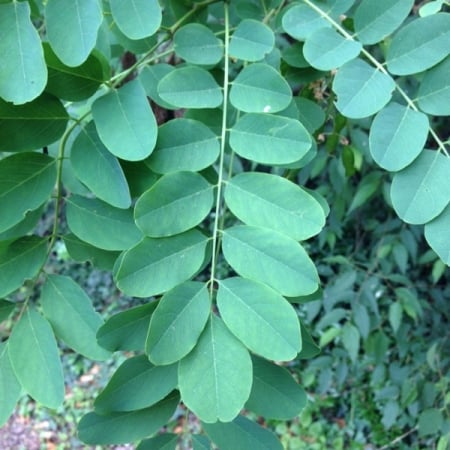
Leaf
Pierre Bonnet, Tela Botanica · CC BY-SA 2.0
Black locust
Robinia pseudoacacia L.
Also known as: False acacia
Family: Fabaceae
15 to 25 m tall
Banks, waste ground, widely planted and naturalised
Flowering: May – June
Full sun
Very hardy, to -30°C
❓ How do you recognise this plant?
Clusters of fragrant white flowers in May, flat pods typical of legumes. The rose acacia remains a low shrub with stems bristling with stiff reddish hairs and large pink flowers, whereas the false acacia is a large tree with fissured bark and fragrant white flowers in drooping clusters.
🍃 Leaves
Compound, 9 to 19 ovate leaflets, two short spines at the base of the petiole
🌸 Flowers
Large drooping white clusters, highly fragrant
🍎 Fruits
Flat brown pods persisting through winter
🪵 Bark
Grey, very deeply fissured in a diamond-shaped network
🗺️ Distribution
Native to North America, introduced into Europe in the 17th century; widely naturalised and invasive in France
🐝 Value for pollinators
Very abundant, fragrant white flowering in May, extremely rich in nectar (acacia honey), much visited by bees
✂️ Horticultural uses
Planted in avenues and for stabilising poor soils, regarded as invasive in some natural habitats
⚠️ Possible toxicity
Bark, leaves and seeds toxic if ingested (robinin and other compounds), causing digestive upset; flowers edible
🌱 Known cultivars
Frisia
Foliage entirely golden yellow from spring to autumn, one of the most widely planted coloured-foliage trees in France; strongly contrasting with the green of the type.
Umbraculifera (mop-head false acacia)
Dense, regular globe-shaped habit, grafted on a stem, without the thorns or the flowers of the type; widely used as an avenue tree in towns, notably in France.
⚠️ Look-alike species
Black locust
Robinia pseudoacacia
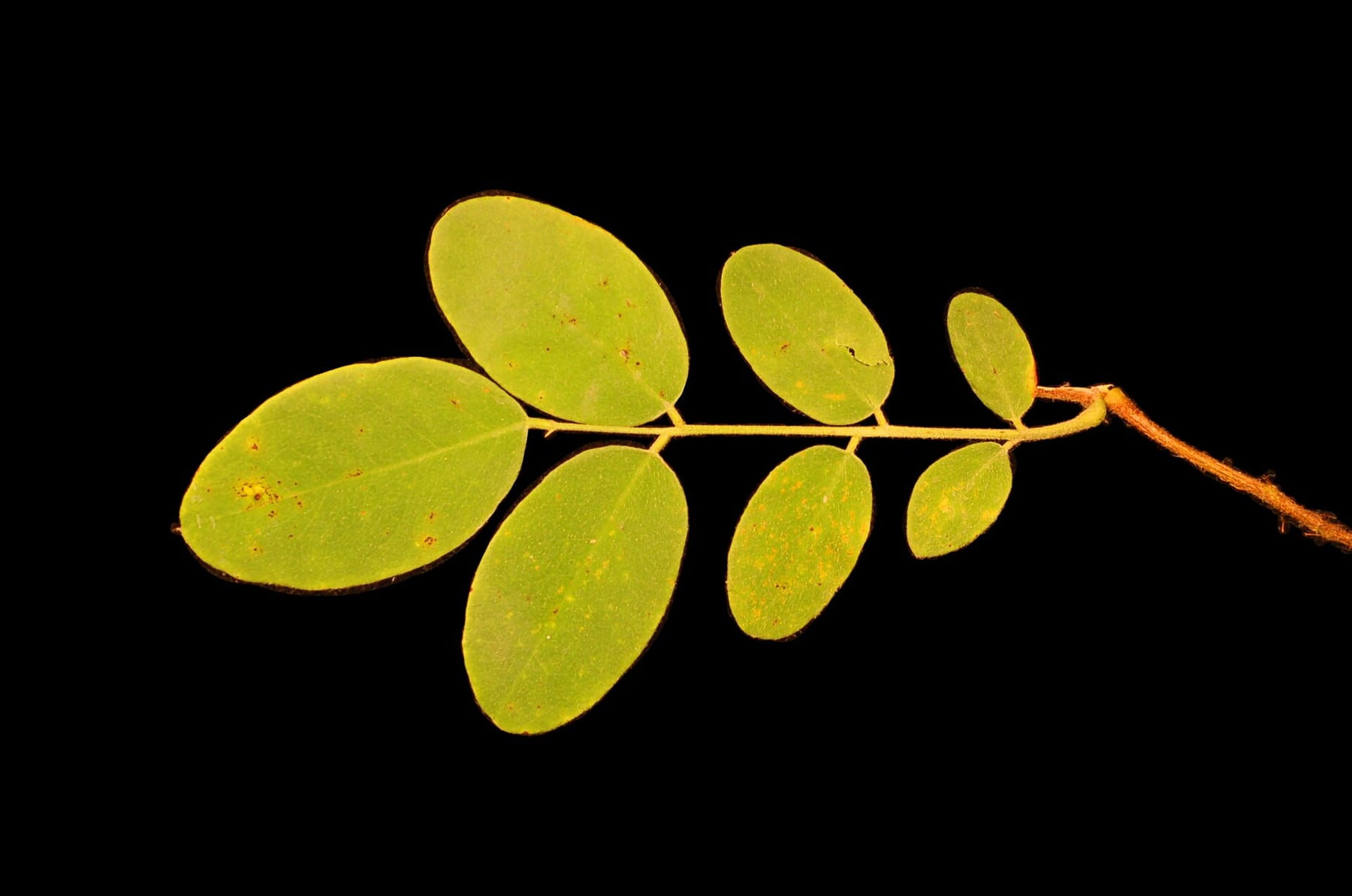
Rose acacia
Robinia hispida
The rose acacia remains a low shrub with stems bristling with stiff reddish hairs and large pink flowers, whereas the false acacia is a large tree with fissured bark and fragrant white flowers in drooping clusters.
🌿 Other Fabaceae to discover


ℹ️ Educational profile — do not use it to judge whether a plant is edible or safe.
🌱 This database is constantly evolving — species and information are added and corrected regularly. Spotted a mistake? Report it below.
© Floraneo — profile content is protected; reproduction without permission is prohibited. Photos remain under their own licence (see the credit shown on each photo).