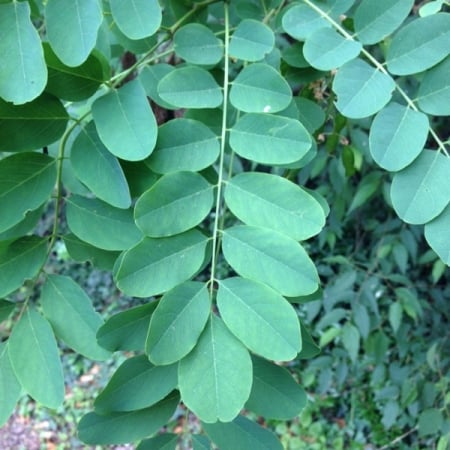
Leaf
Gerd Eichmann, Wikimedia · CC BY-SA 4.0
Kentucky coffee tree
Gymnocladus dioicus (L.) K.Koch
Also known as: Kentucky coffeetree
Family: Fabaceae
15 to 25 m tall
Planted as a specimen in large parks for its spectacular winter appearance and its rarity
Flowering: May – June
Full sun
Hardy to about -30°C
❓ How do you recognise this plant?
Its exceptionally thick twigs, lacking small side twigs, give it in winter such a distinctive bare silhouette that it can be spotted from afar even without leaves.
🍃 Leaves
Deciduous, very large, bipinnate, can exceed 90 cm, appearing late in spring
🌸 Flowers
Small, greenish white, in racemes, inconspicuous, fragrant; dioecious tree with separate male and female trees
🍎 Fruits
Large thick, leathery pods, red-brown, persisting a long time on female trees
🪵 Bark
Dark grey, lifting in rough, curled scales, very recognisable in winter
🗺️ Distribution
Native to eastern North America
🐝 Value for pollinators
Fragrant flowers visited by bees
✂️ Horticultural uses
Planted as a rare and remarkable specimen for its bare, angular winter silhouette, its very thick twigs and its textured bark
⚠️ Possible toxicity
Seeds and pulp of the pods toxic when raw (cytisine), notably to livestock; the seeds must be roasted before any use, hence its nickname 'coffee tree'.
🌿 Other Fabaceae to discover
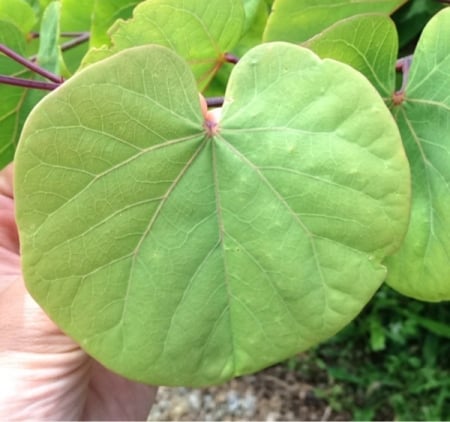


ℹ️ Educational profile — do not use it to judge whether a plant is edible or safe.
🌱 This database is constantly evolving — species and information are added and corrected regularly. Spotted a mistake? Report it below.
© Floraneo — profile content is protected; reproduction without permission is prohibited. Photos remain under their own licence (see the credit shown on each photo).