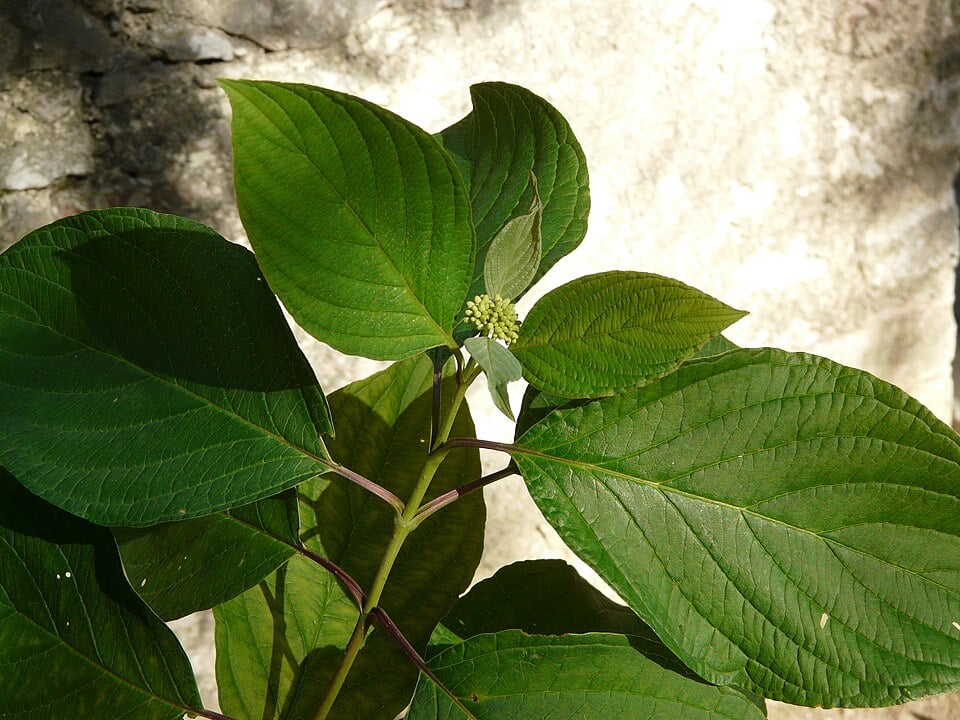
Leaf
ann2005, Tela Botanica · CC BY-SA 2.0

Tatarian dogwood

Cornus alba L.
Also known as: Red-barked dogwood, White dogwood
Family: Cornaceae
1.5 to 3 m tall
Borders, riverbanks, gardens, cool soils
Flowering: May – June
Full sun
Part shade
Hardy to -30°C

❓ How do you recognise this plant?

Grown above all for its bright red young twigs, spectacular in winter against a background of snow. Tatarian dogwood: young twigs often bright red and fruits white to bluish-white. Common dogwood: twigs often dark red and fruits black. Twig colour varies with season and exposure, so fruits and leaves complete the identification.
🍃 Leaves
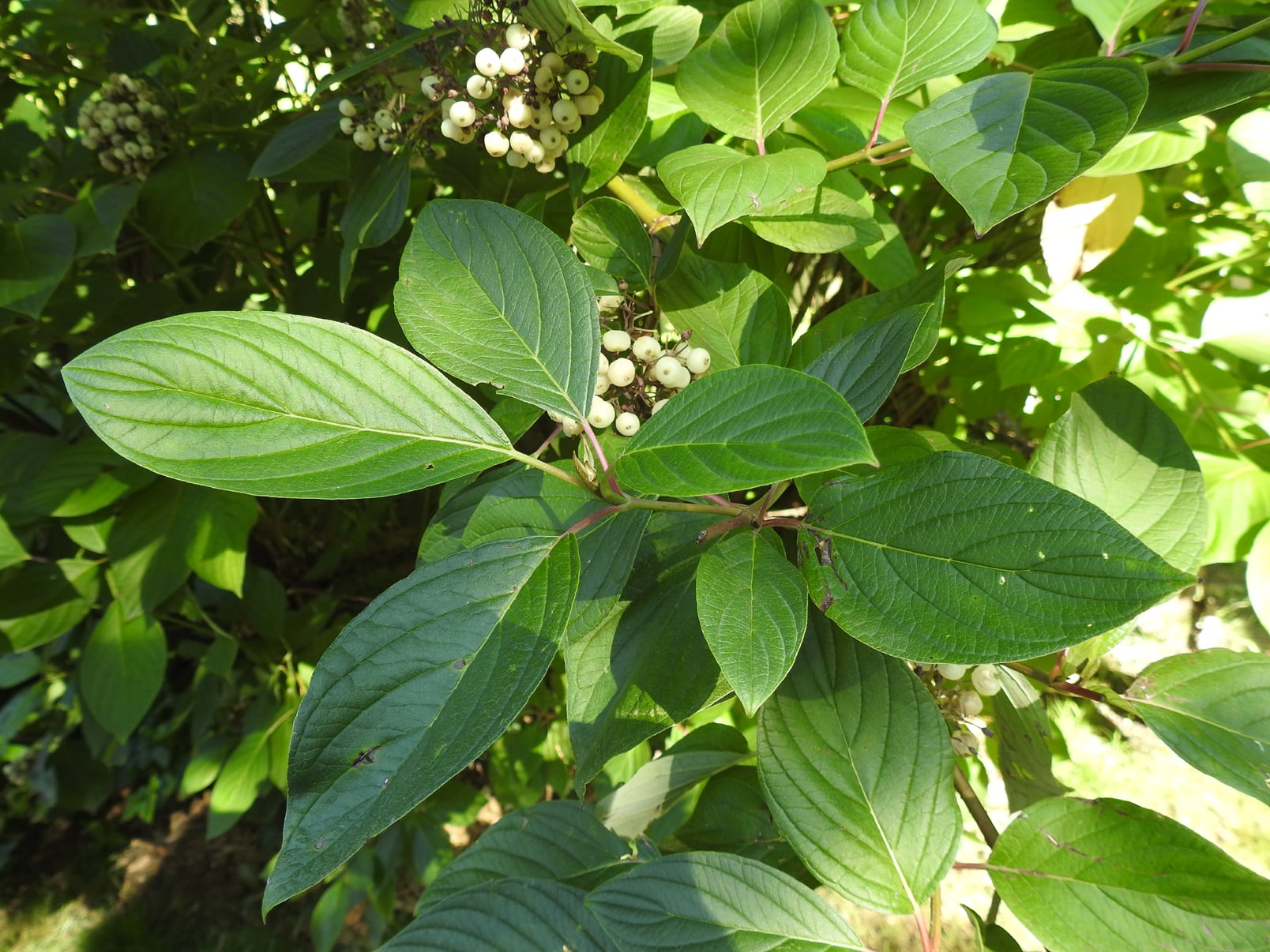
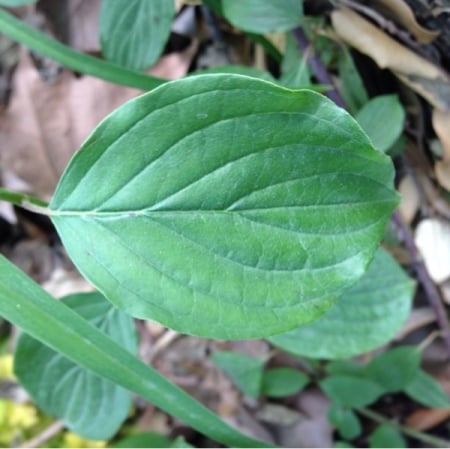
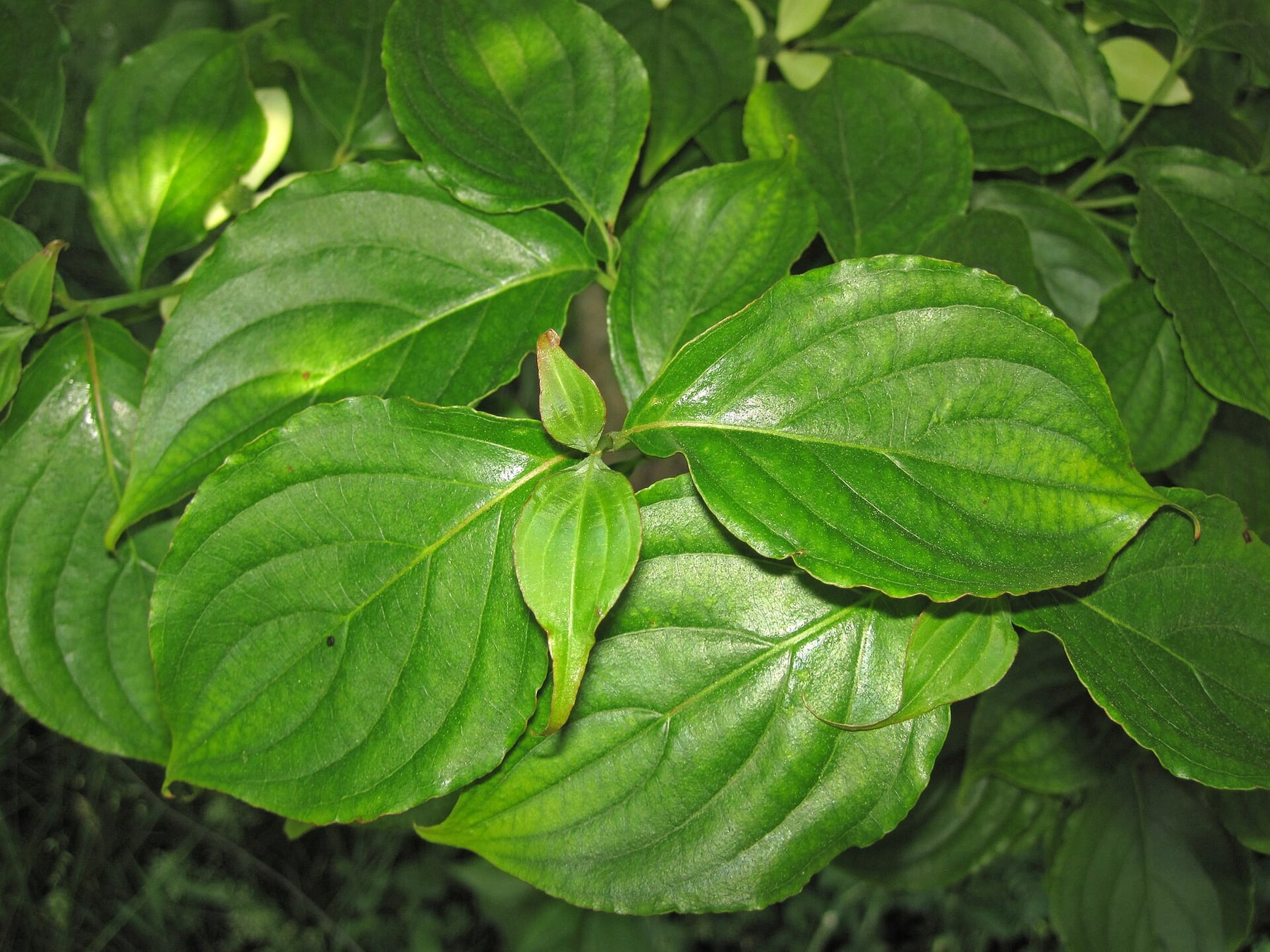
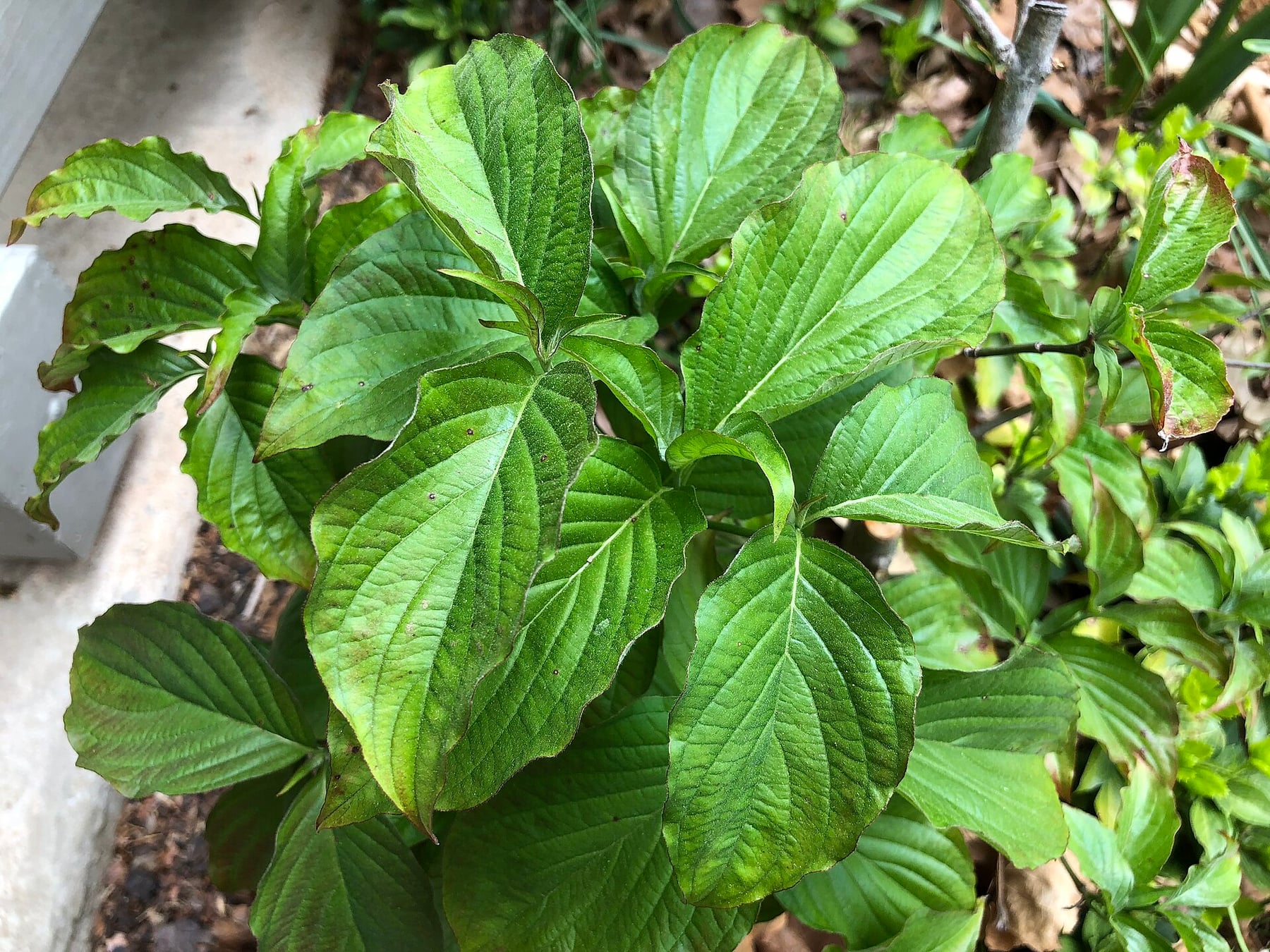
Deciduous, ovate, bright green, turning red in autumn
🌸 Flowers
Small cream-white flowers in flat corymbs
🍎 Fruits
Small white to bluish-white drupes, often grouped in clusters; they are mainly eaten by wildlife and should not be presented as everyday food fruits for humans.
🪵 Bark
Bright red young twigs, very decorative in winter
🗺️ Distribution
Siberia, China, Korea; grown in France as an ornamental, not wild.
🐝 Value for pollinators
Nectar-bearing white flowers in spring, visited by bees and hoverflies.
✂️ Horticultural uses
Planted for its bright red young twigs, very decorative in winter, in borders or beside a pond.

⚠️ Possible toxicity

No known toxicity; fruits unappetising but not toxic.

🌱 Known cultivars

Sibirica
The most famous cultivar of the genus: its young twigs turn a brilliant coral red in winter, spectacular against snow; green foliage in summer, small white flowers and white berries.
Elegantissima
Grey-green variegated foliage broadly edged with cream-white, sometimes streaked with pink, which brightens shady borders all summer, with the same decorative red stems in winter as the species.
Ivory Halo
Compact, dwarf version (1.2 to 1.5 m, about half the type species) with white-variegated foliage, easier to fit into a small garden while keeping the bright red stems so prized in winter.

⚠️ Look-alike species

Tatarian dogwood
Tatarian dogwood
Cornus alba
Common dogwood
Common dogwood
Cornus sanguinea

Tatarian dogwood: young twigs often bright red and fruits white to bluish-white. Common dogwood: twigs often dark red and fruits black. Twig colour varies with season and exposure, so fruits and leaves complete the identification.

Tatarian dogwood
Tatarian dogwood
Cornus alba
Red osier dogwood
Red osier dogwood
Cornus sericea

Tatarian dogwood and red osier dogwood are almost impossible to tell apart with certainty from the look of the twigs alone: both are grown for their bright red to purple stems in winter and their small white to pale blue fruits. Tatarian dogwood stays slightly more upright, whereas red osier dogwood tends to sucker more and form more spreading clumps — a useful clue but not an absolute one; if in doubt, the original label is more reliable than appearance alone.

ℹ️ Educational profile — do not use it to judge whether a plant is edible or safe.

🌱 This database is constantly evolving — species and information are added and corrected regularly. Spotted a mistake? Report it below.

© Floraneo — profile content is protected; reproduction without permission is prohibited. Photos remain under their own licence (see the credit shown on each photo).