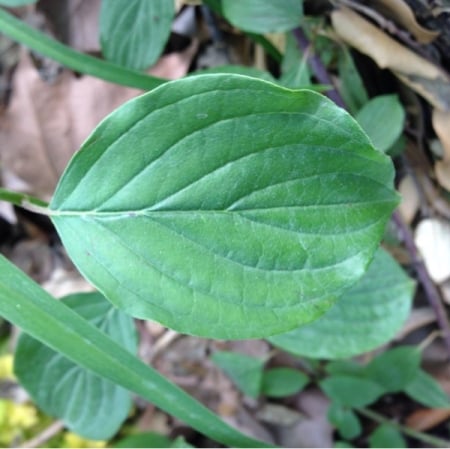
Leaf
Pierre Bonnet, Tela Botanica · CC BY-SA 2.0
Common dogwood
Cornus sanguinea L.
Scientific synonyms: Swida sanguinea
Also known as: Bloodtwig dogwood, Dogwood
Family: Cornaceae
- 2 to 4 m tall
- Hedges, woodland edges, thickets
- Full sun, Part shade
- Very hardy, to -25°C
In flower from May to June
2 months❓ How do you recognise this plant?
Its bright red young twigs are visible from far away in midwinter, when everything else is bare. Common dogwood has thinner blood-red twigs and black fruits, whereas Tatarian dogwood has stouter twigs, often variegated in garden varieties, and characteristic white fruits.
Learn to recognise it
Classic flowering shrubs. This plant is in the lesson “Classic flowering shrubs”, with 9 others.

A free account is enough for this lesson.
🍃 Leaves
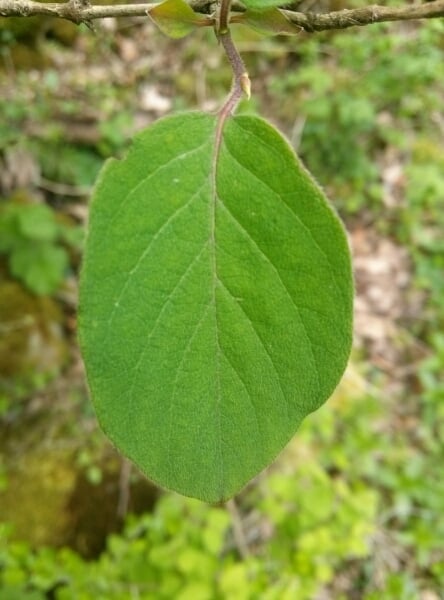
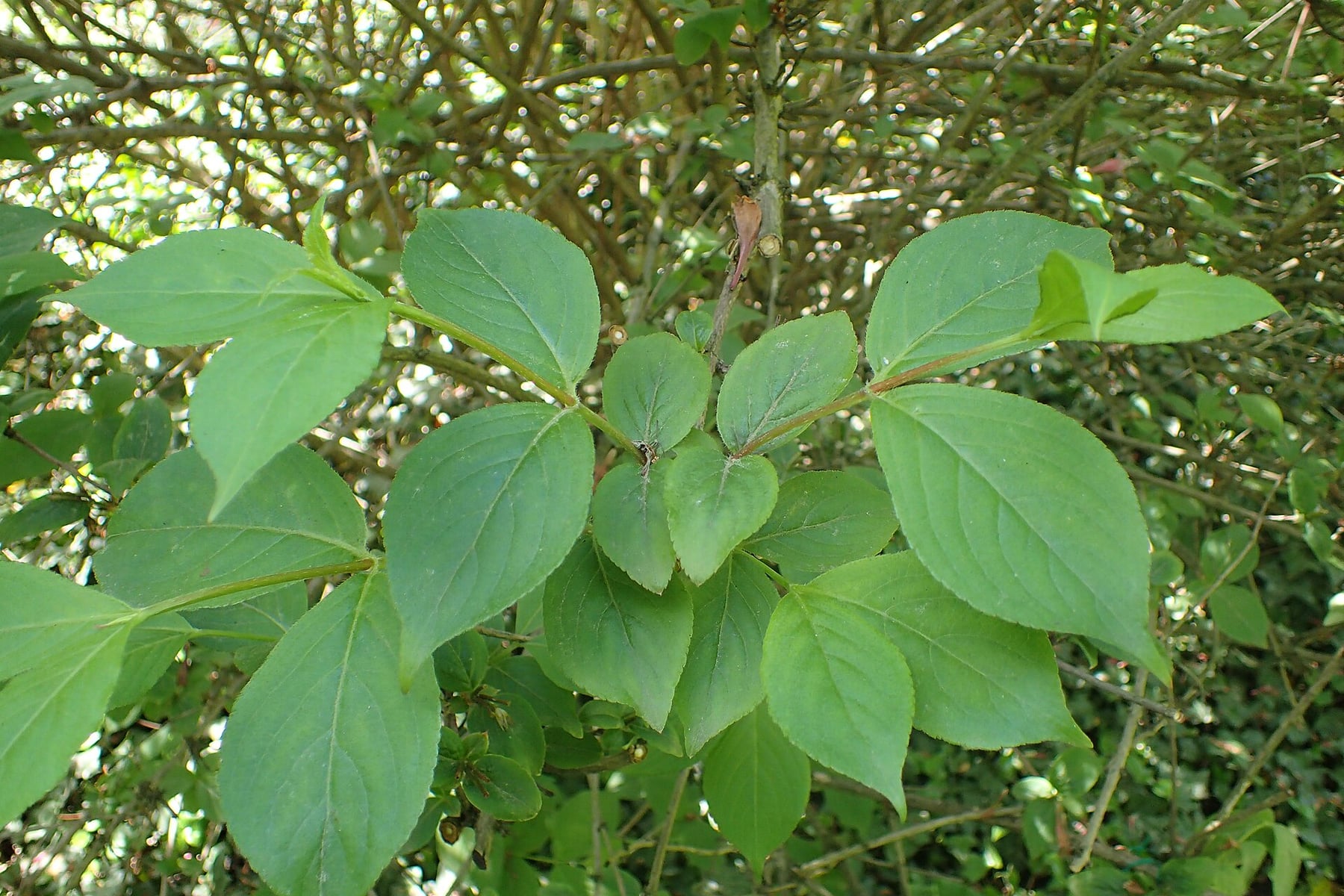
Opposite, ovate, clearly visible arching veins, dark red in autumn
🌸 Flowers
Small flat white corymbs
🍎 Fruits
Small blue-black to black drupes when ripe, gathered in loose clusters.
🪵 Bark
Young twigs often reddish to dark red, especially in winter; the shade can vary with exposure and the age of the twigs.
Distribution, pollinators, uses
🗺️ Distribution
Europe, western Asia; very common in hedges and woodland edges throughout France.
🐝 Value for pollinators
Nectar-bearing white flowers in corymbs, much visited by bees and various insects in spring.
✂️ Horticultural uses
Planted in country hedges, also valued for its decorative red twigs in winter.
⚠️ Possible toxicity
Fruits mildly purgative and not recommended for human consumption (digestive upset if eaten), unappetising.
🌱 Known cultivars
Midwinter Fire
The undisputed star of winter: its stems shift from yellow at the base to orange and then bright red at the tip, a 'flame' gradient that no other dogwood offers; green foliage turning golden-yellow in autumn.
⚠️ Look-alike species
Common dogwood
Cornus sanguinea
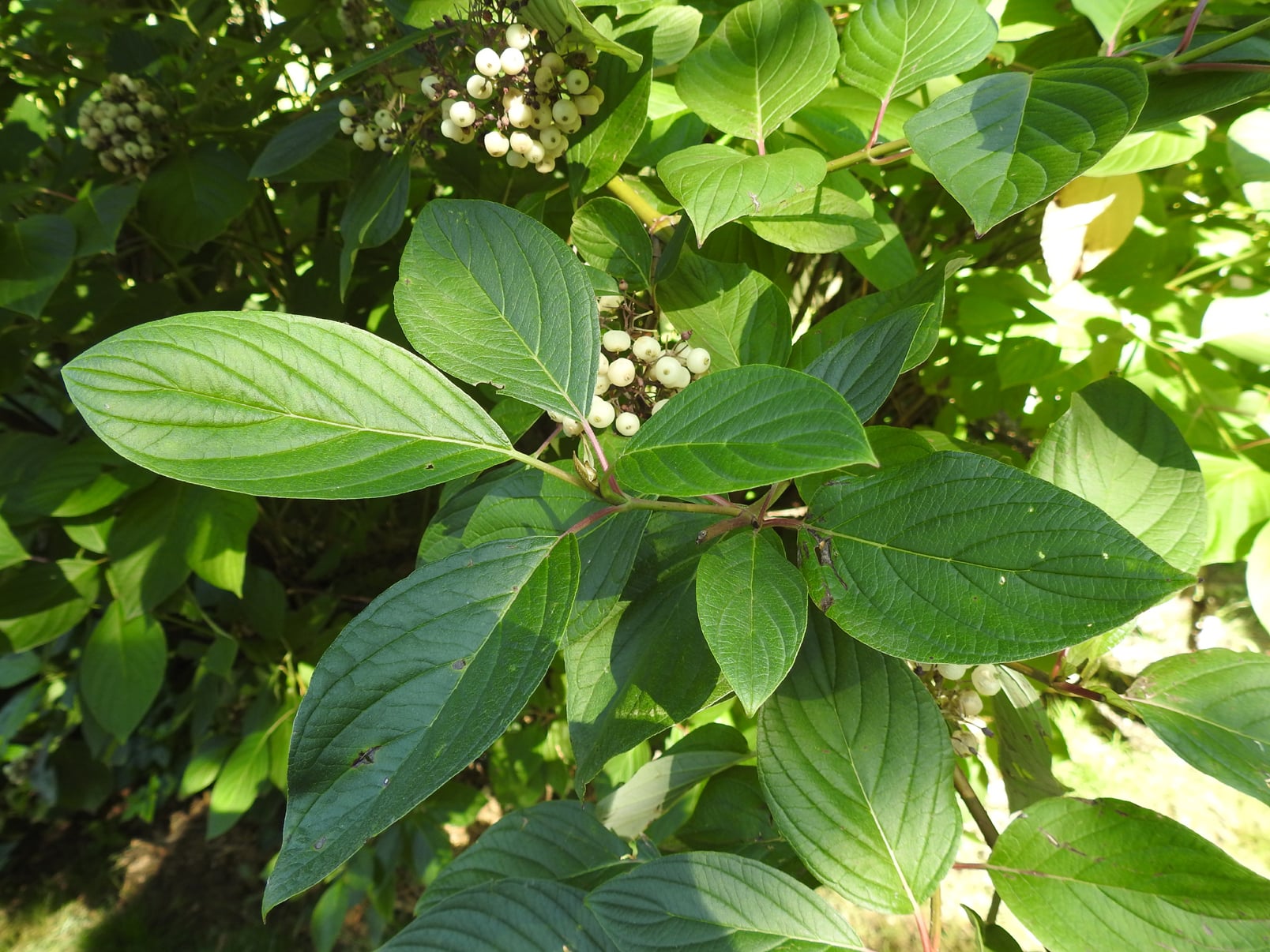
Tatarian dogwood
Cornus alba
Common dogwood has thinner blood-red twigs and black fruits, whereas Tatarian dogwood has stouter twigs, often variegated in garden varieties, and characteristic white fruits.
🌿 Other Cornaceae to discover
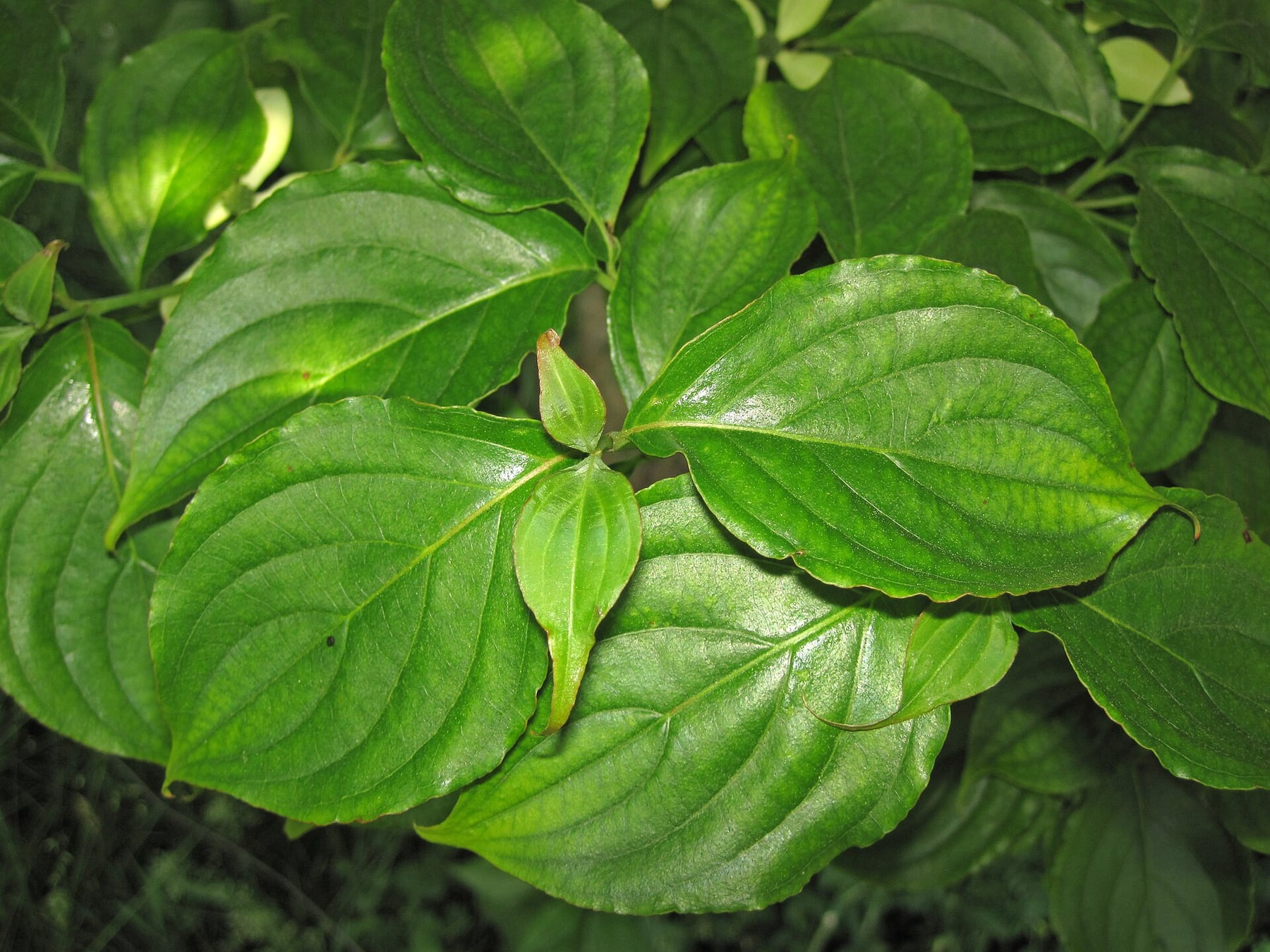
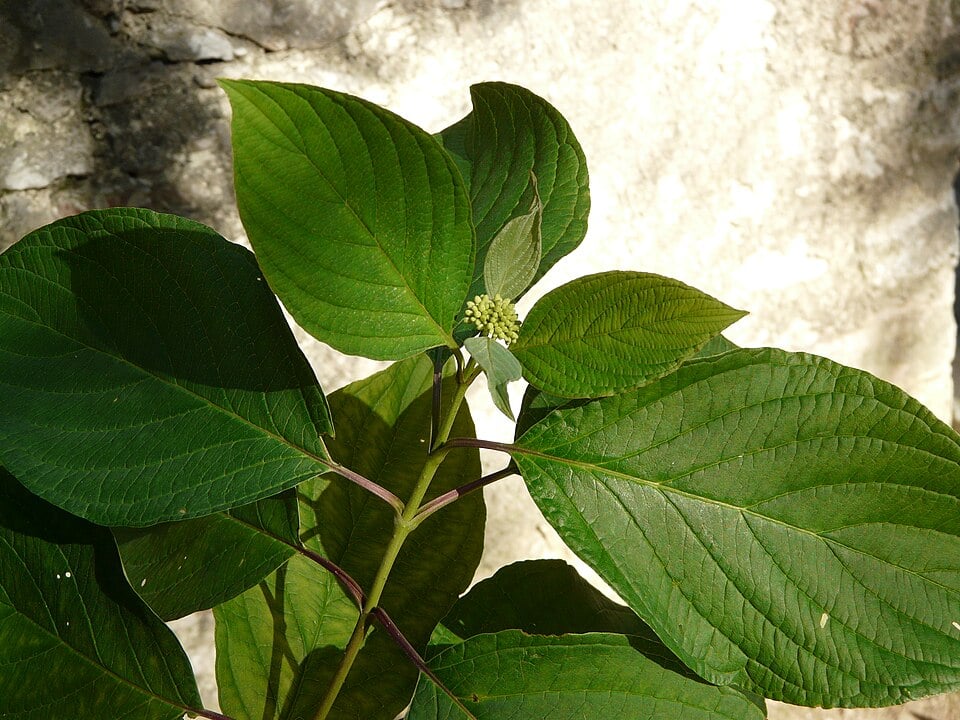
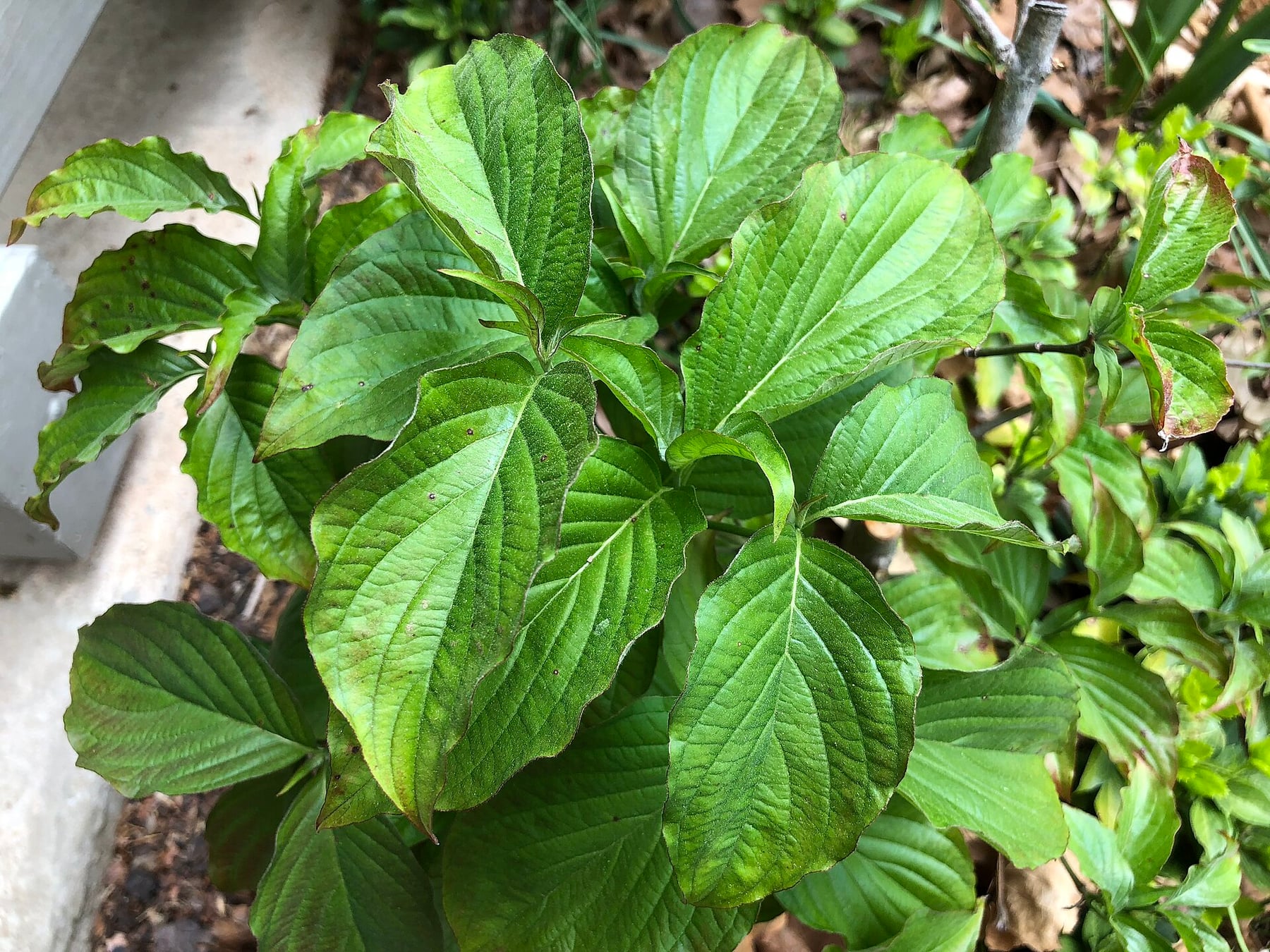
ℹ️ Educational profile — do not use it to judge whether a plant is edible or safe.
🌱 This database is constantly evolving — species and information are added and corrected regularly. Spotted a mistake? Report it below.
© Floraneo — profile content is protected; reproduction without permission is prohibited. Photos remain under their own licence (see the credit shown on each photo).