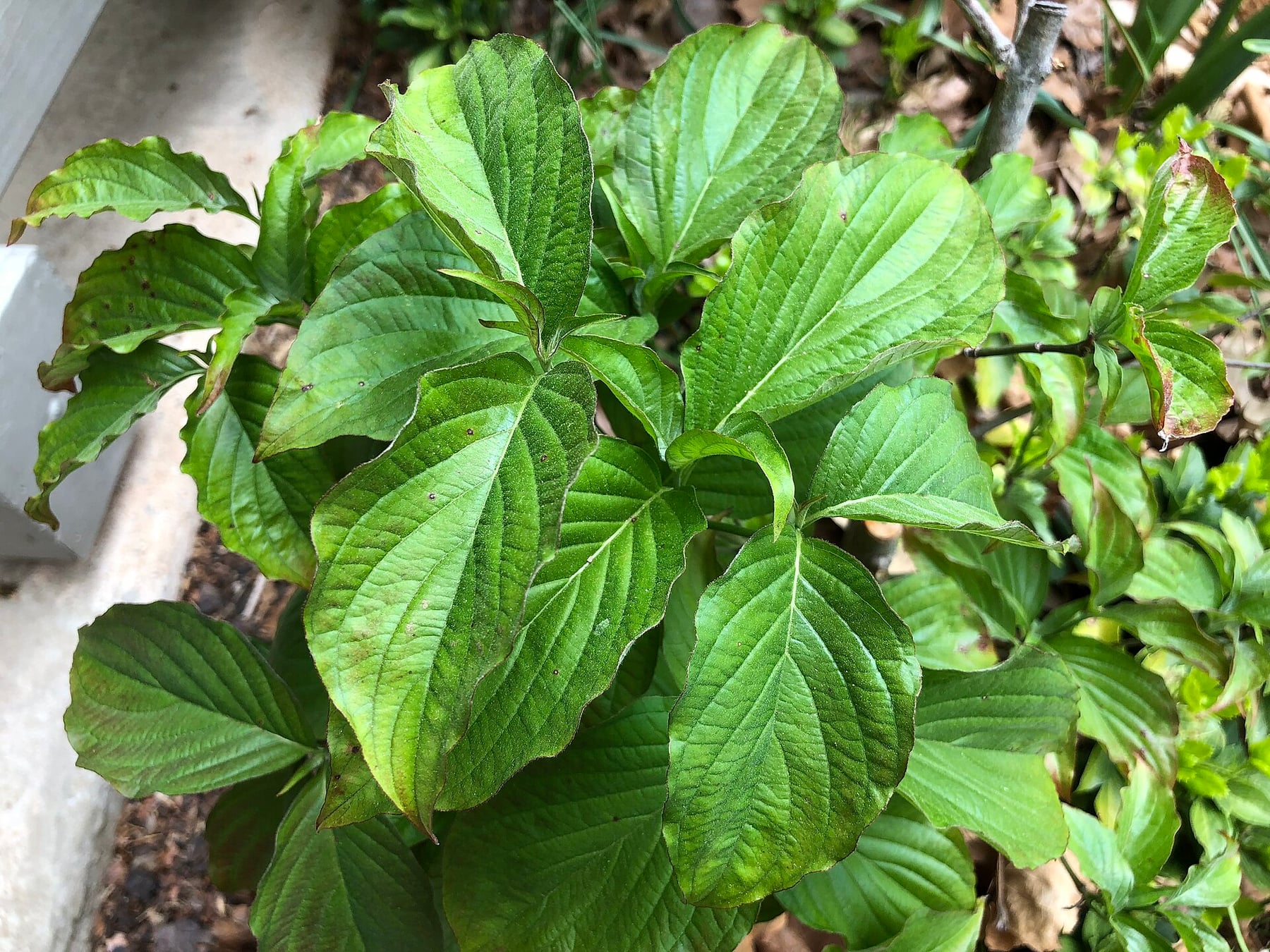
Red osier dogwood
Cornus sericea L.
Also known as: Red-twig dogwood
Family: Cornaceae
1.5 to 3 m tall
Planted in borders or on banks, cool to moist soils
Flowering: May – June
Full sun
Part shade
Very hardy, to about -35°C
❓ How do you recognise this plant?
The twigs of red osier dogwood take on their most intense bright red colour on young wood of the current year — which is why it is cut back hard every spring, a sacrifice of flowering that guarantees a brilliant winter display. Red osier dogwood and Tatarian dogwood are almost impossible to tell apart with certainty from the look of the twigs alone: both are grown for their bright red to purple stems in winter and their small white to pale blue fruits. Red osier dogwood tends to sucker more and form more spreading clumps, whereas Tatarian dogwood stays slightly more upright — a useful clue but not an absolute one; if in doubt, the original label is more reliable than appearance alone.
🍃 Leaves
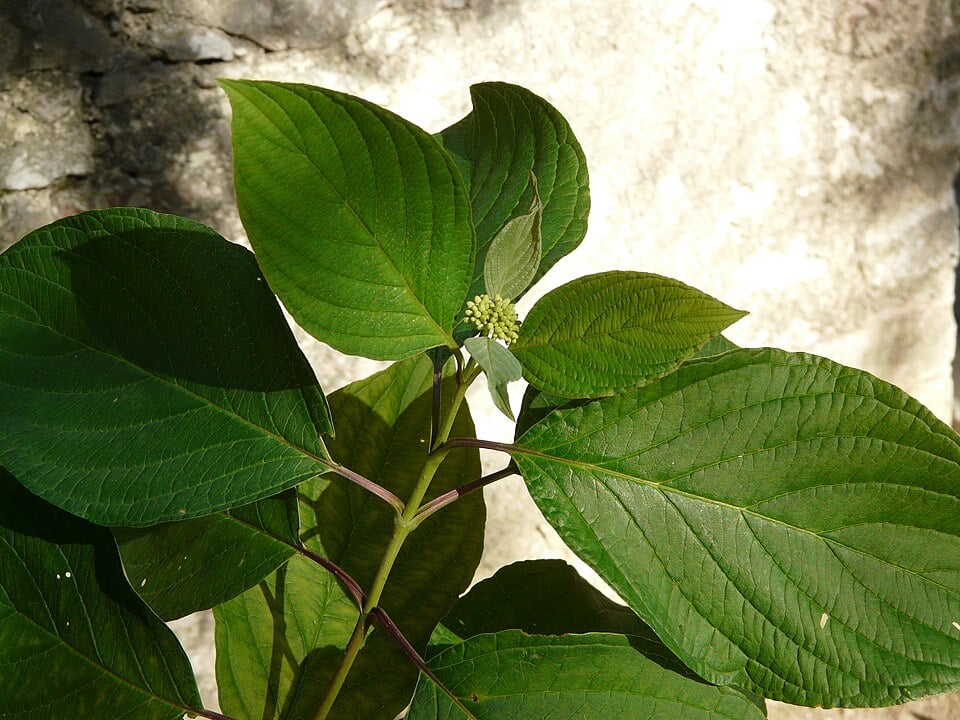
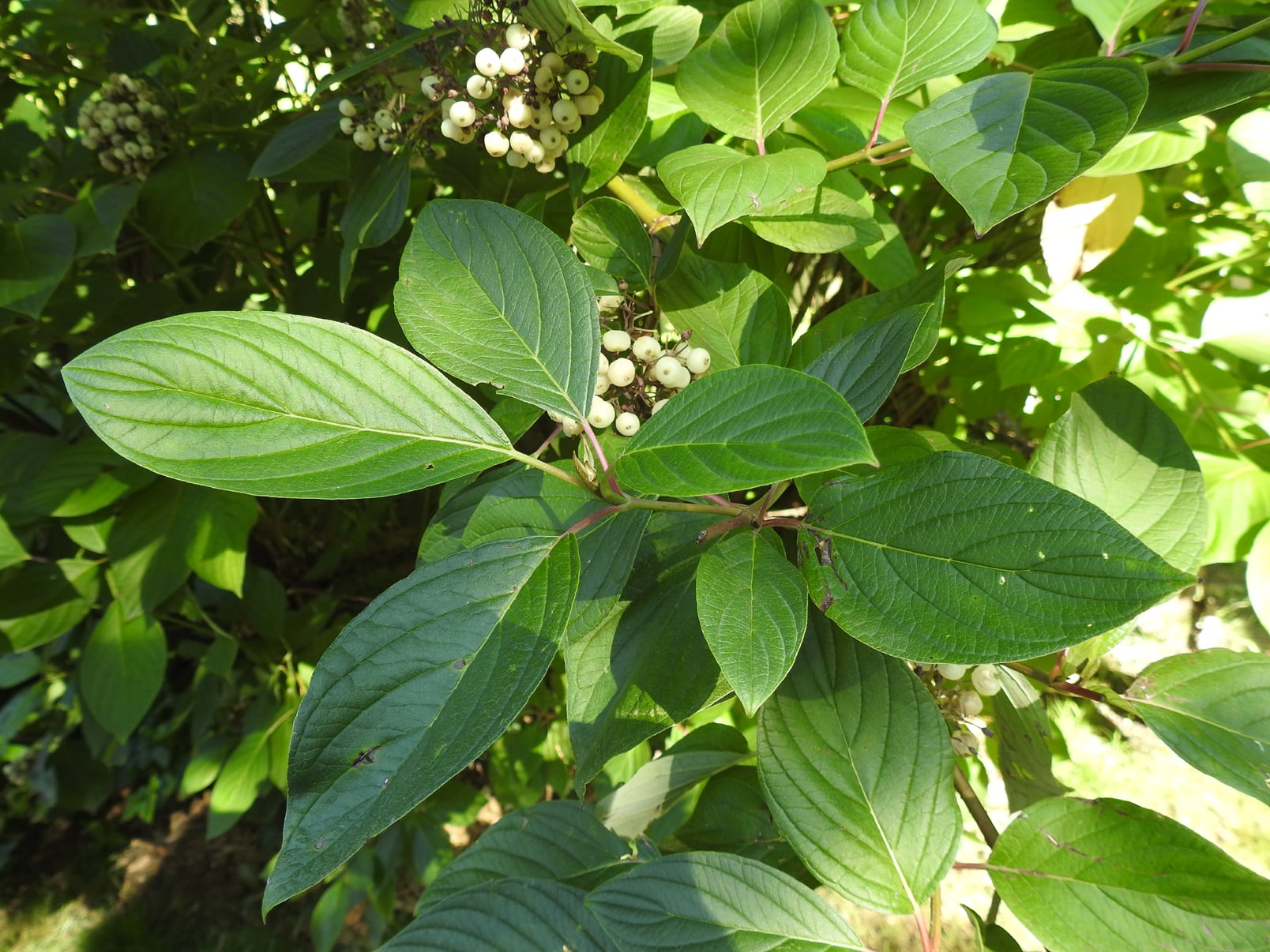
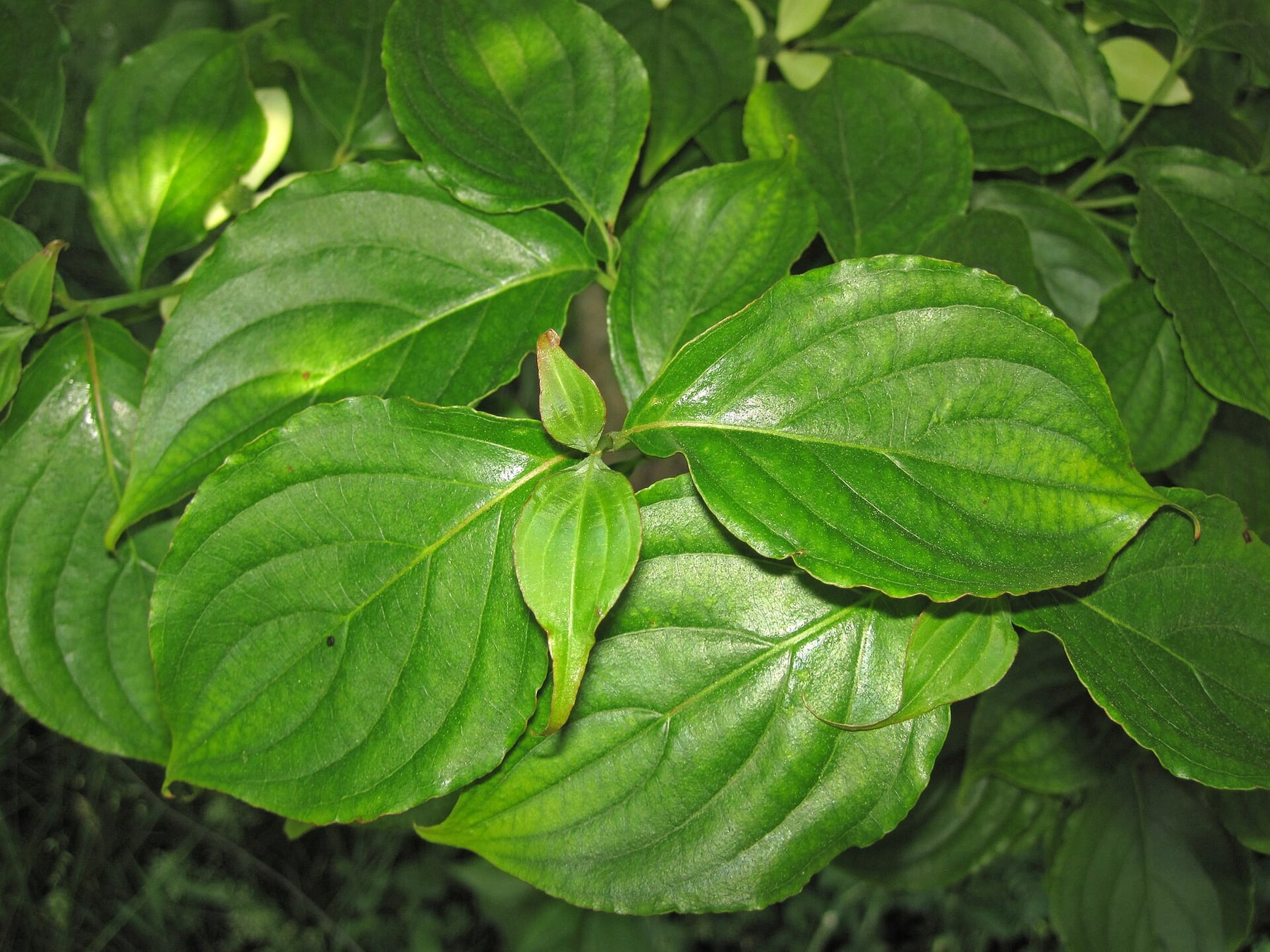
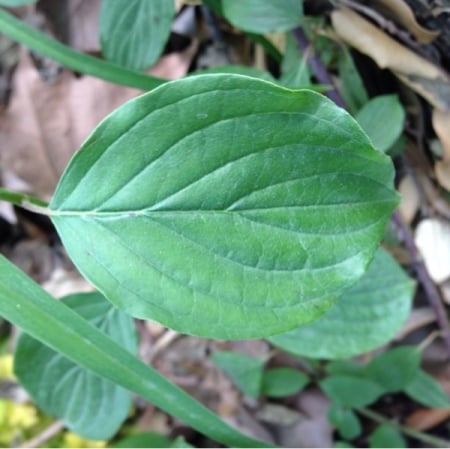
Opposite, ovate to elliptic, green; some garden varieties are variegated.
🌸 Flowers
Small, white, grouped in flat corymbs
🍎 Fruits
Small white to pale blue drupes, gathered in clusters, mainly eaten by birds.
🪵 Bark
Bright red to purple twigs in winter, very decorative once the leaves have fallen
🗺️ Distribution
Native to North America; widely planted in France as an ornamental shrub, notably for its coloured winter wood
🐝 Value for pollinators
Honey-rich flowering, visited by bees; fruits appreciated by birds
✂️ Horticultural uses
Shrub planted for its spectacular bright red twigs in winter once the foliage has fallen, cut back hard every spring to stimulate the regrowth of young coloured stems
ℹ️ Educational profile — do not use it to judge whether a plant is edible or safe.
🌱 This database is constantly evolving — species and information are added and corrected regularly. Spotted a mistake? Report it below.
© Floraneo — profile content is protected; reproduction without permission is prohibited. Photos remain under their own licence (see the credit shown on each photo).