Tatarian dogwood or Red osier dogwood: how to tell them apart?

Tatarian dogwood and Red osier dogwood look alike and are often mixed up. Here is how to tell them apart, feature by feature, with their photos and the details to look for.
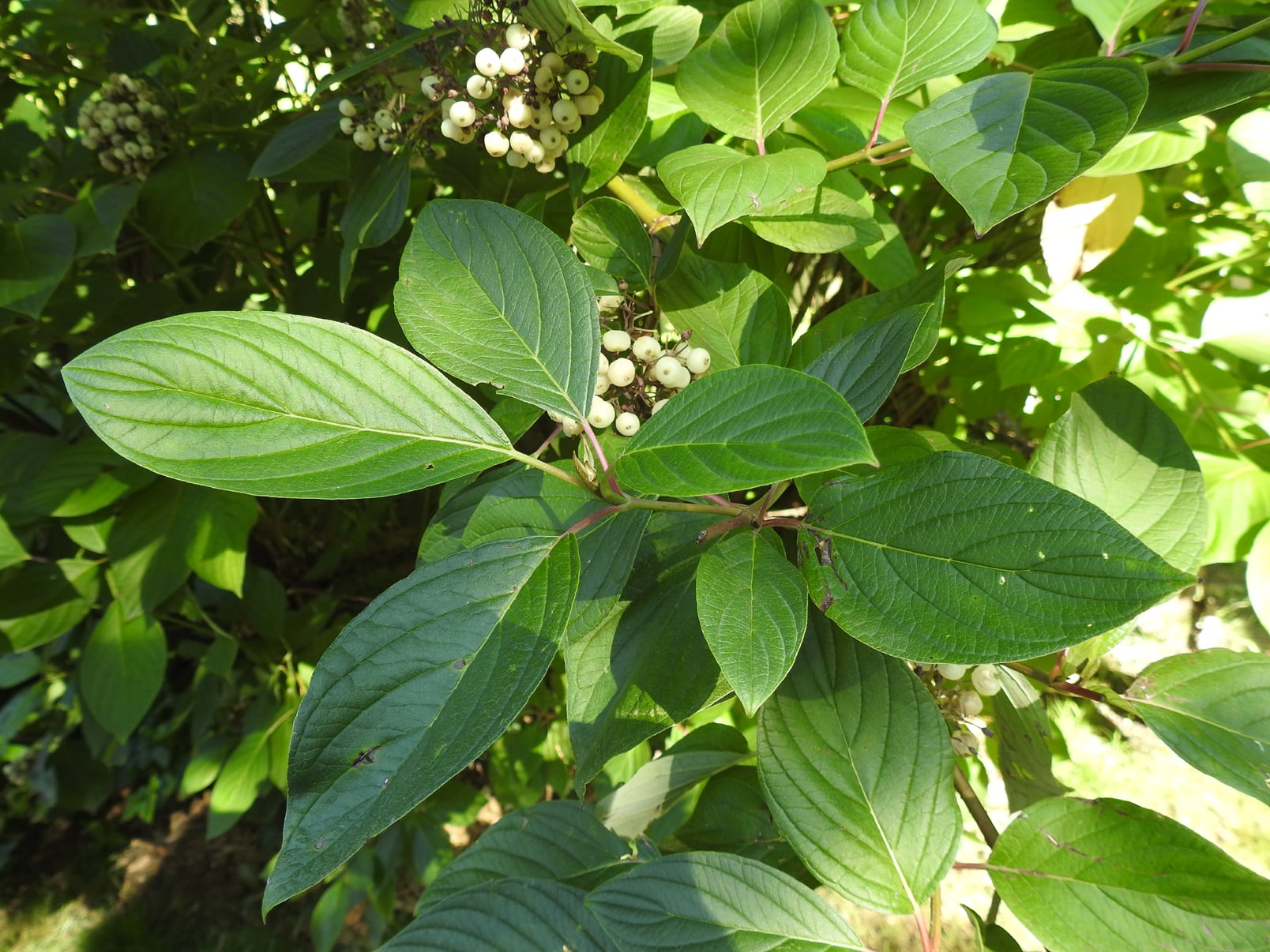
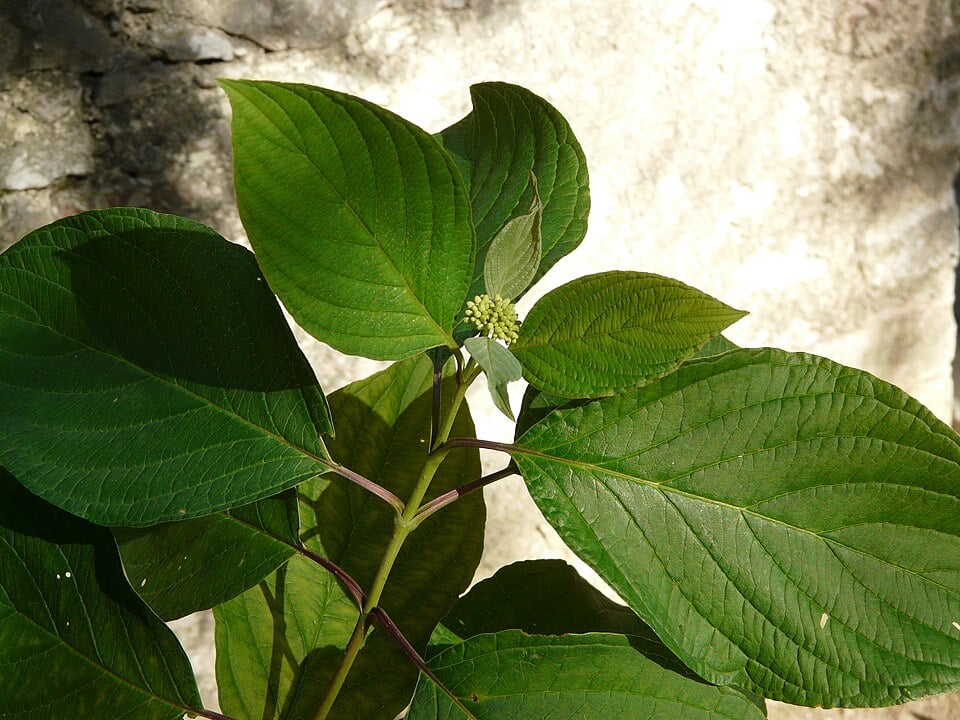
⚡ The quick answer
Tatarian dogwood
Tatarian dogwood
Cornus alba
Red osier dogwood
Red osier dogwood
Cornus sericea

Tatarian dogwood and red osier dogwood are almost impossible to tell apart with certainty from the look of the twigs alone: both are grown for their bright red to purple stems in winter and their small white to pale blue fruits. Tatarian dogwood stays slightly more upright, whereas red osier dogwood tends to sucker more and form more spreading clumps — a useful clue but not an absolute one; if in doubt, the original label is more reliable than appearance alone.

🍃 Leaves
Deciduous, ovate, bright green, turning red in autumn
Opposite, ovate to elliptic, green; some garden varieties are variegated.
🌸 Flowers
Small cream-white flowers in flat corymbs
Small, white, grouped in flat corymbs
🍎 Fruits
Small white to bluish-white drupes, often grouped in clusters; they are mainly eaten by wildlife and should not be presented as everyday food fruits for humans.
Small white to pale blue drupes, gathered in clusters, mainly eaten by birds.
🪵 Bark
Bright red young twigs, very decorative in winter
Bright red to purple twigs in winter, very decorative once the leaves have fallen
📏 Size
1.5 to 3 m tall
1.5 to 3 m tall
🗺️ Habitat
Borders, riverbanks, gardens, cool soils
Planted in borders or on banks, cool to moist soils
⚠️ Toxicity
No known toxicity; fruits unappetising but not toxic.
No notable toxicity known
🔎 And from the Red osier dogwood side
Red osier dogwood and Tatarian dogwood are almost impossible to tell apart with certainty from the look of the twigs alone: both are grown for their bright red to purple stems in winter and their small white to pale blue fruits. Red osier dogwood tends to sucker more and form more spreading clumps, whereas Tatarian dogwood stays slightly more upright — a useful clue but not an absolute one; if in doubt, the original label is more reliable than appearance alone.
🌿 Go further

Want to practise spotting these details on real photos? Floraneo offers profiles and quizzes for dozens of look-alike species.

ℹ️ Educational profile — do not use it to judge whether a plant is edible or safe.