Leaf
John De Vos, Tela Botanica · CC BY-SA 2.0
Lingonberry
Vaccinium vitis-idaea L.
Also known as: Cowberry, Mountain cranberry
Family: Ericaceae
10 to 30 cm tall, mat-forming dwarf shrub
Mountain woodland understorey, acid gardens, peat bogs
Flowering: May – July
Part shade
Shade
Hardy to -30°C
❓ How do you recognise this plant?
Its tart red berries, close to cranberries, are traditionally used in jam served with game. Bilberry has deciduous, finely toothed leaves and blue-black fruits with a bloom, whereas cowberry has evergreen, leathery, glossy leaves and bright red fruits.
🍃 Leaves
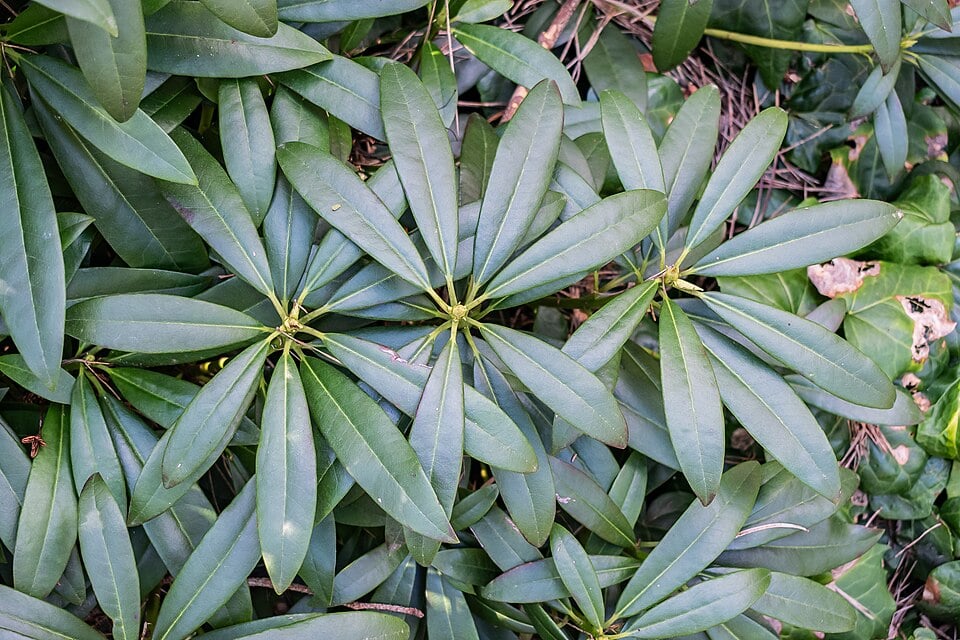
Evergreen, small, ovate, leathery, glossy dark green
🌸 Flowers
Small pinkish-white bells in racemes
🍎 Fruits
Small, round red fruits about 5 to 8 mm across, tart, often grouped in small clusters, edible as jam.
🪵 Bark
Dwarf shrub with low, upright or creeping stems, sometimes forming mats.
🗺️ Distribution
Northern Europe and the mountains of Europe (Alps, Vosges, Massif Central), Asia, North America; fairly common in acid mountain woodland, scarce in the lowlands.
🐝 Value for pollinators
Pink bell-shaped flowers visited by bumblebees and wild bees in spring.
✂️ Horticultural uses
Ground cover for heather gardens and acid rockeries.
⚠️ Possible toxicity
No known toxicity; fruits edible.
⚠️ Look-alike species
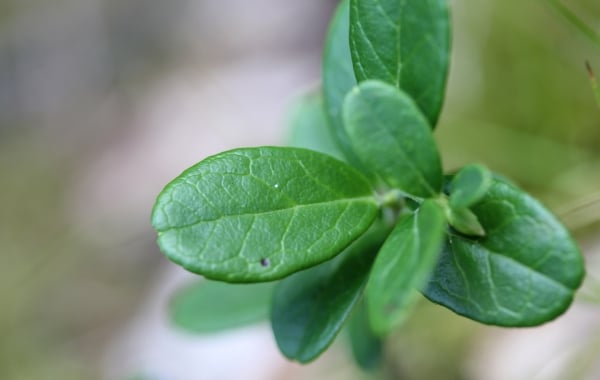
Lingonberry
Vaccinium vitis-idaea
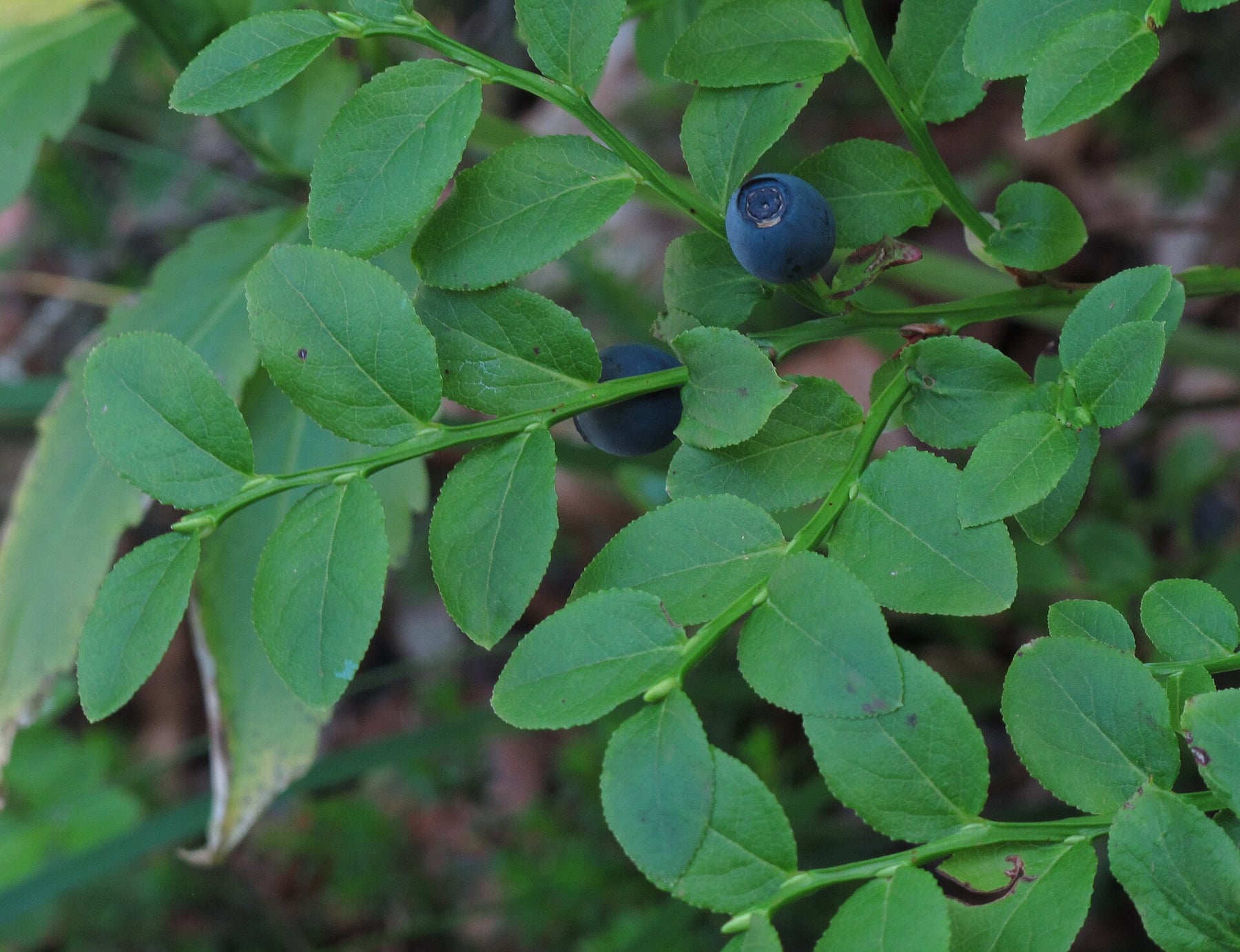
Bilberry
Vaccinium myrtillus
Bilberry has deciduous, finely toothed leaves and blue-black fruits with a bloom, whereas cowberry has evergreen, leathery, glossy leaves and bright red fruits.
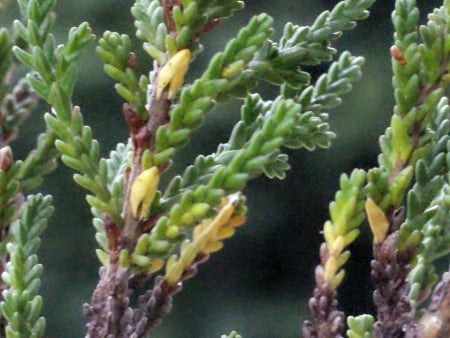
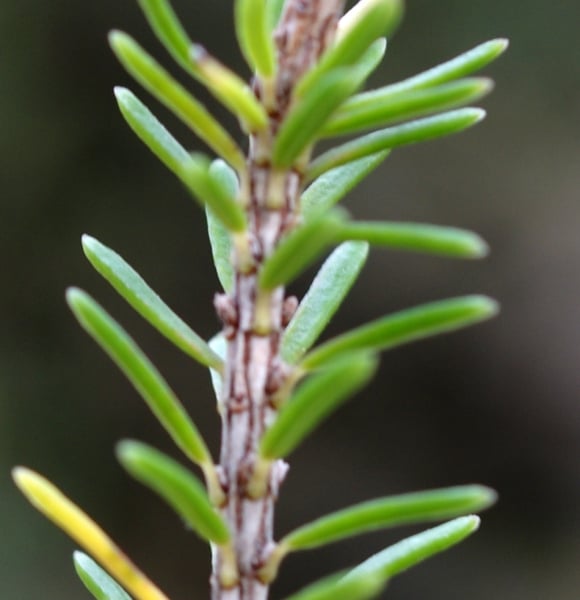
🌿 Other Ericaceae to discover
ℹ️ Educational profile — do not use it to judge whether a plant is edible or safe.
🌱 This database is constantly evolving — species and information are added and corrected regularly. Spotted a mistake? Report it below.
© Floraneo — profile content is protected; reproduction without permission is prohibited. Photos remain under their own licence (see the credit shown on each photo).