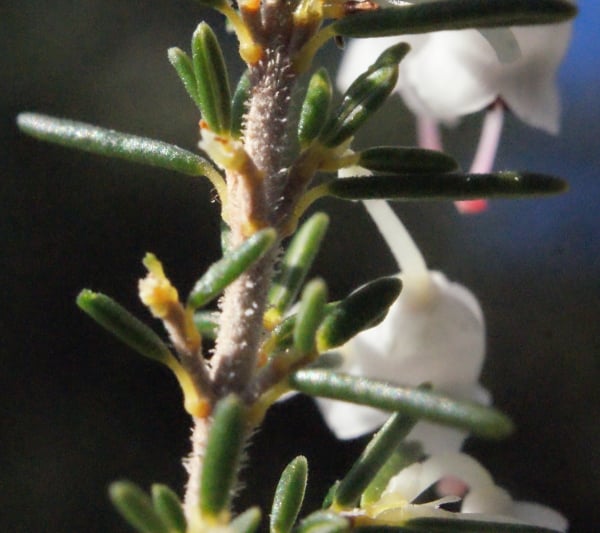
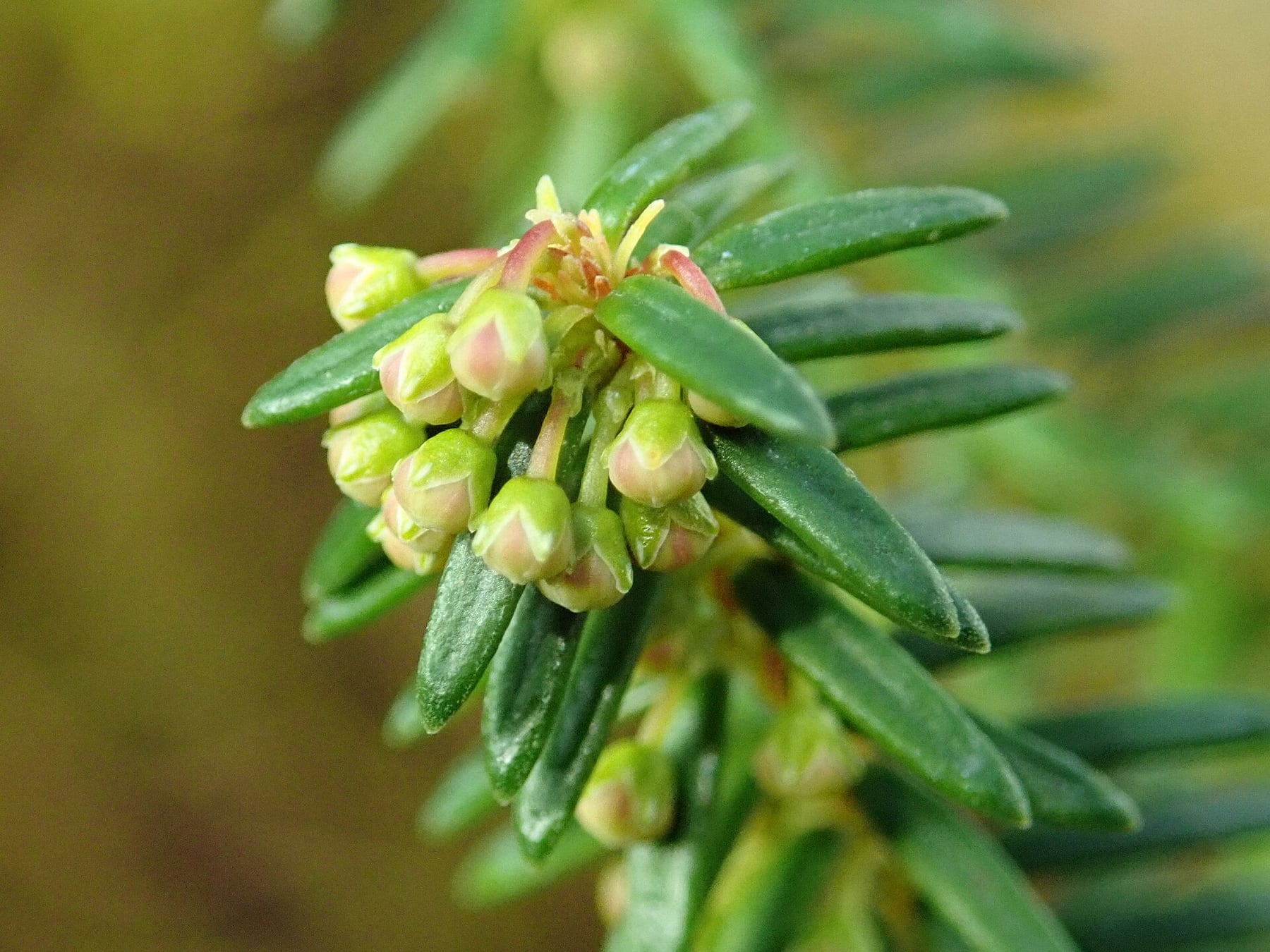
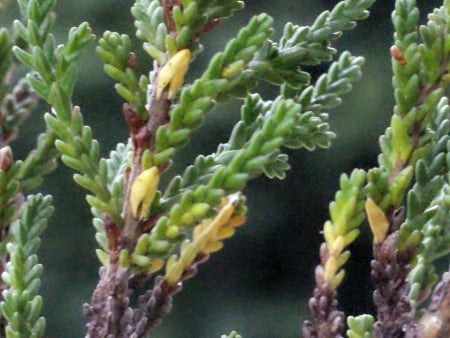
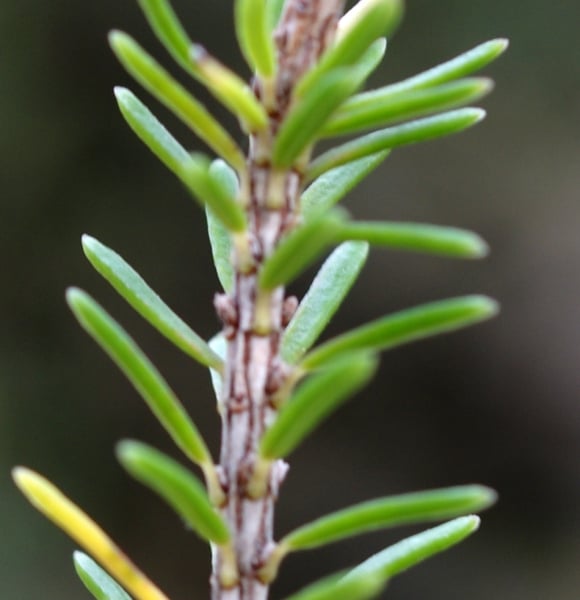
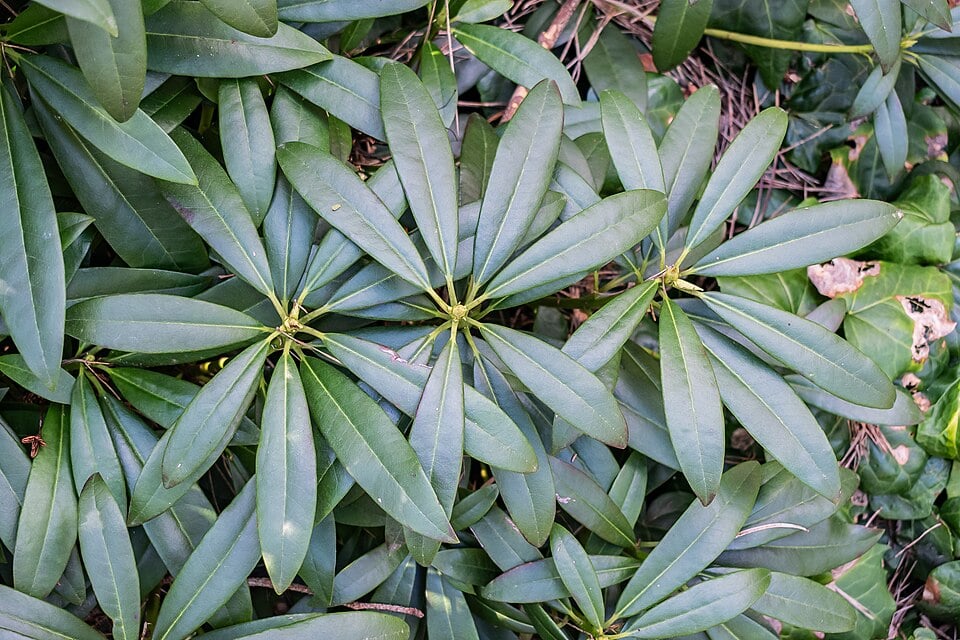
Leaf
Liliane Roubaudi, Tela Botanica · CC BY-SA 2.0

Tree heath

Erica arborea L.
Also known as: Giant heather
Family: Ericaceae
1 to 3 m tall, sometimes more in the Mediterranean region
Garrigue, heaths, dry gardens, acid soils
Flowering: March – May
Full sun
Part shade
Hardy to -12°C

❓ How do you recognise this plant?

The extremely hard root burl of this heath is the wood traditionally used to make pipes. These two heaths can form an upright shrub of similar outline, sometimes more than a metre tall. But tree heath bears numerous small, strongly scented white bells that cover the twigs abundantly, whereas besom heath has tiny, barely visible greenish flowers borne in long narrow racemes — a good clue when both are in flower, less useful outside the flowering season when their outlines look more alike.
🍃 Leaves
Evergreen, very fine needles in whorls, dark green
🌸 Flowers
Tiny scented white bells in great numbers
🍎 Fruits
Small dry capsules
🪵 Bark
Reddish-brown bark peeling in strips, very hard root burl
🗺️ Distribution
Mediterranean basin, East Africa at altitude; found in the maquis and garrigue of southern France.
🐝 Value for pollinators
Early, abundant flowering, rich in nectar, important for bees in late winter.
✂️ Horticultural uses
Planted in borders or informal hedges in acid soil; the root burl is traditionally used to make pipes (briar root).

⚠️ Possible toxicity

No known toxicity.

⚠️ Look-alike species

Tree heath
Tree heath
Erica arborea
Besom heath
Besom heath
Erica scoparia

These two heaths can form an upright shrub of similar outline, sometimes more than a metre tall. But tree heath bears numerous small, strongly scented white bells that cover the twigs abundantly, whereas besom heath has tiny, barely visible greenish flowers borne in long narrow racemes — a good clue when both are in flower, less useful outside the flowering season when their outlines look more alike.

ℹ️ Educational profile — do not use it to judge whether a plant is edible or safe.

🌱 This database is constantly evolving — species and information are added and corrected regularly. Spotted a mistake? Report it below.

© Floraneo — profile content is protected; reproduction without permission is prohibited. Photos remain under their own licence (see the credit shown on each photo).