Japanese plum
Prunus salicina Lindl.
Also known as: Chinese plum
Family: Rosaceae
4 to 8 m tall
Planted in orchards, deep, free-draining soils
Flowering: March, before the leaves
Full sun
Fairly hardy, to about -20°C, but sensitive to late frosts on the early flowering
❓ How do you recognise this plant?
The Japanese plum flowers among the very first fruit trees of spring, just after the almond — an early flowering that exposes it to late frosts but makes it a vital resource for the first active bees. Two 'plum trees' with fruits of very variable colour (yellow, red, purple depending on variety), easily confused by a beginner. The Japanese plum flowers earlier and more abundantly, often from March before the leaves, with flowers in groups of 2-3; its fruits are generally larger, rounder and firmer, with a stone that clings to the flesh — unlike the stone that separates easily in the plum.
🍃 Leaves
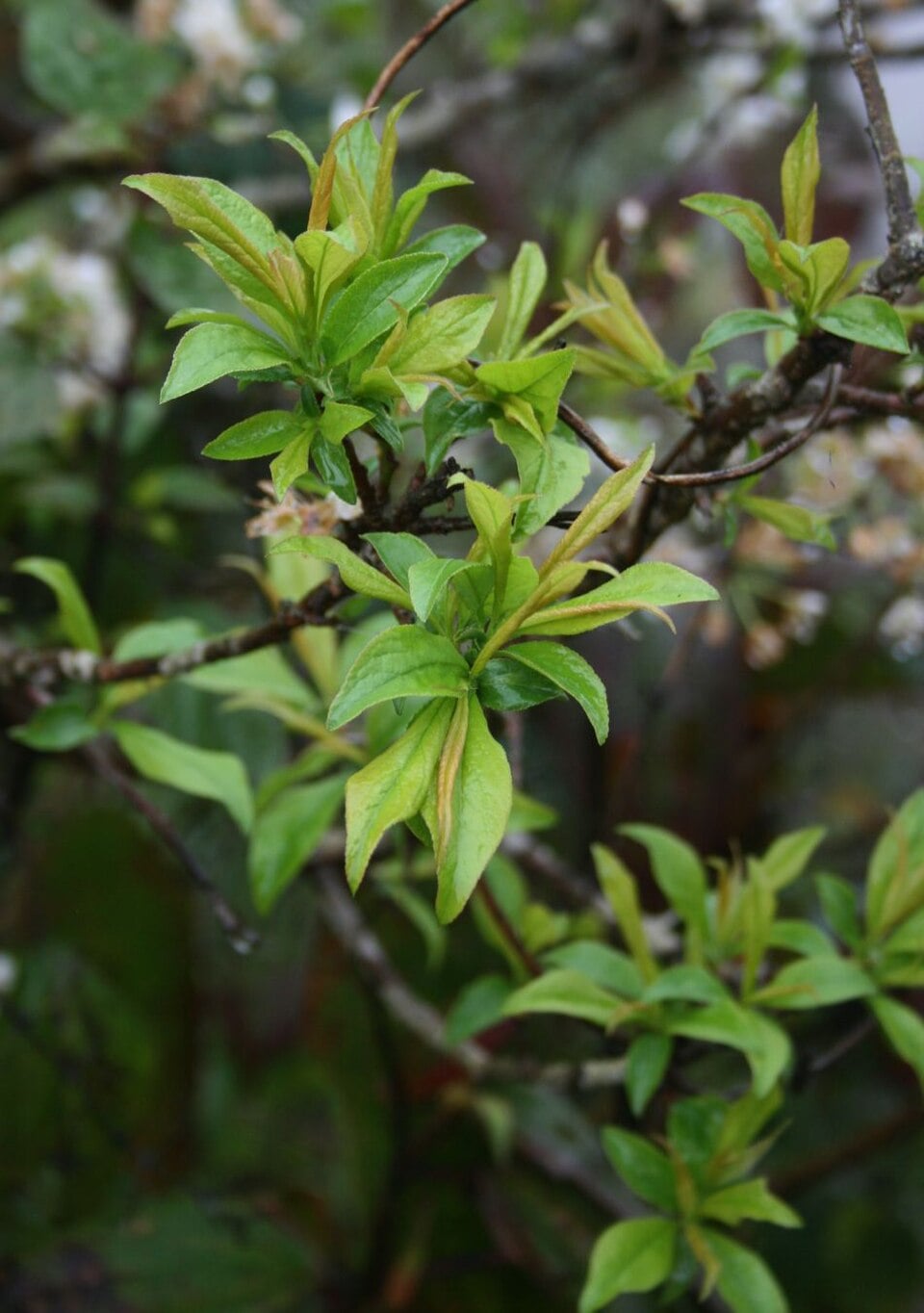
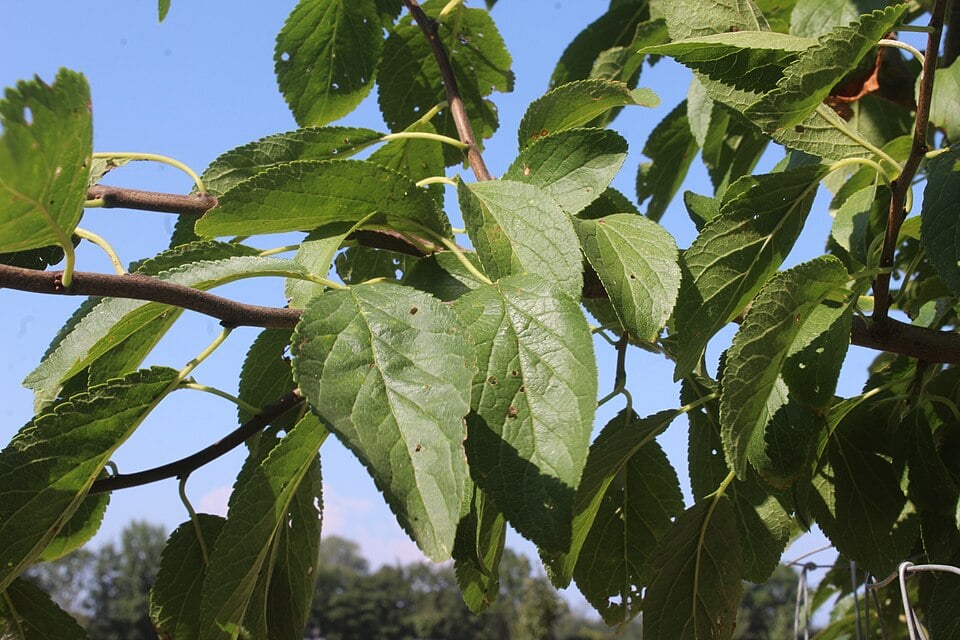
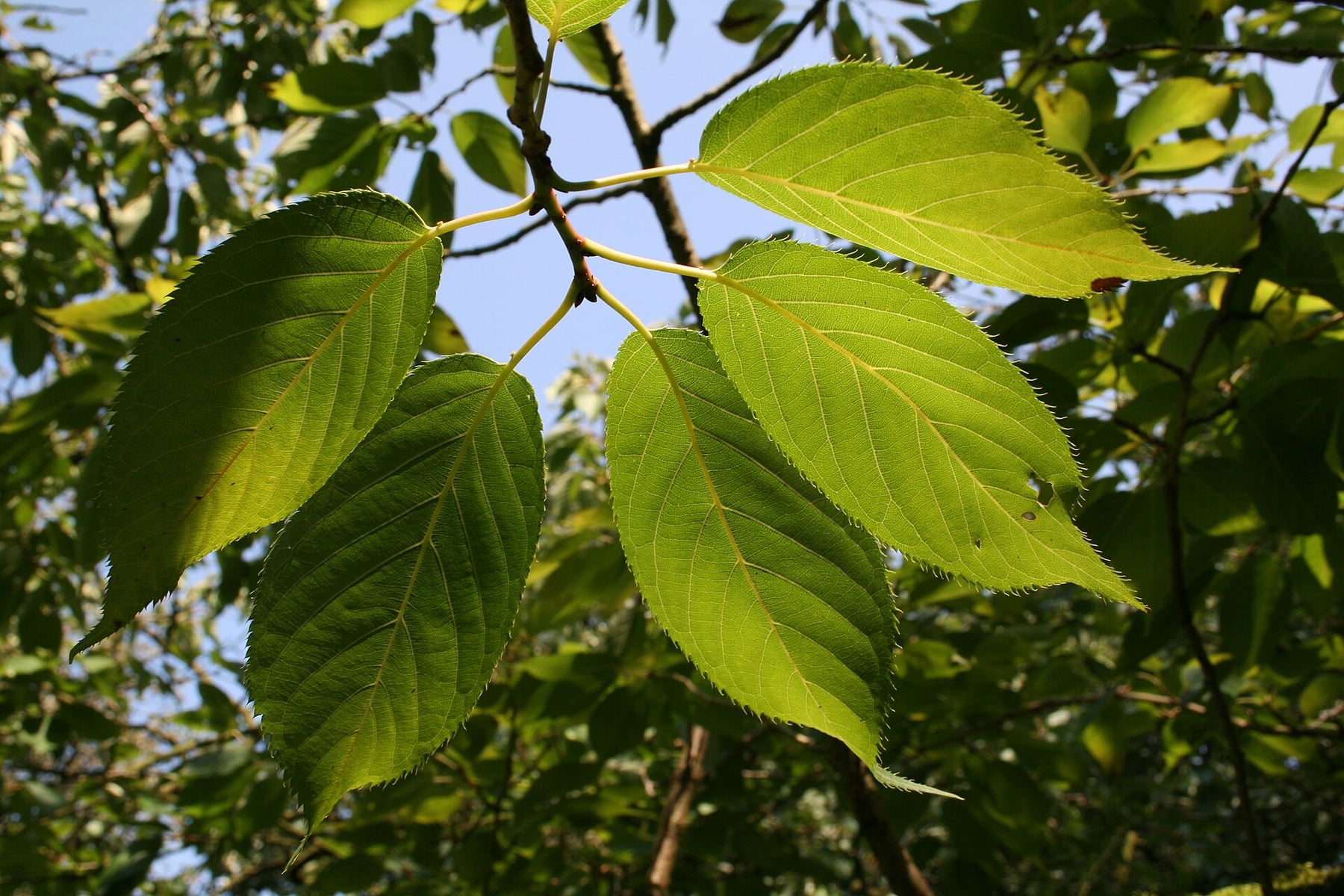
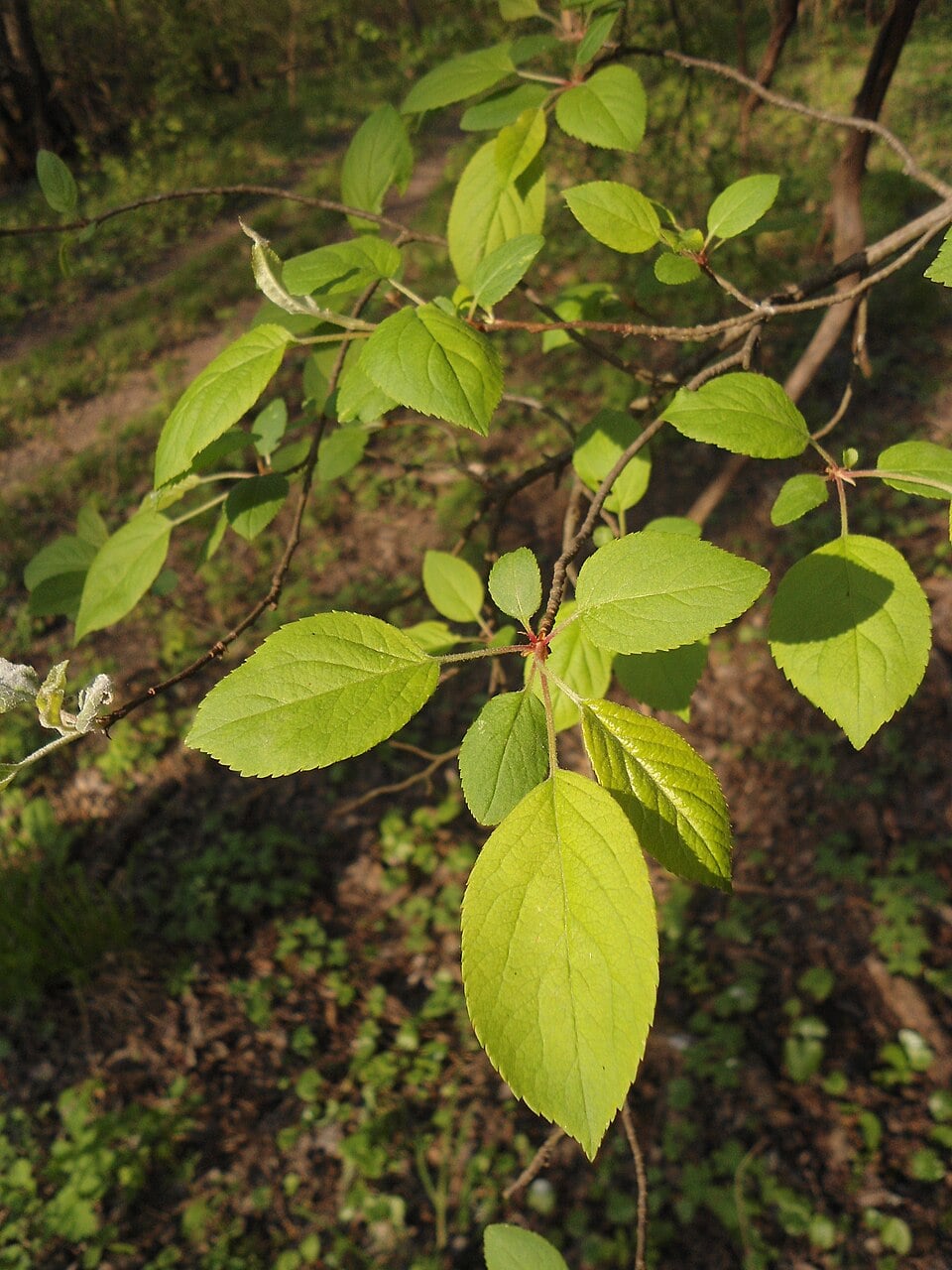
Deciduous, ovate-lanceolate, finely toothed, glossy
🌸 Flowers
White, in groups of 2-3, appearing early in spring before the foliage
🍎 Fruits
Round to ovoid drupe, skin red, yellow or green depending on variety, juicy, sweet flesh
🪵 Bark
Reddish-brown, horizontal lenticels
🗺️ Distribution
Native to China; cultivated in France especially in the south, often under the name Japanese plum
🐝 Value for pollinators
Very early flowering, an important resource for the first bees of spring
✂️ Horticultural uses
Orchard fruit tree, valued for its very early flowering and its juicy, sweet fruits
ℹ️ Educational profile — do not use it to judge whether a plant is edible or safe.
🌱 This database is constantly evolving — species and information are added and corrected regularly. Spotted a mistake? Report it below.
© Floraneo — profile content is protected; reproduction without permission is prohibited. Photos remain under their own licence (see the credit shown on each photo).