Plum or Japanese plum: how to tell them apart?

Plum and Japanese plum look alike and are often mixed up. Here is how to tell them apart, feature by feature, with their photos and the details to look for.
⚡ The quick answer
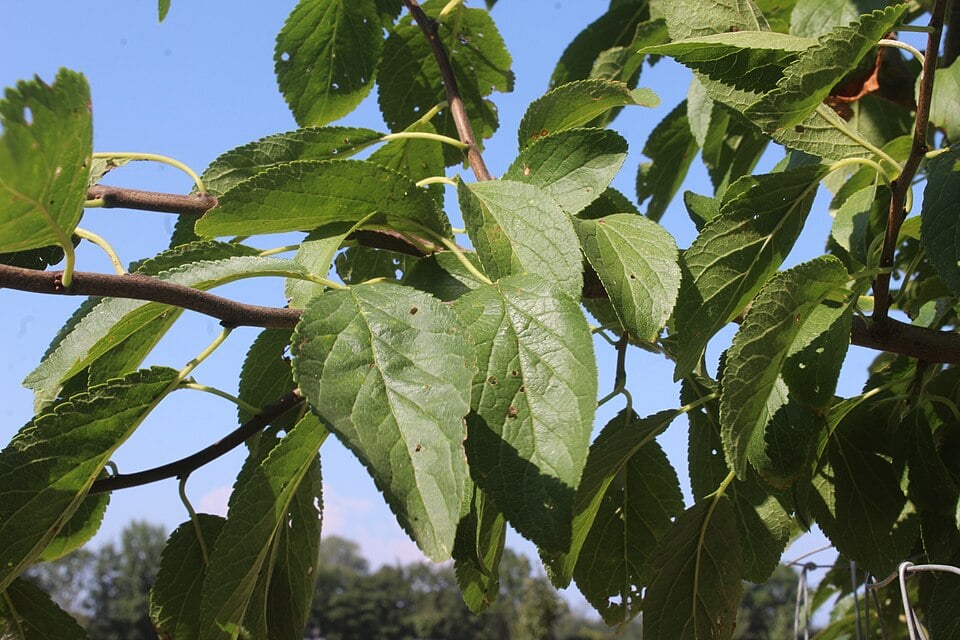
Plum
Plum
Prunus domestica
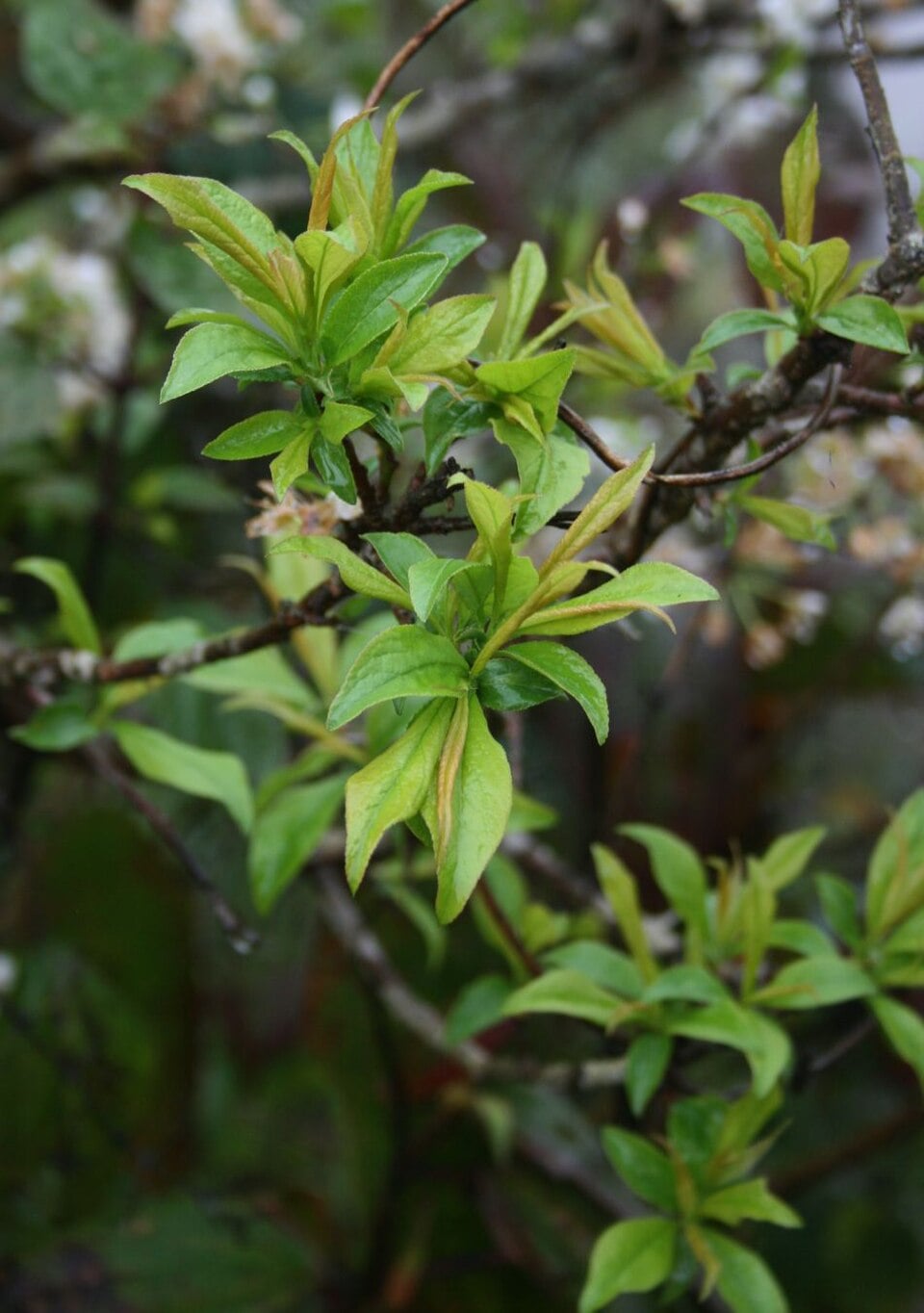
Japanese plum
Japanese plum
Prunus salicina

Two 'plum trees' with fruits of very variable colour (yellow, red, purple depending on variety), easily confused by a beginner. The plum has a stone that separates easily from the flesh, whereas the Japanese plum flowers earlier and more abundantly (often from March before the leaves, flowers in groups of 2-3) and produces generally larger, rounder and firmer fruits, with a clinging stone.

🍃 Leaves
Elliptic to obovate, toothed, slightly downy beneath
Deciduous, ovate-lanceolate, finely toothed, glossy
🌸 Flowers
White, solitary or in groups of 2-3, appearing early in spring
White, in groups of 2-3, appearing early in spring before the foliage
🍎 Fruits
Fleshy drupe (plum), purple, yellow or red depending on variety, with a flattened stone
Round to ovoid drupe, skin red, yellow or green depending on variety, juicy, sweet flesh
🪵 Bark
Greyish to dark brown, cracking into scales
Reddish-brown, horizontal lenticels
📏 Size
3 to 8 m tall
4 to 8 m tall
🗺️ Habitat
Orchards and gardens, sometimes naturalised at woodland edges
Planted in orchards, deep, free-draining soils
⚠️ Toxicity
Fruit flesh edible; the stone, leaves and bark contain amygdalin (a cyanide precursor), toxic in large quantities
Fruit edible; like other Prunus, the stone contains amygdalin and should not be eaten
🔎 And from the Japanese plum side
Two 'plum trees' with fruits of very variable colour (yellow, red, purple depending on variety), easily confused by a beginner. The Japanese plum flowers earlier and more abundantly, often from March before the leaves, with flowers in groups of 2-3; its fruits are generally larger, rounder and firmer, with a stone that clings to the flesh — unlike the stone that separates easily in the plum.
🌿 Go further

Want to practise spotting these details on real photos? Floraneo offers profiles and quizzes for dozens of look-alike species.

ℹ️ Educational profile — do not use it to judge whether a plant is edible or safe.