Leaf
Jerzy Opioła, Wikimedia · CC BY-SA 4.0
Japanese barberry
Berberis thunbergii DC.
Also known as: Thunberg's barberry
Family: Berberidaceae
1 to 2 m tall
Planted as a hedge or specimen, ordinary well-drained soils
Flowering: April – May
Full sun
Part shade
Very hardy, to about -25°C
❓ How do you recognise this plant?
Japanese barberry offers one of the most intense autumn colours among hedging shrubs, its leaves turning a brilliant scarlet red — a transformation that, combined with its spines, also makes it an excellent defensive hedge. Japanese barberry has mostly simple spines and wood with no particular colouring under the bark, whereas the native common barberry has characteristic 3-pronged spines and bright yellow wood just under the bark — a good additional test. The fruits are red on both, but Japanese barberry often keeps them all winter.
🍃 Leaves
Deciduous, small, oval, green or purple depending on variety, turning bright red in autumn
🌸 Flowers
Small, pale yellow, inconspicuous, clustered or solitary
🍎 Fruits
Small bright red berry, persisting all winter
🪵 Bark
Brown, spiny shoots
🗺️ Distribution
Native to Japan; very widely planted in France as a defensive hedge and ornamental shrub
🐝 Value for pollinators
Nectar-rich spring flowering, visited by bees
✂️ Horticultural uses
Defensive hedging shrub planted for its deterrent spines and spectacular bright red autumn colour, very widely available in purple- or gold-leaved varieties
⚠️ Possible toxicity
Bark, leaves and roots contain berberine (an alkaloid), as in other Berberis, although less well documented than in the native common barberry; the berries remain edible but tart.
🌱 Known cultivars
Rose Glow
New leaves bright pink mottled with white and purple, a unique marbled effect that later darkens to purple-bronze; one of the most recognisable coloured-foliage shrubs for low hedges.
Atropurpurea
The classic purple-leaved barberry with intense purple-red foliage all season, spiny and dense; this is the form most used as a coloured defensive hedge.
⚠️ Look-alike species
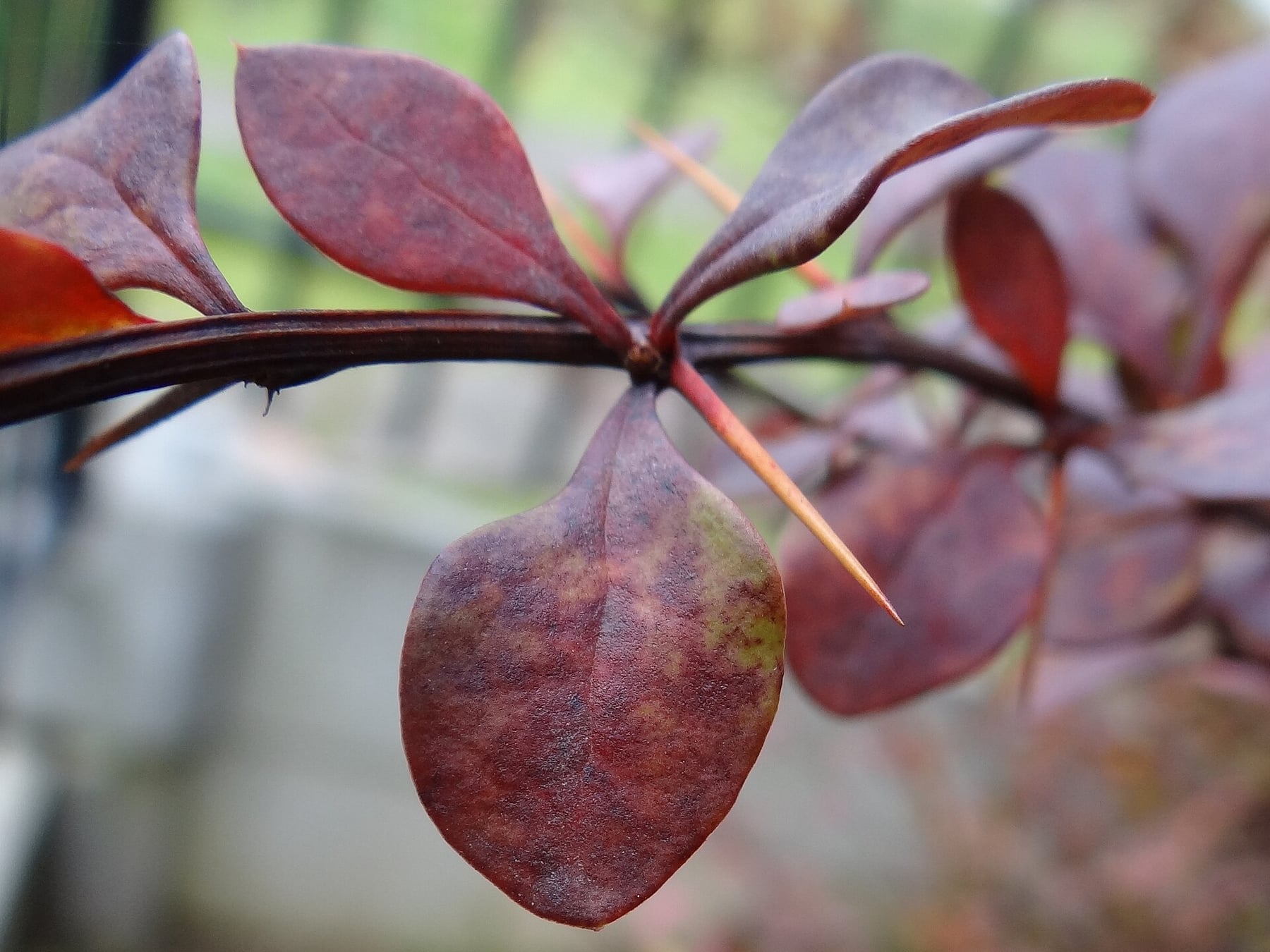
Japanese barberry
Berberis thunbergii
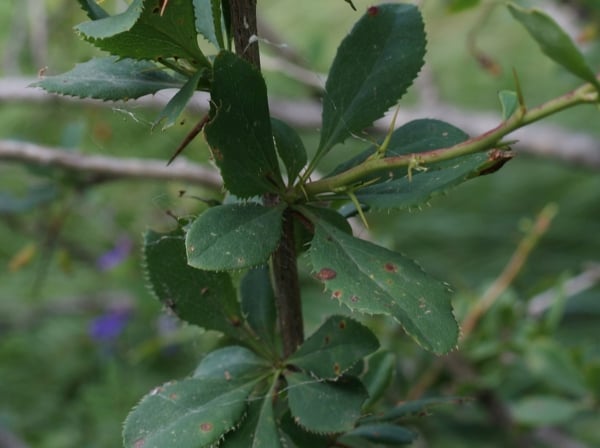
Common barberry
Berberis vulgaris
Japanese barberry has mostly simple spines and wood with no particular colouring under the bark, whereas the native common barberry has characteristic 3-pronged spines and bright yellow wood just under the bark — a good additional test. The fruits are red on both, but Japanese barberry often keeps them all winter.
🌿 Other Berberidaceae to discover


ℹ️ Educational profile — do not use it to judge whether a plant is edible or safe.
🌱 This database is constantly evolving — species and information are added and corrected regularly. Spotted a mistake? Report it below.
© Floraneo — profile content is protected; reproduction without permission is prohibited. Photos remain under their own licence (see the credit shown on each photo).