Leaf
Liliane Roubaudi, Tela Botanica · CC BY-SA 2.0
Common barberry
Berberis vulgaris L.
Also known as: European barberry
Family: Berberidaceae
1 to 3 m tall
Hedges and woodland edges on chalky soil
Flowering: May
Full sun
Part shade
Very hardy, to -25°C
❓ How do you recognise this plant?
The wood is bright yellow just under the bark — a simple test to confirm identification. Common barberry has clearly visible 3-pronged spines and bright yellow wood under the bark, whereas Japanese barberry has mostly simple (unbranched) spines and wood that lacks this characteristic yellow colouring. The flowers help too: yellow pendent racemes on the native barberry, smaller, inconspicuous flowers, often solitary or in pairs, on the Japanese one.
🍃 Leaves
Small, oval, finely saw-toothed, grouped in tufts
🌸 Flowers
Yellow pendent racemes
🍎 Fruits
Small, elongated bright red berries, very sour
🪵 Bark
Yellow beneath the grey bark, shoots bearing 3-pronged spines
🗺️ Distribution
Europe, western Asia, North Africa; found in hedges and woodland edges, in decline in France (host of black stem rust of wheat).
🐝 Value for pollinators
Yellow flowers in pendent racemes, rich in nectar, visited by bees in spring.
✂️ Horticultural uses
Planted as a spiny defensive hedge, although not recommended near cereal fields.
⚠️ Possible toxicity
Bark and roots toxic (alkaloids, including berberine); the fruits are edible once ripe and cooked.
⚠️ Look-alike species
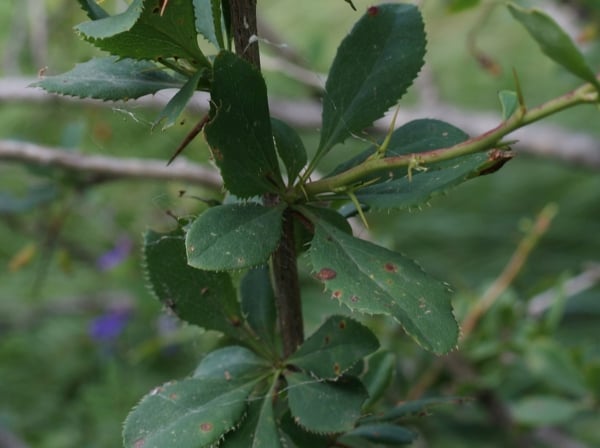
Common barberry
Berberis vulgaris
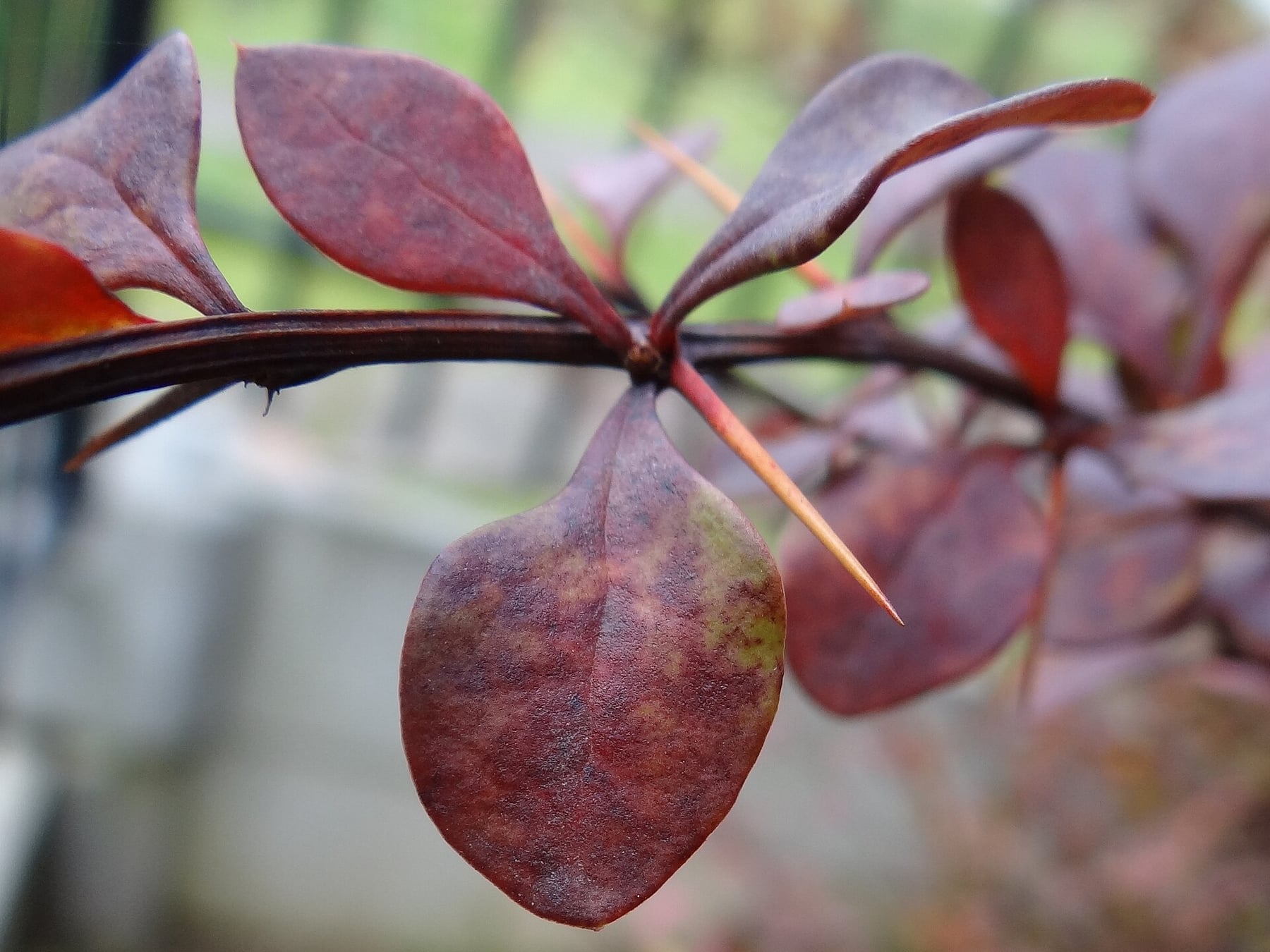
Japanese barberry
Berberis thunbergii
Common barberry has clearly visible 3-pronged spines and bright yellow wood under the bark, whereas Japanese barberry has mostly simple (unbranched) spines and wood that lacks this characteristic yellow colouring. The flowers help too: yellow pendent racemes on the native barberry, smaller, inconspicuous flowers, often solitary or in pairs, on the Japanese one.
🌿 Other Berberidaceae to discover


ℹ️ Educational profile — do not use it to judge whether a plant is edible or safe.
🌱 This database is constantly evolving — species and information are added and corrected regularly. Spotted a mistake? Report it below.
© Floraneo — profile content is protected; reproduction without permission is prohibited. Photos remain under their own licence (see the credit shown on each photo).