Common barberry or Japanese barberry: how to tell them apart?
Common barberry and Japanese barberry look alike and are often mixed up. Here is how to tell them apart, feature by feature, with their photos and the details to look for.
⚡ The quick answer
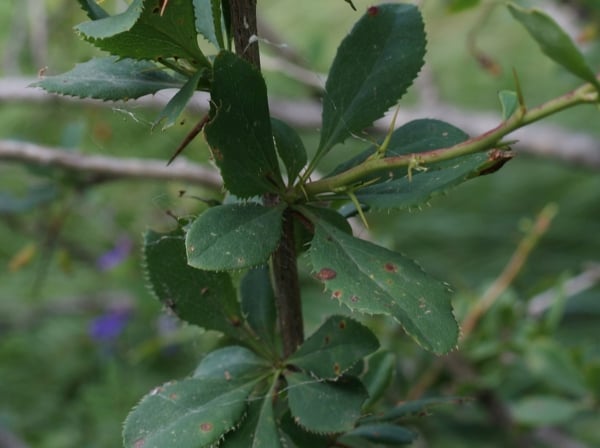
Common barberry
Berberis vulgaris
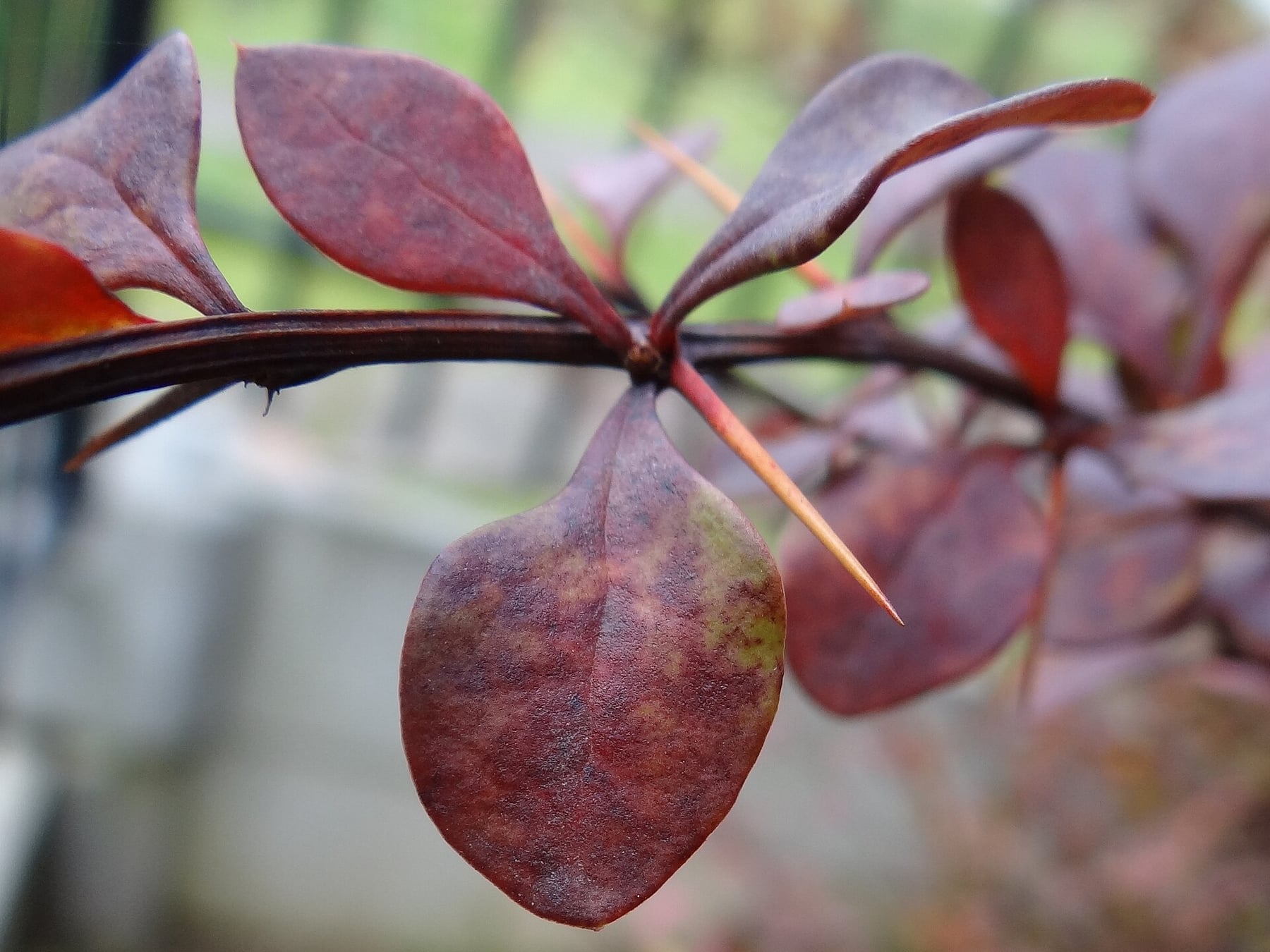
Japanese barberry
Berberis thunbergii
Common barberry has clearly visible 3-pronged spines and bright yellow wood under the bark, whereas Japanese barberry has mostly simple (unbranched) spines and wood that lacks this characteristic yellow colouring. The flowers help too: yellow pendent racemes on the native barberry, smaller, inconspicuous flowers, often solitary or in pairs, on the Japanese one.
🍃 Leaves
Small, oval, finely saw-toothed, grouped in tufts
Deciduous, small, oval, green or purple depending on variety, turning bright red in autumn
🌸 Flowers
Yellow pendent racemes
Small, pale yellow, inconspicuous, clustered or solitary
🍎 Fruits
Small, elongated bright red berries, very sour
Small bright red berry, persisting all winter
🪵 Bark
Yellow beneath the grey bark, shoots bearing 3-pronged spines
Brown, spiny shoots
📏 Size
1 to 3 m tall
1 to 2 m tall
🗺️ Habitat
Hedges and woodland edges on chalky soil
Planted as a hedge or specimen, ordinary well-drained soils
⚠️ Toxicity
Bark and roots toxic (alkaloids, including berberine); the fruits are edible once ripe and cooked.
Bark, leaves and roots contain berberine (an alkaloid), as in other Berberis, although less well documented than in the native common barberry; the berries remain edible but tart.
🔎 And from the Japanese barberry side
Japanese barberry has mostly simple spines and wood with no particular colouring under the bark, whereas the native common barberry has characteristic 3-pronged spines and bright yellow wood just under the bark — a good additional test. The fruits are red on both, but Japanese barberry often keeps them all winter.
🌿 Go further
Want to practise spotting these details on real photos? Floraneo offers profiles and quizzes for dozens of look-alike species.
ℹ️ Educational profile — do not use it to judge whether a plant is edible or safe.