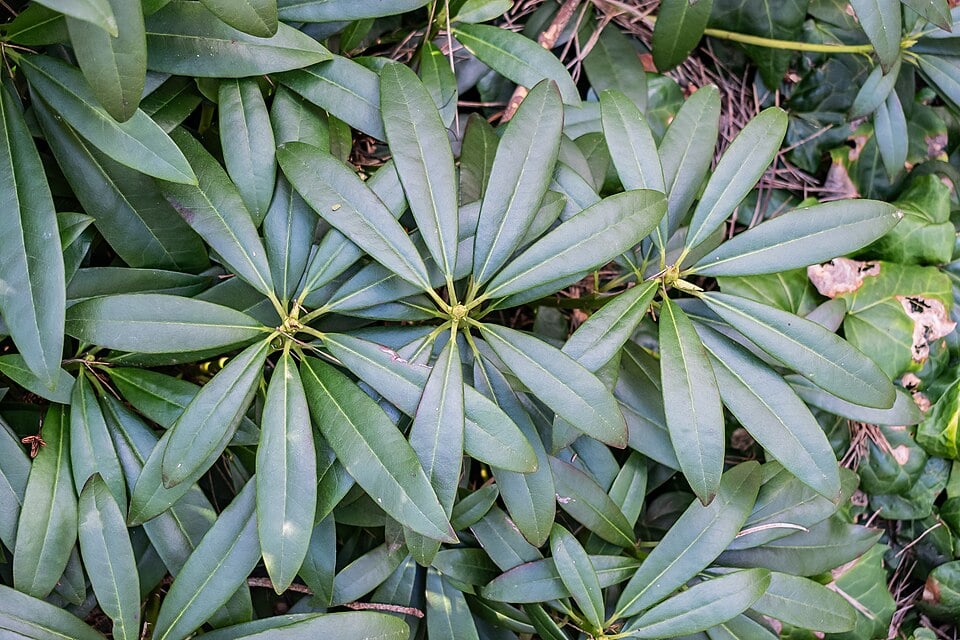
Leaf
Yoan Martin, Tela Botanica · CC BY-SA 2.0
Telling heaths apart ›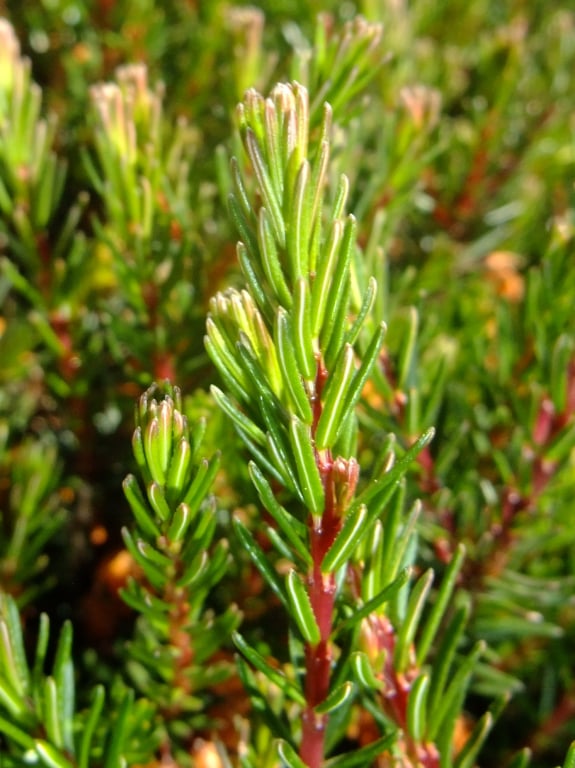
 See the full comparison →
- 15 to 30 cm tall, in a spreading mat
- Open pine woods, scree and rocky slopes of the Alps; in gardens, rockeries, banks and winter beds in sun, including on slightly limy soils
- Full sun, Part shade
- Very hardy, to -25°C
In flower from December to April
5 months❓ How do you recognise this plant?
It flowers from December to April, sometimes under snow, and is one of the few heathers to tolerate a slightly limy soil, which makes it the garden heather par excellence. Winter heath flowers in midwinter, from December to April, in bright pink bells with protruding blackish-brown anthers, on a low mat that tolerates a little lime; bell heather flowers in summer (July to September), its bells are purple, rounder, and it needs an acid soil.
🍃 Leaves
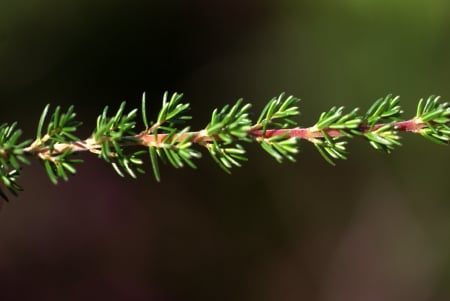
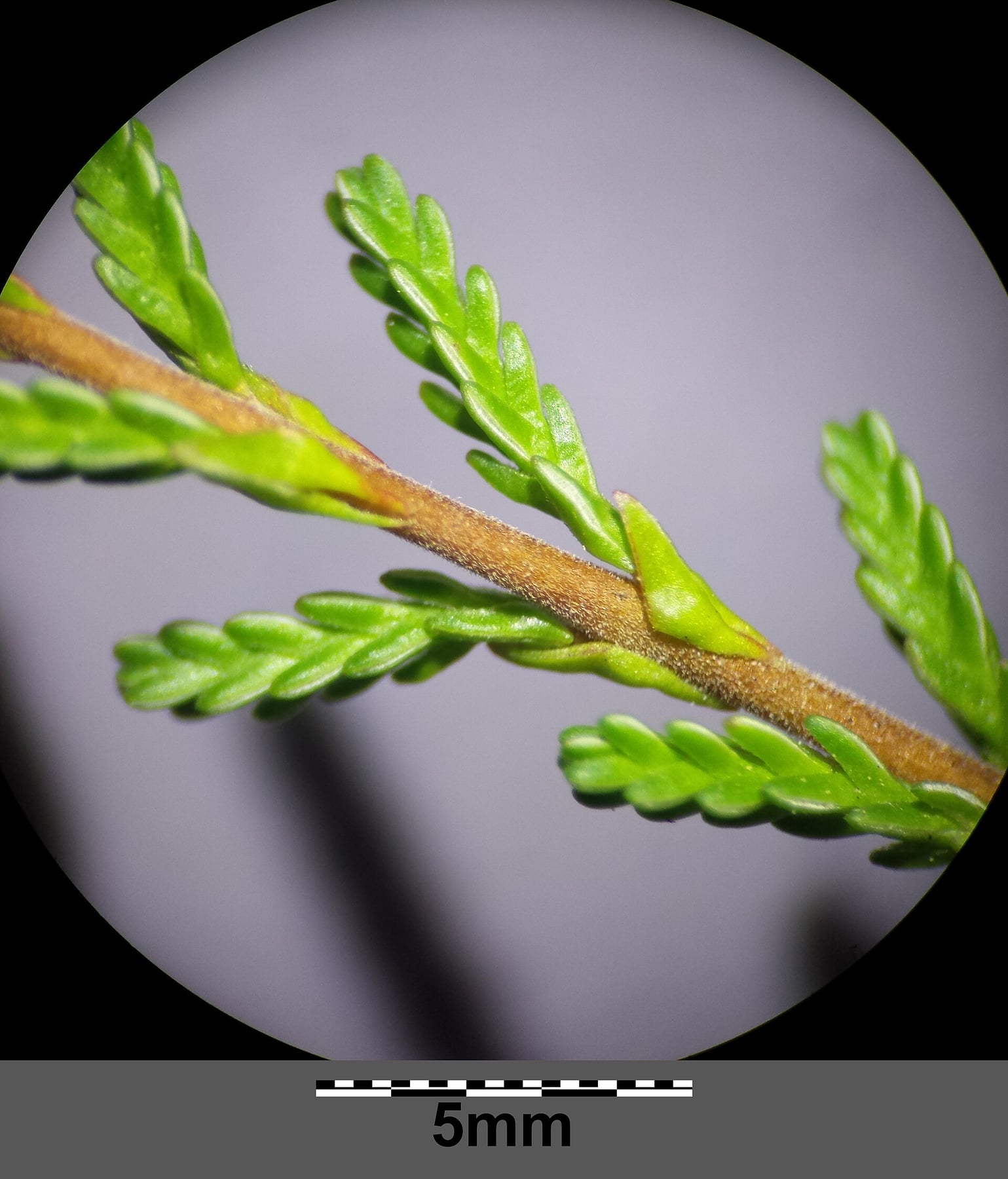
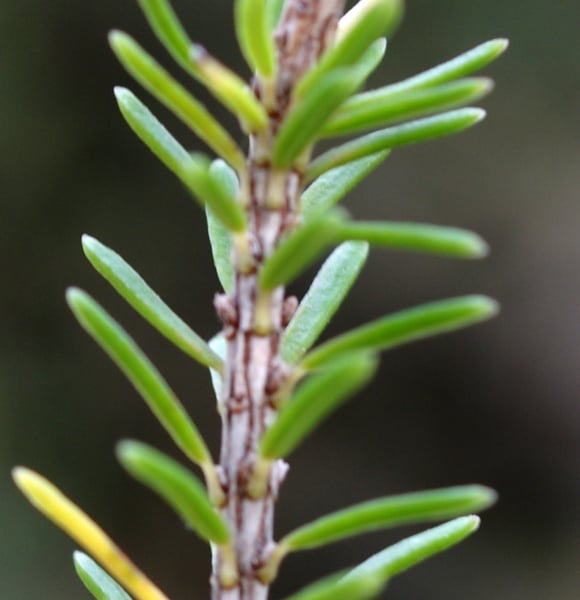
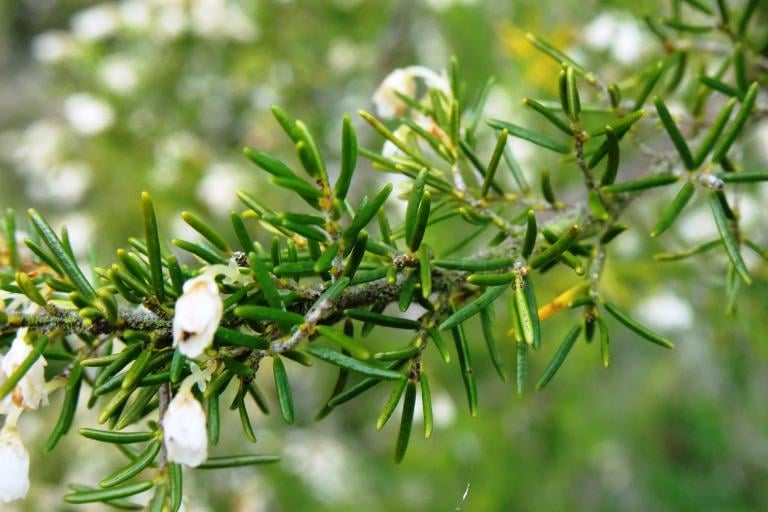
Evergreen, in fine linear needles 5 to 8 mm, whorled in fours around the stem, dark green
🌸 Flowers
Small tubular bells, bright pink, 5 to 6 mm, grouped in one-sided racemes, with blackish-brown anthers protruding from the corolla
🍎 Fruits
Small dry capsules containing tiny seeds
🪵 Bark
Woody stems, spreading or creeping, reddish-brown
Distribution, pollinators, uses
🗺️ Distribution
The Alps, Apennines and Balkans; locally naturalised on limy mountain soils
🐝 Value for pollinators
Winter flowering that is very valuable for queen bumblebees and bees that come out in mild weather
✂️ Horticultural uses
Ground cover for rockeries and banks, flowering in midwinter and until spring; one of the few heathers that tolerate lime
⚠️ Possible toxicity
No notable toxicity known
⚠️ Look-alike species
Winter heath
Erica carnea
Bell heather
Erica cinerea
Winter heath flowers in midwinter, from December to April, in bright pink bells with protruding blackish-brown anthers, on a low mat that tolerates a little lime; bell heather flowers in summer (July to September), its bells are purple, rounder, and it needs an acid soil.
🌿 Other Ericaceae to discover
ℹ️ Educational profile — do not use it to judge whether a plant is edible or safe.
🌱 This database is constantly evolving — species and information are added and corrected regularly. Spotted a mistake? Report it below.
© Floraneo — profile content is protected; reproduction without permission is prohibited. Photos remain under their own licence (see the credit shown on each photo).