Leaf
Francesco Maschietto, Tela Botanica · CC BY-SA 2.0
Wall cotoneaster
Cotoneaster horizontalis Decne.
Also known as: Rockspray cotoneaster, Herringbone cotoneaster
Family: Rosaceae
- 0.5 to 1 m tall, fan-shaped spreading habit
- Banks, low walls, ground cover, all well-drained soils
- Full sun, Part shade
- Hardy to -20°C
In flower from May to June
2 months❓ How do you recognise this plant?
Its branches grow in a regular herringbone pattern, unique among shrubs. Milkflower cotoneaster is an upright, bushy shrub with large, puckered, evergreen leaves, whereas wall cotoneaster grows flat against the ground or walls, with branches arranged flat in a 'herringbone' pattern, with small round deciduous to semi-evergreen leaves.
Learn to recognise it
Common ornamental shrubs. This plant is in the lesson “Common ornamental shrubs”, with 10 others.
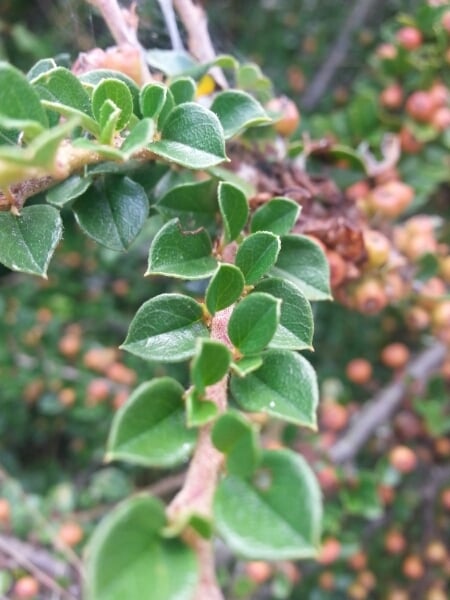


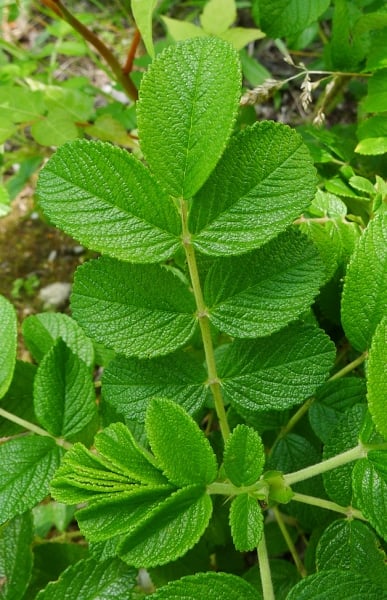
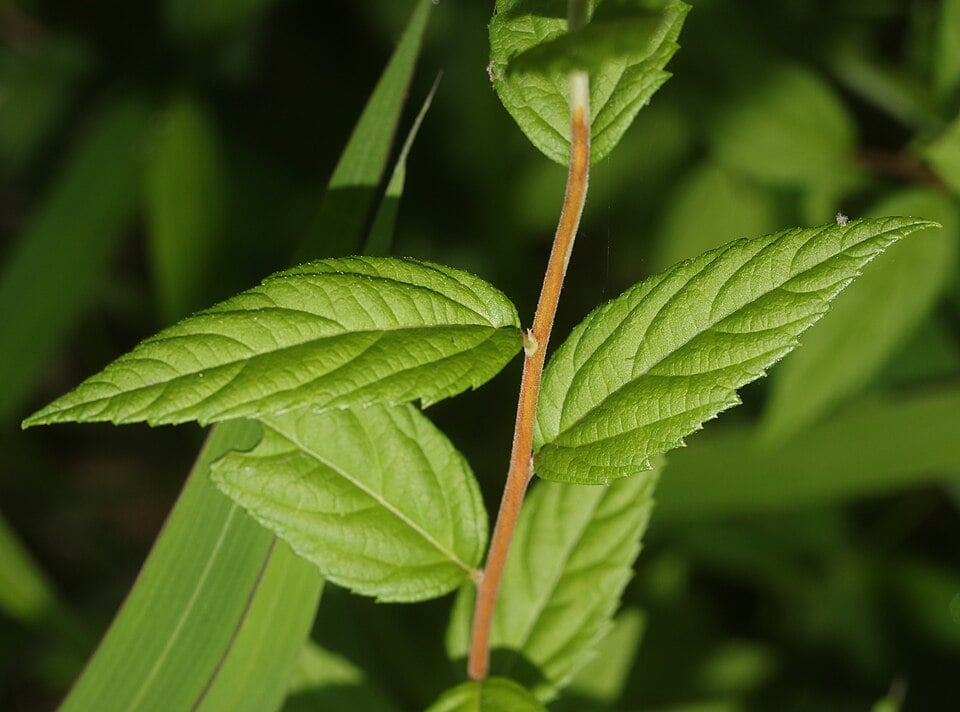
🍃 Leaves
Small, rounded, glossy green, turning red in autumn
🌸 Flowers
Tiny pink or white flowers, very rich in honey
🍎 Fruits
Small bright red berries persisting all winter
🪵 Bark
Thin twigs arranged in a characteristic herringbone pattern
Distribution, pollinators, uses
🗺️ Distribution
China; widely grown in France as an ornamental ground cover, sometimes naturalised.
🐝 Value for pollinators
Small pinkish-white flowers very rich in nectar, abundantly visited by bees in spring.
✂️ Horticultural uses
Planted as ground cover, on banks or along low walls for its spreading habit and decorative red berries in winter.
⚠️ Possible toxicity
Fruits (berries) mildly toxic if ingested, may cause digestive upset, notably in children and animals.
⚠️ Look-alike species
Wall cotoneaster
Cotoneaster horizontalis
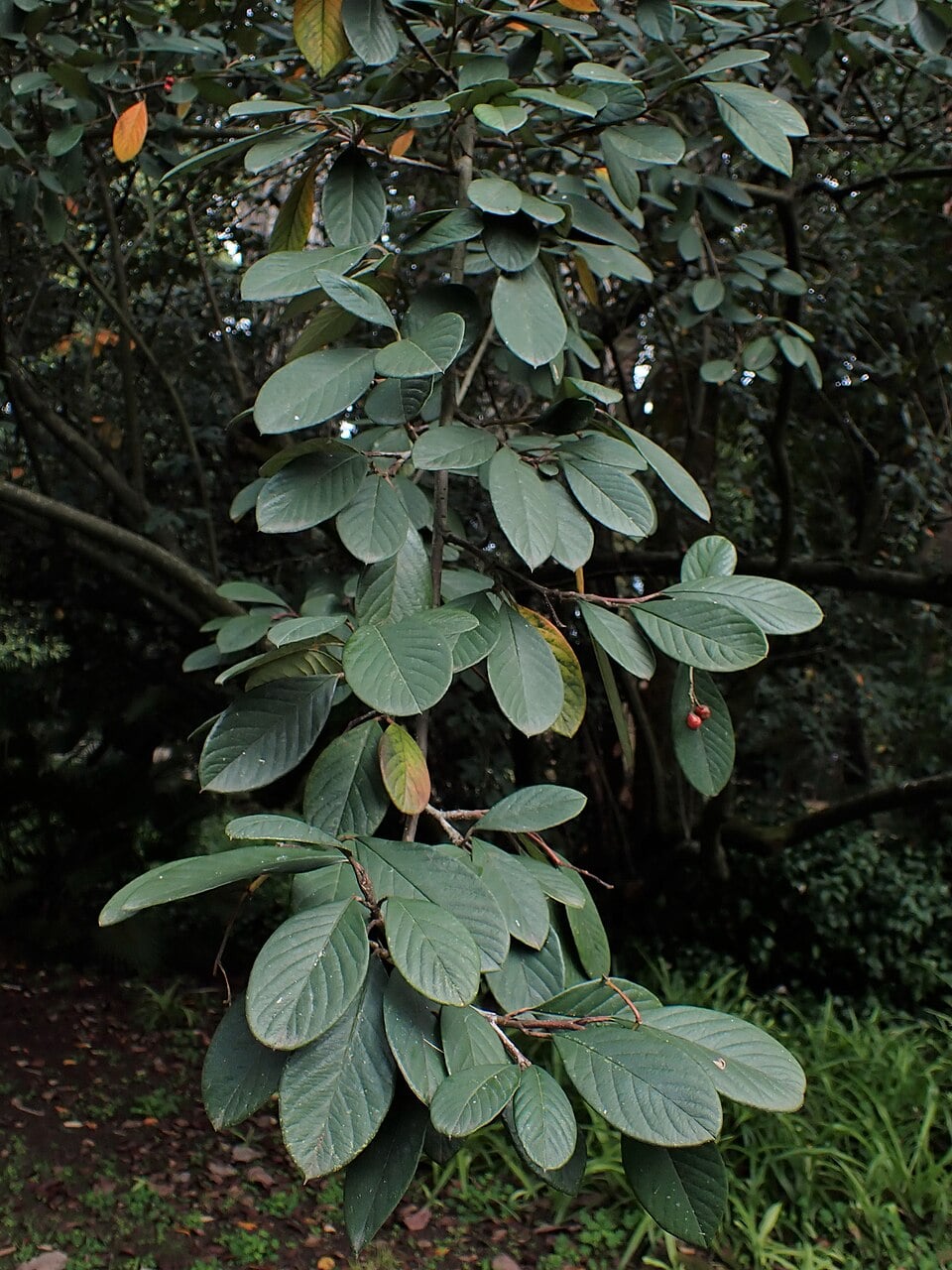
Milkflower cotoneaster
Cotoneaster lacteus
Milkflower cotoneaster is an upright, bushy shrub with large, puckered, evergreen leaves, whereas wall cotoneaster grows flat against the ground or walls, with branches arranged flat in a 'herringbone' pattern, with small round deciduous to semi-evergreen leaves.
🌿 Other Rosaceae to discover
ℹ️ Educational profile — do not use it to judge whether a plant is edible or safe.
🌱 This database is constantly evolving — species and information are added and corrected regularly. Spotted a mistake? Report it below.
© Floraneo — profile content is protected; reproduction without permission is prohibited. Photos remain under their own licence (see the credit shown on each photo).