Planted in orchards and gardens, mild Mediterranean climate
Flowering: March – May
Full sun
Not very hardy, dislikes frost below -5°C
❓ How do you recognise this plant?
The highly fragrant orange blossom has been distilled for centuries to produce orange flower water used in cooking and perfumery — a single flower can scent several litres of water. Very similar foliage and silhouette. The mandarin is distinguished by smaller, flattened fruits with skin that peels off easily, unlike the orange.
🍃 Leaves
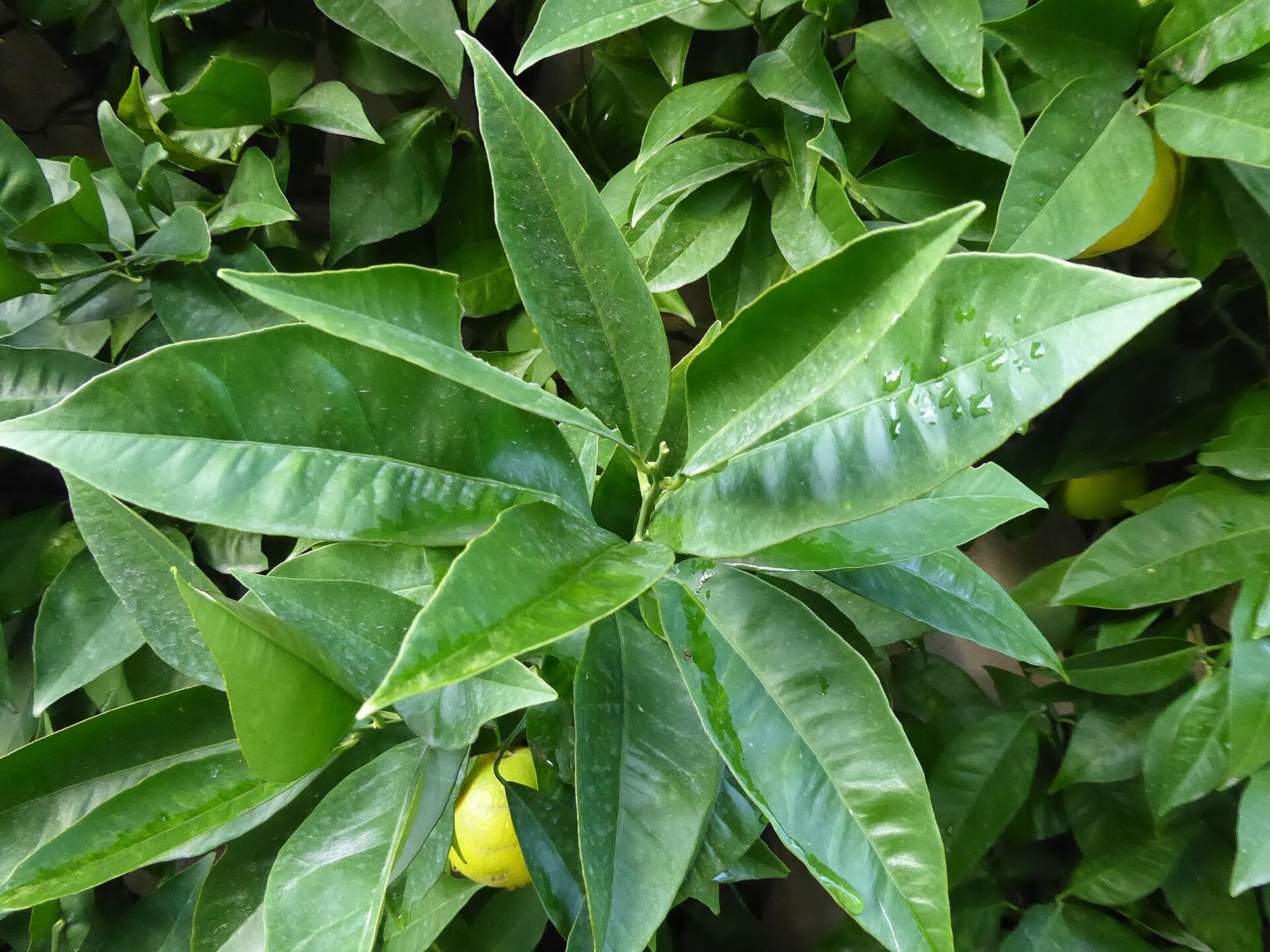
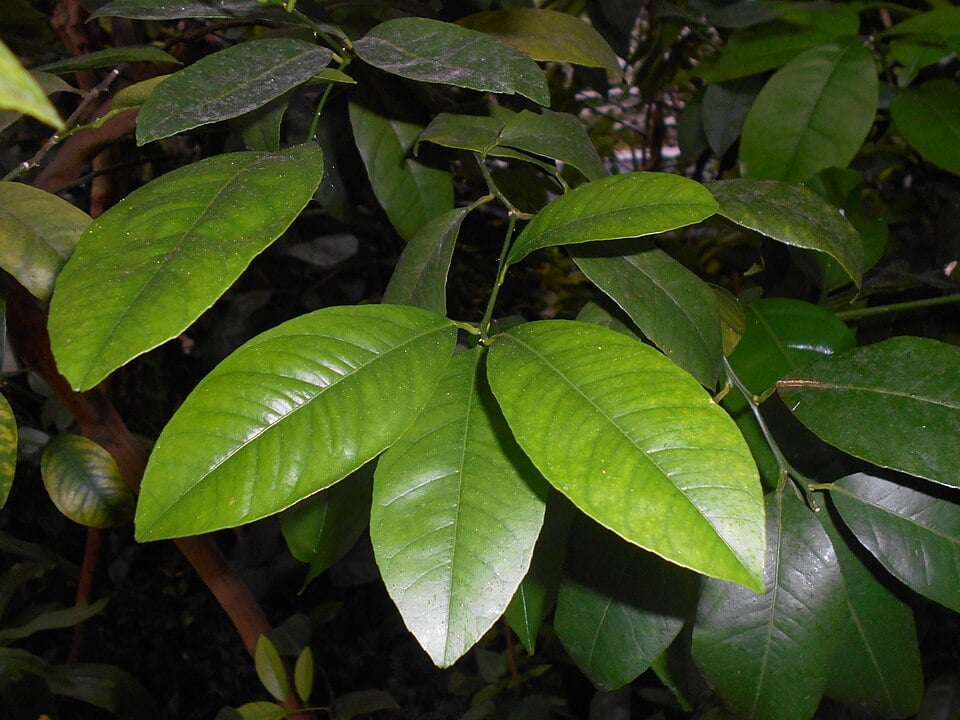
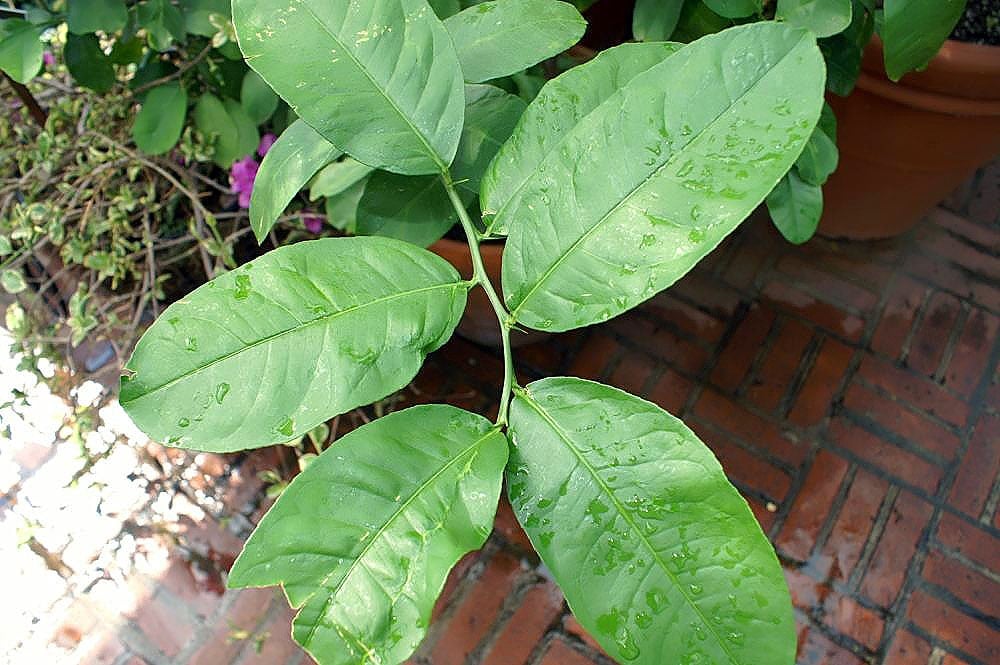
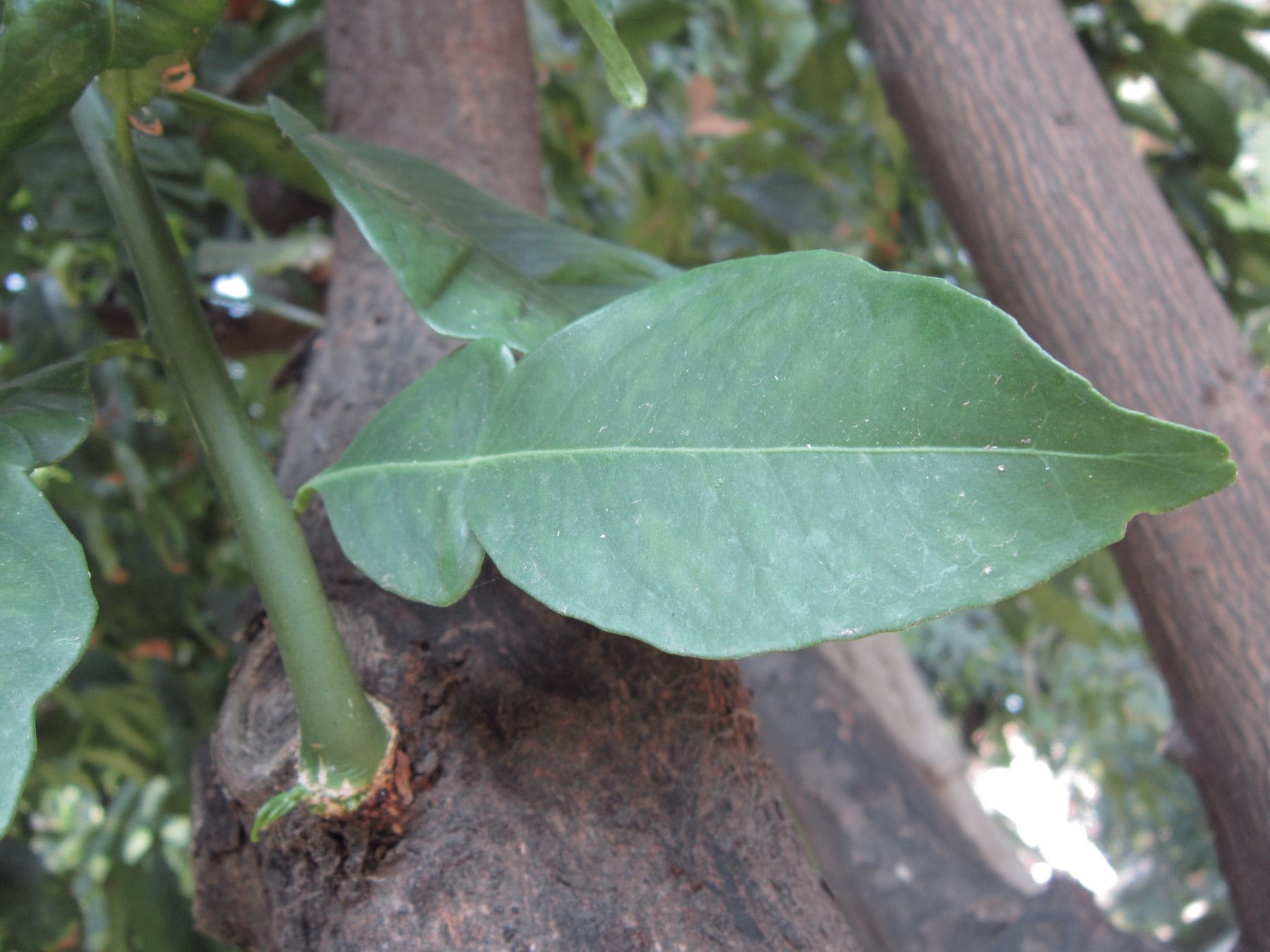
Evergreen, ovate, glossy, aromatic when crushed, petiole slightly winged
🌸 Flowers
White, very fragrant (orange blossom), clustered or solitary
🍎 Fruits
Large round citrus fruit, orange when ripe, sweet pulp divided into segments
🪵 Bark
Greyish, smooth on young specimens
🗺️ Distribution
Native to Asia; grown around the French Mediterranean, notably in Corsica
🐝 Value for pollinators
Very fragrant, nectar-rich flowering, one of the most attractive to bees in spring
✂️ Horticultural uses
Fruit and ornamental tree for mild climates, flowers used in perfumery (orange flower water)
⚠️ Possible toxicity
Fruit edible for humans; the leaves, bark and zest contain essential oils and psoralens that are toxic to dogs and cats (digestive upset, dermatitis)
Both share very similar glossy, aromatic evergreen foliage, but the leaves of the sweet orange are clearly smaller than those of the lemon. The lemon's flower buds are tinged with purple before opening (pure white flowers on the orange), and its oval, thin-skinned yellow fruit contrasts with the round, thicker-skinned orange.
The Seville orange closely resembles the sweet orange in habit and glossy evergreen foliage, but its petiole is clearly more winged, its twigs are often thornier, and above all its fruit is inedible fresh because it is so bitter — unlike the sweet orange. Its larger, more fragrant flowers are the traditional source of orange flower water.