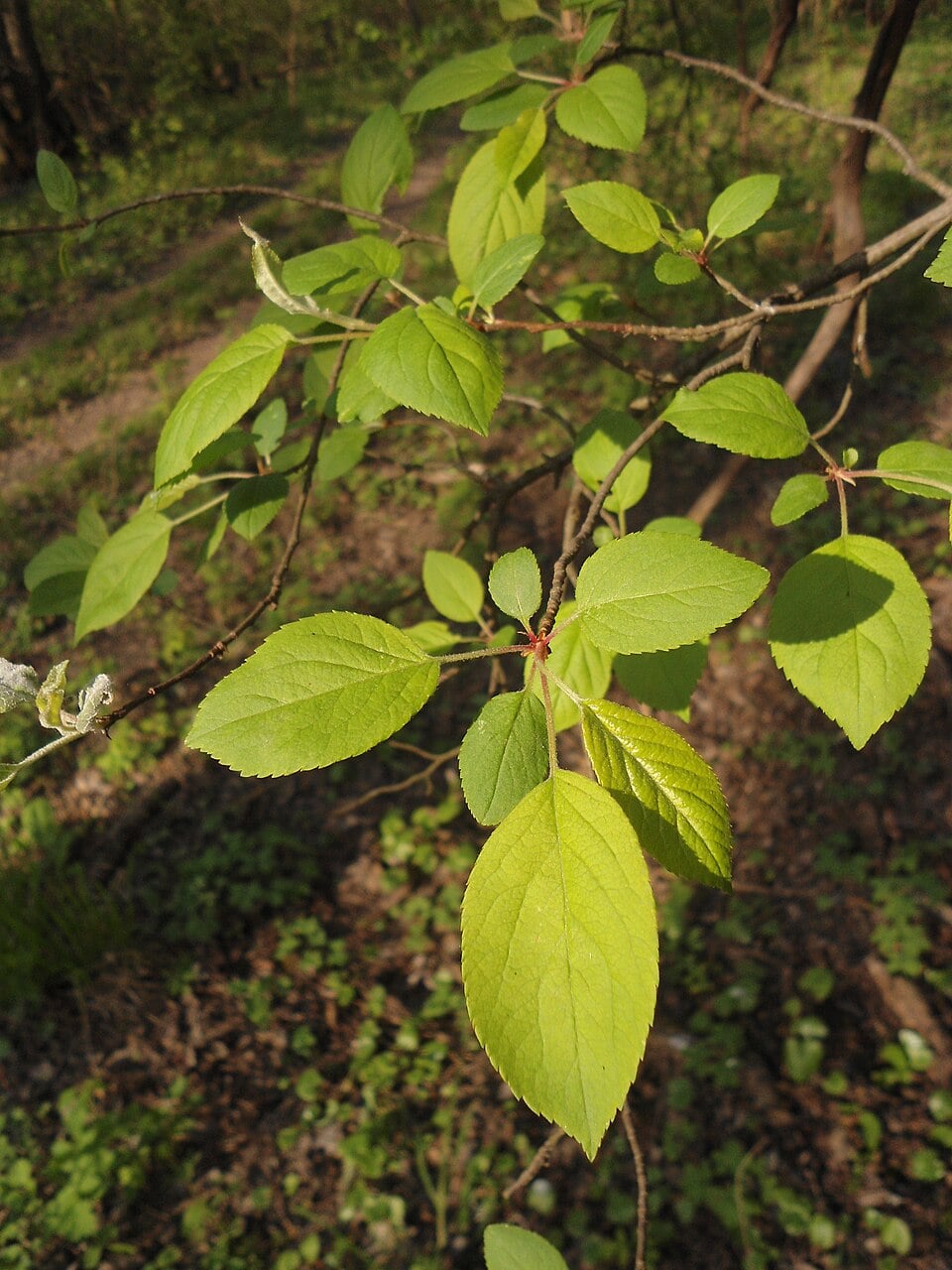
Leaf
Hladac, Wikimedia · CC BY-SA 4.0
Telling rowans and whitebeams apart ›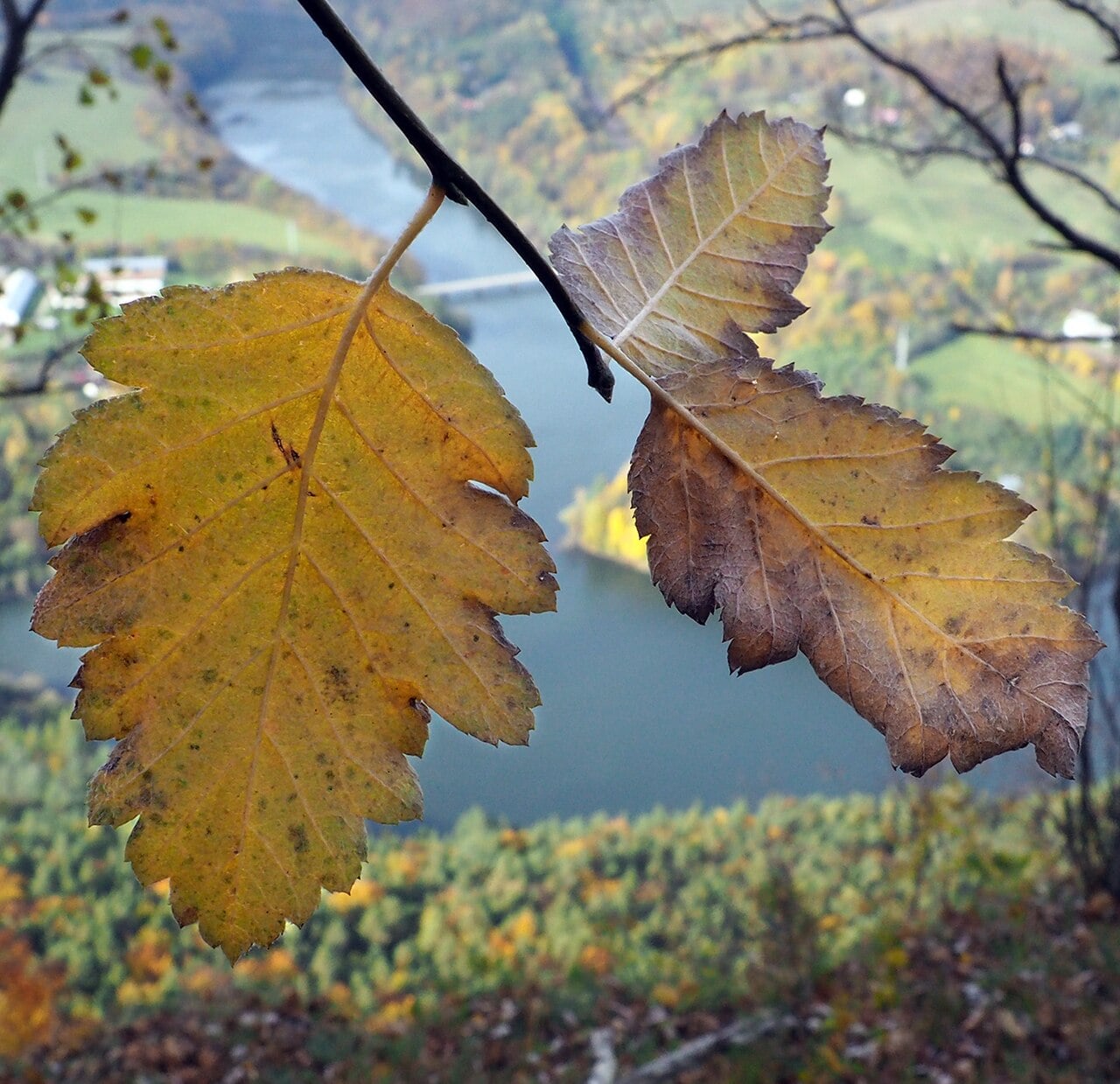
 See the full comparison →
- 8 to 12 m tall
- Urban avenues, parks and gardens, widely planted for its hardiness and resistance to pollution; ordinary soils, including limy ones; sometimes self-sown
- Full sun, Part shade
- Very hardy, to -30°C
In flower from May to June
2 months❓ How do you recognise this plant?
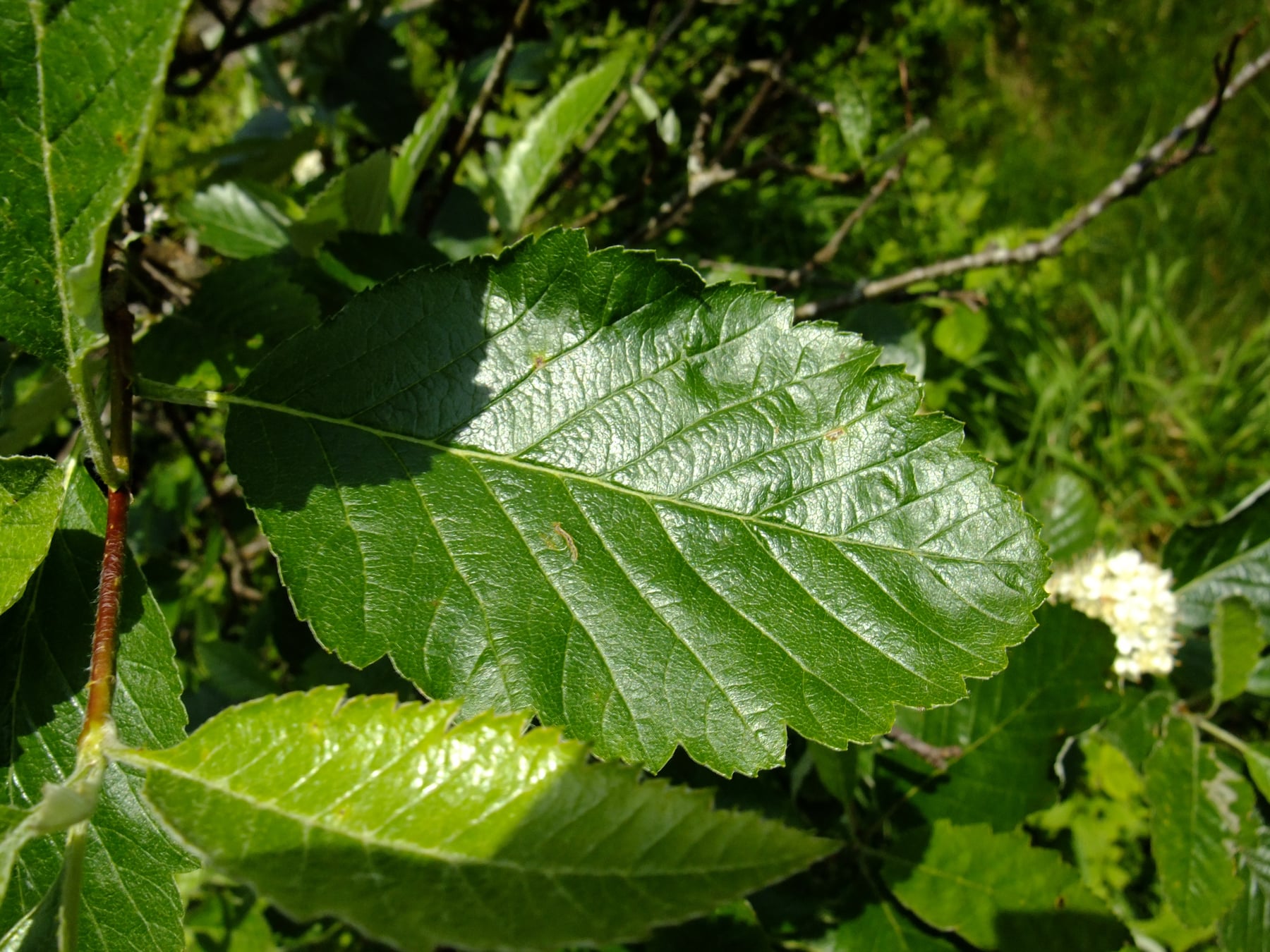
Widely planted along streets and car parks for its hardiness, this whitebeam is an old natural hybrid; its leaves, lobed at the base and felted beneath, distinguish it from the other rowans in our streets. Swedish whitebeam has lobed leaves, mainly in their lower half, and orange-red fruits; whitebeam, which is native, has leaves that are simply toothed, without lobes, snow-white beneath, and slightly larger red fruits.
🍃 Leaves
Deciduous, alternate, simple, ovate and 6 to 12 cm, cut into shallow rounded lobes, mainly in the lower half; glossy dark green above, felted grey beneath
🌸 Flowers
Small white five-petalled flowers in dense corymbs 5 to 10 cm across, lightly scented
🍎 Fruits
Small ovoid pomes 1 to 1.5 cm, orange-red, mealy at first; ripe at the end of summer, they are eaten by birds
🪵 Bark
Grey, smooth on young trees, then finely fissured
Distribution, pollinators, uses
🗺️ Distribution
Native to northern Europe (Scandinavia, the Baltic region); planted throughout Europe and locally self-sown
🐝 Value for pollinators
Nectar-rich flowering visited by bees and hoverflies; berries eaten by birds
✂️ Horticultural uses
Small avenue and garden tree, hardy and undemanding, tolerating pollution and wind well
⚠️ Possible toxicity
Fruits mealy and unpleasant, not to be presented as a safe food; they mainly feed birds
⚠️ Look-alike species
Swedish whitebeam
Sorbus intermedia
Whitebeam
Sorbus aria
Swedish whitebeam has lobed leaves, mainly in their lower half, and orange-red fruits; whitebeam, which is native, has leaves that are simply toothed, without lobes, snow-white beneath, and slightly larger red fruits.
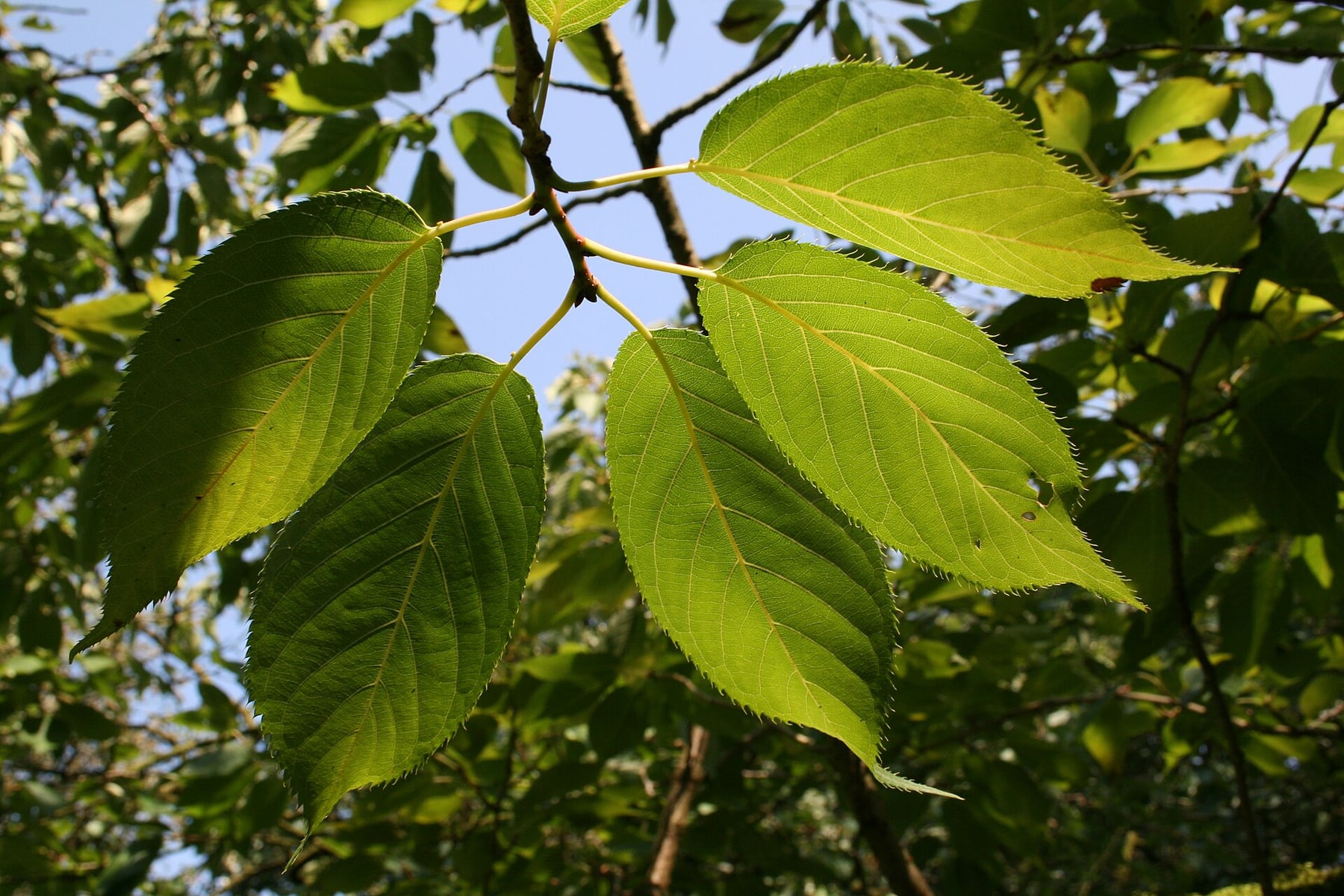
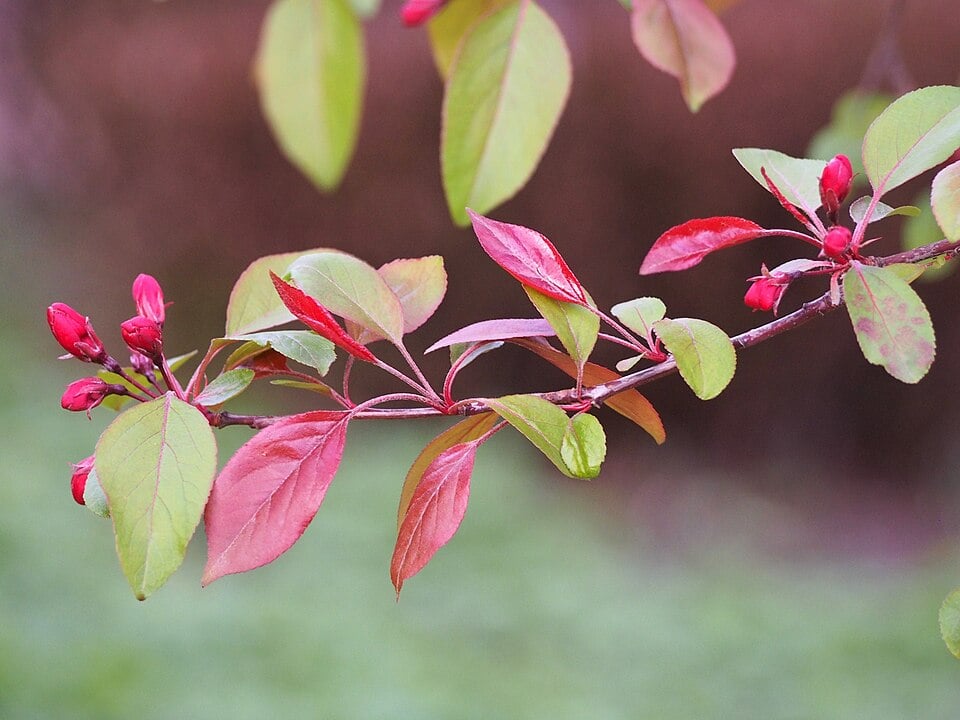
🌿 Other Rosaceae to discover
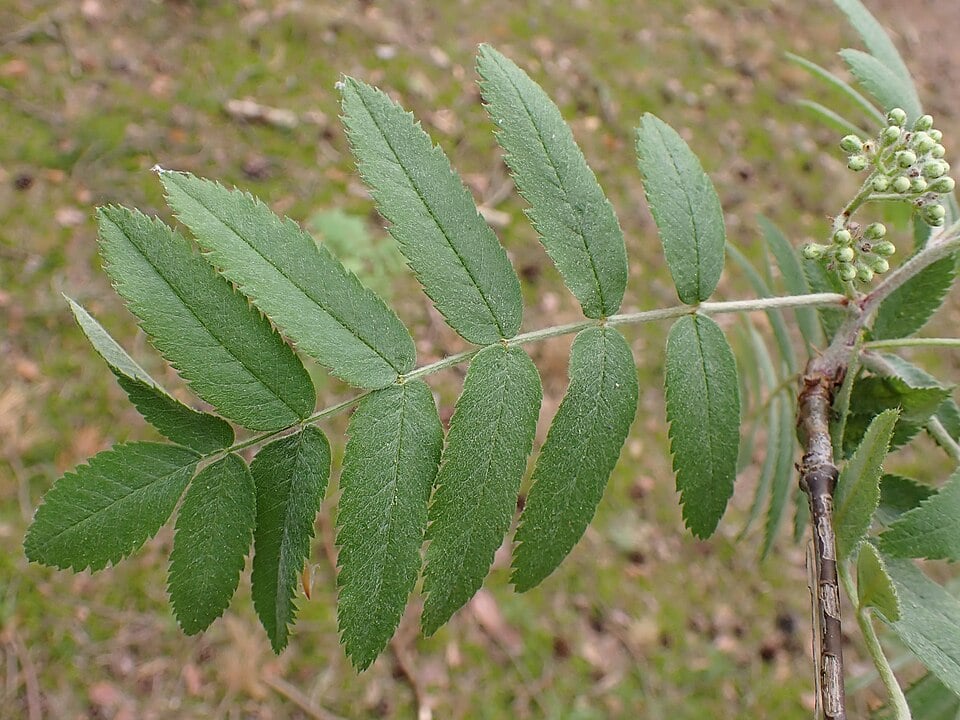
ℹ️ Educational profile — do not use it to judge whether a plant is edible or safe.
🌱 This database is constantly evolving — species and information are added and corrected regularly. Spotted a mistake? Report it below.
© Floraneo — profile content is protected; reproduction without permission is prohibited. Photos remain under their own licence (see the credit shown on each photo).