Leaf
Yoan Martin, Tela Botanica · CC BY-SA 2.0
Whitebeam
Sorbus aria (L.) Crantz
Also known as: Common whitebeam
Family: Rosaceae
10 to 15 m tall, sometimes up to 20 m
Limestone slopes, open mountain woodland
Flowering: May
Full sun
Part shade
Very hardy, to -25°C
❓ How do you recognise this plant?
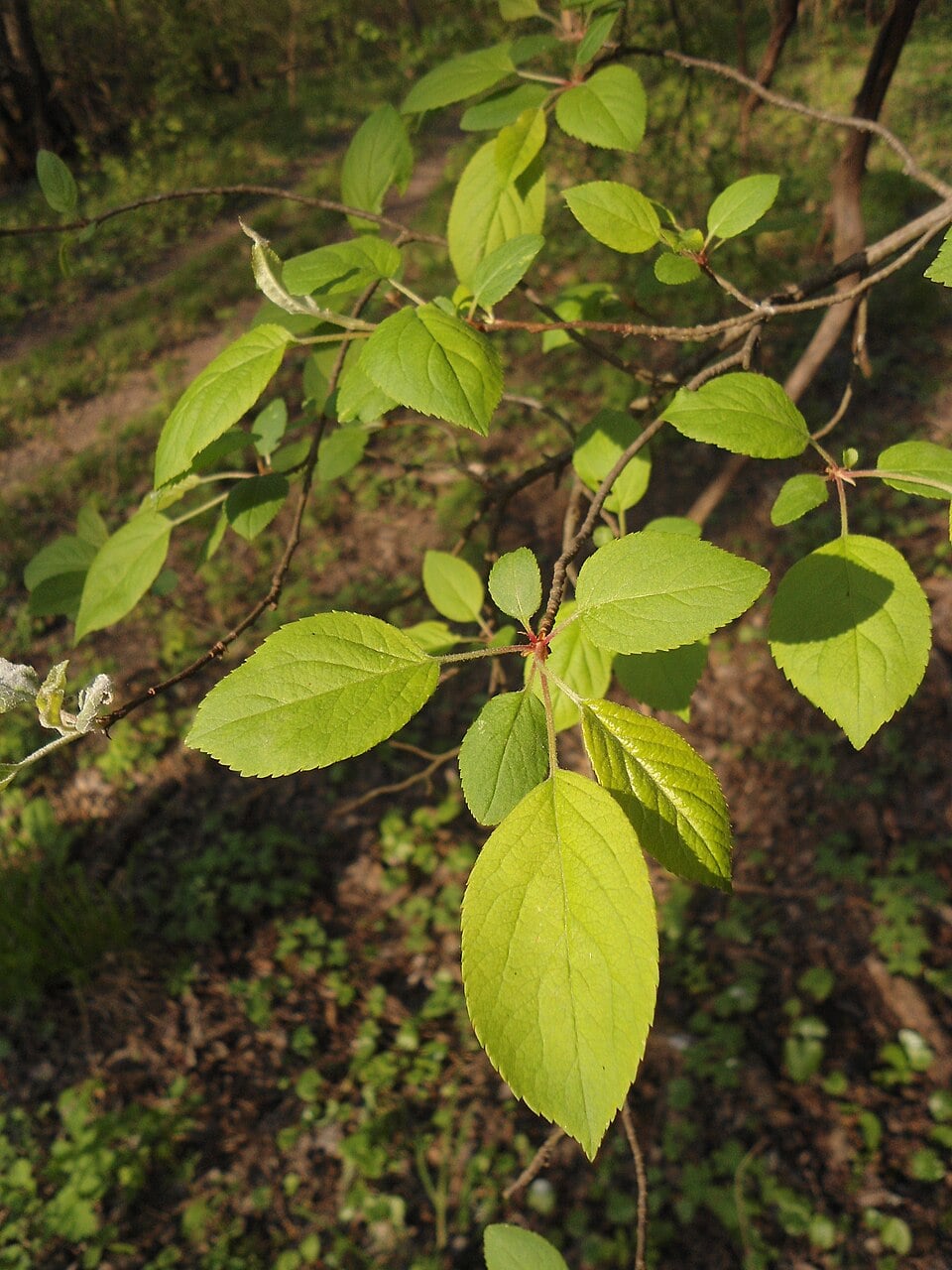
The white, felted underside of the leaves shimmers in the wind, like a white poplar. Whitebeam has simple, ovate leaves that are only toothed, with a very white, felted underside. Wild service tree has distinctly lobed leaves, recalling those of a maple, and a much less white underside.
🍃 Leaves
Ovate, simple, toothed, white and felted beneath
🌸 Flowers
White corymbs
🍎 Fruits
Small round to ovoid fruits, about 1 cm, orange to orange-red when ripe, borne in clusters; edible once bletted.
🪵 Bark
Grey, smooth
🗺️ Distribution
Europe, from southern Scandinavia to the Mediterranean basin; fairly common on limestone soils in France, especially in woodland and on slopes
🐝 Value for pollinators
Spring flowering in white corymbs rich in nectar and pollen, attractive to bees and various foraging insects
✂️ Horticultural uses
Planted as an urban street tree for its tolerance of drought and pollution, also as a specimen or in country hedges
⚠️ Possible toxicity
No known toxicity; fruits (whitebeam berries) edible once bletted
⚠️ Look-alike species
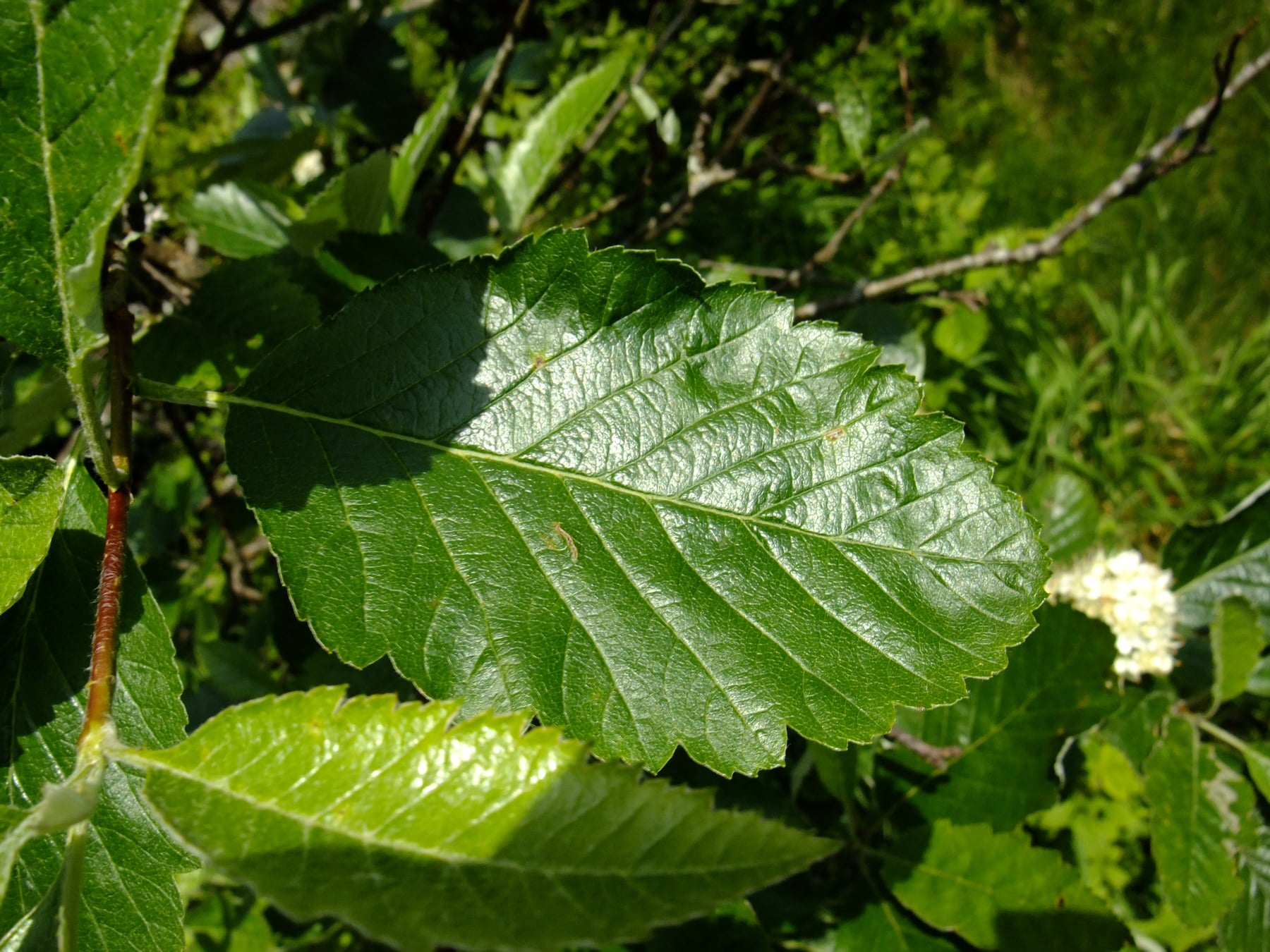
Whitebeam
Sorbus aria
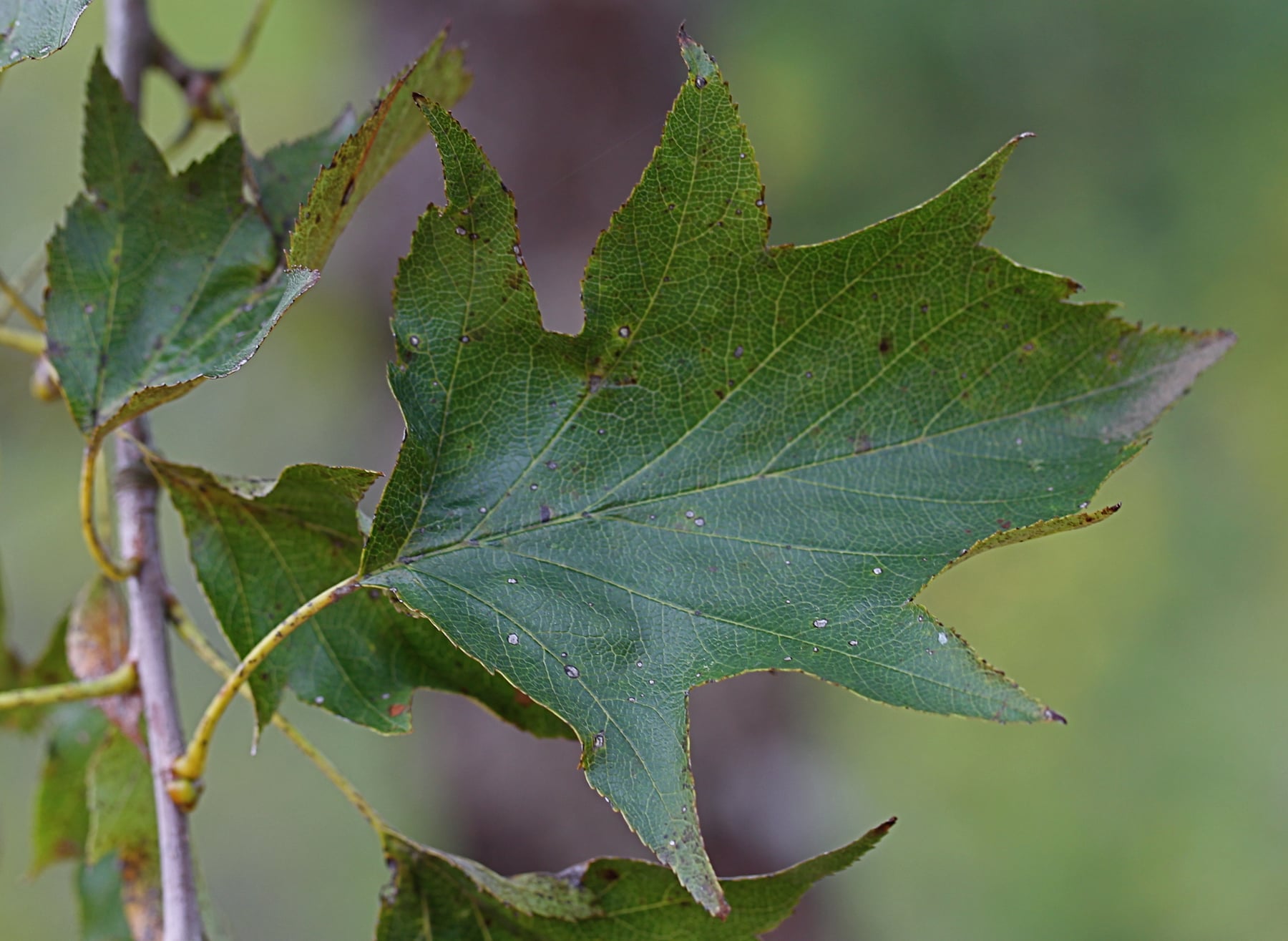
Wild service tree
Sorbus torminalis
Whitebeam has simple, ovate leaves that are only toothed, with a very white, felted underside. Wild service tree has distinctly lobed leaves, recalling those of a maple, and a much less white underside.
🌿 Other Rosaceae to discover
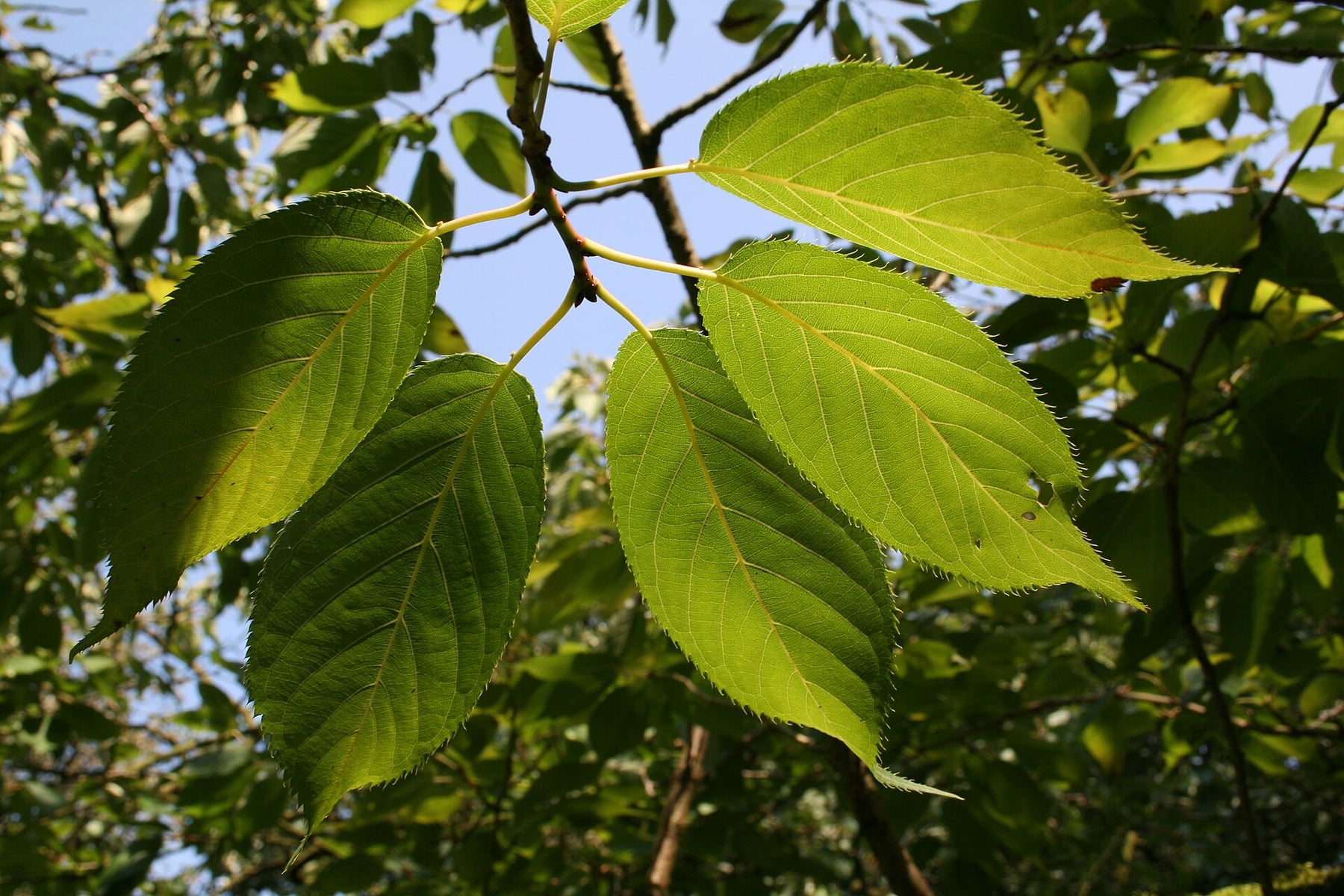
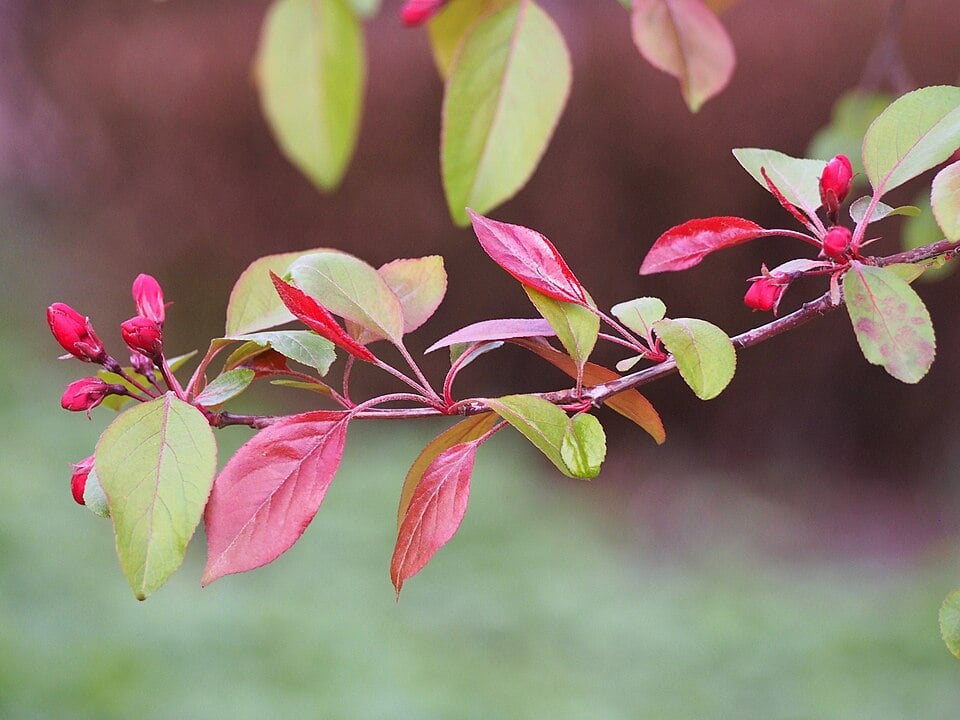
ℹ️ Educational profile — do not use it to judge whether a plant is edible or safe.
🌱 This database is constantly evolving — species and information are added and corrected regularly. Spotted a mistake? Report it below.
© Floraneo — profile content is protected; reproduction without permission is prohibited. Photos remain under their own licence (see the credit shown on each photo).