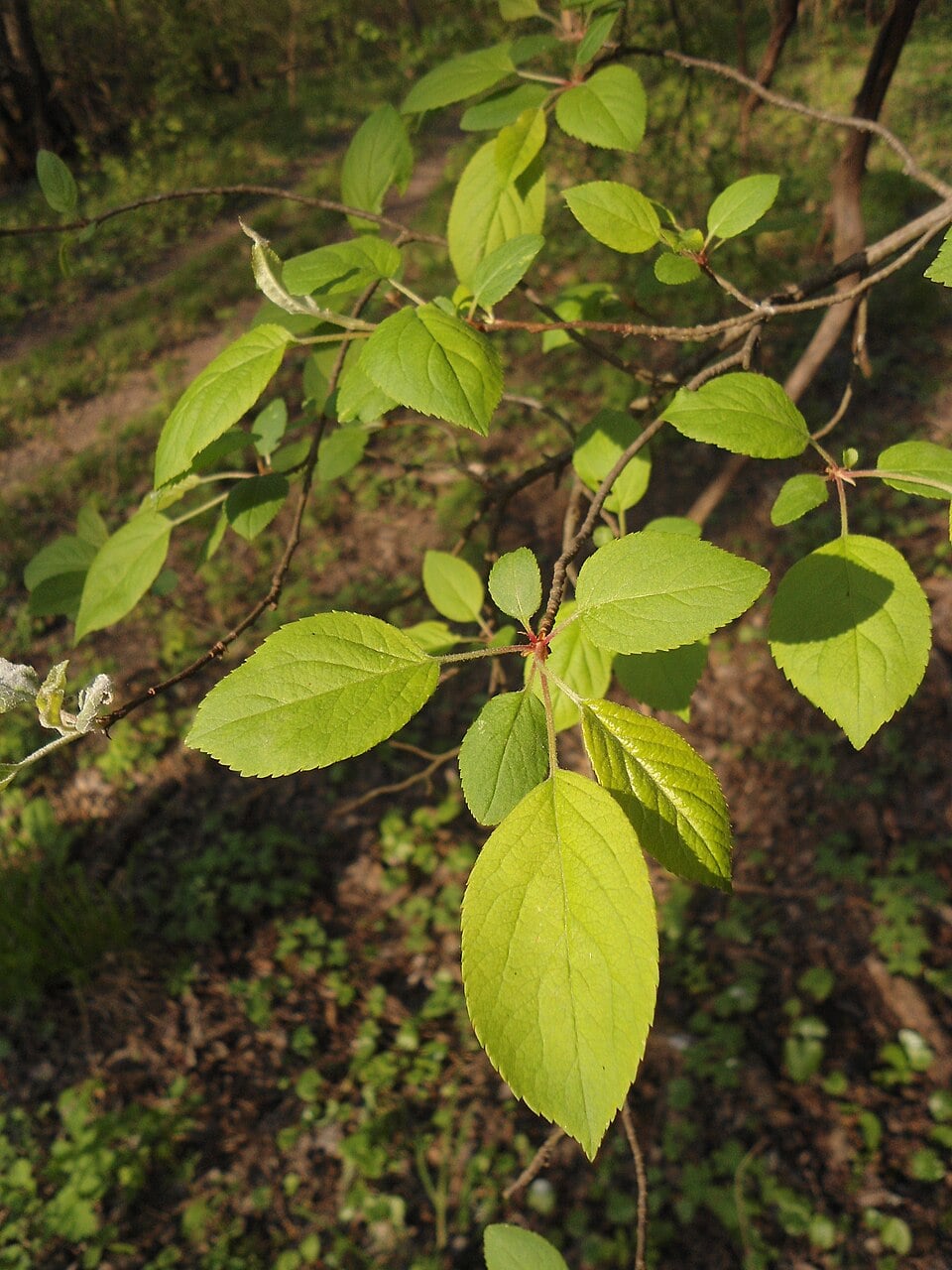
Leaf
Abraham, Wikimedia · CC BY 4.0
Sour cherry
Prunus cerasus L.
Also known as: Morello cherry, Tart cherry
Family: Rosaceae
3 to 6 m tall
Orchards and gardens
Flowering: April, before or at the same time as the leaves
Full sun
Hardy to about -25°C
❓ How do you recognise this plant?
Unlike the wild cherry (sweet cherry), the sour cherry bears tart fruits used mainly cooked or in liqueur, rarely eaten raw. The wild cherry has sweet fruits and a straighter, more slender trunk; the sour cherry remains bushier, with sour fruits.
🍃 Leaves
Elliptic to obovate, toothed, dark green, smaller than those of the wild cherry
🌸 Flowers
White, in small umbels, appearing early in spring
🍎 Fruits
Small bright red, tart drupe (morello cherry)
🪵 Bark
Reddish-brown, marked with horizontal lenticels
🗺️ Distribution
Cultivated throughout temperate Europe, often naturalised
🐝 Value for pollinators
Nectar-rich spring flowering, visited by bees
✂️ Horticultural uses
Orchard fruit tree, grown for its tart fruits used in jam or liqueur (guignolet, kirsch)
⚠️ Possible toxicity
Fruit flesh edible and tart; stone, leaves and bark contain amygdalin (a cyanide precursor), toxic in large quantities
⚠️ Look-alike species
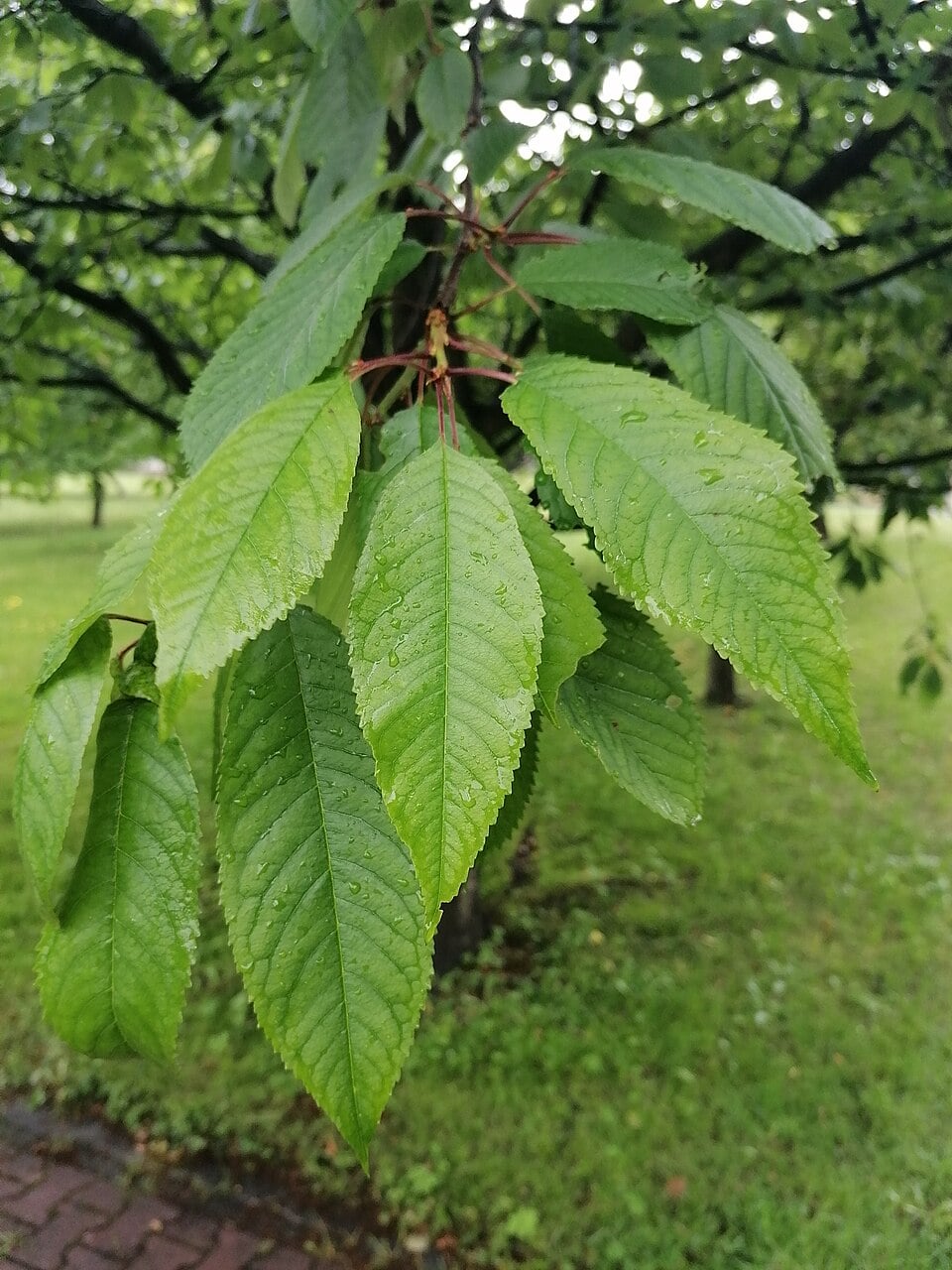
Sour cherry
Prunus cerasus
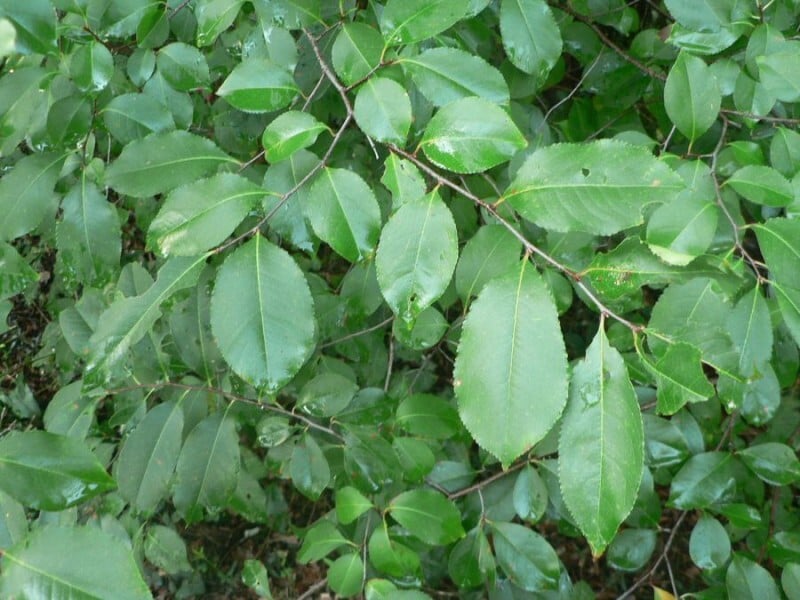
Wild cherry
Prunus avium
The wild cherry has sweet fruits and a straighter, more slender trunk; the sour cherry remains bushier, with sour fruits.
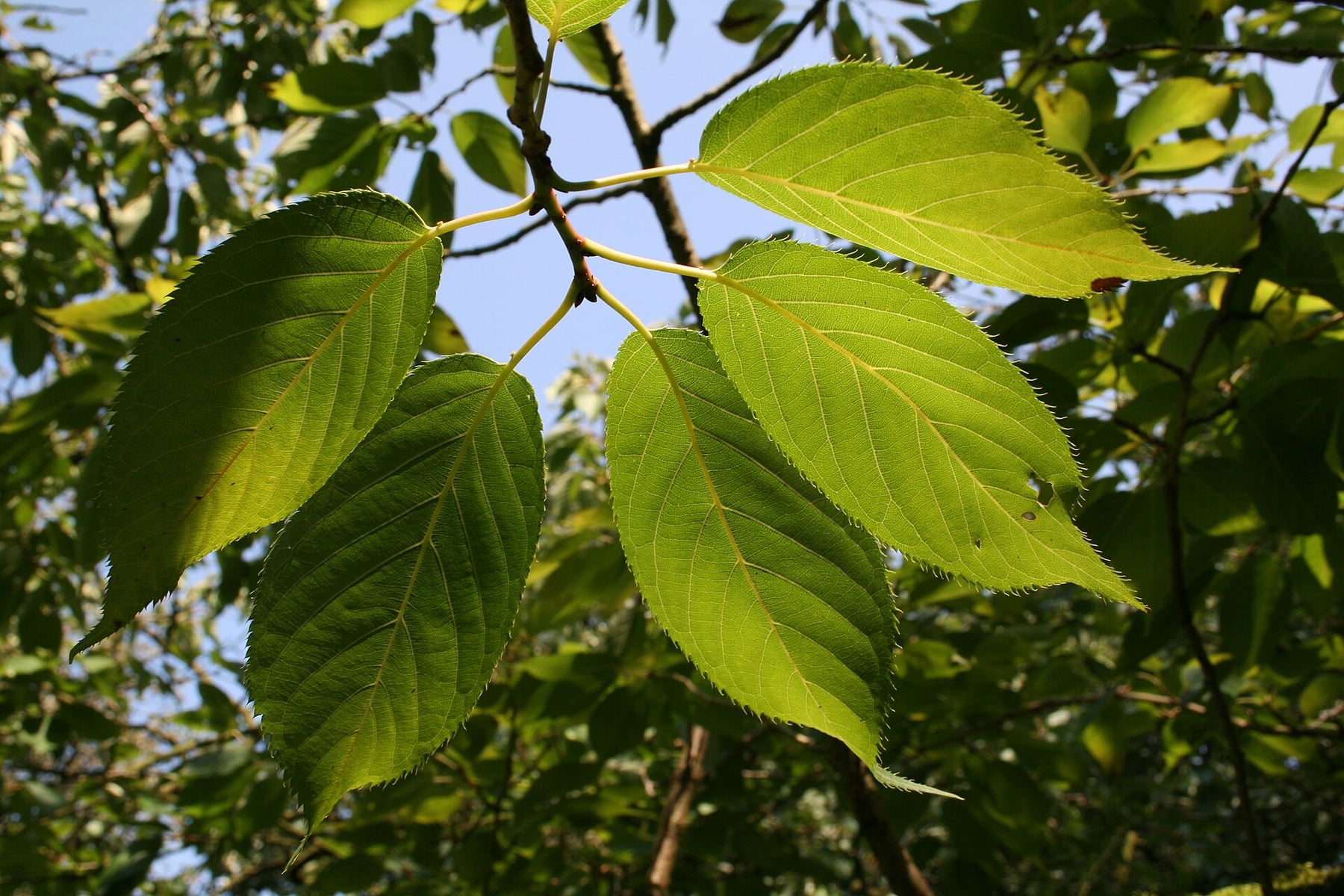
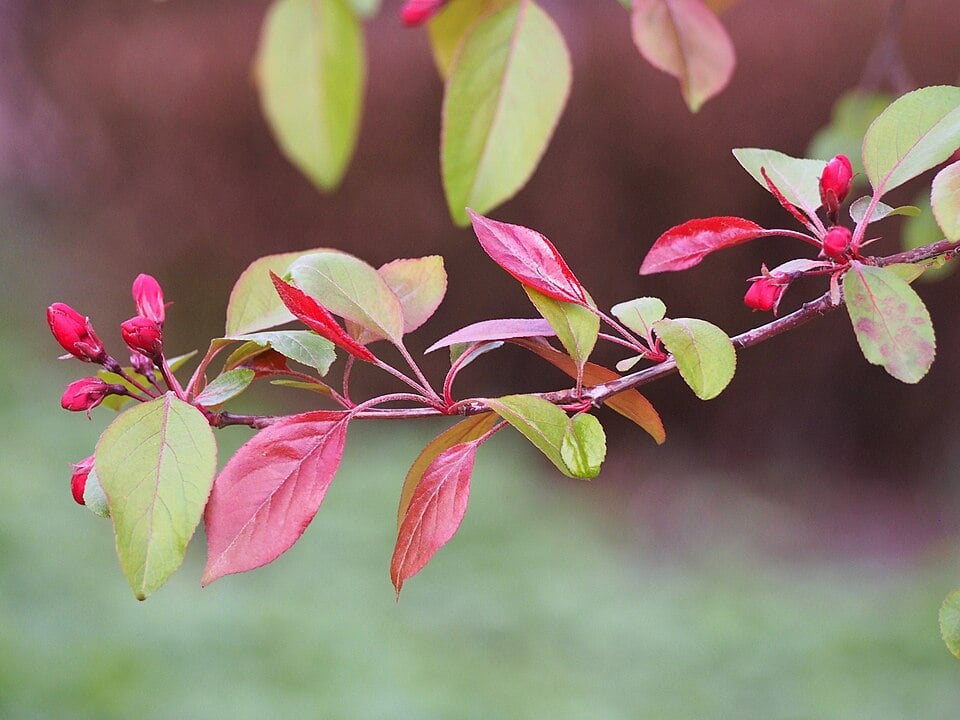
🌿 Other Rosaceae to discover
ℹ️ Educational profile — do not use it to judge whether a plant is edible or safe.
🌱 This database is constantly evolving — species and information are added and corrected regularly. Spotted a mistake? Report it below.
© Floraneo — profile content is protected; reproduction without permission is prohibited. Photos remain under their own licence (see the credit shown on each photo).