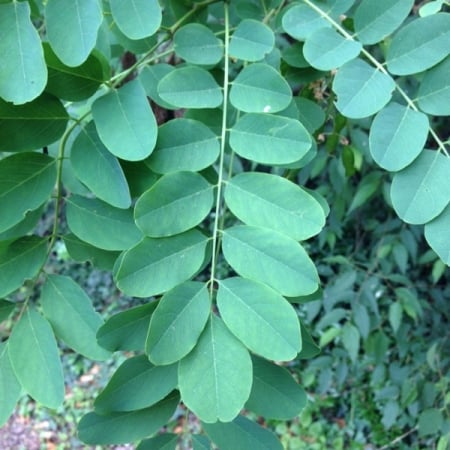
Leaf
Katrin Schneider / korina.info, Wikimedia · CC BY-SA-4.0
Siberian pea tree
Caragana arborescens Lam.
Also known as: Siberian peashrub
Family: Fabaceae
2 to 6 m tall
Informal hedges and banks, poor dry soil, very tolerant of cold and wind
Flowering: May
Full sun
Hardy to about -35°C
❓ How do you recognise this plant?
It tolerates extremely harsh Siberian winters and almost barren soils, which makes it one of the hardiest ornamental shrubs grown in France in cold conditions.
🍃 Leaves
Deciduous, compound, pinnate, with numerous light green leaflets
🌸 Flowers
Yellow, pea-shaped, grouped in 2s to 5s in the leaf axils
🍎 Fruits
Linear brown pods twisting open at maturity
🪵 Bark
Brownish-green, smooth, twigs spiny in some forms
🗺️ Distribution
Native to Siberia, Mongolia and northern China; introduced to Europe as a hardy hedging shrub
🐝 Value for pollinators
Early nectar-rich flowers much visited by bees in spring
✂️ Horticultural uses
Planted as a windbreak hedge or on banks for its extreme hardiness and its yellow spring flowering
🌱 Known cultivars
'Pendula'
The 'Pendula' form is a small grafted tree with entirely drooping branches and a very recognisable weeping habit, whereas the species grows as an upright bush without this weeping habit.
🌿 Other Fabaceae to discover


ℹ️ Educational profile — do not use it to judge whether a plant is edible or safe.
🌱 This database is constantly evolving — species and information are added and corrected regularly. Spotted a mistake? Report it below.
© Floraneo — profile content is protected; reproduction without permission is prohibited. Photos remain under their own licence (see the credit shown on each photo).