Leaf
Harry Rose, Wikimedia · CC BY 2.0
Salad burnet
Sanguisorba minor L.
Also known as: Small burnet, Garden burnet
Family: Rosaceae
20 to 50 cm tall
Dry meadows, vegetable gardens, gardens, chalky soils
Flowering: May – August
Full sun
Hardy to -25°C
❓ How do you recognise this plant?
Its young leaves have a slight cucumber flavour and are traditionally used in salads. Great burnet has long, upright, dark red-purple flower spikes, whereas salad burnet has smaller, rounded, greenish flower heads tinged with red, and foliage that smells of cucumber when crushed.
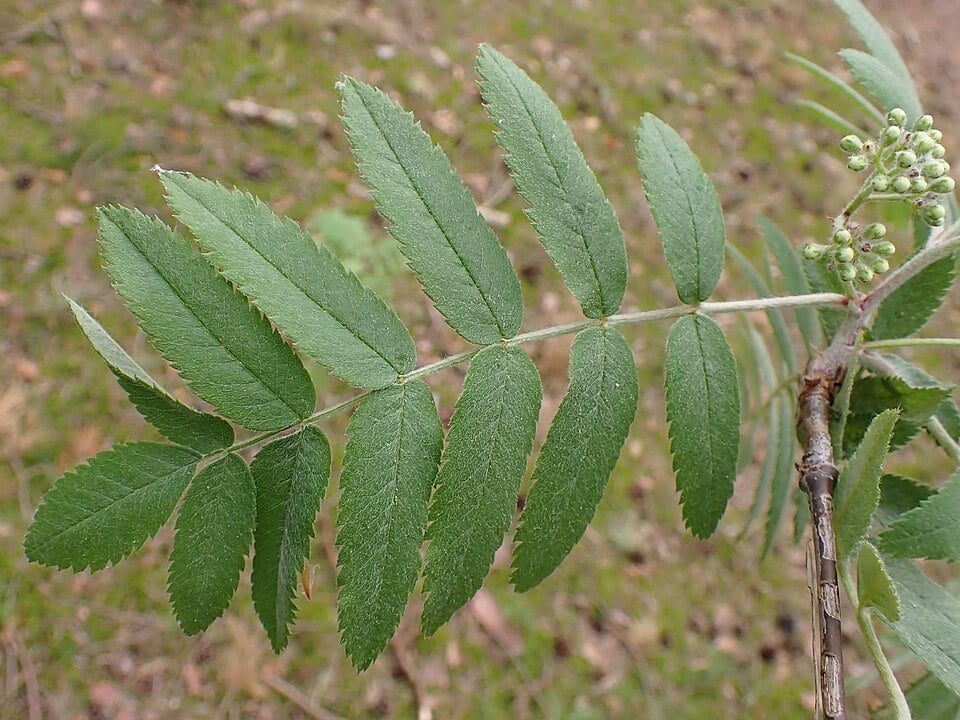
🍃 Leaves
Compound, with rounded toothed leaflets, blue-green, tasting of cucumber
🌸 Flowers
Small, round, greenish flower heads with dangling red stamens
🍎 Fruits
Small angular achenes
🪵 Bark
Dense basal clump
🗺️ Distribution
Europe, western Asia, North Africa; common in dry chalk grassland in France.
🐝 Value for pollinators
Small, inconspicuous greenish flowers, mainly wind-pollinated, limited interest for insects.
✂️ Horticultural uses
Flower meadows, vegetable garden (young leaves in salads); little grown in ornamental borders.
⚠️ Possible toxicity
No known toxicity, edible leaves with a cucumber flavour.
⚠️ Look-alike species
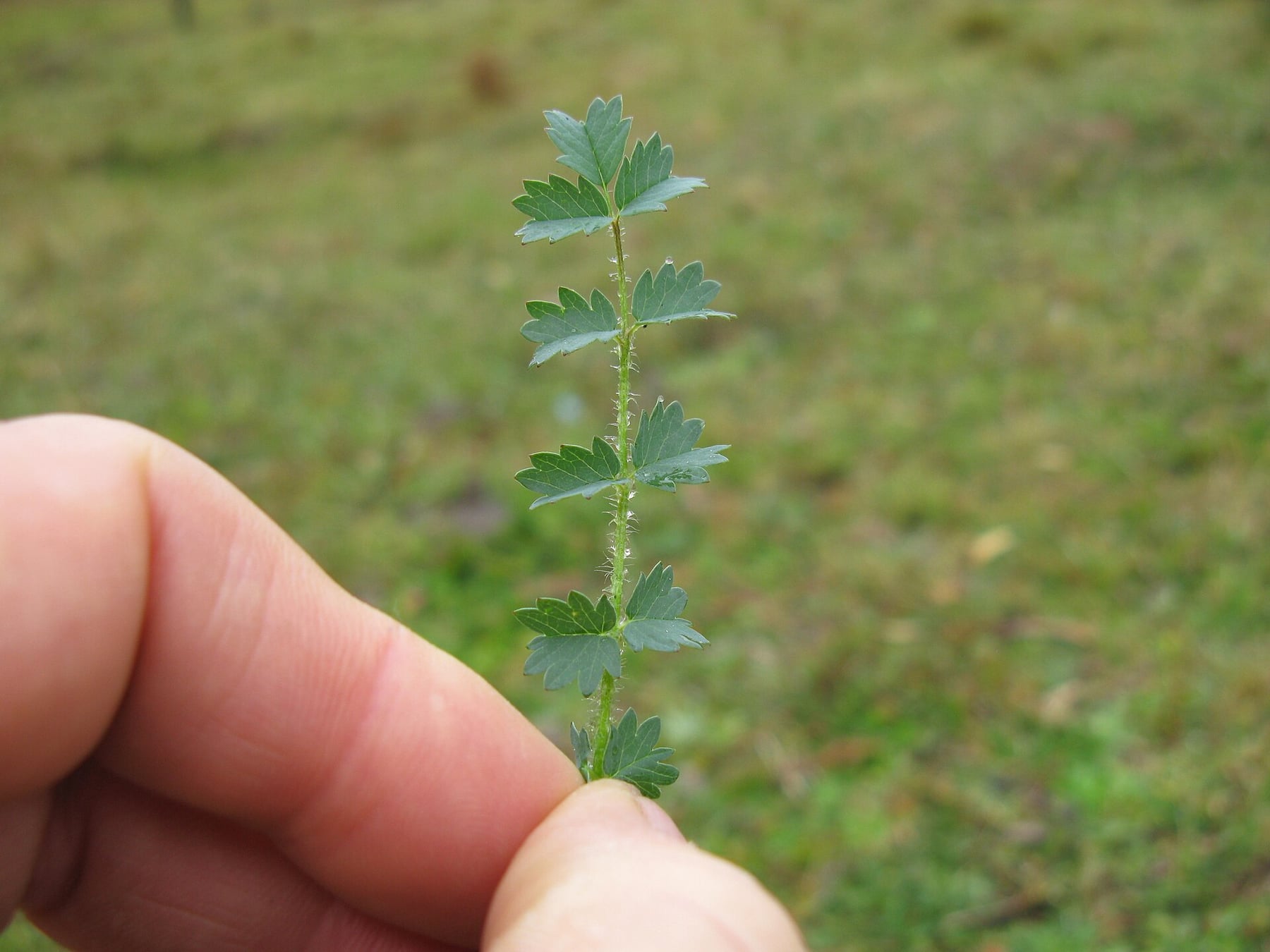
Salad burnet
Sanguisorba minor
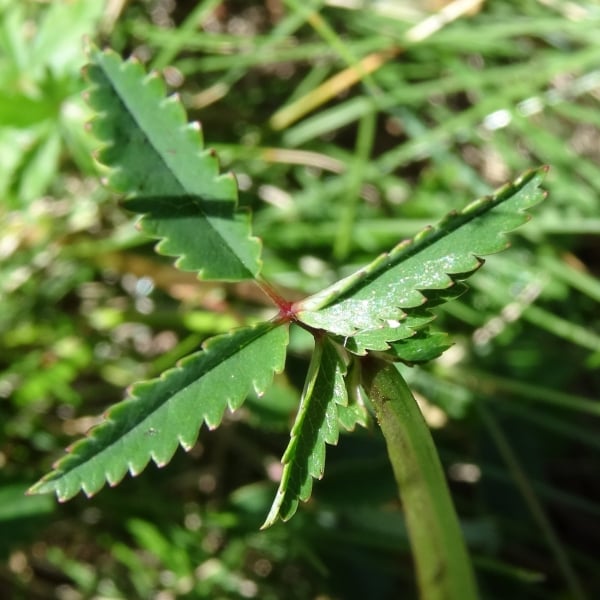
Great burnet
Sanguisorba officinalis
Great burnet has long, upright, dark red-purple flower spikes, whereas salad burnet has smaller, rounded, greenish flower heads tinged with red, and foliage that smells of cucumber when crushed.
🌿 Other Rosaceae to discover
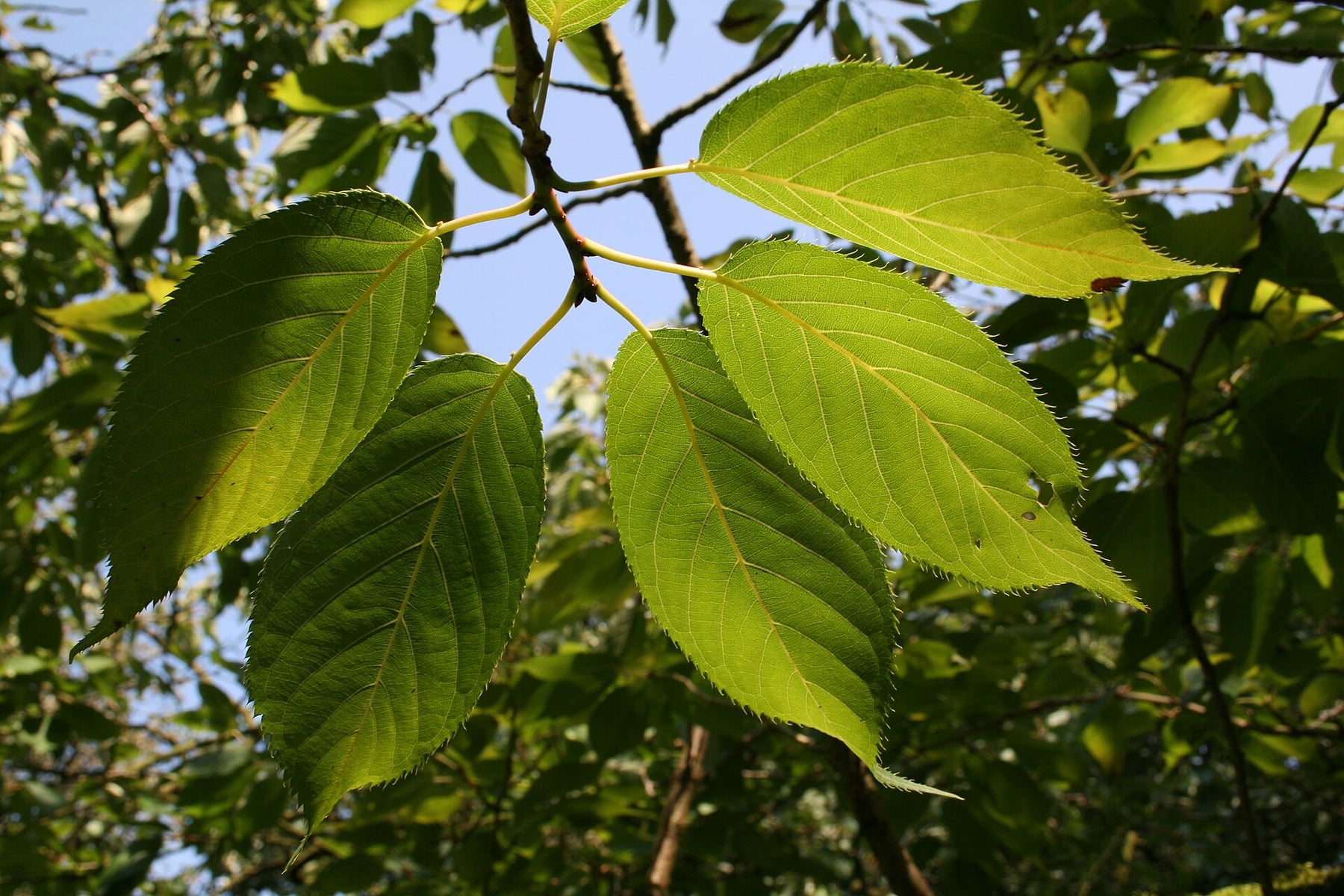
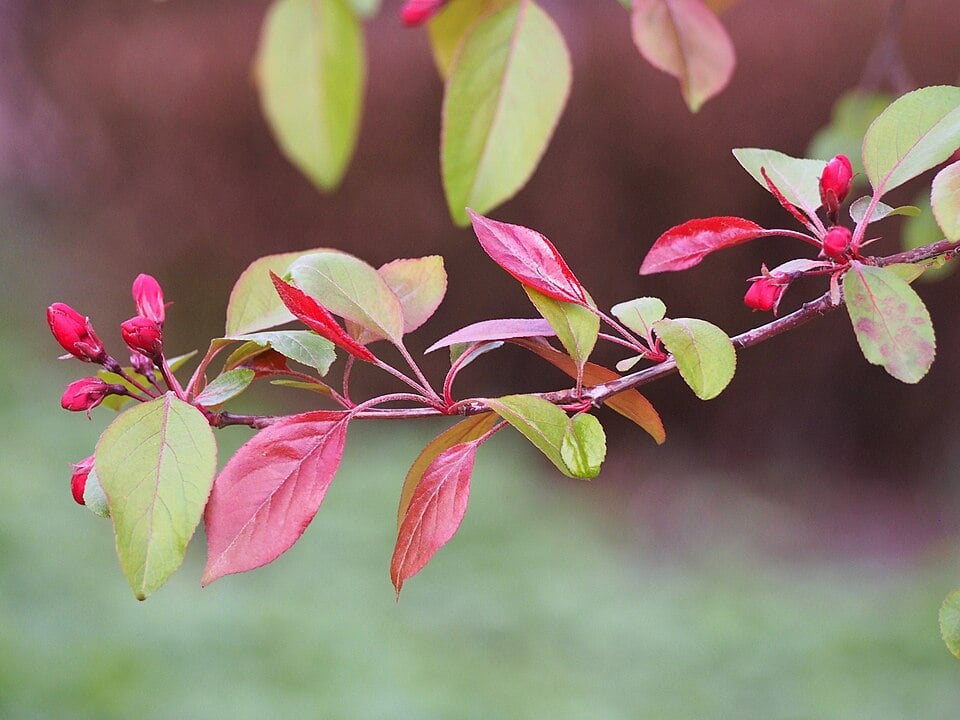
ℹ️ Educational profile — do not use it to judge whether a plant is edible or safe.
🌱 This database is constantly evolving — species and information are added and corrected regularly. Spotted a mistake? Report it below.
© Floraneo — profile content is protected; reproduction without permission is prohibited. Photos remain under their own licence (see the credit shown on each photo).