Leaf
Alain Bigou, Tela Botanica · CC BY-SA 2.0
Great burnet
Sanguisorba officinalis L.
Family: Rosaceae
30 to 80 cm tall
Damp meadows, gardens, rich soils
Flowering: June – September
Full sun
Part shade
Hardy to -30°C
❓ How do you recognise this plant?
Its name 'sanguisorba' (which absorbs blood) comes from its traditional use to stop bleeding. Great burnet has long, erect dark reddish-purple flower spikes, whereas salad burnet has smaller, rounded, greenish flower heads tinged with red, and foliage that smells of cucumber when crushed.
🍃 Leaves
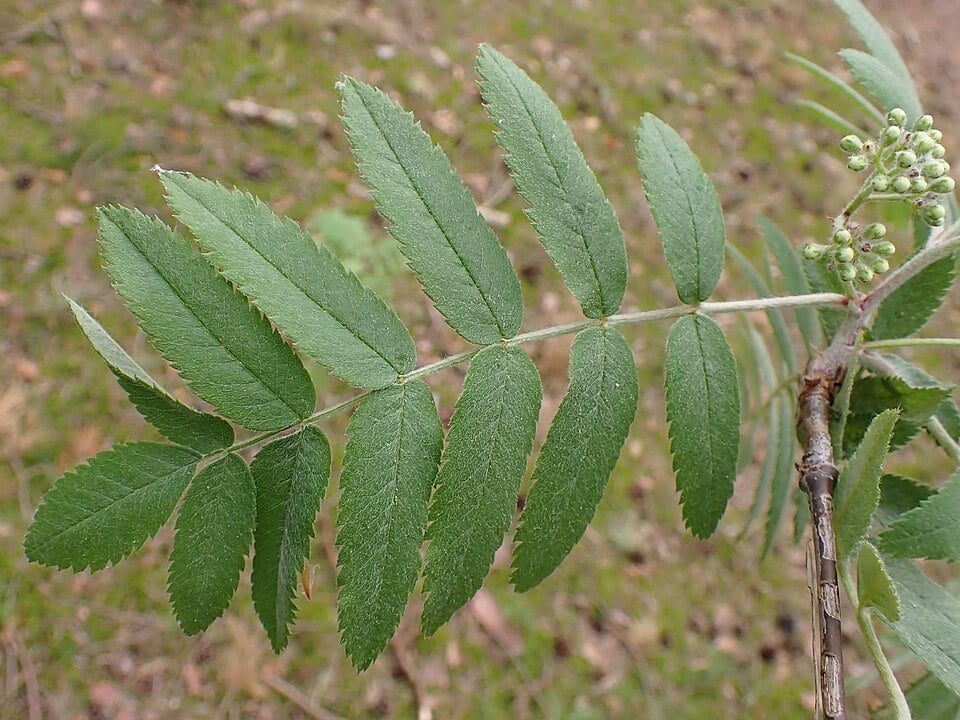
Compound, toothed ovate leaflets, blue-green
🌸 Flowers
Small ovoid dark reddish-purple flower heads, with no visible petals
🍎 Fruits
Small angular achenes
🪵 Bark
Erect clump, sparsely branched stems
🗺️ Distribution
Europe, temperate Asia; found in damp meadows in France, more localised than salad burnet.
🐝 Value for pollinators
Small dark purple flower heads, host plant of the Scarce large blue (a protected butterfly), pollinated by wind and various insects.
✂️ Horticultural uses
Damp borders, flowery meadows; slender silhouette and unusual dark flower heads at the edge of a border or in a naturalistic planting.
⚠️ Possible toxicity
No known toxicity.
⚠️ Look-alike species
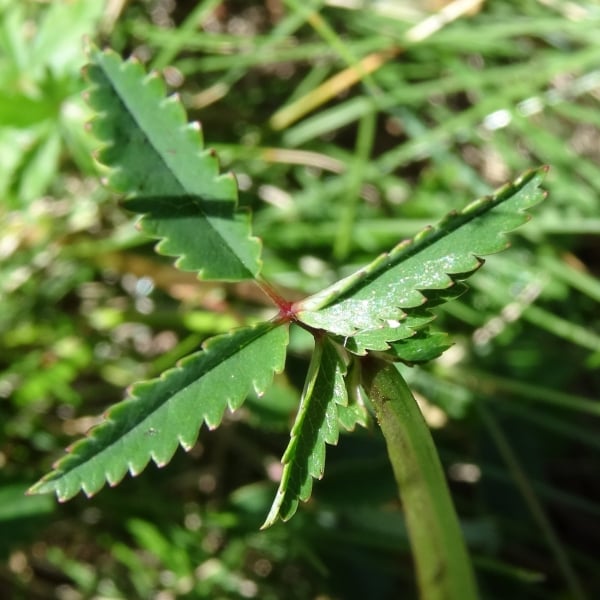
Great burnet
Sanguisorba officinalis
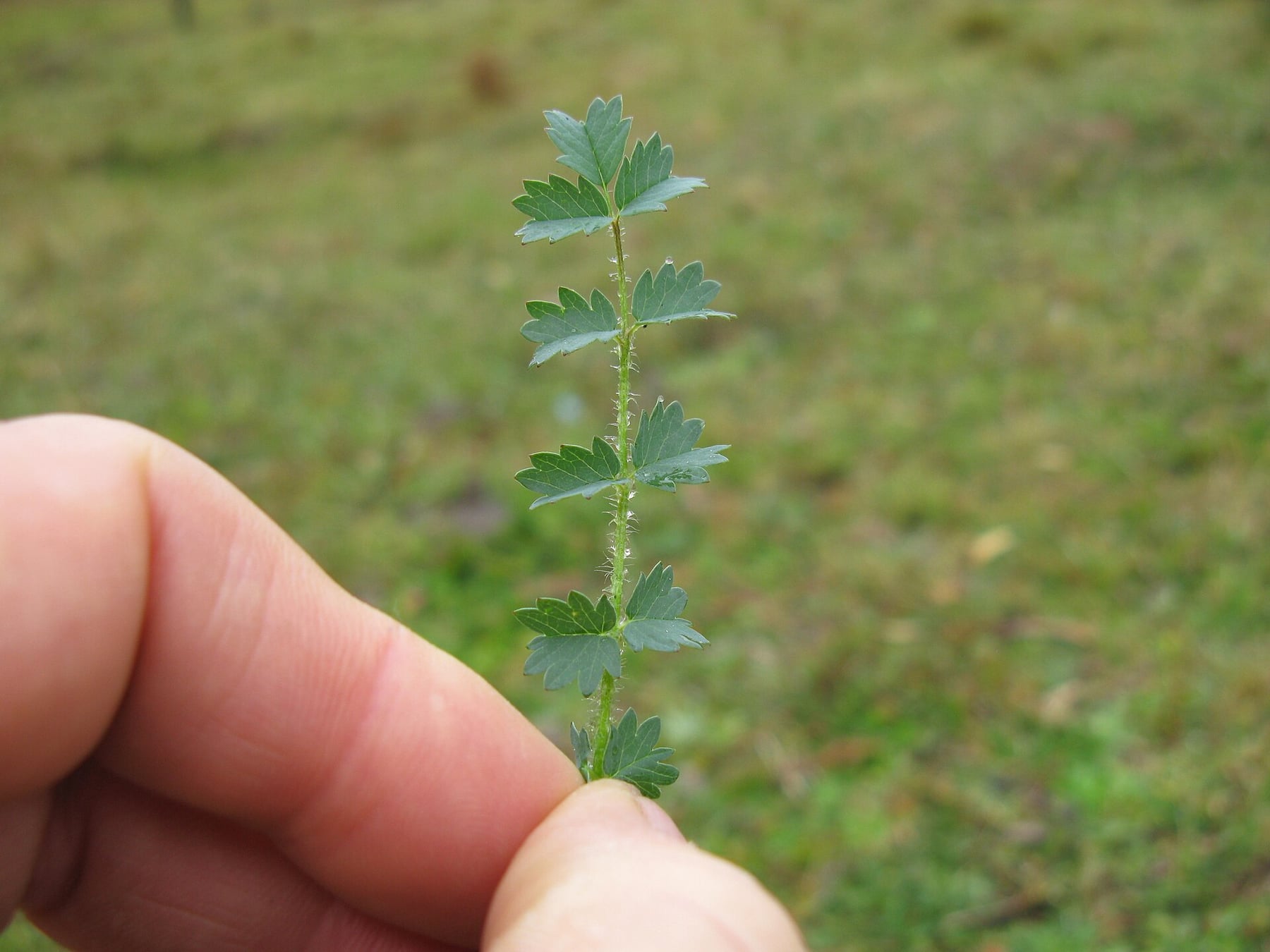
Salad burnet
Sanguisorba minor
Great burnet has long, erect dark reddish-purple flower spikes, whereas salad burnet has smaller, rounded, greenish flower heads tinged with red, and foliage that smells of cucumber when crushed.
🌿 Other Rosaceae to discover
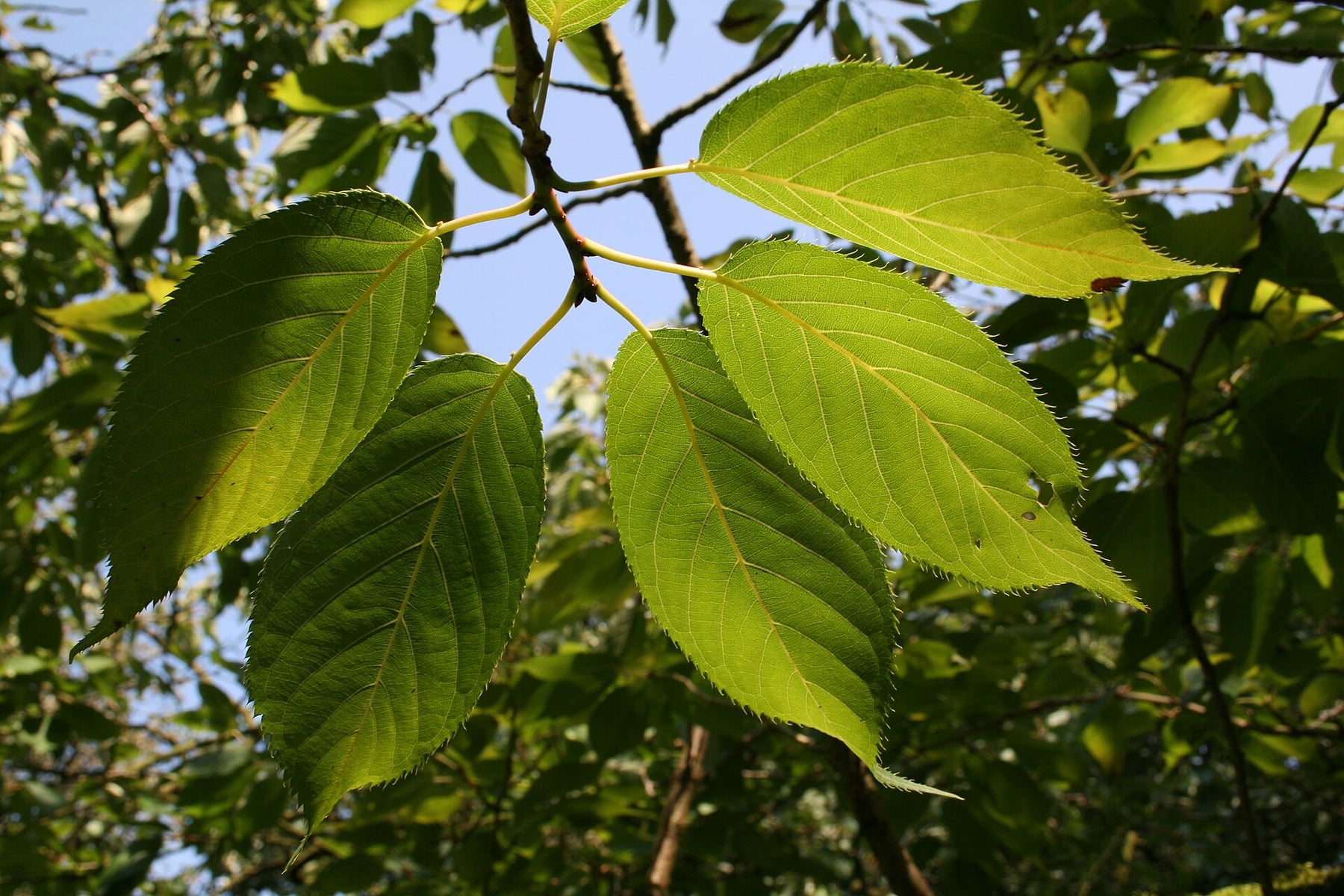
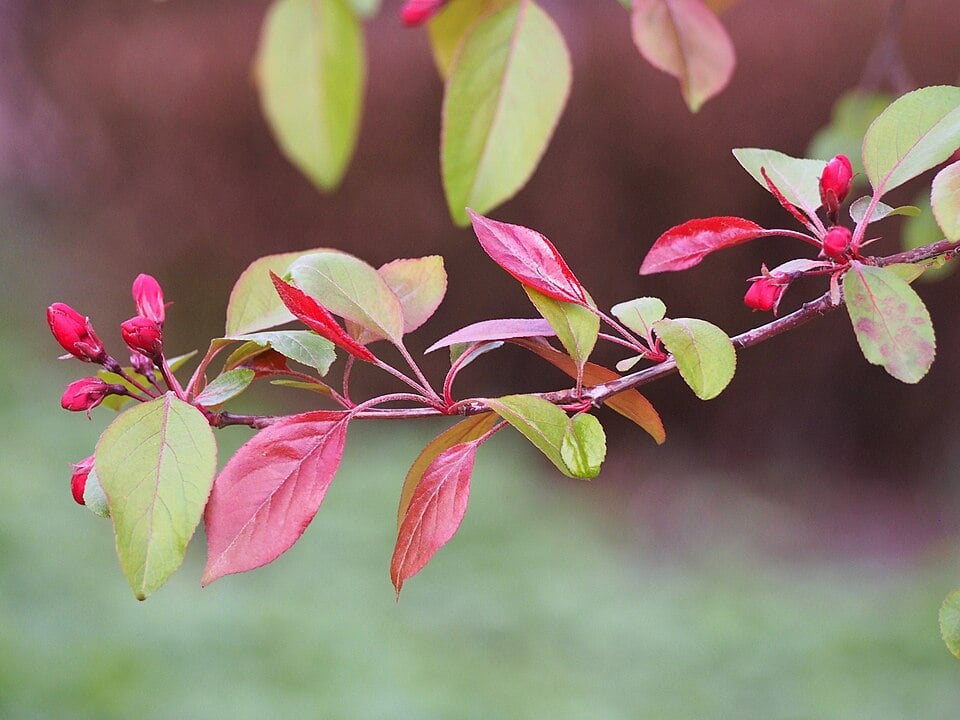
ℹ️ Educational profile — do not use it to judge whether a plant is edible or safe.
🌱 This database is constantly evolving — species and information are added and corrected regularly. Spotted a mistake? Report it below.
© Floraneo — profile content is protected; reproduction without permission is prohibited. Photos remain under their own licence (see the credit shown on each photo).