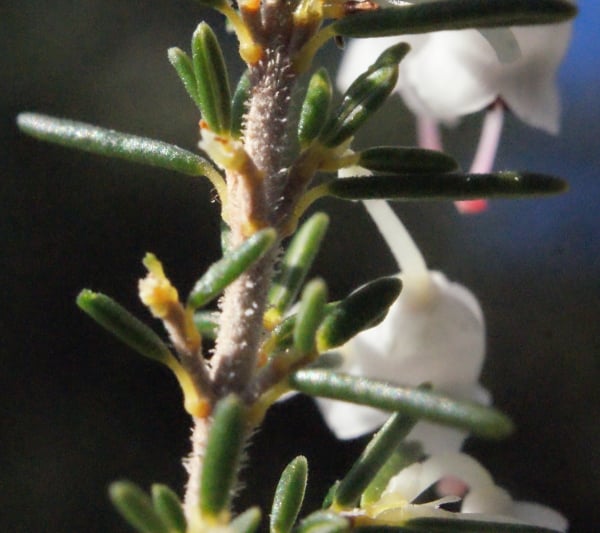
Leaf (underside)
Syrio, Wikimedia · CC BY-SA 4.0
Rusty-leaved alpenrose
Rhododendron ferrugineum L.
Also known as: Alpenrose, Snow-rose
Family: Ericaceae
30 cm to 1 m tall
Heaths and open woodland of the subalpine zone of the Alps, the Jura and the Pyrenees, between 1500 and 2500 m, on acid soils
Flowering: June - August
Full sun
Part shade
Very hardy, to -25°C or lower
❓ How do you recognise this plant?
Its vast bright pink carpets, which set the Alpine slopes ablaze in summer, owe their name to the rusty ('ferruginous') underside of the leaves, not to the flowers. The common rhododendron is a large invasive shrub with large, leathery evergreen leaves and large mauve flowers in clusters, whereas the alpenrose remains a small mountain shrub with tiny leaves and small pink-red bell-shaped flowers.
🍃 Leaves
Evergreen, leathery, elliptic, glossy dark green above, covered underneath in small rusty-brown (rust-coloured) scales, hence its name
🌸 Flowers
Small bright pink to red bells, grouped in tight corymbs at the ends of the twigs
🍎 Fruits
Small upright brown capsules containing many seeds
🪵 Bark
Low, bushy shrub with twisted brown twigs
🗺️ Distribution
Alps, Jura and Pyrenees; forms vast heaths (rhodoraies) on north-facing slopes, protected by snow in winter
🐝 Value for pollinators
Rich nectar visited by alpine bumblebees and various mountain insects despite its toxicity to other animals
✂️ Horticultural uses
Rarely grown outside its natural habitat, demanding in terms of cool conditions and acid soil; floral emblem of high-altitude landscapes
⚠️ Possible toxicity
Toxic: leaves and nectar contain grayanotoxins, dangerous to livestock and humans; the honey produced can be toxic
⚠️ Look-alike species
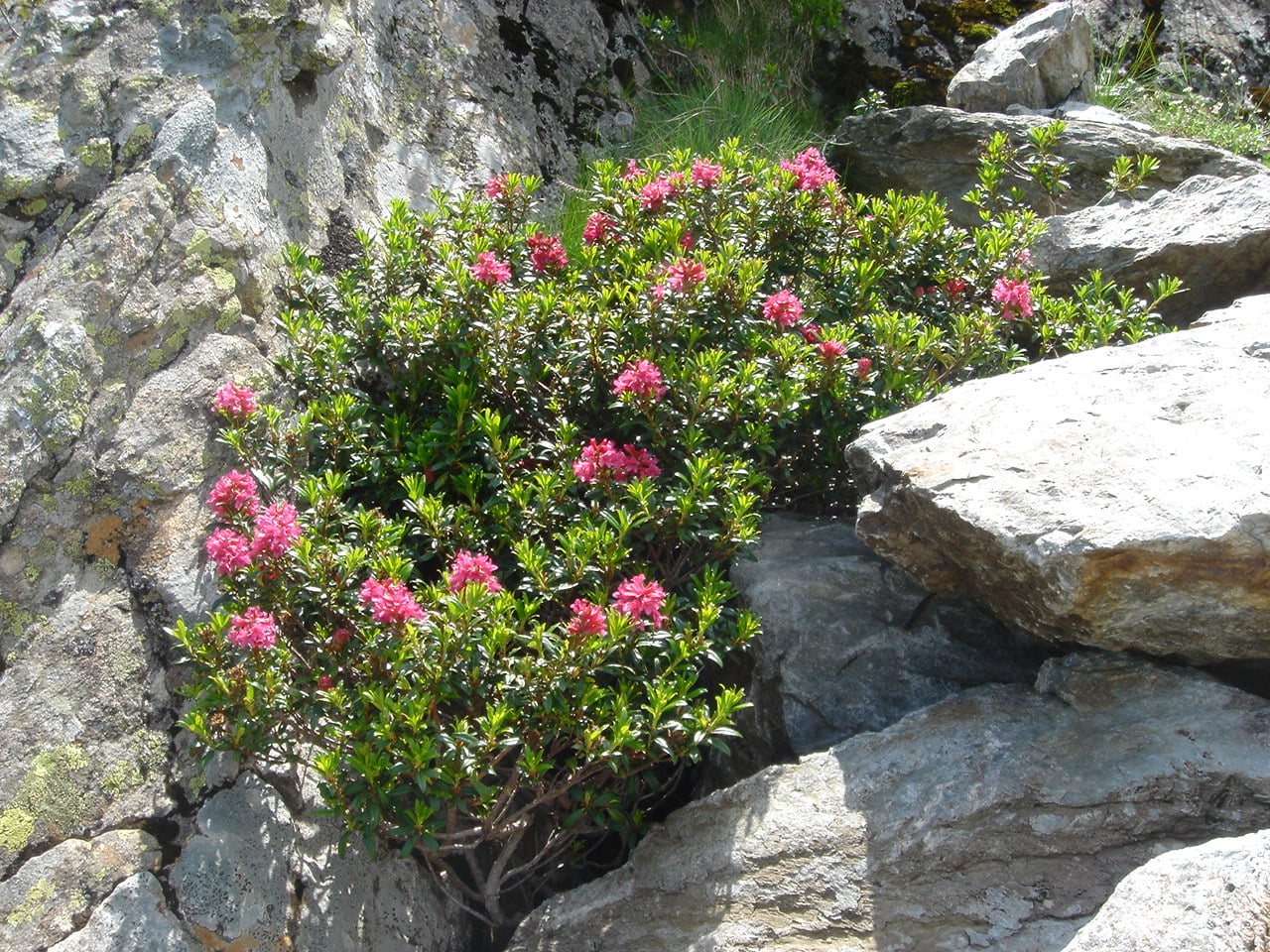
Rusty-leaved alpenrose
Rhododendron ferrugineum
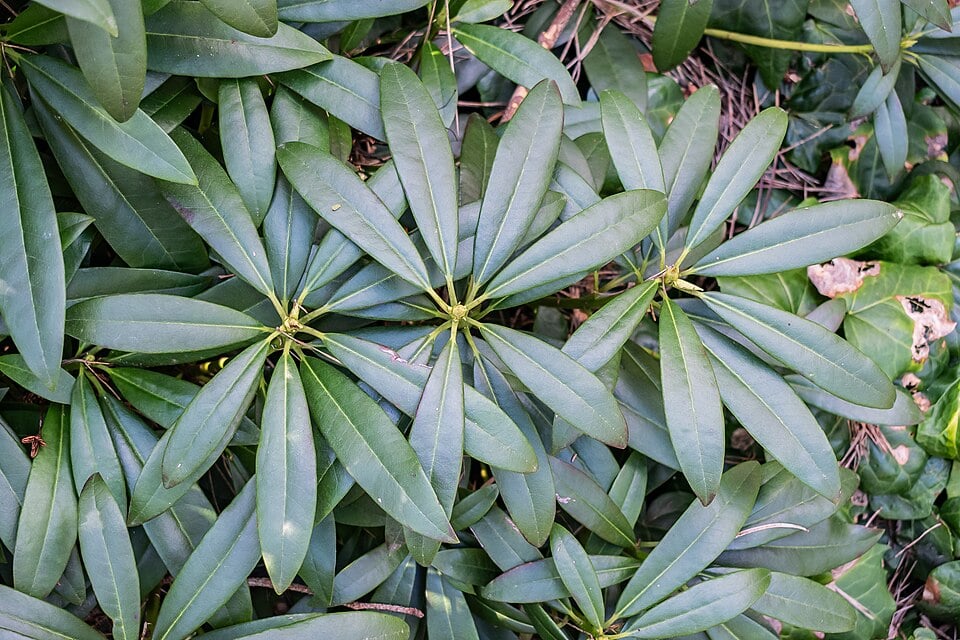
Common rhododendron
Rhododendron ponticum
The common rhododendron is a large invasive shrub with large, leathery evergreen leaves and large mauve flowers in clusters, whereas the alpenrose remains a small mountain shrub with tiny leaves and small pink-red bell-shaped flowers.
🌿 Other Ericaceae to discover
ℹ️ Educational profile — do not use it to judge whether a plant is edible or safe.
🌱 This database is constantly evolving — species and information are added and corrected regularly. Spotted a mistake? Report it below.
© Floraneo — profile content is protected; reproduction without permission is prohibited. Photos remain under their own licence (see the credit shown on each photo).