Rusty-leaved alpenrose or Common rhododendron: how to tell them apart?
Rusty-leaved alpenrose and Common rhododendron look alike and are often mixed up. Here is how to tell them apart, feature by feature, with their photos and the details to look for.
⚡ The quick answer
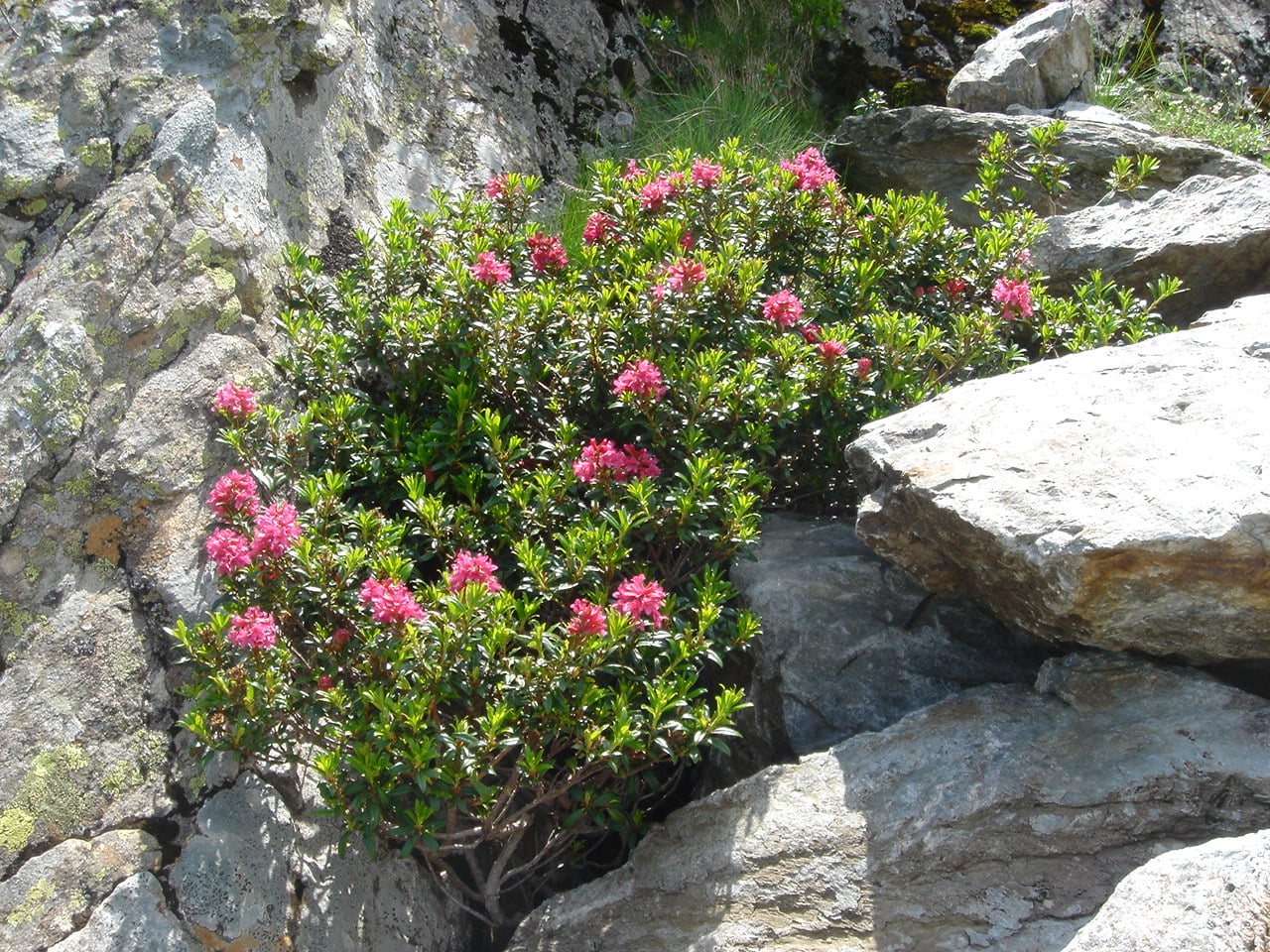
Rusty-leaved alpenrose
Rhododendron ferrugineum
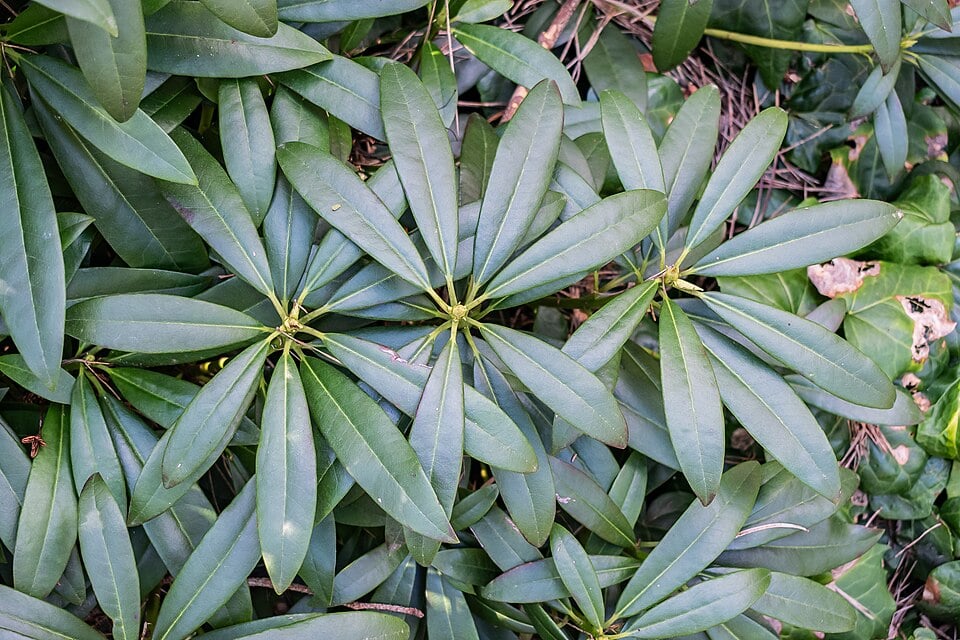
Common rhododendron
Rhododendron ponticum
The common rhododendron is a large invasive shrub with large, leathery evergreen leaves and large mauve flowers in clusters, whereas the alpenrose remains a small mountain shrub with tiny leaves and small pink-red bell-shaped flowers.
🍃 Leaves
Evergreen, leathery, elliptic, glossy dark green above, covered underneath in small rusty-brown (rust-coloured) scales, hence its name
Evergreen, large, leathery, glossy, elongated
🌸 Flowers
Small bright pink to red bells, grouped in tight corymbs at the ends of the twigs
Large, mauve to purplish-pink, grouped in dense clusters at the tips of the twigs
🍎 Fruits
Small upright brown capsules containing many seeds
Small woody capsule
🪵 Bark
Low, bushy shrub with twisted brown twigs
Grey, smooth, becoming rough with age
📏 Size
30 cm to 1 m tall
2 to 5 m tall, sometimes more
🗺️ Habitat
Heaths and open woodland of the subalpine zone of the Alps, the Jura and the Pyrenees, between 1500 and 2500 m, on acid soils
Planted as a specimen or in hedges in parks and gardens, acid soils
⚠️ Toxicity
Toxic: leaves and nectar contain grayanotoxins, dangerous to livestock and humans; the honey produced can be toxic
All parts are toxic if ingested, including the nectar, which can make honey toxic in large quantities (a rare effect, known as mad honey)
🔎 And from the Common rhododendron side
The alpenrose remains a small mountain shrub with tiny leaves and small pink-red bell-shaped flowers, whereas the common rhododendron is a large invasive shrub with large leathery leaves and large mauve flowers in clusters.
🌿 Go further
Want to practise spotting these details on real photos? Floraneo offers profiles and quizzes for dozens of look-alike species.
ℹ️ Educational profile — do not use it to judge whether a plant is edible or safe.