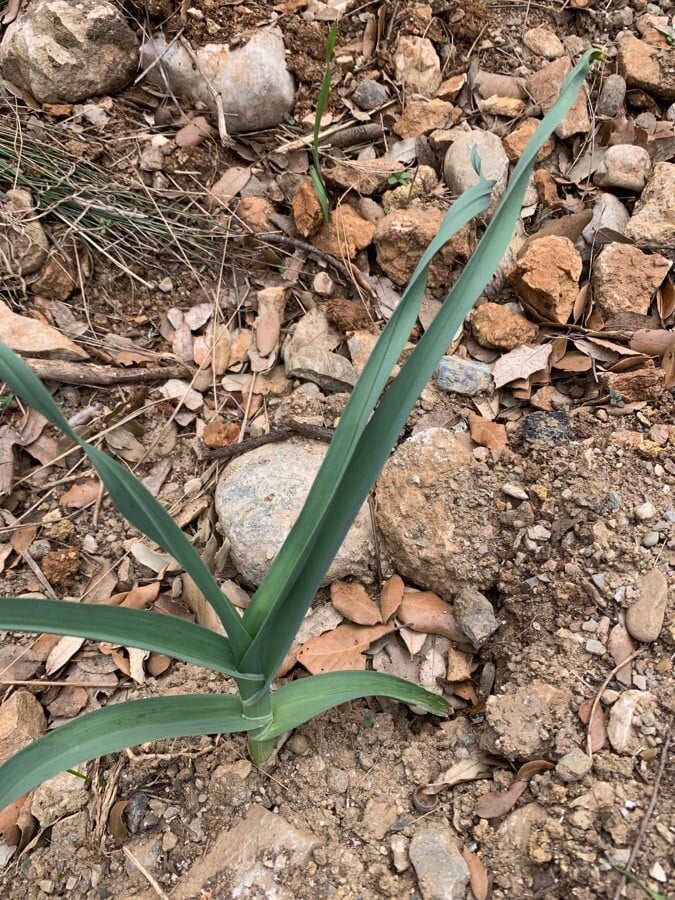
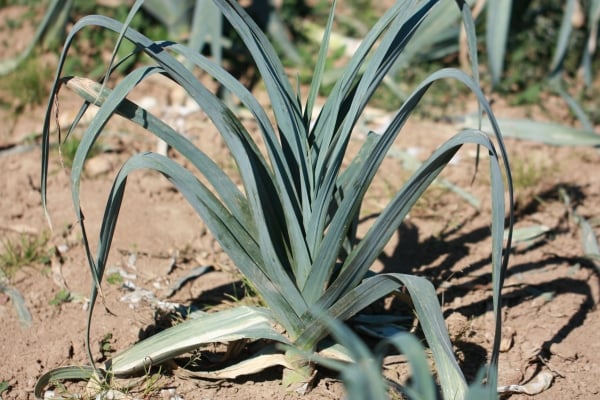
Leaf
plm4 plantnet, Tela Botanica · CC BY-SA 2.0
Onion
Allium cepa L.
Family: Amaryllidaceae
40 to 100 cm tall in flower
Grown in vegetable gardens worldwide
Flowering: June – July
Full sun
Hardy, withstands frost
❓ How do you recognise this plant?
Onion releases an irritant gas (syn-propanethial-S-oxide) when cut, in response to its cells being broken — this is what makes you cry. Garlic forms flat, strap-like leaves arising from a head of several cloves, whereas onion has tubular, hollow leaves arising from a single round bulb.
🍃 Leaves
Cylindrical, hollow, blue-green
🌸 Flowers
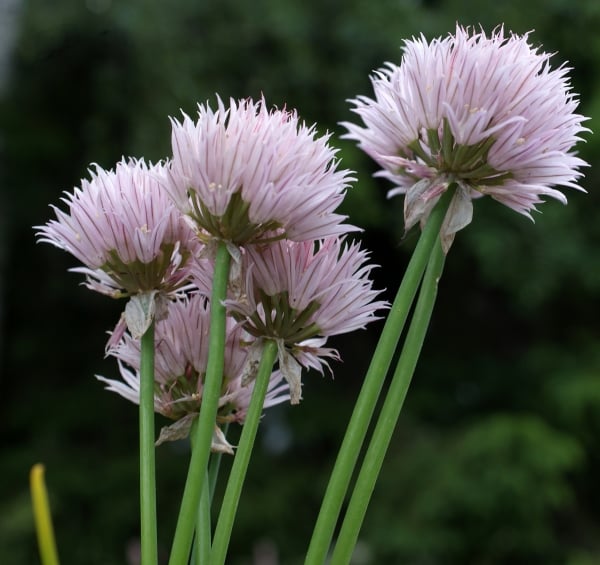
White to greenish, in a dense spherical umbel
🍎 Fruits
Capsule with angular black seeds
🪵 Bark
Globose bulb with dry tunics, yellow, red or white depending on the variety
🗺️ Distribution
Native to central Asia; one of the most widely grown vegetables in the world
🐝 Value for pollinators
Very nectar-rich umbels, much visited by honey bees
✂️ Horticultural uses
Staple vegetable-garden crop, grown for its bulb
⚠️ Possible toxicity
No known toxicity to humans — edible bulb; toxic to dogs and cats
⚠️ Look-alike species
Onion
Allium cepa
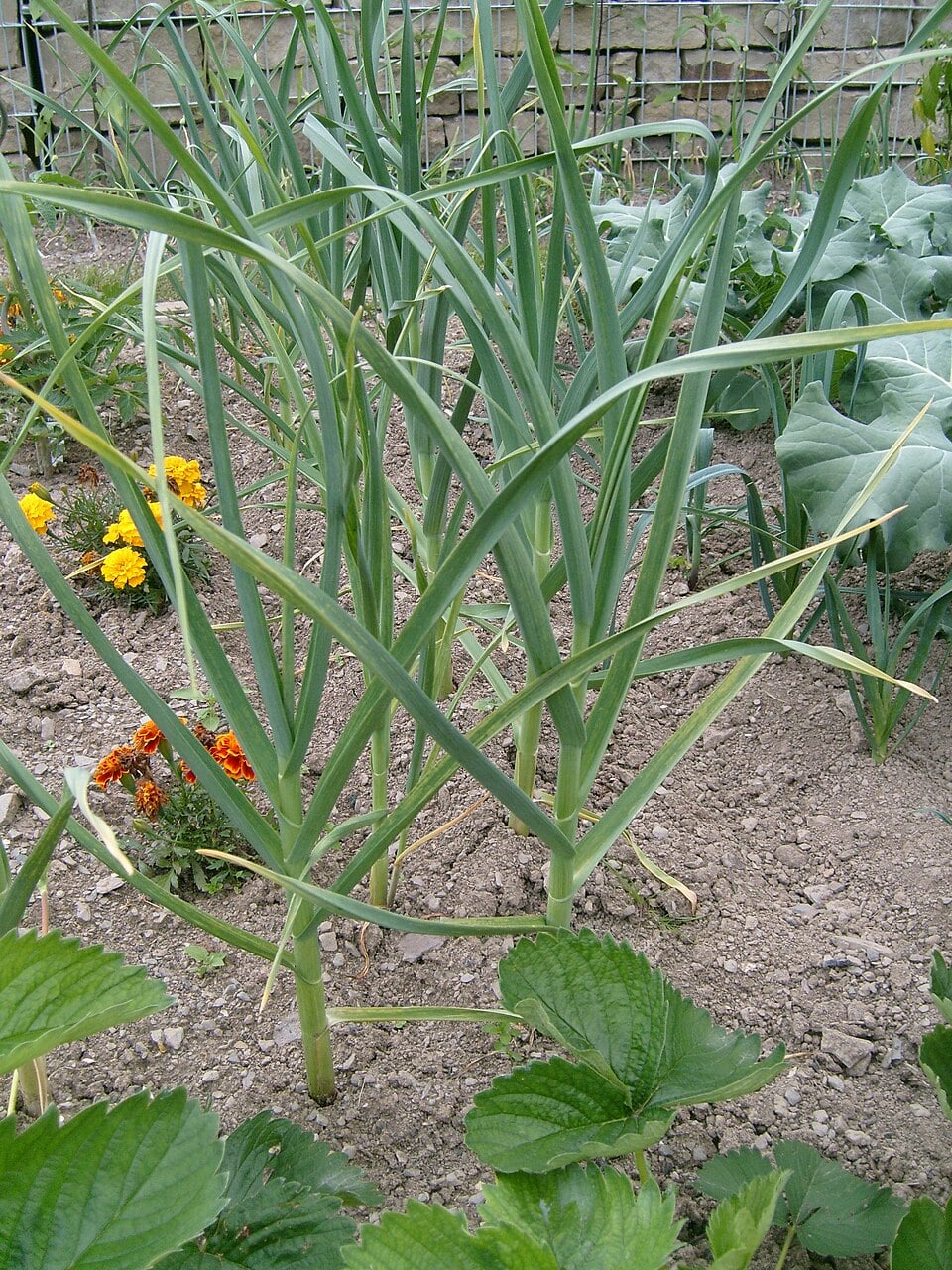
Garlic
Allium sativum
Garlic forms flat, strap-like leaves arising from a head of several cloves, whereas onion has tubular, hollow leaves arising from a single round bulb.
Onion
Allium cepa
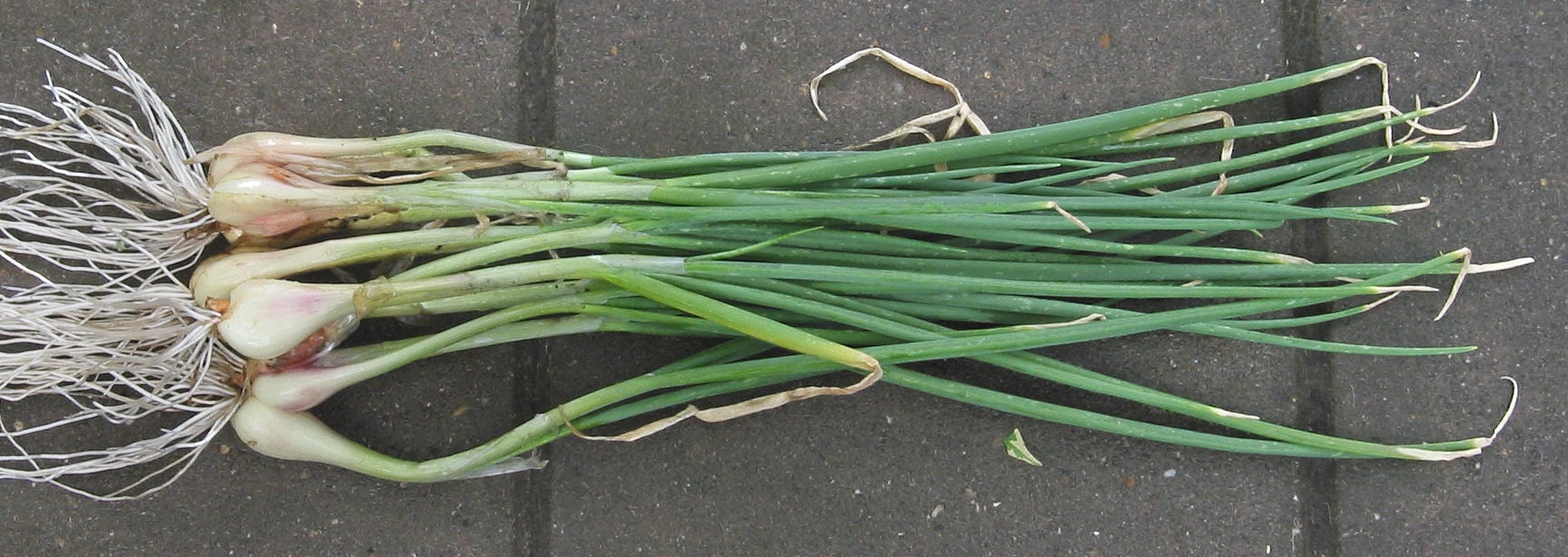
Welsh onion
Allium fistulosum
Welsh onion generally forms a clump of slender stems without a true large bulb, unlike the common onion which develops a single large round bulb; the leaves of Welsh onion are cylindrical and hollow.
🌿 Other Amaryllidaceae to discover
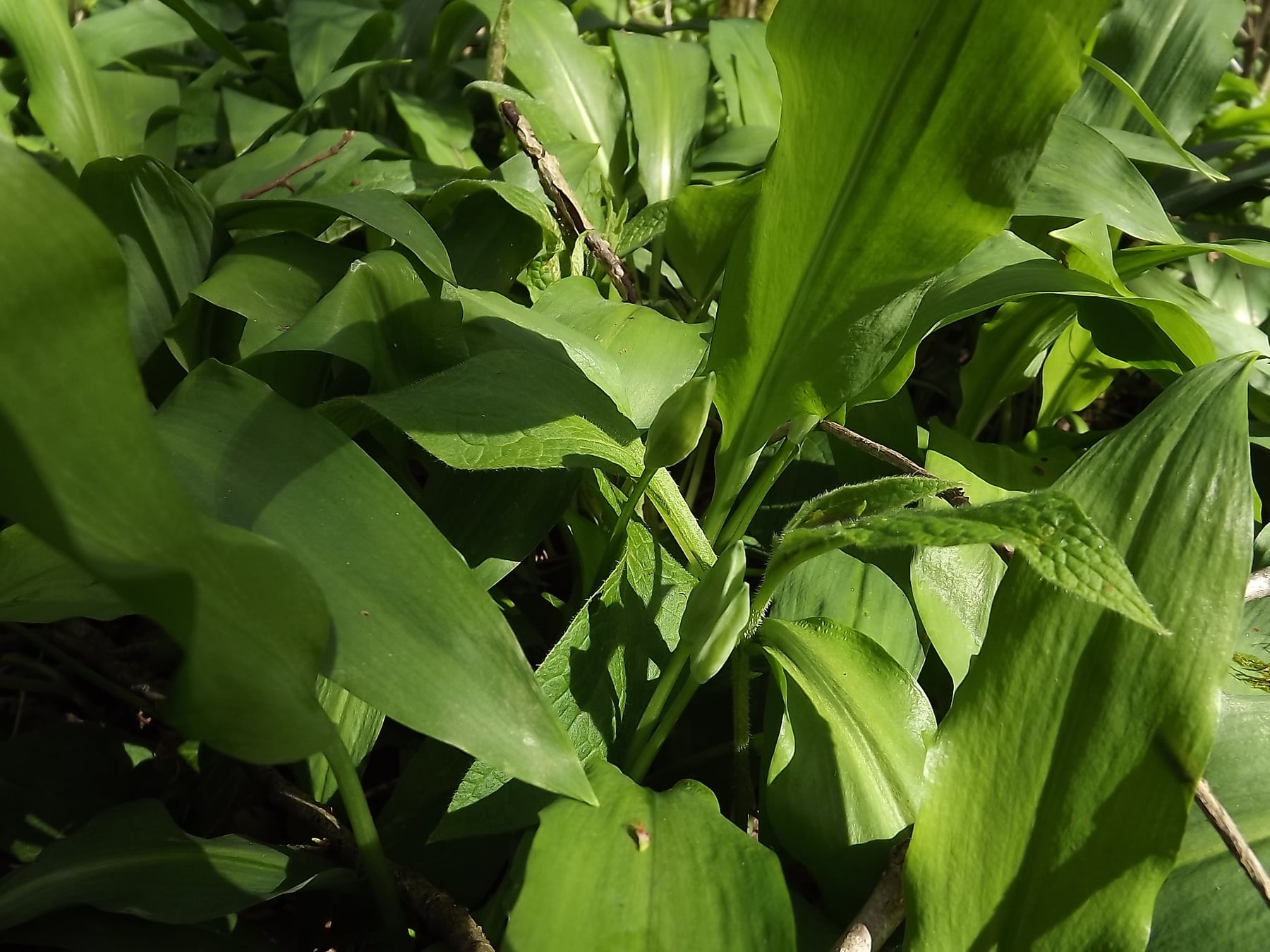
ℹ️ Educational profile — do not use it to judge whether a plant is edible or safe.
🌱 This database is constantly evolving — species and information are added and corrected regularly. Spotted a mistake? Report it below.
© Floraneo — profile content is protected; reproduction without permission is prohibited. Photos remain under their own licence (see the credit shown on each photo).