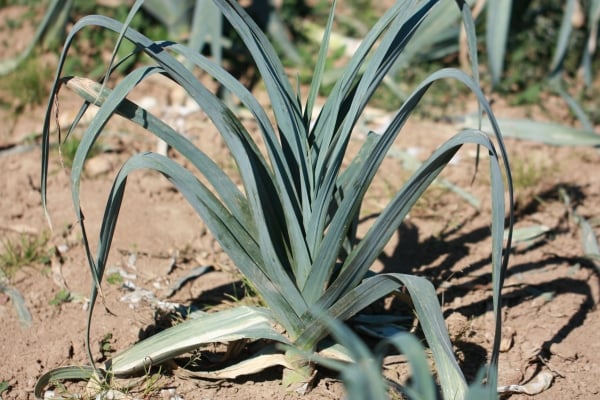
Habit
Rasbak, Wikimedia · CC BY-SA 3.0
Welsh onion
Allium fistulosum L.
Also known as: Japanese bunching onion, Bunching onion
Family: Amaryllidaceae
30 to 50 cm tall
Grown in the vegetable garden, ordinary free-draining soils
Flowering: June – August
Full sun
Very hardy, to about -20°C, the foliage persists for much of the winter
❓ How do you recognise this plant?
Unlike the onion, whose large underground bulb is harvested, the Welsh onion is grown for its long cylindrical leaves and its barely swollen false bulb — it is the onion vegetable eaten fresh, like a large chive, rather than dried and stored in a cellar. Both form clumps of fine, hollow green stems, but the Welsh onion has much thicker stems and a slight swelling at the base, close to a small onion.
🍃 Leaves
Long, cylindrical, hollow, arranged in a clump (the part mainly eaten)
🌸 Flowers
White, grouped in a dense spherical umbel at the top of a hollow flower stalk
🍎 Fruits
Small 3-celled capsule
🪵 Bark
Perennial herbaceous clump formed of elongated, barely swollen false bulbs
🗺️ Distribution
Native to Asia; widely grown in vegetable gardens in France
🐝 Value for pollinators
Nectar-rich umbels, visited by bees
✂️ Horticultural uses
Perennial vegetable-garden crop close to the onion, grown for its cylindrical leaves eaten fresh all year round, does not form a large bulb unlike the onion
⚠️ Possible toxicity
Edible for humans, but toxic to dogs and cats (like all Allium): causes haemolytic anaemia through oxidation of red blood cells if eaten in large or repeated amounts.
⚠️ Look-alike species
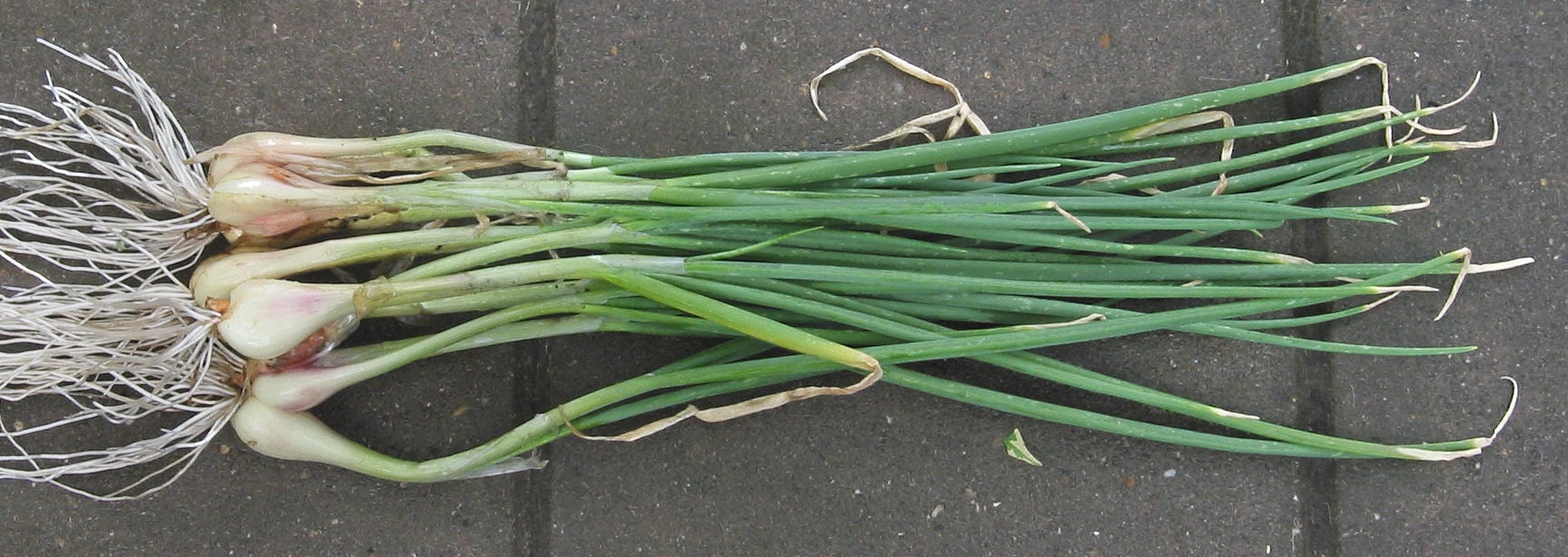
Welsh onion
Allium fistulosum
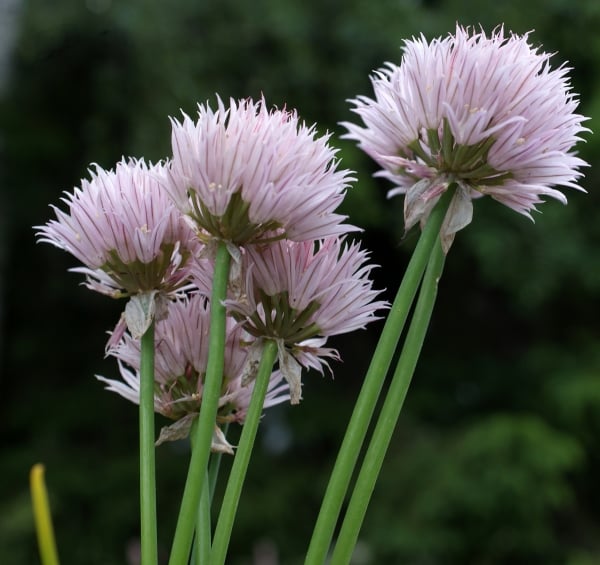
Chives
Allium schoenoprasum
Both form clumps of fine, hollow green stems, but the Welsh onion has much thicker stems and a slight swelling at the base, close to a small onion.
Welsh onion
Allium fistulosum
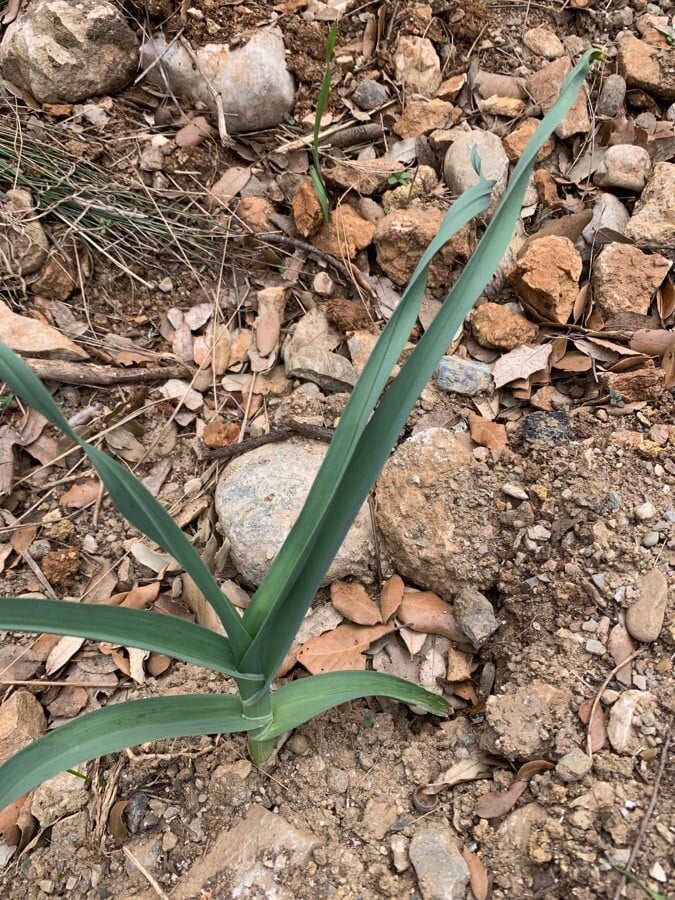
Onion
Allium cepa
The Welsh onion generally forms a clump of fine stems without a true large bulb, unlike the common onion, which develops a single large round bulb; the leaves of the Welsh onion are cylindrical and hollow.
🌿 Other Amaryllidaceae to discover
ℹ️ Educational profile — do not use it to judge whether a plant is edible or safe.
🌱 This database is constantly evolving — species and information are added and corrected regularly. Spotted a mistake? Report it below.
© Floraneo — profile content is protected; reproduction without permission is prohibited. Photos remain under their own licence (see the credit shown on each photo).