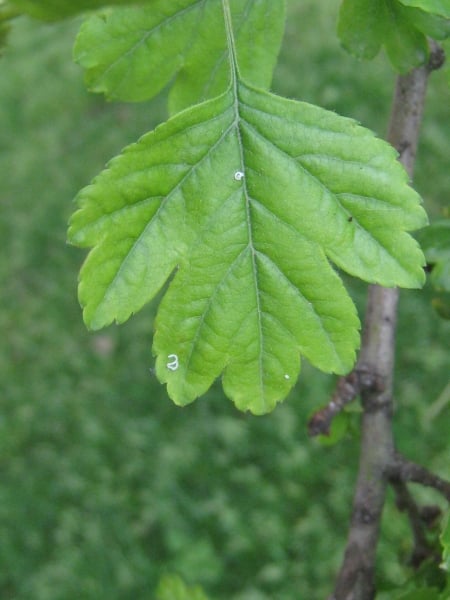
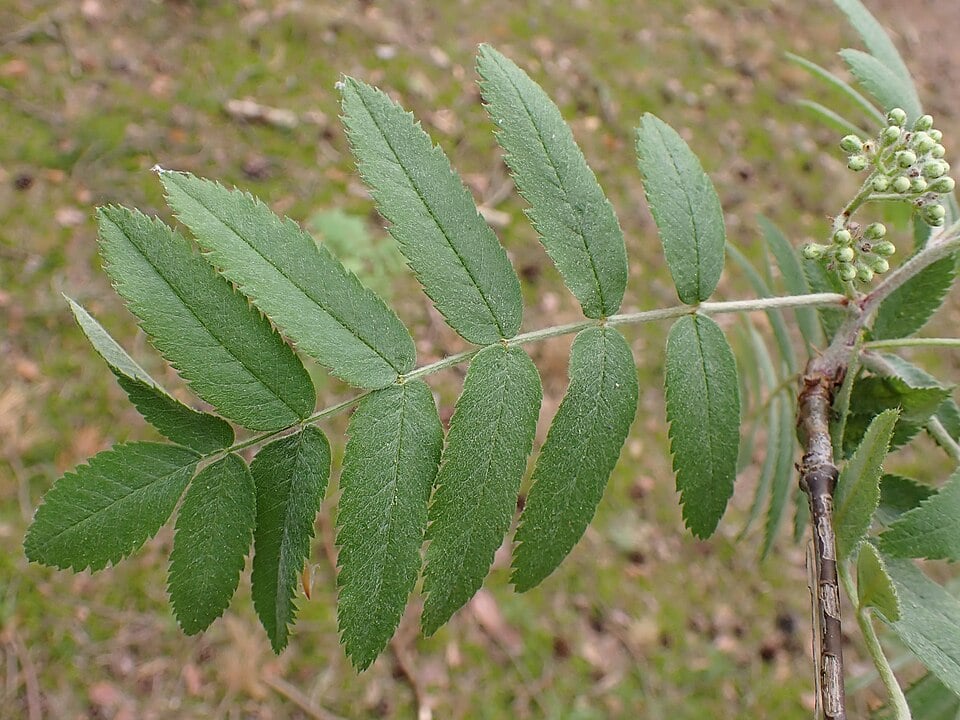
Leaf
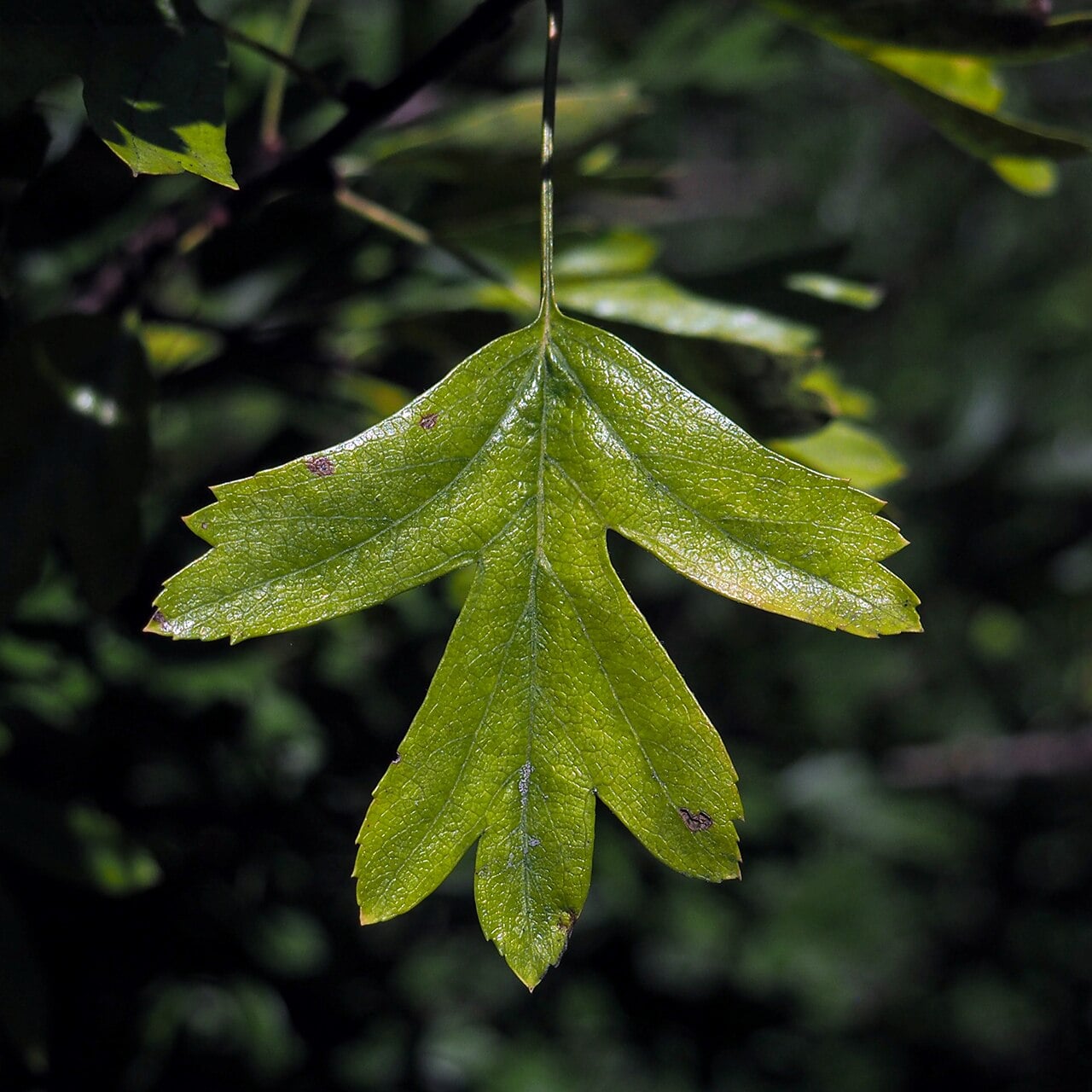
Hervé Goëau, Tela Botanica · CC BY-SA 2.0
Midland hawthorn
Crataegus laevigata
Also known as: Woodland hawthorn, Two-styled hawthorn
Family: Rosaceae
- 3 to 6 m tall
- Hedgerows, woodland edges, gardens, ordinary soils
- Full sun, Part shade
- Hardy to -25°C
In flower from April to May
2 months❓ How do you recognise this plant?
Distinguished from common hawthorn by its two-stoned fruits and less deeply cut leaves. Compare above all the leaves and flowers: C. laevigata generally has less deeply lobed leaves and flowers with 2-3 styles, whereas C. monogyna generally has 1 style. Hybrids can show intermediate characters.
Learn to recognise it
Collector shrubs. This plant is in the lesson “Collector shrubs”, with 10 others.

🍃 Leaves
Deciduous, shallowly lobed, glossy green
🌸 Flowers
Clusters of white or pink flowers, strong scent
🍎 Fruits
Small red fruits, generally with 2 stones, sometimes 3.
🪵 Bark
Cracked grey-brown bark, thorny shoots
Distribution, pollinators, uses
🗺️ Distribution
Europe; common in the hedgerows of the French bocage, often confused with common hawthorn.
🐝 Value for pollinators
Fragrant white flowering in May, much visited by bees, hoverflies and other foraging insects.
✂️ Horticultural uses
Planted in country and bocage hedges, sometimes as a specimen for its flowers and fruits (haws).
⚠️ Possible toxicity
No known toxicity; fruits edible, used in herbal medicine for the heart.
🌱 Known cultivars
'Paul's Scarlet'
The cultivar 'Paul's Scarlet', widely planted in parks and gardens, is recognised by its double, pinkish red flowers gathered in dense clusters, very different from the small, single white flowers of the wild species.
⚠️ Look-alike species
Midland hawthorn
Crataegus laevigata
Common hawthorn
Crataegus monogyna
Compare above all the leaves and flowers: C. laevigata generally has less deeply lobed leaves and flowers with 2-3 styles, whereas C. monogyna generally has 1 style. Hybrids can show intermediate characters.
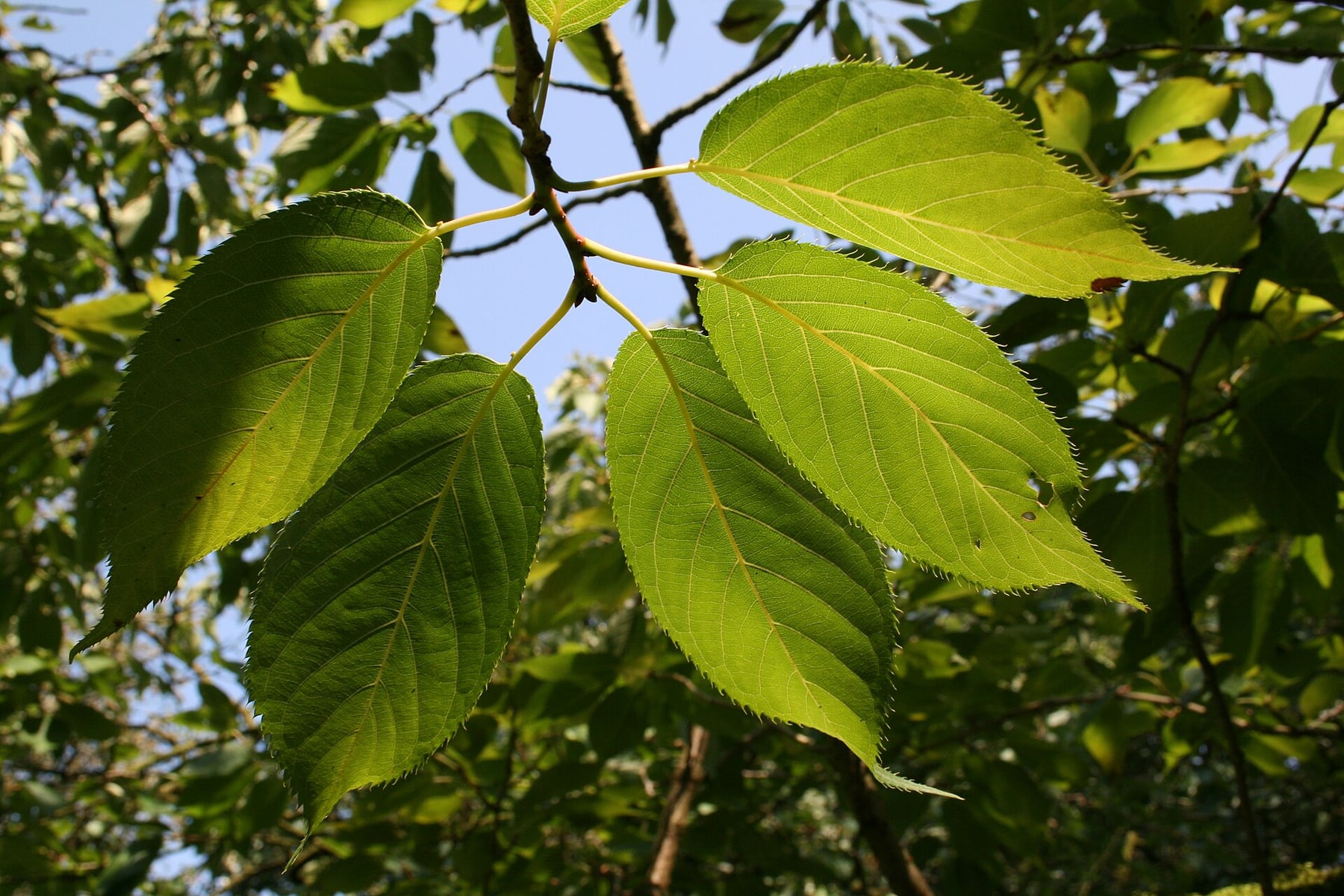
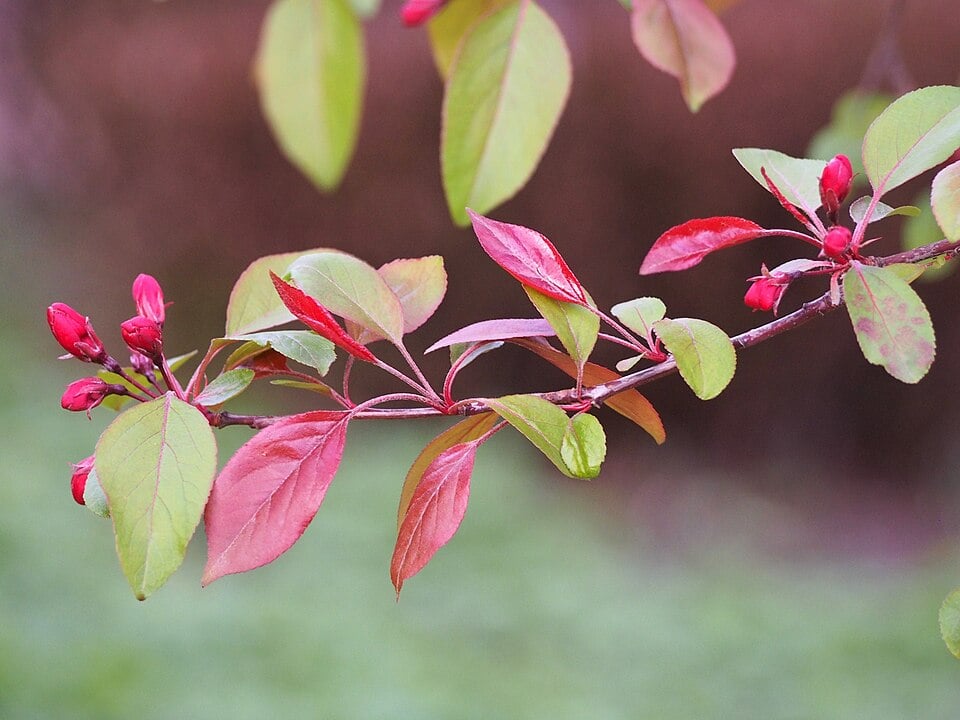
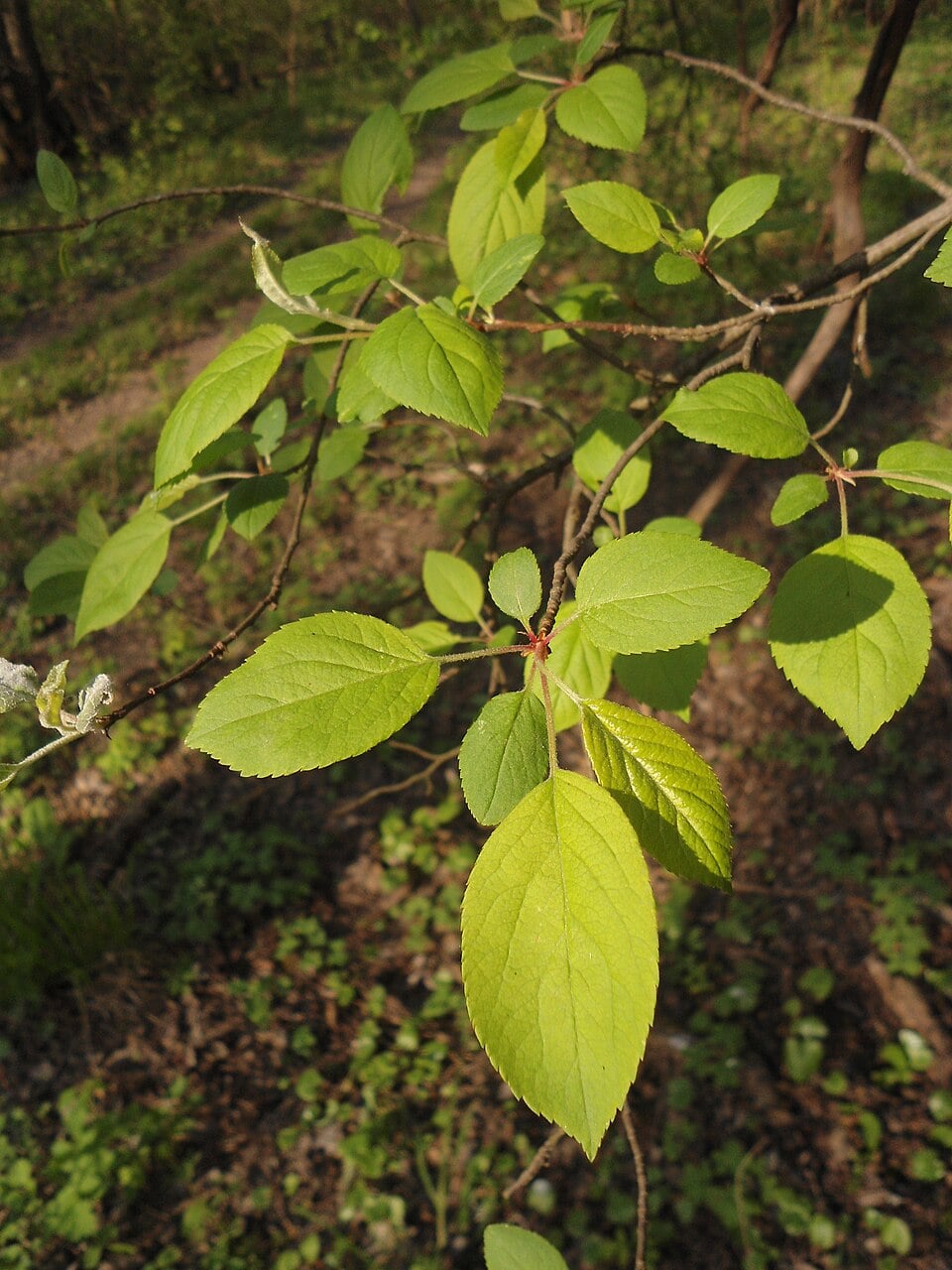
🌿 Other Rosaceae to discover
ℹ️ Educational profile — do not use it to judge whether a plant is edible or safe.
🌱 This database is constantly evolving — species and information are added and corrected regularly. Spotted a mistake? Report it below.
© Floraneo — profile content is protected; reproduction without permission is prohibited. Photos remain under their own licence (see the credit shown on each photo).