Leaf
Krzysztof Ziarnek, Kenraiz, Wikimedia · CC BY-SA 4.0
Maritime pine
Pinus pinaster Aiton
Also known as: Cluster pine
Family: Pinaceae
20 to 35 m tall, trunk often crooked at the base
Coastal forests and dunes (the Landes forest in particular), plantations on poor sandy soils and gardens of the Atlantic and Mediterranean coasts
Flowering: April - May
Full sun
Hardy to -15°C, sensitive to cold continental winds
❓ How do you recognise this plant?
It is the tree of the largest artificial forest in Europe, the Landes forest, planted in the 19th century to drain marshland and stabilise dunes. Aleppo pine has paler greyish bark and an often twisted, sparse silhouette, with fine, flexible needles, whereas maritime pine has thick, deeply fissured red-brown bark and very long, rigid needles.
🍃 Leaves
Very long, stiff needles (10 to 25 cm), in pairs, bright green to yellowish-green
🌸 Flowers
Numerous bright yellow male catkins in spring, female cones reddish then green
🍎 Fruits
Large glossy conical cones 10 to 20 cm long, shiny brown, with thick scales ending in a sharp point
🪵 Bark
Thick red-brown bark, deeply fissured into broad plates, base of the trunk often blackened
🗺️ Distribution
Emblematic of the Landes de Gascogne forest, also found in Brittany, Provence and along the whole Atlantic coast
🐝 Value for pollinators
Very abundant wind-dispersed pollen (allergenic), of little interest to insects but a major habitat for many woodland birds
✂️ Horticultural uses
Historically planted on a large scale to stabilise dunes and for resin tapping; still used for reforestation of sandy, poor soils
⚠️ Possible toxicity
Non-toxic
⚠️ Look-alike species
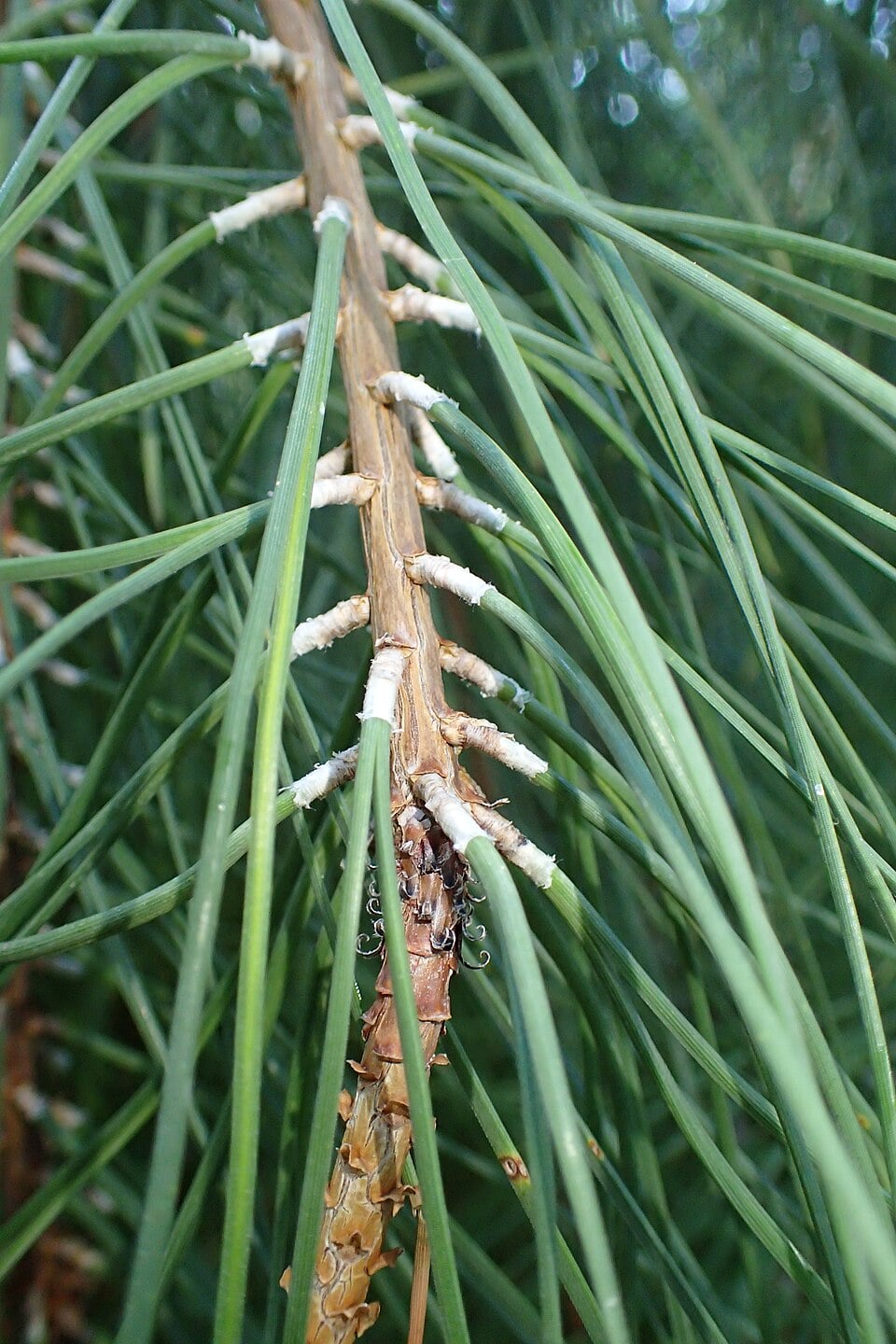
Maritime pine
Pinus pinaster
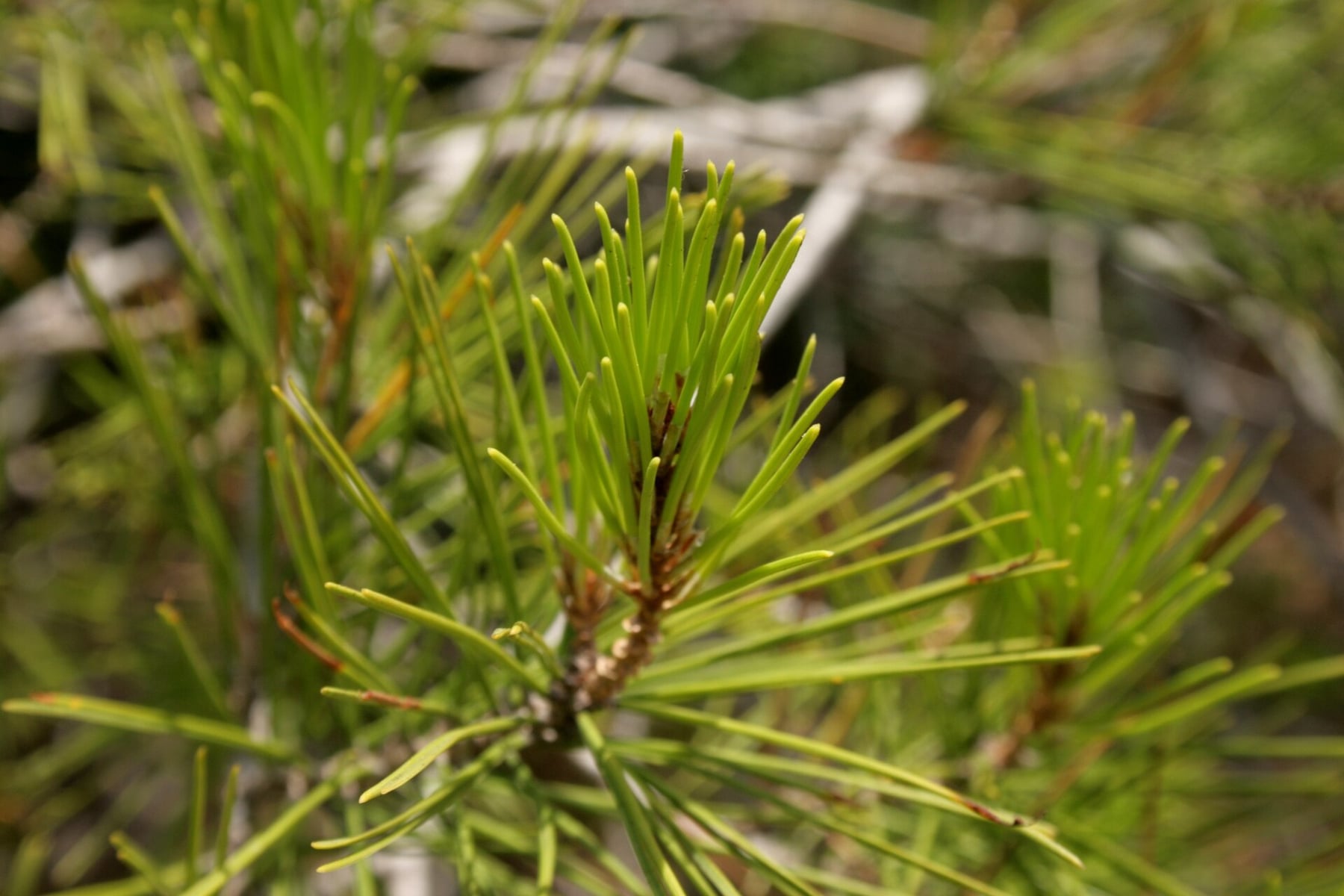
Aleppo pine
Pinus halepensis
Aleppo pine has paler greyish bark and an often twisted, sparse silhouette, with fine, flexible needles, whereas maritime pine has thick, deeply fissured red-brown bark and very long, rigid needles.
🌿 Other Pinaceae to discover
ℹ️ Educational profile — do not use it to judge whether a plant is edible or safe.
🌱 This database is constantly evolving — species and information are added and corrected regularly. Spotted a mistake? Report it below.
© Floraneo — profile content is protected; reproduction without permission is prohibited. Photos remain under their own licence (see the credit shown on each photo).