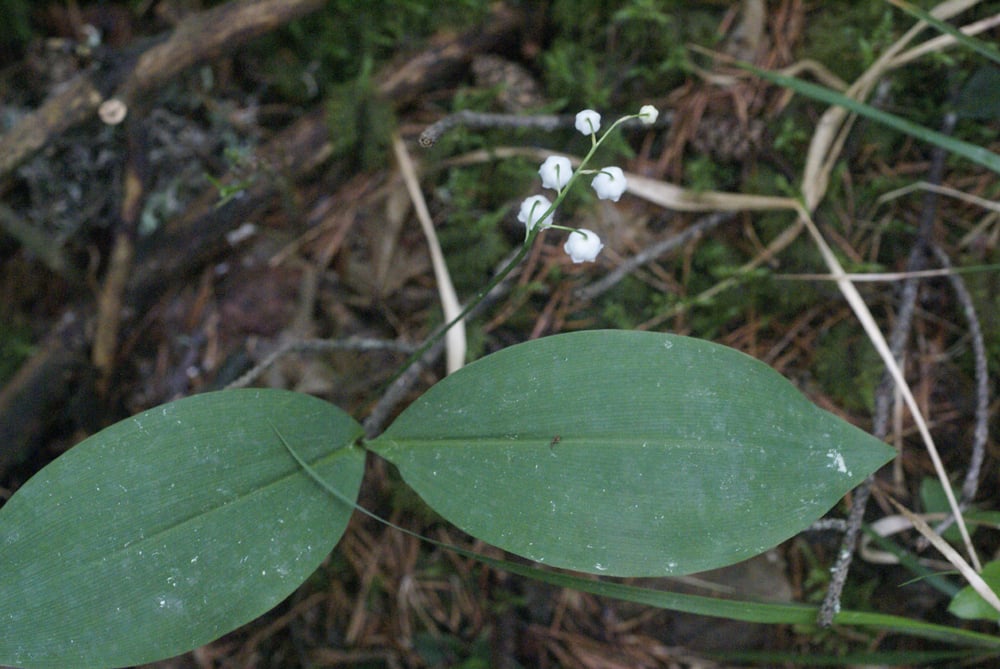
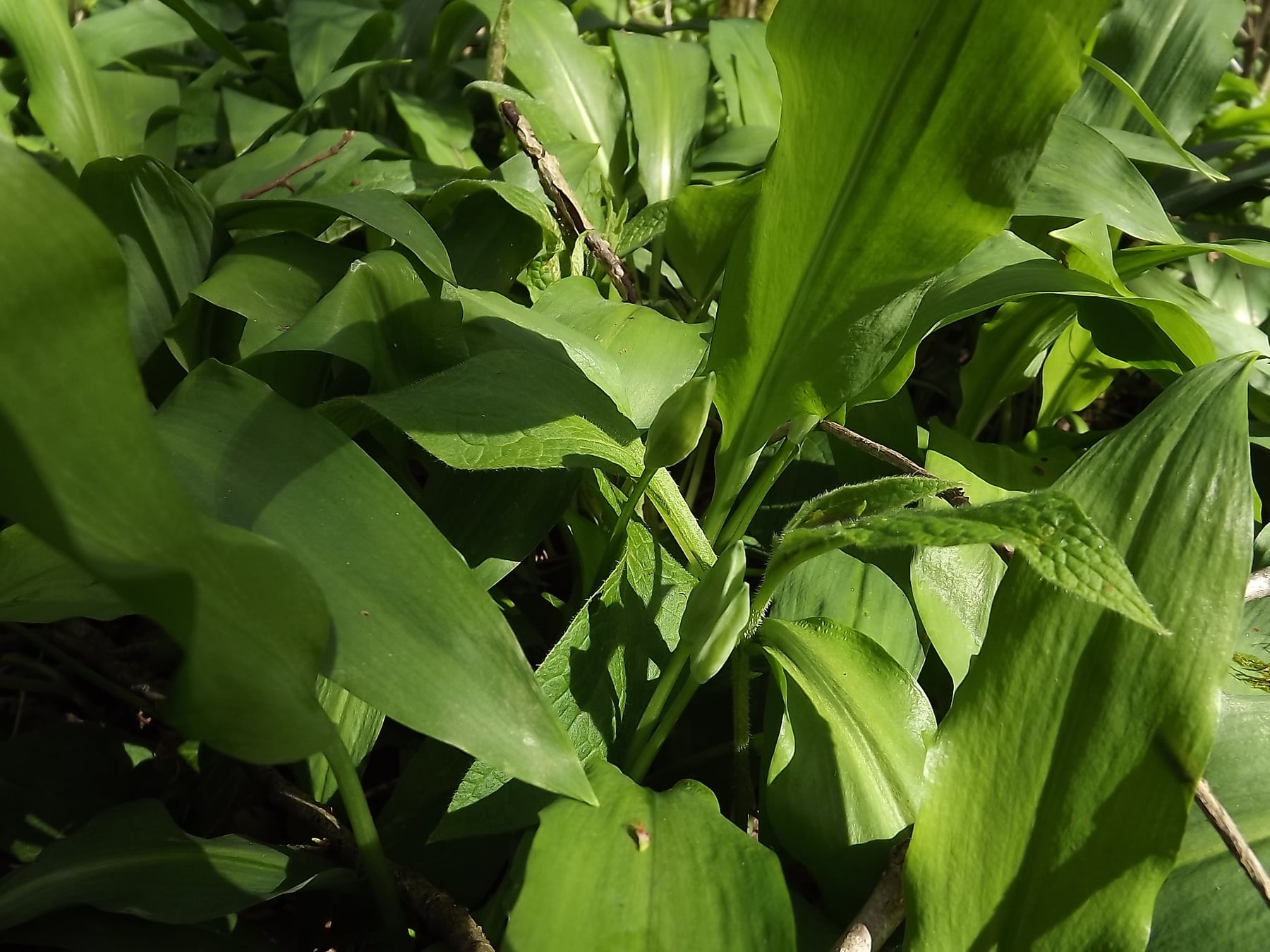
The characteristic scent of 1 May — but the whole plant, including the red berries, is toxic. The safest test: crush a leaf between your fingers and smell it. Ramsons immediately gives off a strong smell of garlic — lily of the valley smells of nothing at all. Its leaves are also more fleshy and sheathing at the base. These are good clues, but none is an absolute guarantee on its own: if in the slightest doubt, do not eat it — lily of the valley is highly toxic.
🍃 Leaves
Two large ovate leaves sheathing at the base
🌸 Flowers
Small fragrant white bells in a one-sided raceme
🍎 Fruits
Small orange-red berries, toxic
🪵 Bark
Creeping underground rhizome, herbaceous plant
🗺️ Distribution
Europe, temperate Asia; common as carpets in cool, light woodland in France.
🐝 Value for pollinators
Small fragrant white bells, nectar-bearing, visited by bees in spring.
✂️ Horticultural uses
Ground cover for woodland, shady borders; traditional 1 May sprig, to be kept out of reach of children.
⚠️ Possible toxicity
Very toxic in all its parts, including the water in the vase after flowering (cardiac glycosides); ingestion may cause serious heart problems, particularly dangerous for young children.
The safest test: crush a leaf between your fingers and smell it. Ramsons immediately gives off a strong smell of garlic — lily of the valley smells of nothing at all. Its leaves are also more fleshy and sheathing at the base. These are good clues, but none is an absolute guarantee on its own: if in the slightest doubt, do not eat it — lily of the valley is highly toxic.