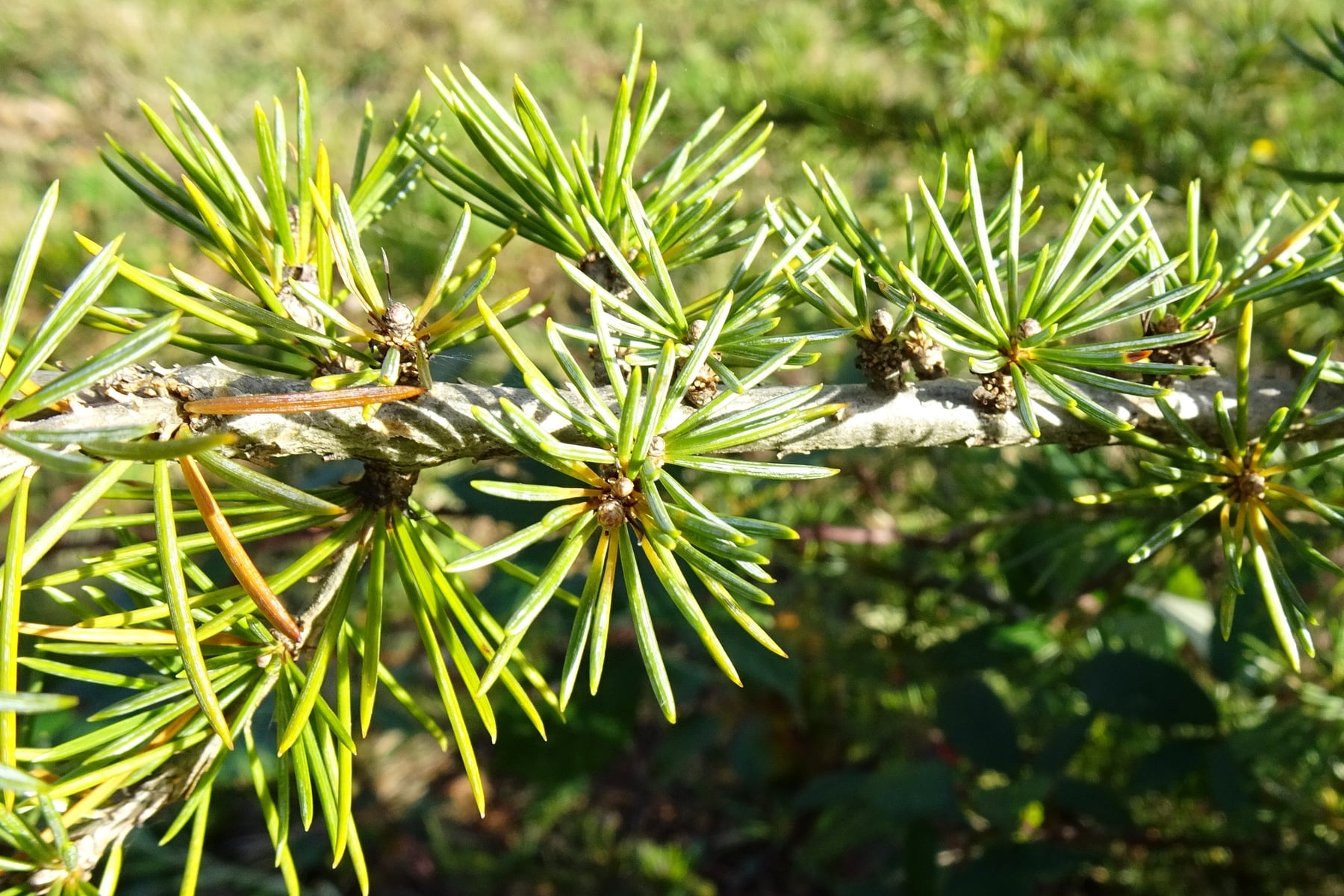
Twig
Sten Porse · CC BY-SA 3.0
Japanese larch
Larix kaempferi (Lindl.) Carrière
Family: Pinaceae
30 to 35 m tall
Planted for reforestation and as specimen trees in parks; native to the mountains of central Japan.
Flowering: March – April
Full sun
Very hardy, to about -30°C
❓ How do you recognise this plant?
Japanese larch looks a lot like European larch, but its cones have scales with the edge curled outwards, forming a small rosette, whereas those of European larch stay rounded and pressed flat. Japanese larch looks very much like European larch (deciduous needles in tufts, conical outline) — the best clue is the cone: its scales have the upper edge curled outwards, forming a rosette, whereas those of European larch stay rounded and pressed flat. The young twigs of Japanese larch are also more distinctly bronze-orange.
🍃 Leaves
Soft needles in tufts, slightly bluer green than European larch, deciduous, turning yellow in autumn.
🌸 Flowers
Small male cones and reddish to pinkish female cones, discreet, appearing before the needles.
🍎 Fruits
Small ovoid cone whose scales have the upper edge distinctly curled outwards, rosette-shaped — unlike the rounded, flat-pressed scales of European larch.
🪵 Bark
Scaly, reddish-brown to orange; the current year's young twigs are distinctly bronze to orange.
🗺️ Distribution
Native to the mountains of central Japan (Honshū); introduced to Europe in 1861, now planted for reforestation and as an ornamental.
🐝 Value for pollinators
Wind-pollinated, little direct interest for pollinators.
✂️ Horticultural uses
Planted for reforestation and as a specimen tree for its fast growth and golden autumn foliage; crossed with European larch, it gave rise to the Dunkeld larch (Larix × marschlinsii).
⚠️ Possible toxicity
No known toxicity
⚠️ Look-alike species
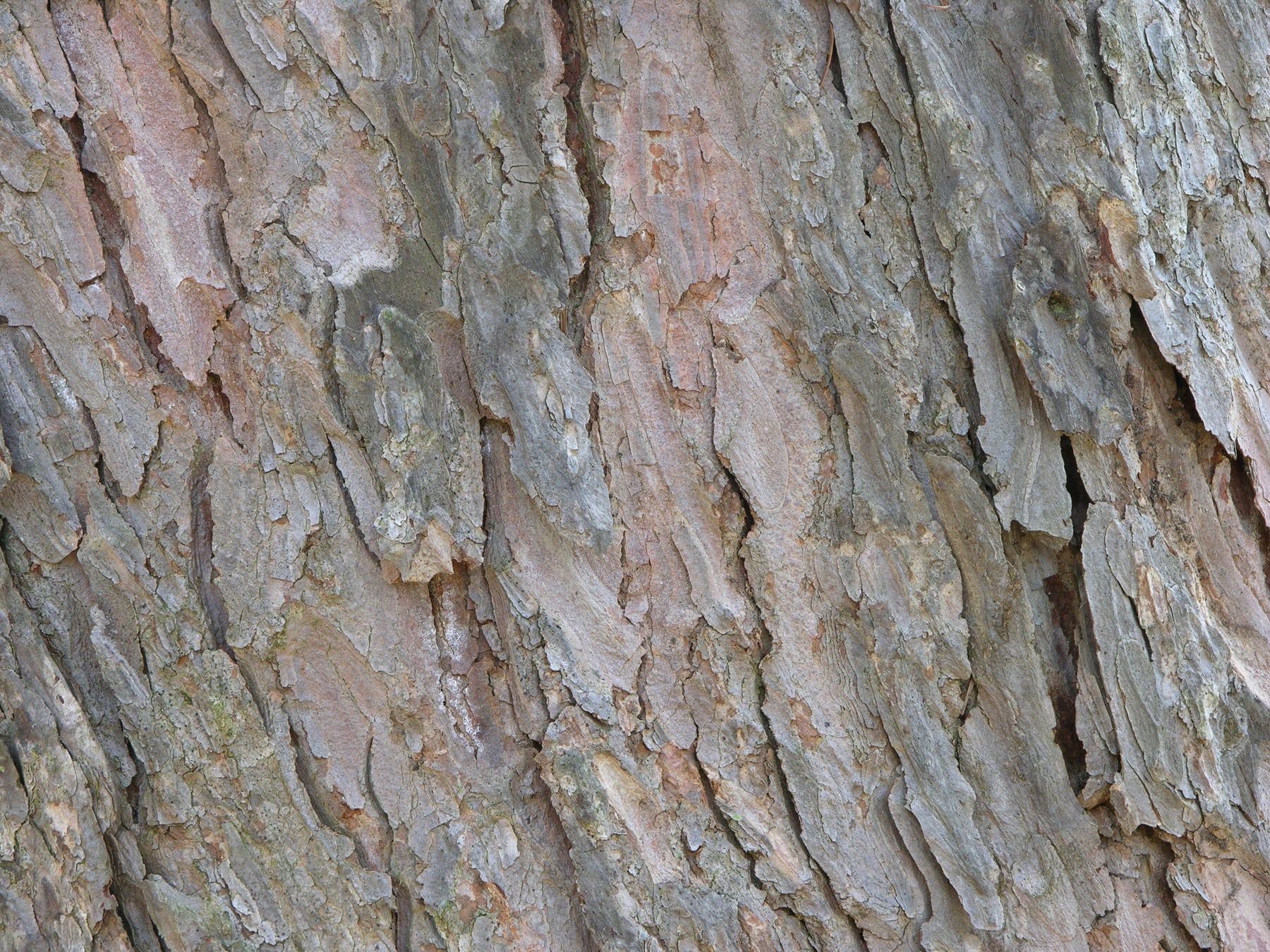
Japanese larch
Larix kaempferi
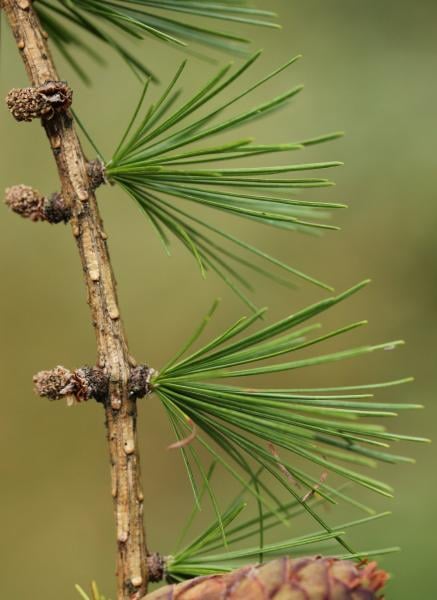
European larch
Larix decidua
Japanese larch looks very much like European larch (deciduous needles in tufts, conical outline) — the best clue is the cone: its scales have the upper edge curled outwards, forming a rosette, whereas those of European larch stay rounded and pressed flat. The young twigs of Japanese larch are also more distinctly bronze-orange.
🌿 Other Pinaceae to discover
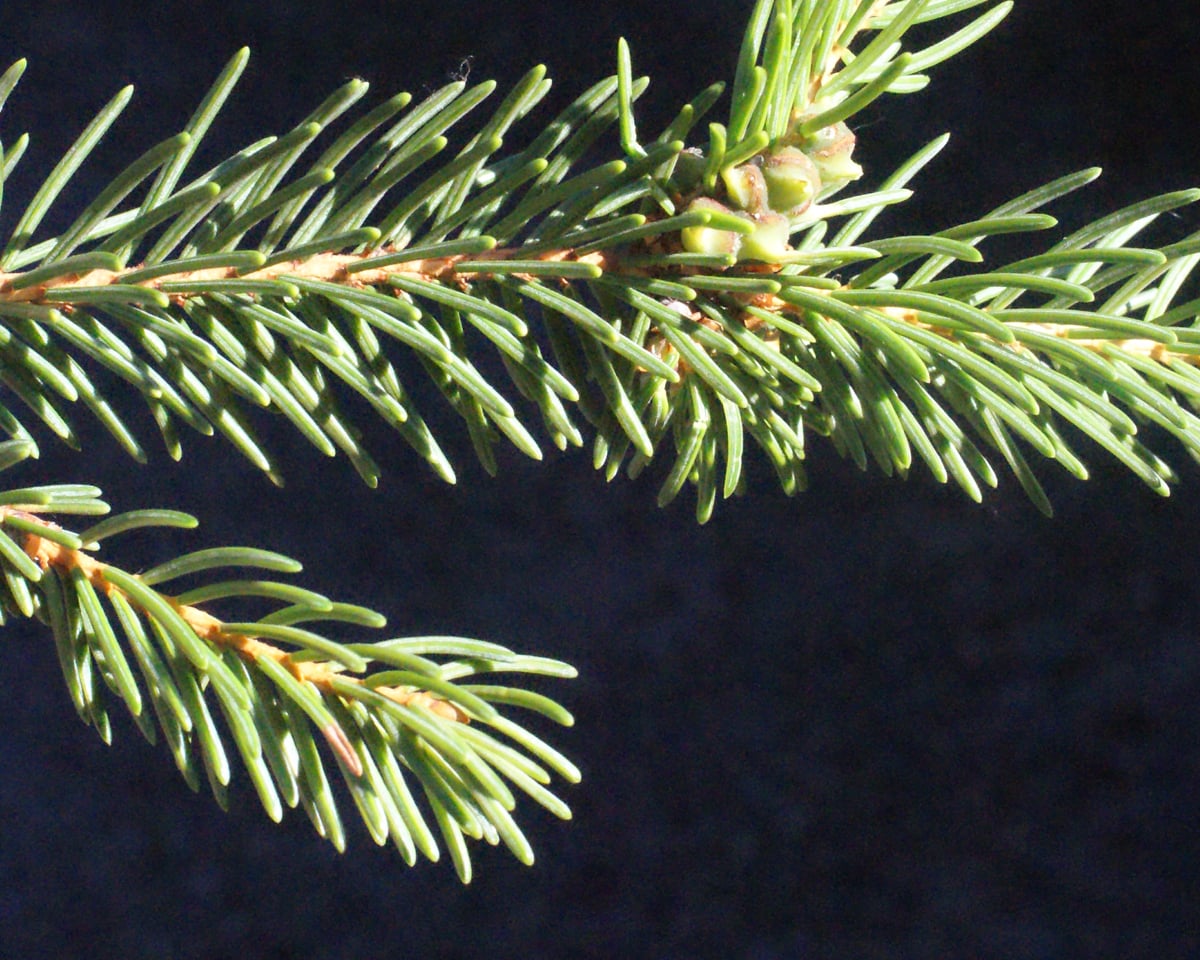
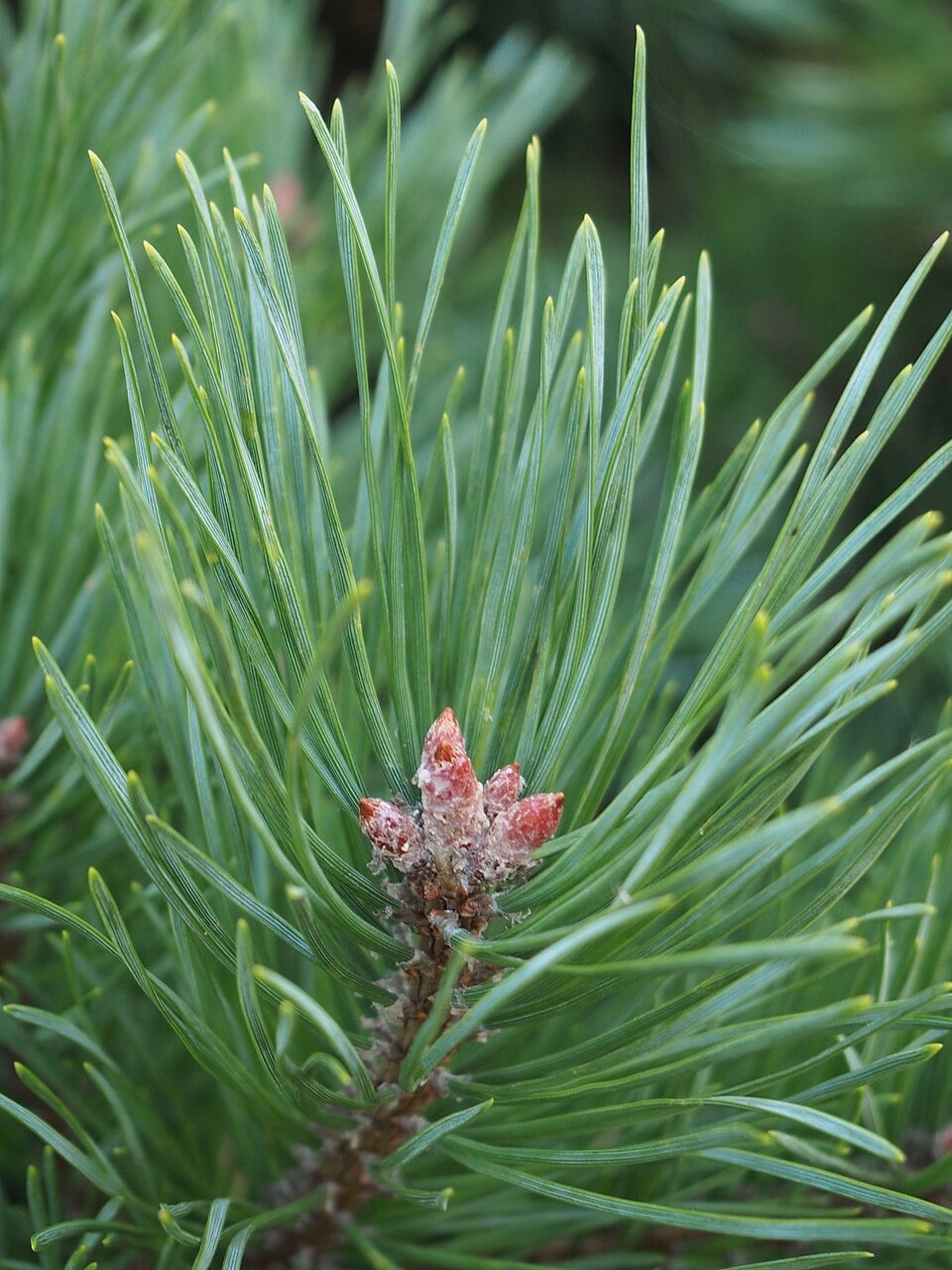
ℹ️ Educational profile — do not use it to judge whether a plant is edible or safe.
🌱 This database is constantly evolving — species and information are added and corrected regularly. Spotted a mistake? Report it below.
© Floraneo — profile content is protected; reproduction without permission is prohibited. Photos remain under their own licence (see the credit shown on each photo).