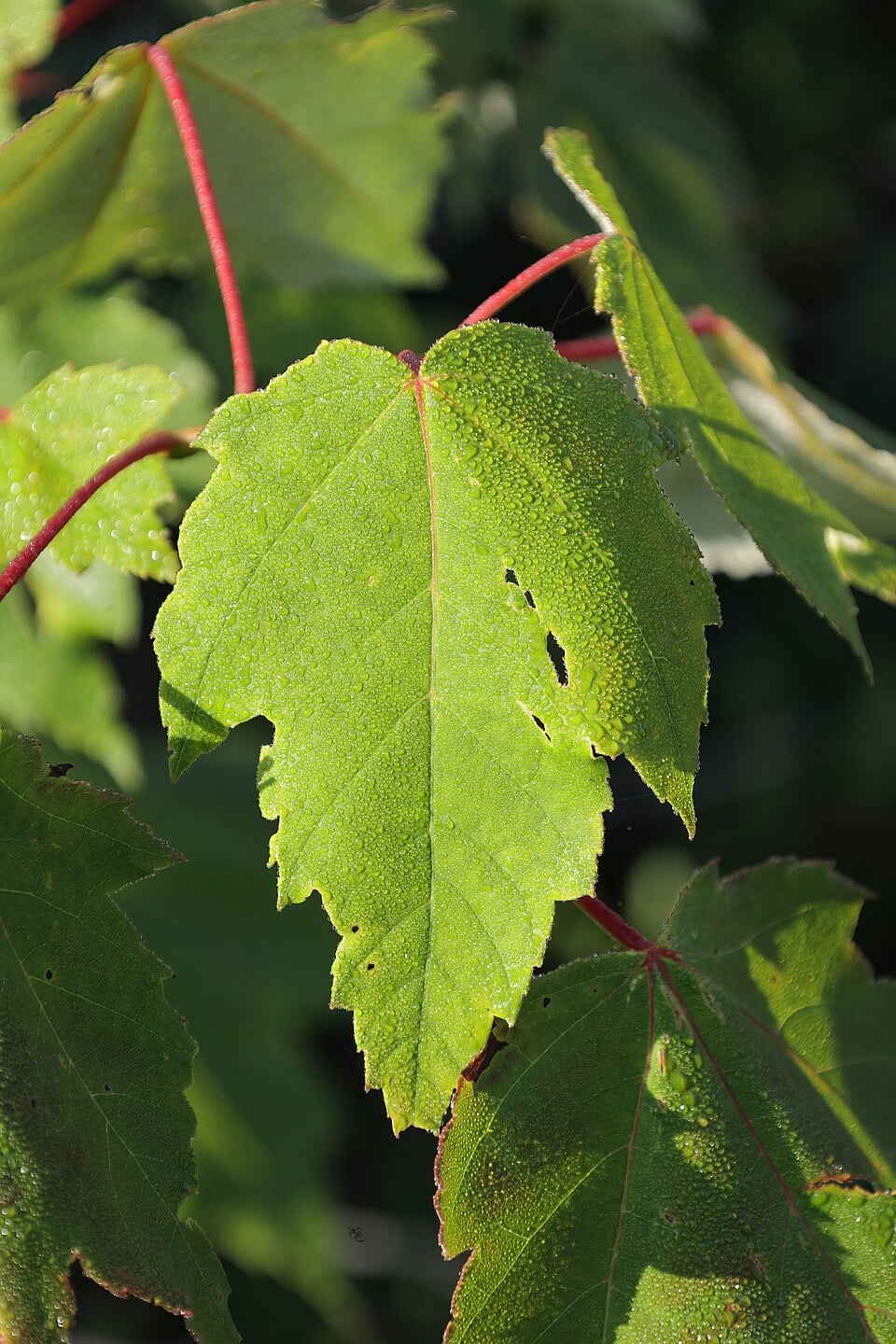
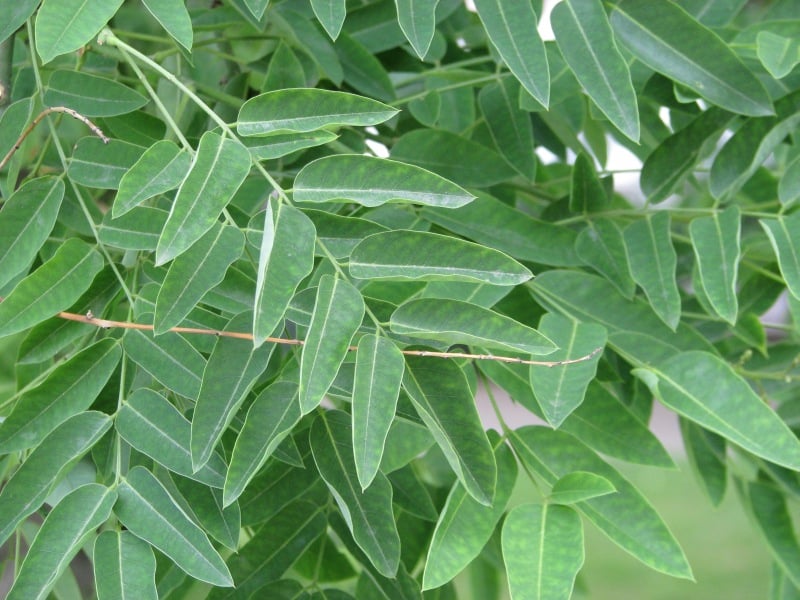
Leaf
Hladac, Wikimedia · CC BY-SA 4.0
- 15 to 25 m tall
- Planted as a shade and urban avenue tree, notably as its thornless cultivars
- Full sun
- Hardy to about -25°C
In flower from May to June
2 months❓ How do you recognise this plant?
The wild tree bears formidable branched thorns that can exceed 10 cm, but the cultivars planted in towns lack them completely.
Learn to recognise it
Trees with spectacular blossom. This plant is in the lesson “Trees with spectacular blossom”, with 11 others.
A free account is enough for this lesson.
🍃 Leaves
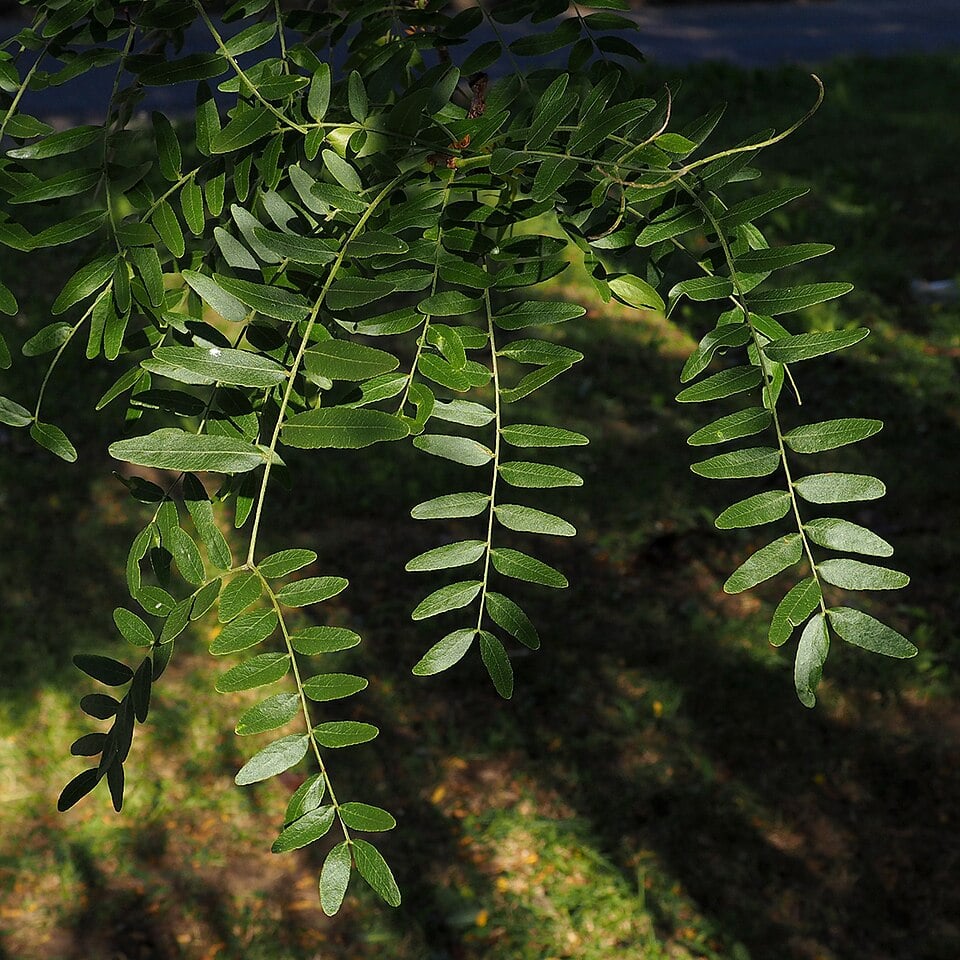
Deciduous, compound, often bipinnate, small, numerous leaflets giving light shade
🌸 Flowers
Small, greenish, barely visible, grouped in racemes
🍎 Fruits
Long red-brown pods, twisted in a spiral, persisting on the tree in winter
🪵 Bark
Grey to brown, bearing long branched thorns on the trunk in the wild type
Distribution, pollinators, uses
🗺️ Distribution
Native to eastern North America, widely planted in Europe as an urban tree
🐝 Value for pollinators
Nectar-rich flowers appreciated by bees
✂️ Horticultural uses
Thornless, golden-leaved cultivars such as 'Sunburst' are widely used as street trees for their light shade and tolerance of pollution
🌱 Known cultivars
'Sunburst'
This cultivar is recognised by its golden-yellow spring foliage (which then turns green in summer) and by the absence of the large branched thorns that bristle on the trunk and branches of the type species.
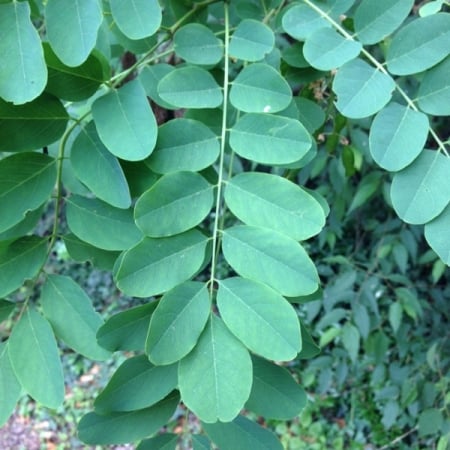
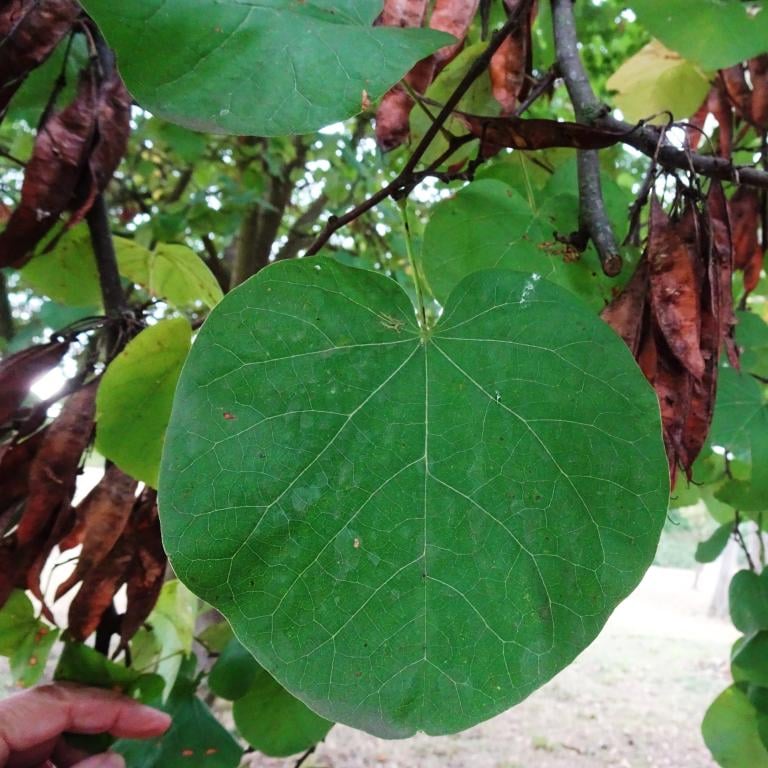
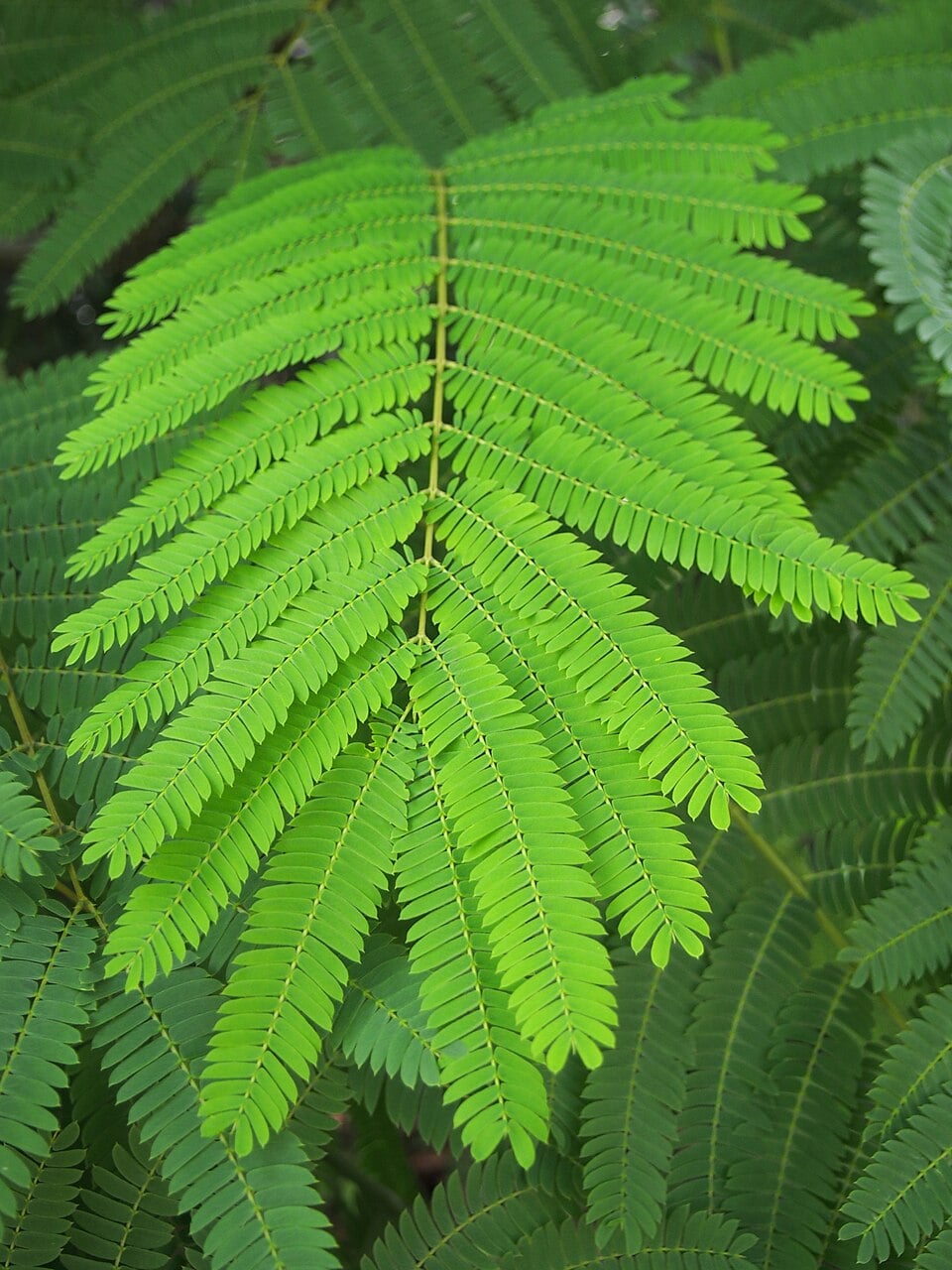
🌿 Other Fabaceae to discover
ℹ️ Educational profile — do not use it to judge whether a plant is edible or safe.
🌱 This database is constantly evolving — species and information are added and corrected regularly. Spotted a mistake? Report it below.
© Floraneo — profile content is protected; reproduction without permission is prohibited. Photos remain under their own licence (see the credit shown on each photo).