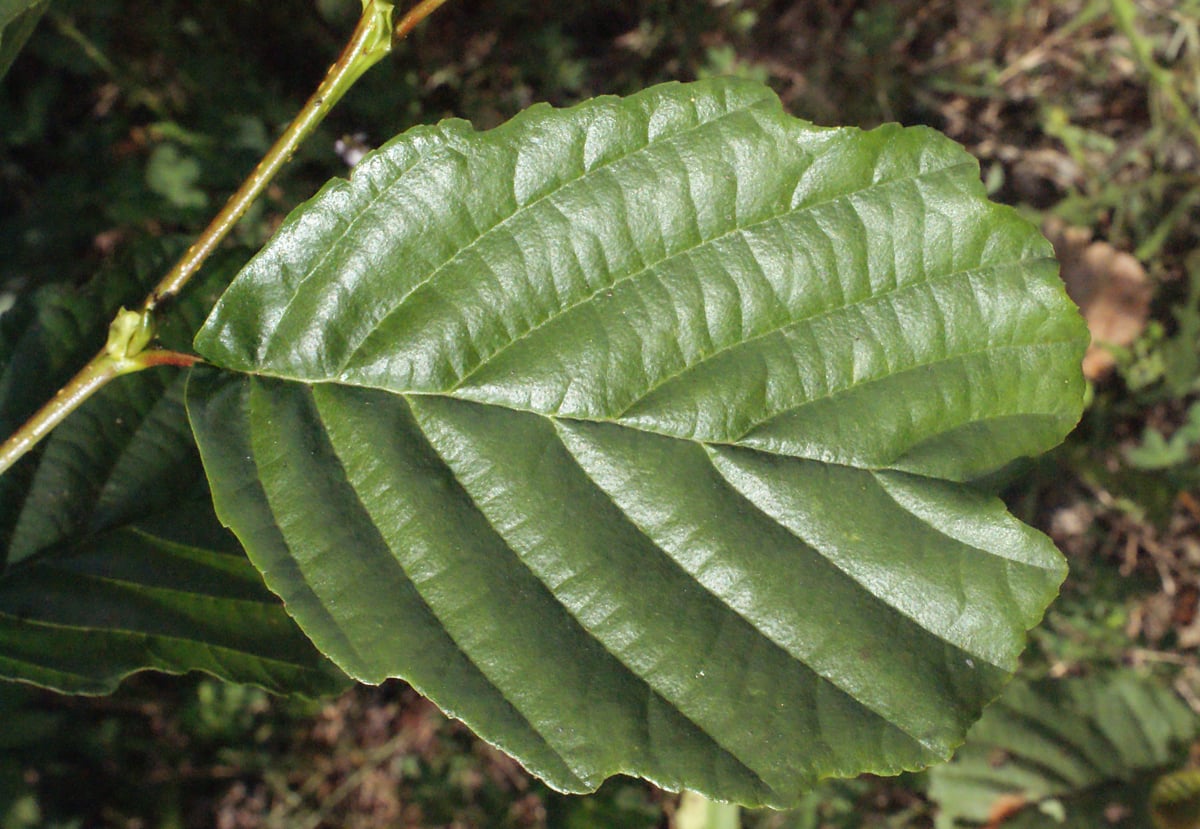
Leaf
Alain Bigou, Tela Botanica · CC BY-SA 2.0
Giant filbert
Corylus maxima Mill.
Also known as: Filbert, Lambert's filbert
Family: Betulaceae
4 to 6 m tall
Planted in hedges or as a specimen, rich, well-drained soils
Flowering: January – March, before the leaves
Full sun
Part shade
Very hardy, to about -20°C
❓ How do you recognise this plant?
Filbert is distinguished from common hazel by its long tubular husk that almost entirely encloses the nut, unlike the short, flared husk of common hazel. The cultivated filbert produces much larger, more elongated nuts than the wild common hazel, whose fruit is smaller and round.
🍃 Leaves
Deciduous, rounded, toothed, sometimes purple depending on variety
🌸 Flowers
Pendent yellowish male catkins and small reddish female flowers, separate on the same plant
🍎 Fruits
Large elongated nut, enclosed in a characteristic long tubular husk
🪵 Bark
Grey, smooth
🗺️ Distribution
Native to south-eastern Europe and Asia Minor; grown in France for its large nuts and as an ornamental shrub
🐝 Value for pollinators
Wind-pollinated, little interest for pollinators but early catkins useful at the very start of spring
✂️ Horticultural uses
Large fruit shrub grown for its big nuts, also planted as a purple variety for its decorative foliage
⚠️ Possible toxicity
Edible fruit; no known toxicity
🌱 Known cultivars
'Purpurea'
This variety is distinguished by its dark purple foliage, almost black in spring, which contrasts strongly with the bright green leaves of the wild species.
⚠️ Look-alike species
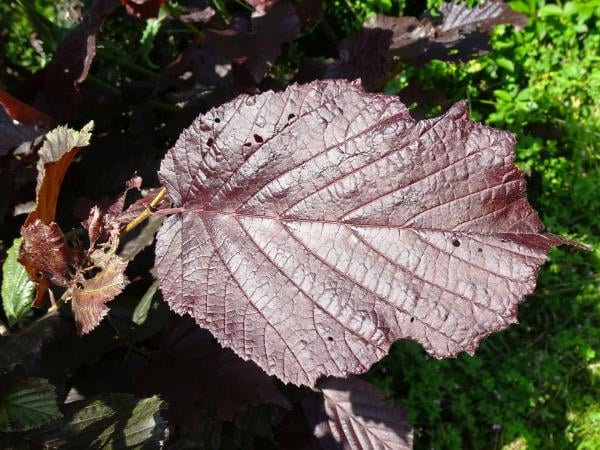
Giant filbert
Corylus maxima
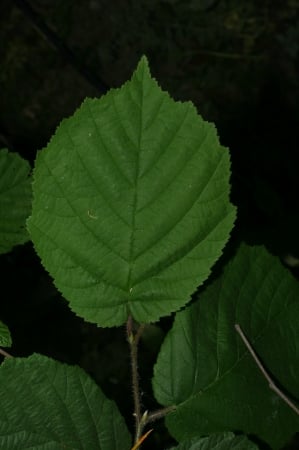
Common hazel
Corylus avellana
The cultivated filbert produces much larger, more elongated nuts than the wild common hazel, whose fruit is smaller and round.
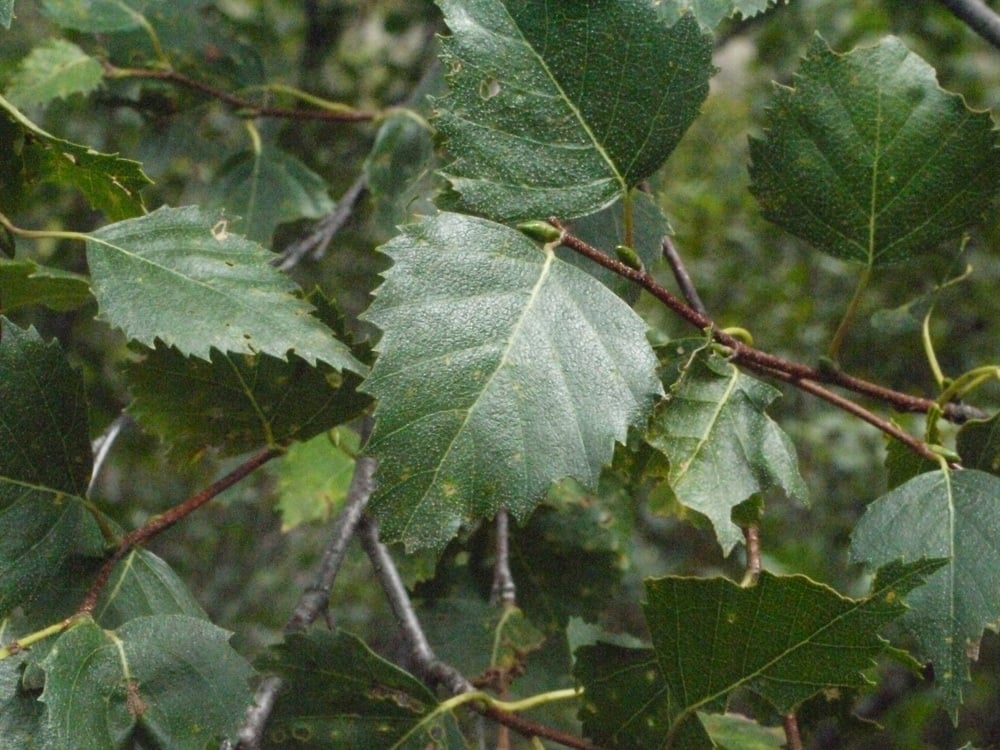
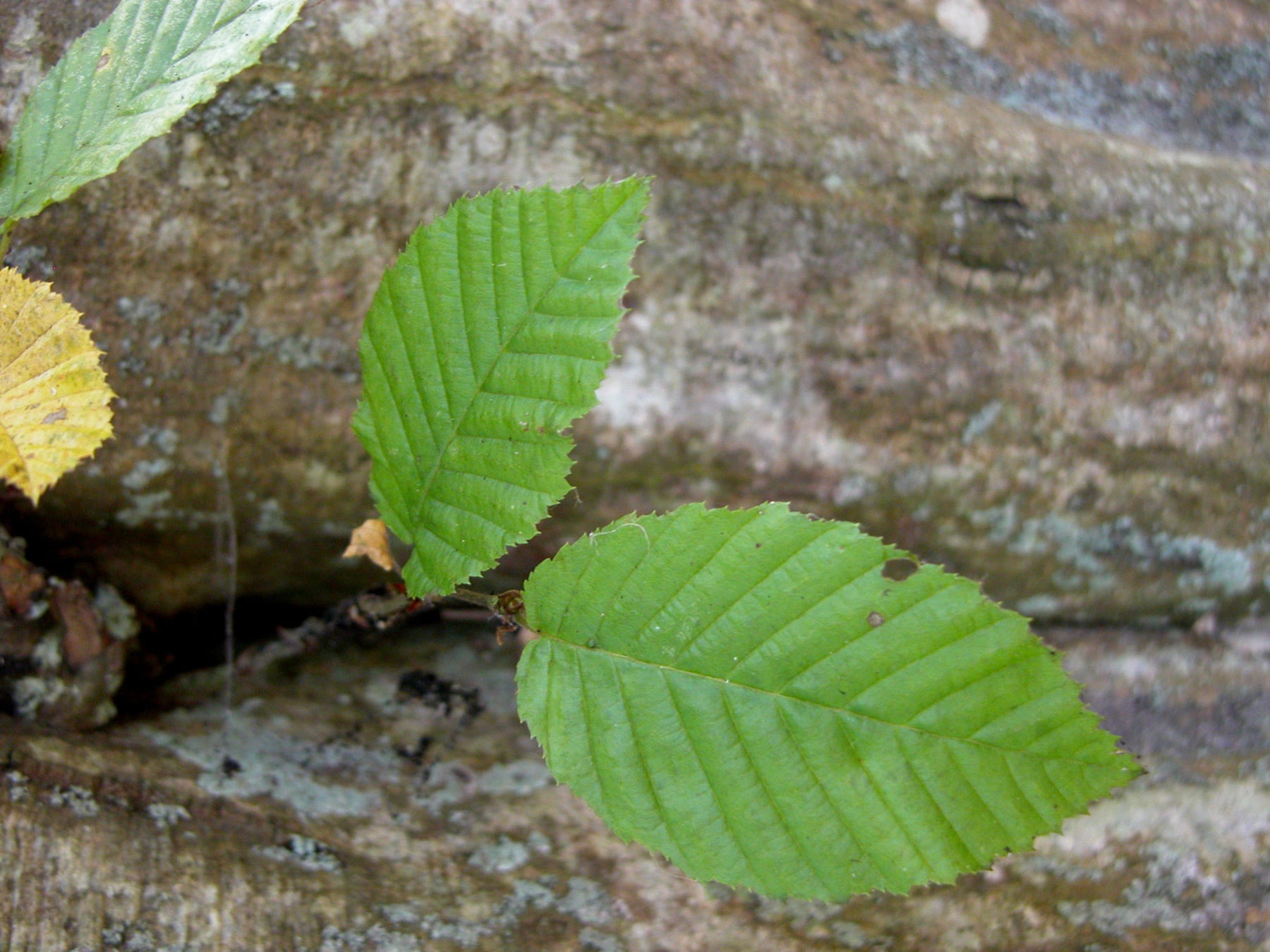
🌿 Other Betulaceae to discover
ℹ️ Educational profile — do not use it to judge whether a plant is edible or safe.
🌱 This database is constantly evolving — species and information are added and corrected regularly. Spotted a mistake? Report it below.
© Floraneo — profile content is protected; reproduction without permission is prohibited. Photos remain under their own licence (see the credit shown on each photo).