Common hazel or Giant filbert: how to tell them apart?
Common hazel and Giant filbert look alike and are often mixed up. Here is how to tell them apart, feature by feature, with their photos and the details to look for.
⚡ The quick answer
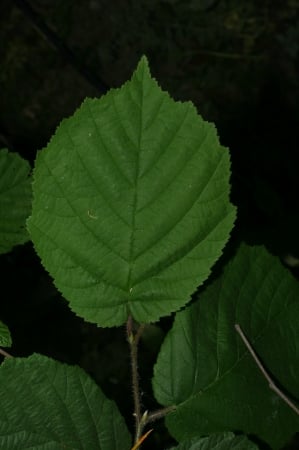
Common hazel
Corylus avellana
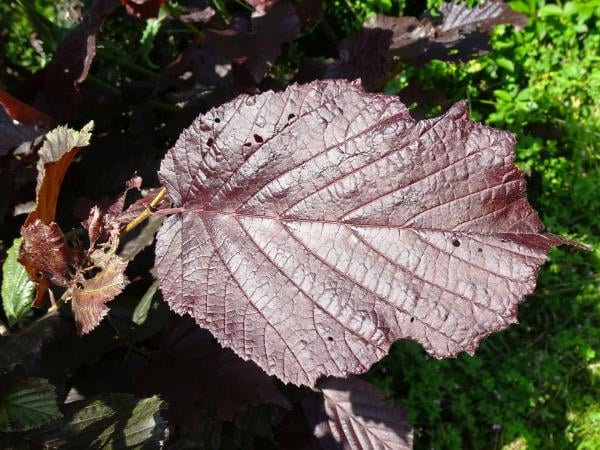
Giant filbert
Corylus maxima
The cultivated filbert produces much larger, more elongated nuts than the wild common hazel, whose fruit is smaller and round.
🍃 Leaves
Round, heart-shaped base, doubly toothed, rough surface
Deciduous, rounded, toothed, sometimes purple depending on variety
🌸 Flowers
Long pendent yellow male catkins, tiny red female flowers
Pendent yellowish male catkins and small reddish female flowers, separate on the same plant
🍎 Fruits
Hazelnuts in clusters of 2 or 3, surrounded by a leafy husk
Large elongated nut, enclosed in a characteristic long tubular husk
🪵 Bark
Light brown, smooth, peeling in thin horizontal strips
Grey, smooth
📏 Size
3 to 7 m tall
4 to 6 m tall
🗺️ Habitat
Hedgerows, light woodland, woodland edges
Planted in hedges or as a specimen, rich, well-drained soils
⚠️ Toxicity
No known toxicity; allergenic pollen
Edible fruit; no known toxicity
🔎 And from the Giant filbert side
The cultivated filbert produces much larger, more elongated nuts than the wild common hazel, whose fruit is smaller and round.
🌿 Go further
Want to practise spotting these details on real photos? Floraneo offers profiles and quizzes for dozens of look-alike species.
ℹ️ Educational profile — do not use it to judge whether a plant is edible or safe.