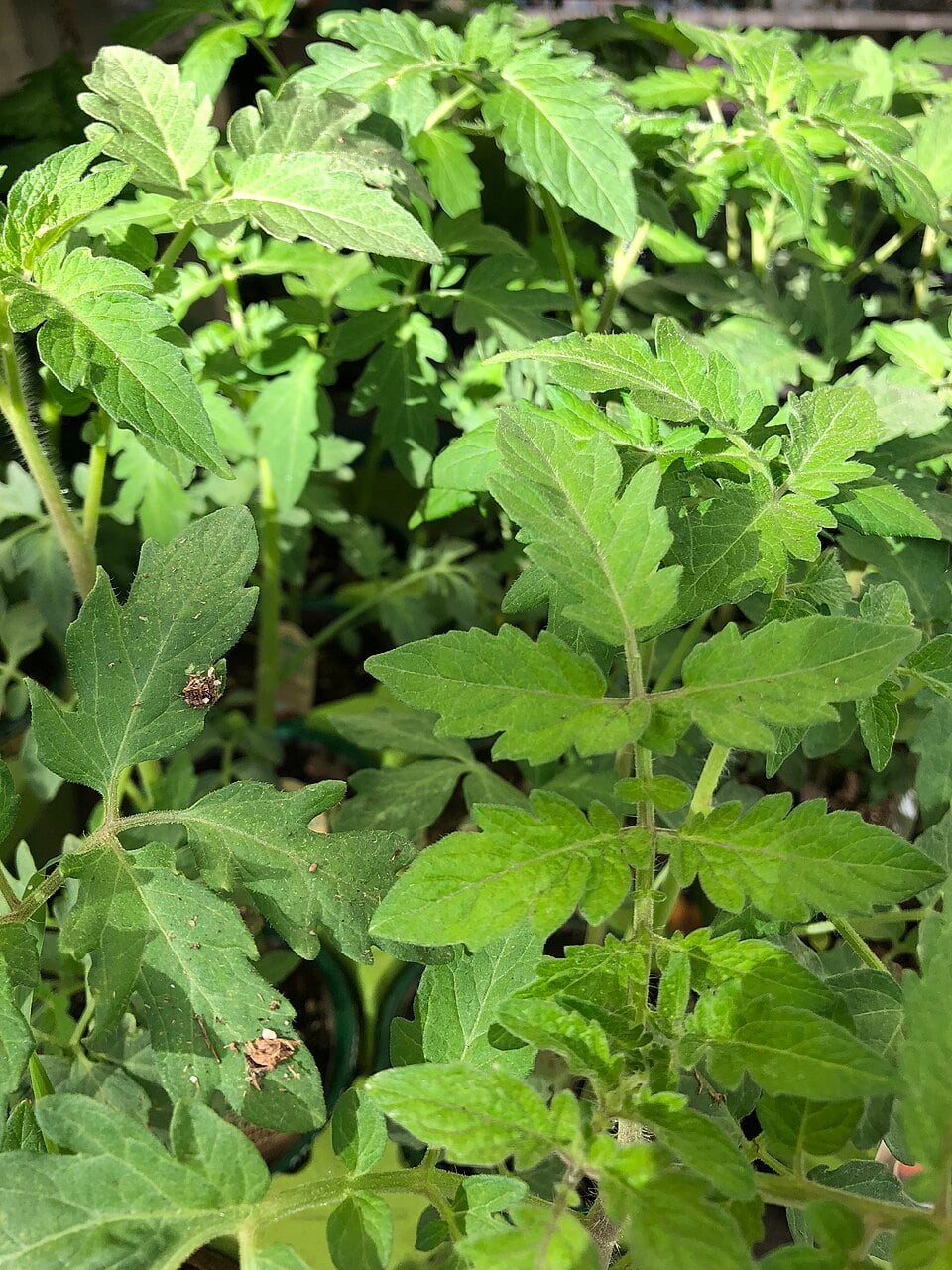
Leaf
Henry Miller, iNaturalist · CC BY
- 1 to 1.5 m tall, sometimes more
- Clearings, felled woodland, woodland edges and cool mountain scree on rich limy soils; pioneer plant of disturbed ground
- Part shade, Full sun
- Very hardy, to -20°C
In flower from June to August
3 months❓ How do you recognise this plant?
Its name comes, it is said, from Renaissance Italian women who put a few drops in their eyes to dilate their pupils and look more beautiful: belladonna means "beautiful lady". Deadly nightshade bears large solitary black berries 1.5 cm across, glossy, sitting on a green star-shaped calyx, after brown-violet bells, on a plant 1 to 1.5 m tall; black nightshade bears small dull berries 7 to 10 mm across in hanging clusters, after small white stars with a yellow cone. When in doubt, never taste any wild black berry.
🍃 Leaves
Alternate, but arranged in unequal pairs in the upper part of the plant, ovate, entire, pointed, 10 to 20 cm, dull green
🌸 Flowers
Solitary hanging bell-shaped flowers 2 to 3 cm, dull brown-violet outside and yellowish-green veined with violet inside
🍎 Fruits
Large globose berry 1.5 cm across, black and shiny when ripe, sitting on a green star-shaped calyx; its juice is violet
🌿 Stem and habit
Upright, branched, hairy and often reddish stem, herbaceous
Distribution, pollinators, uses
🗺️ Distribution
Europe, North Africa and western Asia; in France, mainly in the mountains and in the east; rare on the plain
🐝 Value for pollinators
Flowers visited by bumblebees; berries eaten without harm by some birds
✂️ Horticultural uses
Historic medicinal plant whose atropine is still used in medicine to dilate the pupil; never to be grown where children play
⚠️ Possible toxicity
The whole plant is very toxic, potentially fatal (atropine, scopolamine); a few berries are enough to poison a child seriously
⚠️ Look-alike species
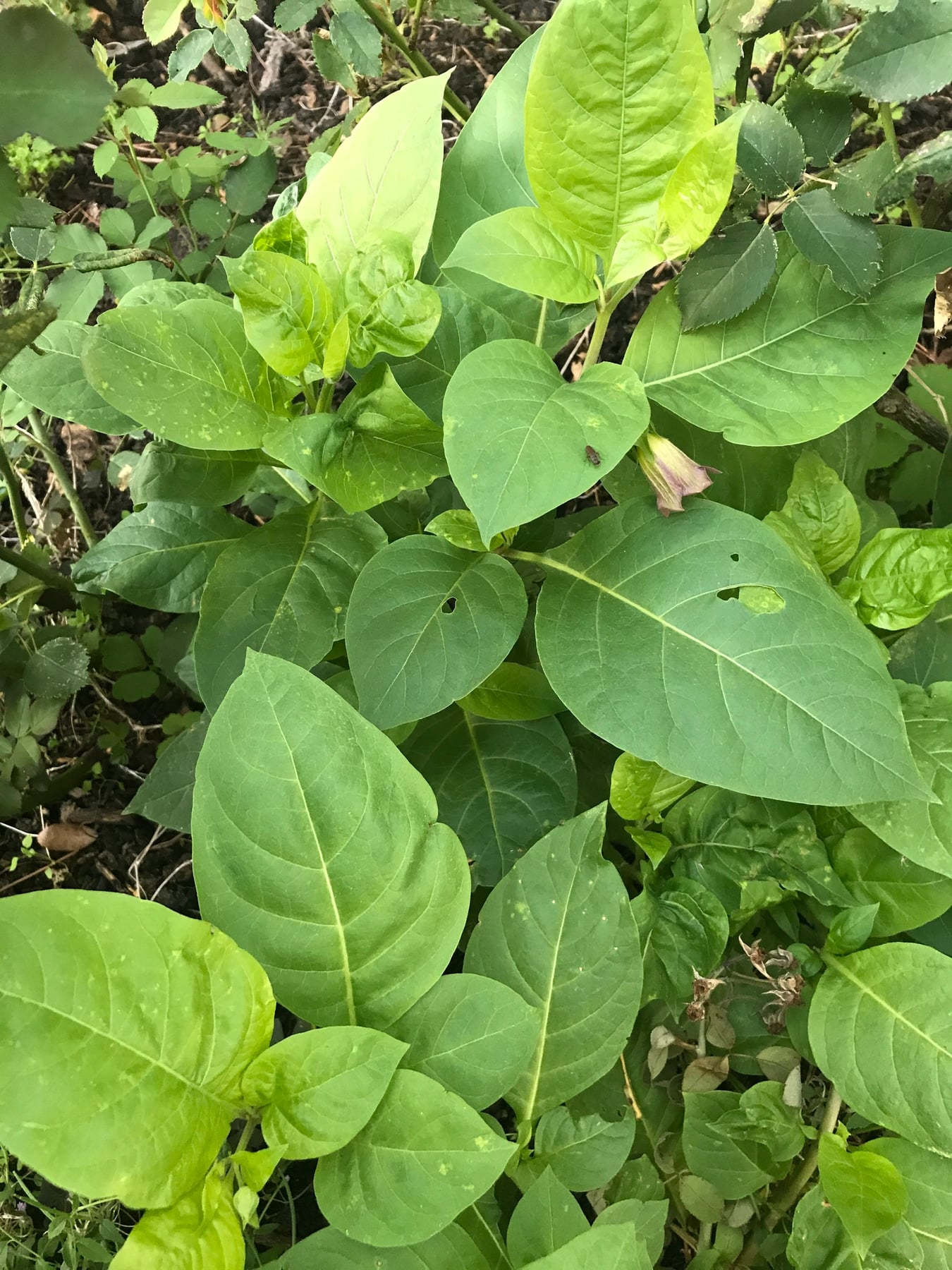
Deadly nightshade
Atropa belladonna
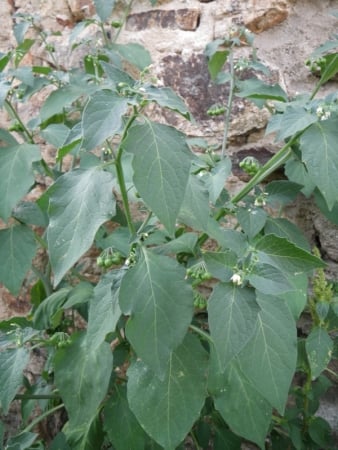
Black nightshade
Solanum nigrum
Deadly nightshade bears large solitary black berries 1.5 cm across, glossy, sitting on a green star-shaped calyx, after brown-violet bells, on a plant 1 to 1.5 m tall; black nightshade bears small dull berries 7 to 10 mm across in hanging clusters, after small white stars with a yellow cone. When in doubt, never taste any wild black berry.
🌿 Other Solanaceae to discover
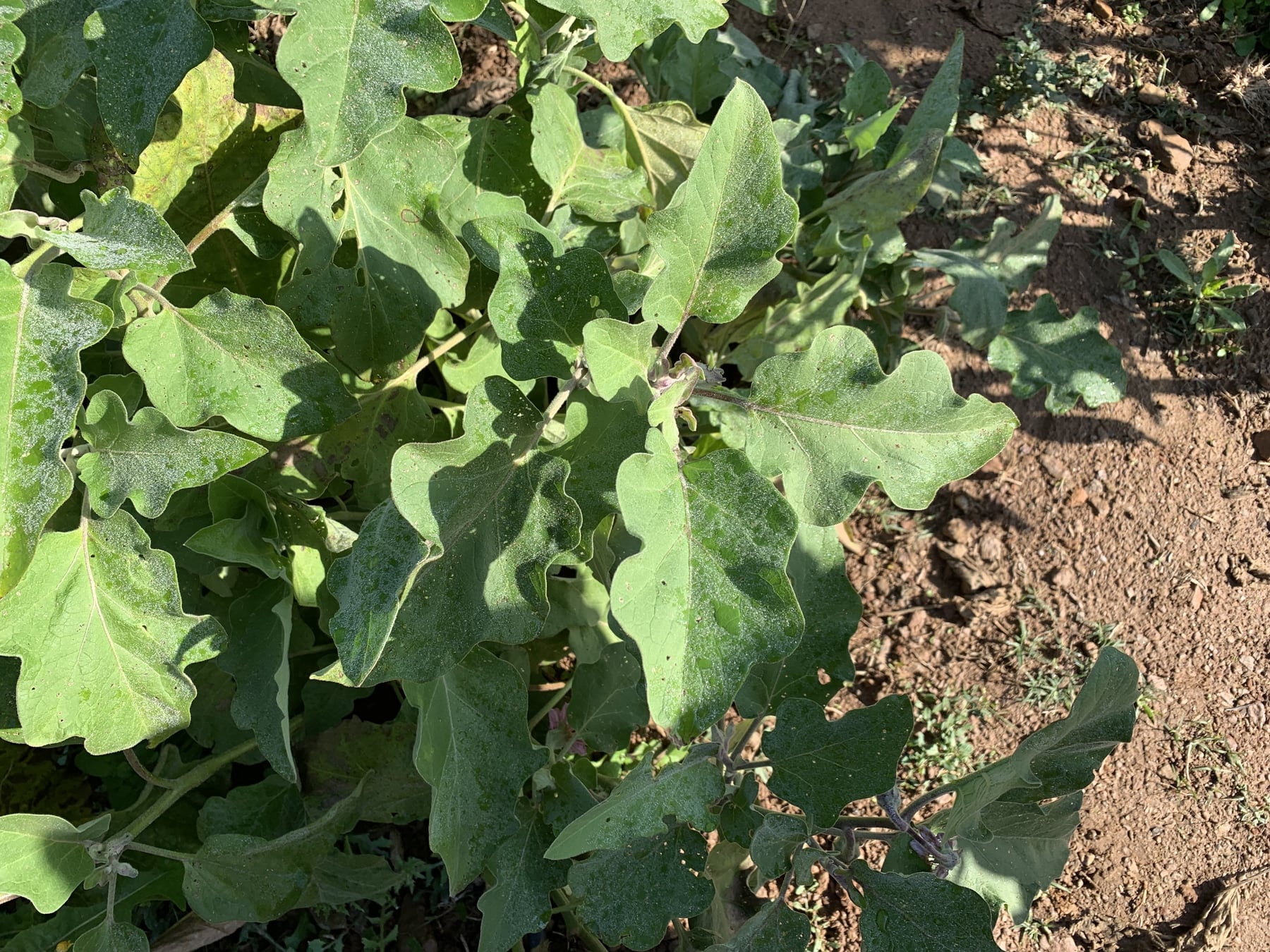

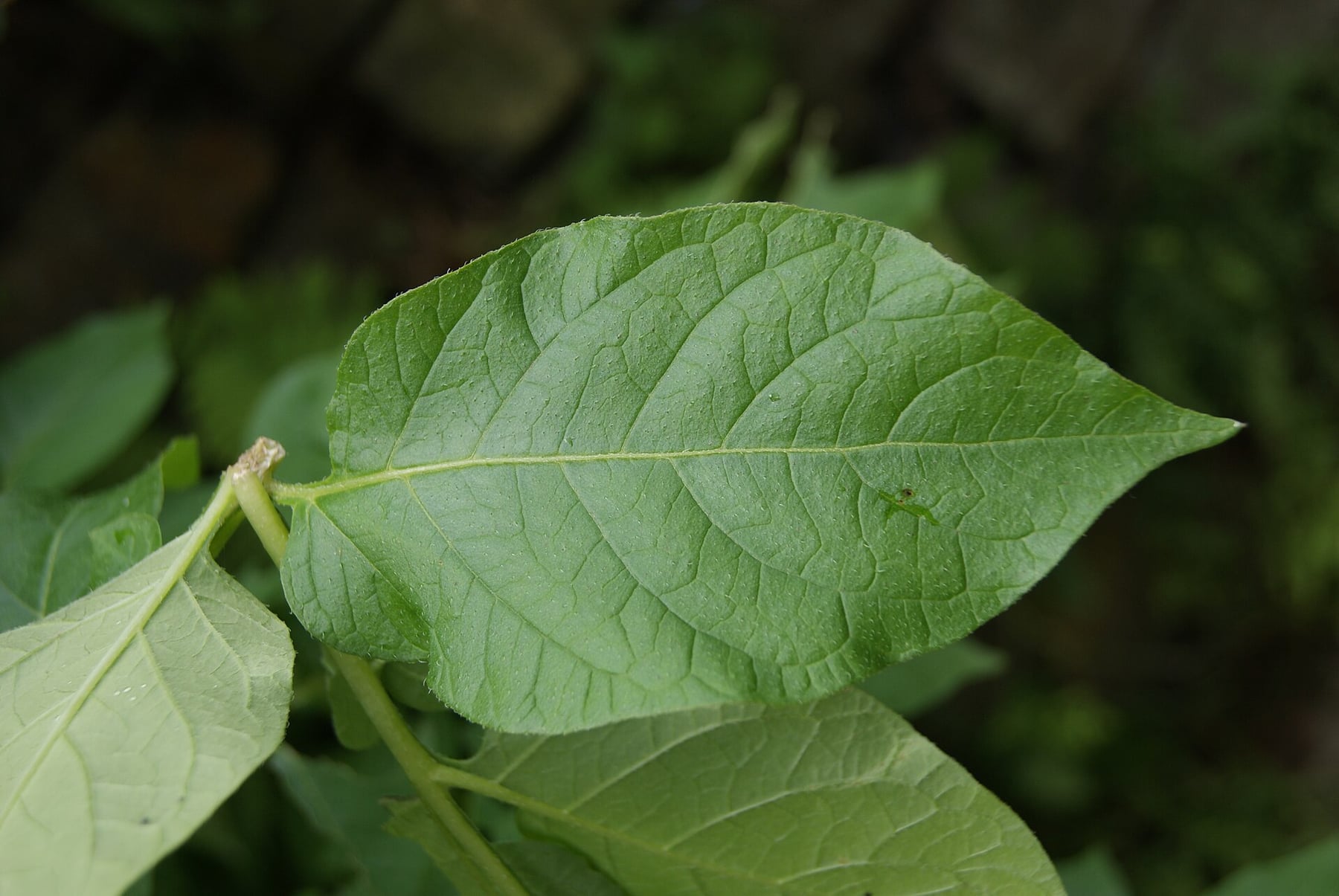
ℹ️ Educational profile — do not use it to judge whether a plant is edible or safe.
🌱 This database is constantly evolving — species and information are added and corrected regularly. Spotted a mistake? Report it below.
© Floraneo — profile content is protected; reproduction without permission is prohibited. Photos remain under their own licence (see the credit shown on each photo).