Leaf
Mairie de Bonneval, Tela Botanica · CC BY-SA 2.0
Common sage
Salvia officinalis L.
Also known as: Garden sage, Sage
Family: Lamiaceae
30 to 60 cm tall
Vegetable gardens, borders, dry gardens, free-draining soils
Flowering: May – July
Full sun
Hardy to -20°C
❓ How do you recognise this plant?
Its Latin name 'salvia' comes from 'salvare' (to save), in reference to its many traditional medicinal virtues. Cultivated common sage has thick, crinkled, grey-green, very aromatic leaves, whereas wild meadow clary has thinner, less aromatic leaves and smaller blue-violet flowers in loose spikes.
🍃 Leaves
Evergreen, ovate, crinkled, grey-green, very aromatic
🌸 Flowers
Spikes of blue-violet gaping flowers
🍎 Fruits
Small dry achenes
🪵 Bark
Low stems, woody at the base, clump-forming habit
🗺️ Distribution
Mediterranean basin; widely cultivated throughout France, rarely wild.
🐝 Value for pollinators
Blue-violet flowers with a see-saw pollination mechanism, very attractive to bees and bumblebees.
✂️ Horticultural uses
Aromatic borders, vegetable garden, cottage gardens; very fragrant persistent grey-green foliage.
⚠️ Possible toxicity
No toxicity at usual culinary doses; concentrated essential oil (thujone) is not recommended for prolonged internal use.
⚠️ Look-alike species
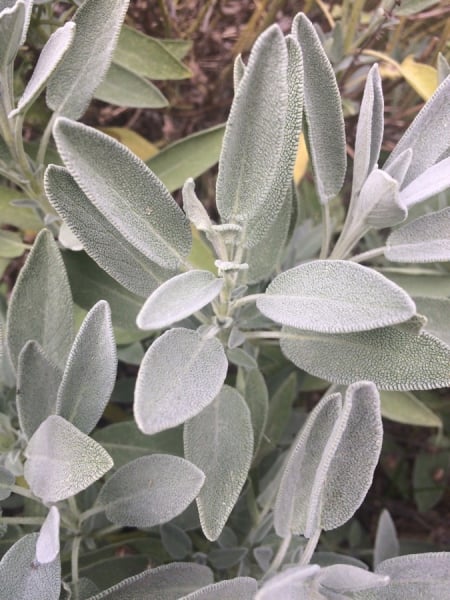
Common sage
Salvia officinalis
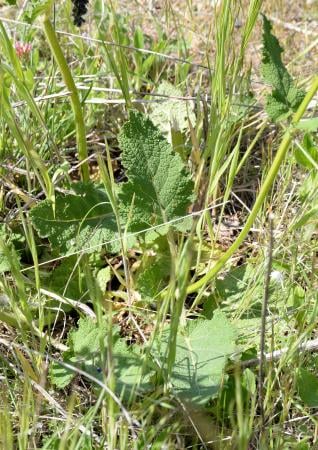
Meadow clary
Salvia pratensis
Cultivated common sage has thick, crinkled, grey-green, very aromatic leaves, whereas wild meadow clary has thinner, less aromatic leaves and smaller blue-violet flowers in loose spikes.
🌿 Other Lamiaceae to discover


ℹ️ Educational profile — do not use it to judge whether a plant is edible or safe.
🌱 This database is constantly evolving — species and information are added and corrected regularly. Spotted a mistake? Report it below.
© Floraneo — profile content is protected; reproduction without permission is prohibited. Photos remain under their own licence (see the credit shown on each photo).